
Cultural Memoirs
Returning to Tibet to Find Happiness
I only find joy in the pursuit of what truly matters in my life
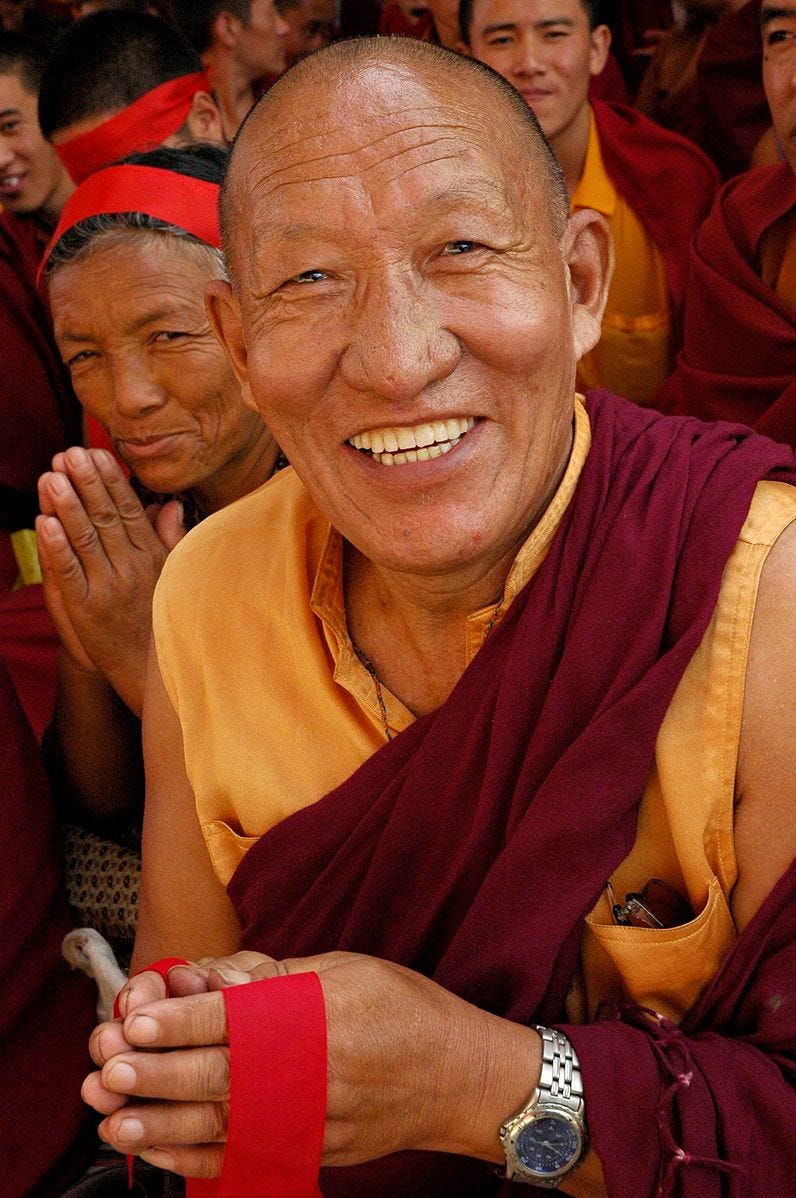
When I finished my Ph.D. coursework, my boyfriend and I decided to travel to India to fulfill my dream to cross the Himalayan mountains and enter Llasa on foot. We flew to New Delhi and Kathmandu and got individual visas from the Chinese embassy. We aimed to trek from Nepal to Llasa on the Friendship Highway.
You must understand that this “highway” was nothing like what you might imagine as a highway. It was a dirt road — a wide dirt road beginning at the border of northeast Nepal and traveling through Tibet to Llasa.
Securing our individual visas was arduous because the Chinese were unwilling to give individual visas. They didn’t want foreigners wandering around Tibet. But we persisted and were at the embassy door every morning until — 3.5 weeks later–we were awarded individual visas to walk into Tibet from northern Nepal.
You have to envision Tibet from Nepal. The whole country sits at 14,000 feet. That’s high. Tibet is like a huge plate balanced at this high altitude, hence the name Tibetan plateau.
I learned that it is the highest point on the earth. The mountains, like Mt. Everest, tower beyond the plateau.
Entering Tibet, we crossed the Sunkosi River and climbed onto level ground. The Sunkosi has two streams, one that arises within Nepal in Choukati and the other, a more significant stream that flows from Nyalam County in Tibet. It was like crossing a great divide.
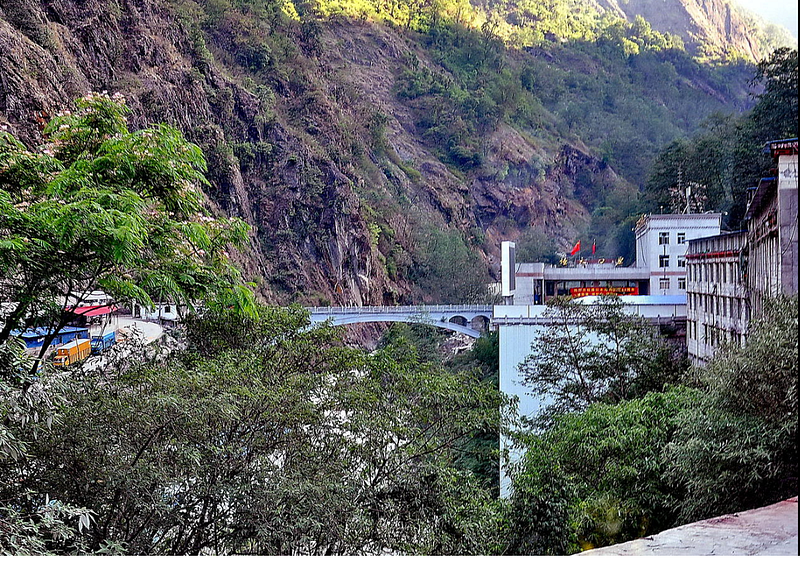
When we were clearly in Tibet, the Tibetans clamored around us, wanting ballpoint pens and photos of HH the Dalai Lama. We had some pens but no photos. And we said to each other, “We have to come back with tons of photos of the Dalai Lama.” [much to our regret, we never made it back]
Climbing was arduous but manageable. However, on the other side of Mt. Everest — -at an elevation of 17,000 feet — I got altitude sickness. We stopped to see if I could recover and camped in an abandoned, blown-out hotel.
Fortunately for me, a French expedition was coming down from the base camp of Mt. Everest and had a doctor with them. She immediately got a truck and said I needed to go down to Nepal and not cross the next summit.
As we drove toward the border, I started coming out of this nausea and blurred vision. I began to feel normal again. And I turned my head to gaze at the mountains once more and said, “I will return.”
So far, I’ve never returned. Chances are, I never will in this lifetime.
The Tibetans are never far from me. I worked for HH Dalai Lama XIV for several years, first representing the Tibetan people in Amnesty International. At the time, there were only four sentences about the plight of the Tibetans, and His Holiness was not awarded the Nobel Peace Prize until a few years later.
I encountered my husband at Tibet House in NYC, and our union was blessed with a Tibetan Rinpoche from Kathmandu. Our sacred marriage ceremony took place in the very backyard of our cherished home, where we continue to reside to this day.
These circumstances and these meetings are mysterious and defy logical explanations. They are part of the grace I feel was bestowed on me by these elegant people. I can never repay their hospitality. But I can write about them and tell my story.
This morning, I found myself writing about the psychology of desire, which led me to unhappiness. But, when I thought about the antidote to unhappiness, I thought of my experiences with the Tibetans, and it is clear America needs a dose of Tibetan life.
Why are we so unhappy?
As a long-term clinical psychologist, I’ve witnessed unhappiness from all angles. In today’s world, key triggers are:
Instant gratifications and immediate rewards
Desire triggers a release of dopamine with an anticipation of pleasure
Social comparison — off the charts
Jumping on the hedonic treadmill [wanting happiness from buying something new]
The fear of missing out (FOMO)
These issues never arose in the Tibetan people in India or America. Therefore, I use this culture as a case study for happiness studies.
5 Factors for Happiness
The antidote to this unhappiness epidemic in America is — writ LARGE — in the Tibetan people.
However, it’s important to note that generalizing the happiness of an entire group of people, such as Tibetans, can be overly simplistic and may not reflect the diversity of individual experiences.
At the same time, my observations about the Tibetans are backed up by psychological studies evincing the psychological hardiness in these people.
Here are five factors that can contribute to our happiness learned from Tibetans that align with my psychology practice.
1. Practice gratitude.
Whenever you find yourself envying or comparing yourself to someone else, think of what you have and remind yourself of the blessings in your life.
2. Embrace uncertainty.
Accept that not everything will go as planned. You can be open to different possibilities that arise throughout your day.
3. Set realistic goals.
Try breaking down your desires into smaller, achievable steps and work on completing those steps. This will counteract your frustration and impatience.
4. Begin a meditation practice.
Practicing slowing down, closing your eyes, and feeling your breath as it goes in and out of your nose. Feel the touch of the breath as it enters your nostrils. This form of mindfulness meditation helps you stay in the moment and temporarily drop rumination and overthinking.
5. Align your desires with your values.
Reflect on what truly matters to you and align your desires with your core values. This leads to a more fulfilling and purpose-driven life.
What We Can Learn from Tibetans
I want to summarize six valuable insights I gained from Tibetan culture that you may consider in planning your happiness.
Explore the Gems of Tibetan Wisdom
- Cultural Riches: Tibetan culture resonates deeply with compassion, mindfulness, and spiritual wellness. Practices like meditation and honoring our link with nature are fundamental to their daily existence.
- Community Harmony: Strong bonds within tight-knit communities are the norm in Tibetan culture. This interconnectedness and sense of belonging contribute significantly to overall happiness.
- Spiritual Enlightenment: Tibetan Buddhism, widely followed, embraces meditation and mindfulness, known to enhance mental well-being and foster inner tranquility.
- Simplicity in Life: The Tibetan way often celebrates a simpler lifestyle, placing less emphasis on material possessions. This emphasis on simplicity can alleviate stress and elevate life’s more meaningful aspects.
- Resilience Amidst Adversity: Despite enduring significant challenges, including political and social upheavals, Tibetans exhibit remarkable resilience and maintain a positive perspective on life.
- Nature’s Embrace: The awe-inspiring beauty of the Tibetan Plateau mirrors the deep connection Tibetans hold with nature, showcasing their profound respect for the natural world.
Conclusions and Takeaways
Happiness is a complex and subjective experience influenced by various factors, and individuals within any group can have diverse experiences.
The situation in Tibet has been marked by political complexities and historical challenges, so the well-being of Tibetans may vary based on individual circumstances and perspectives.
While I speak of the powerful cultural and spiritual values the Tibetans have, I want to emphasize these are ideals to aspire toward.
I wouldn’t expect someone in the throes of unhappiness to grasp these ideals all at once. It takes practice to free yourself of unhappiness, like going to the gym and caring for your body.
We have to work the gratitude muscle every day. We have to embrace uncertainty daily. We must set realistic goals and practice mindfulness meditation as often as possible.
The antidote is not a quick fix or a one-off game plan. It needs to be repeated again and again.
You aren’t suddenly struck with gratefulness. It takes practice. You need to move a mental muscle to change a thought.
Instead of being trapped in a cycle of perpetual longing, try to find happiness in pursuing what truly matters — a life of purpose and authenticity.
Thanks for reading my story.
You may learn about my background from this interview story.


