
Rethinking Private and Public Spaces
The case of microfarming and Open School programs

As our world tries to adapt to shifting social, political, and environmental pressures, our relations to private and public spaces, too, demand scrutiny and reimagining. After all, it is precisely in these spaces that many of the tensions that characterize our current era unfold.
The following reflections about our relation to public and private spaces is inspired by works that reject the utilitarian, exclusionary, and functionality-centric principles that inform access to and interactions within them. In particular, the two projects that I discuss in this piece reject the (limited) spatial and relational logics that characterized their previous forms in an effort to transform these spaces in ways that better equip them to address complex and evolving social needs.
Lets start with a project that aims to transform private property into spaces better fit for the flourishing of local communities: microfarming.
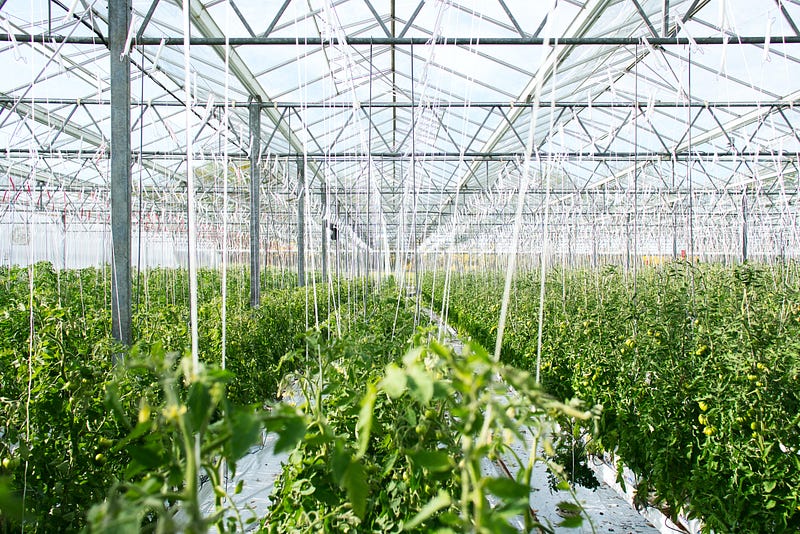
In Mansfield Ohio, a farmer cooperative under the name of the Richland Gro-Op has organized an urban microfarm project meant to provide locals with affordable fresh food and economic opportunities. The space used to create this microfarm was a formerly vacant industrial site. The purchase and community-led transformation of this site into a system of urban agriculture helped increase property values in the area and address local issues related to food security, racial injustice, alienation, and environmental sustainability. For instance, the project helped provide locals with fresh foods at prices that circumvent the costs of transportation, fertilizers, and pesticides that are typically factored into food prices.
As such, microfarming seems to open vital possibilities for poor and marginalized communities near industrial areas, allowing communities to become self-sufficient while helping repurpose unoccupied or abandoned industrial spaces in ways that contribute to locals’ material, mental, and social wellbeing.
In many ways, microfarming projects like the one in Mansfield reflect a collective orientation toward radically different forms of sociality, care, and economics. They share visions of collective ownership and responsible management of resources through which the specific needs of immediately affected communities can be better addressed. As such, the visions of collective flourishing that microfarming embodies reflect a relation to property that is closer to the idea of the commons than to the alienating dynamics of private property (e.g., as vacant industrial sites).
Yet, similar arguments can be made about public property. Public property can also contribute to the alienating dynamics of private property by virtue of its inability (often by design) to meet the needs of the people that rely on it. Like private spaces, public spaces are often designed from the top-down and according to utilitarian and functionality principles meant to effectively address specific social problems. As such, these spaces are often not versatile enough to meet evolving and unforeseen social needs. Moreover, similarly to private property, public spaces tend to be secured through various state, legal, and police apparatuses that manage access to and in interactions within these spaces (raising important questions about who these spaces are for in the first place).

Overcoming these limitations of public property requires a deep rethinking of what these spaces could be and do for people. A good example of this can be found in the work of Chilean communist mayor, Daniel Jadue. Jadue tells us that a core problem for youths in his community (Recoleta) was a lack of spaces where young people could meet and participate in age-appropriate activities.
Unfortunately, Recoleta did not have the resources to build facilities that could meet these needs, so the solution that Jadue’s team in collaboration with local youths came up with was to make use of their public schools after hours. As he explains,
It made no sense for schools to be empty by 4:00 PM, with no one taking advantage of their facilities. So, we decided to create the Open School program, keeping schools open until 10:00 PM daily, and over the weekend as well. This gave the community the opportunity to make use of the spaces as they saw fit: the fields, the gyms, and the classrooms.
The Open School program helped families whose adults’ work late have a safe space for their kids to go to after school and provided the means to organize homework clubs, sports activities, free pre-university preparatory courses, and a variety of open access university classes taught by volunteer professors.
Both these projects are organized from the bottom-up according to the immediate needs and interests of the community. They do not operate according to the fixed functionality and utilitarian principles that characterize the design and use of private and public spaces. Instead, they operate as open-ended and incomplete spaces that can effectively adapt to the changing needs of their communities.
These reimaginings of what vacant industrial sites and public schools are and can be once again move us into the terrain of the commons — that is, away from the spatial and relational dictates of private and public property. In both the cases of microfarming and Open Schools, we see a reinvention of spaces according to visions of the commons through which spaces and resources are reimagined and brought to life as belonging to none, but available to all.
These spaces resist top-down determinations and open possibilities of radically new modes of sociality and co-existence.
Although the cases of microfarming and Open Schools may not be perfect examples of what a commons can be, even in their imperfect forms they reveal to us the possibilities of flourishment and care that lie beyond the organization of social and economic life along established (private and public) property lines — property relations that are handed to us top-down and secured through various state, legal, and police apparatuses as opposed to bottom-up in ways that can acknowledge and address the evolving needs and interests of communities — in turn creating conditions more conducive to human flourishing.
Related Stories by MCQ


