
EDUCATION
Research Validates a Proposition Not Meaningless Opinion
Do your homework to ensure that your point of view is accepted as opposed to being seen as defective due to biased beliefs
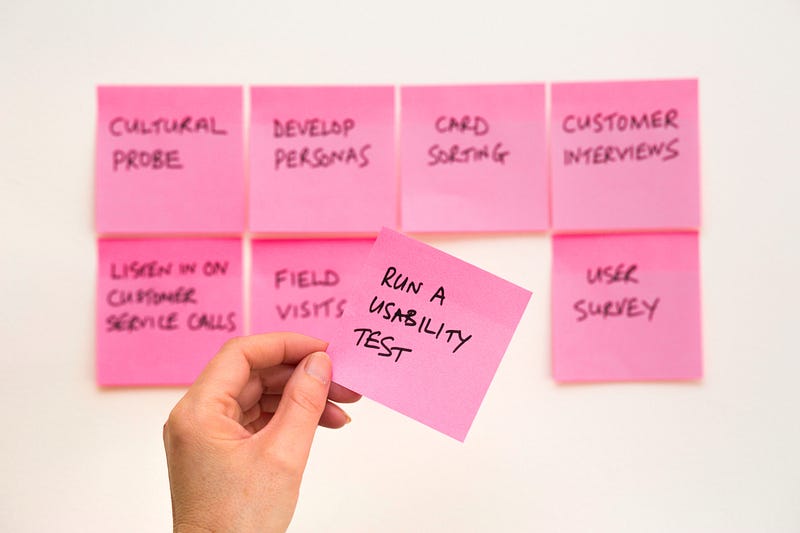
What is research? It’s a systematic investigation, a study of sources and materials to establish facts in order to reach new conclusions.
“An endeavour to discover new or collate old facts by the scientific study of a subject or by a course of critical investigation “— Oxford Dictionary
Research is what we do when we have a question, to uncover a problem that we want to resolve on a particular subject matter.
After reading Dr Mehmet’s article below I was inspired to write this piece about a misunderstood topic, “research methods”.
The Mistakes
Mistakes are clear indicators of inexperience in a piece of research. Typical mistakes derive from:
- Thinking that we already know the answer to a question
- Forming an opinion from limited data
- Forming an opinion from a position of bias
- Forming an opinion with a weak or incomplete sample-set
- Forming an opinion from personal beliefs
- Believing that the answer is obvious, simply common sense
- Lack of self-awareness (see confirmation bias below)
Until a question or problem is subjected to vigorous investigation its only guesswork or intuition. Effectively, it's invalid.

Types of research
Research can take many forms, but here are a few examples:
- Market research to establish consumer preference for a product or service
- Conducting experiments in a laboratory
- Reading books, journals or online articles
- Browsing the web
- Cold calling a particular demographic or segment to ask opinions
- Testing or simulating a prototype
- Observing human behavior
So why conduct research?
- To pass a course assignment
- To solve a problem or answer a question
- Intellectual curiosity in the pursuit of knowledge
- To benefit/improve a group, an organization or society
- To evaluate the impact that something may have: a product, an event, etc.
There are thousands of reasons why, but you get the point.
Research categories
Research is categorized into two areas. So it’s crucial to understand what these are, namely primary and secondary research.
1) Primary Research
Primary research concerns the collection of original data. Methods include questionnaires, observation, and experiments.
Advantages
- Primary research addresses a specific problem
- The researcher controls the research design
Disadvantages
- It can be expensive
- Takes time and a low response rate is expected
2) Secondary Research
Secondary research is a summary, collation, a synthesis of existing research. It often takes the form of ‘desk research’, a systematic review. In academia its known as a literature review.
In market research, secondary research is defined as the reuse of data collected by a first-party — not you. Reports, journals, and organizational statistics are examples of secondary research.

The Research Process
Now that the fundamentals of research methods are covered the next step is the process and to establish research design. I know this is not a thrilling topic, so I’ll list as follows:
- Identify the research topic
- Establish research questions
- Define the research design
- Conduct a literature review
The research topic is important. What is your motivation and why? Who does it benefit? Ideally, research should not be about you, rather a piece of work where your findings enlighten others and backed up with evidence.
List your ideas. Consider what’s manageable, the timeframe, money, and resources required to conduct a rigorous examination.
Also, establish aims and objectives early on.
Research strategy (design)
This is about the research design, to define the most appropriate strategy befitting the subject matter.
- Quantitative and qualitative methods
- Ethics, motivation, and purpose
- Sampling size and relevancy
- Data Collection
- Data Analysis
- Results
- Presentation
Without a strategy, your work is at risk of being viewed as invalid. Investigate what research strategy should be employed.
- Action research
- Grounded theory
- Are they inductive or deductive?
- Quantitative methods versus qualitative methods
- Triangulation — both quantitative and qualitative methods
- Definitions — rules to govern boundaries
- Methodologies — the approach
As Franklin said: “If you fail to plan, you are planning to fail!”
The literature review
A literature review is a critical account of material available from academics, publications, and professionals on a certain topic.
- Learn how to evaluate published research
- A literature review is driven by the research questions
Sources of information include online publications, journals, organizational and government publications, books, databases, and people.

Research paradigm
The research paradigm refers to the approach taken to tackle a specific problem. It’s essentially the underlying philosophy behind the research.
Know your philosophy and endeavor to be transparent.
Final Thoughts
To conclude, there are two takeaways that I’d like to leave with you as they’re vital if your proposition is to glean credibility. They are:
№1 — Confirmation bias
People seek to be right, to make sense of things, it's a concept that’s grounded in basic needs (Maslow).
As far as research is concerned, confirmation bias is considered to be a defect.
Our human monkey brain wants to be correct. To achieve this we look for evidence that confirms that we are correct, ignoring polar views, with undesired, or rather, invalid results.
This is known as “Confirmation Bias”
It’s easy to find data that matches our opinion, our view. It’s a defensive mechanism born out of insecurity.
Confirmation bias is research cancer. It intoxicates credible findings. Great research professionals are highly attuned to this human flaw. They learn to ignore it to uncover the truth. Discoveries that enhance society.
Learn more about confirmation bias in the article below.
№2 — Ethics
Ask is my research ethical? Are my behaviors, motivations appropriate with respect to the rights of the subject? Who are the benefactors?
Ethics permeates all levels of research, from planning and design to collection and analysis of results.
Ethical research is always:
- Accountable
- Responsible
- Objective
- Random (sampling)
Sampling is used because we cannot survey an entire population. Take Illumination, for example, a publication just shy of 20,000 followers. A sample audience would look like this:
- 195 members = 1%
- 975 members = 5%
- 1,950 members = 10%
Accuracy is important. A carefully obtained random sample, with as many participants as possible, is more reliable — deemed credible.
Remember that research is a process, with structure and clarity.
A refined research topic, questions, and purpose are the backbone of any hypothesis. Without this, you risk looking foolish.
What do you think Rasheed, Joe, Mukundarajan, Alison, Amy, Ming, Chirag, Geetika, Holly, Dr. Jackie, Ryan, Dew, Michelle, Rubaiyat, Ahmed, Sharon, Michael, Louise, Desiree, Harley, The Crimson, Infiniti, Pouya Ahmadi, Mary, Kenneth, Tony, Gurpreet, P.G., Timothy, Chris, and Alex?


