
Rep. Hakeem Jeffries Rises to the Top
How Rep. Hakeem Jeffries became the first Black to lead the Democratic party.
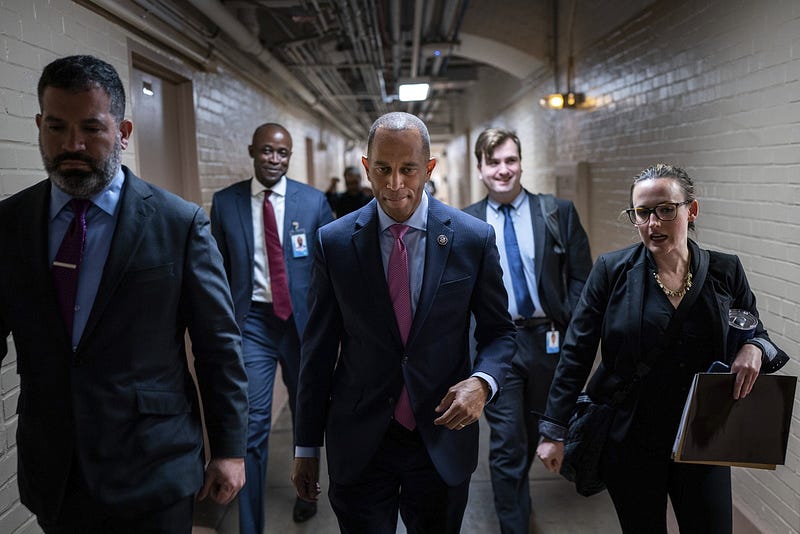
Hakeem Jeffries, a New Yorker and the first Black lawmaker elected to the top post for the Democratic party. He is the incoming minority leader replacing Rep. James E. Clyburn, Democrat in South Carolina, becoming the highest-ranking African American in the House and the first Black lawmaker to lead either party in the chamber. Jeffries’s appointment is indicative of the much-needed new leadership reflective of America’s diversity.
Jeffries (52) did not get this position to lead the Democratic party because he is a Black man but his credentials speak for themselves. He was born in Brooklyn, New York, and became a lawyer and went on to serve for six years in the New York State Assembly, and then left at the end of 2012 after being elected to Congress. Then onto the House Democratic leadership in 2017 as a co-chair of the House Democratic Policy and Communications Committee. Finally landed as caucus chairman in 2019, served two terms in a higher tier of leadership, leading caucus meetings and hosting weekly news conferences. Equally notable was his commitment as one of the House prosecutors in the first impeachment of Trump.
Jeffries was elected on November 30, 2022, to lead the Democratic Party caucus in the House of Representatives in 2023, succeeding Nancy Pelosi. Nancy is graciously handing over her mantle to Jeffries in the face of the renowned legacy she created. While stepping aside for a younger generation, she advised that she will remain active as a member just not the Democratic party leader. Jeffries is in a win-win situation with his credentials and the support of the Democratic party in particular Nancy Pelosi. If Kevin McCarthy is elected Speaker of the House, Jeffries is expected to become the minority leader.
When Jeffries served in the state legislature for six years he introduced over 70 bills. Also, he introduced a bill A02589 to penalize retailers and wholesalers who purposely sold hazardous or dangerous toys that were the subject of a recall. He wrote and sponsored the bill that banned police from compiling names and addresses of those stopped but not arrested during street searches in 2010, Governor David Paterson signed it as the Stop-and-frisk database. He also sponsored and passed house bill A.9834, now a law, the inmate-base gerrymandering law that ended counting prison populations of upstate districts as part of the public population, becoming the second state to end this practice.
Other bills include the Prison Ship Martyrs’ Monument Preservation Act, the Law School Clinic Certification Program of the United States Patent and Trademark Office (H.R. 5108; 113th Congress, and he led the effort to pass The Slain Officer Family Support Act which was signed into law by President Obama.
In conclusion, Jeffries’s accomplishments make him a right fit for the leader of the Democratic Party and he is off the belief that everybody matters. Hopefully, his belief will be infectious spreading throughout the Capitol and the White House. 2023 looks a little brighter as Nancy Pelosi passes the mantel to very capable hands.
For additional reads:
effries stressed that he, Clark and Aguilar share the joint belief that “everybody matters.” “That’s what makes the House Democratic Caucus the most authentic representatives of the American people,” he said. “Sometimes we can have noisy conversations, but as we showed time and time again on issue after issue after issue, at the end of the day we always come together, find the highest common denominator and get big things done for everyday Americans.”


