

RegTech & its Challenges
The regulatory environment for the fintech startups needs a new approach
The Global financial crisis of 2008 was not only the turning point in the evolution of Fintech as we have seen in the last decade but a game-changer for the resulting financial regulations as well. Financial markets have always been regulated on the basis of the Efficient market hypothesis — the idea behind this is that there is sufficient information available to market participants to determine the price of the asset at any given point. This hypothesis, however, is based on a number of assumptions about markets.
- Perfect information available
- No transaction costs involved
- Perfect Competition
- Rational market participants
All these ideas lead to the efficient functioning of markets which in turn supports the overall economy. But in actuality none of these assumptions hold true — we know that market information is asymmetric (Not perfect), there are always transaction costs involved in acquiring information or executing transactions & that competition is almost never perfect.
Much of the regulation prior to the global financial crisis was focused on improving on enhancing competition, reducing costs & improving information quality which would reduce the instances of market problems & failures.
Hundreds of billions of dollars were spent to bail out banks around the Globe after the 2008 financial crisis, highlighting the problems of systemic risk, whereby a collapse of a financial institution triggers a collapse in the entire financial system & eventually the economy.
We saw this happen in the Great Depression of the 1930s and then more recently in the market collapse in 2008. Thus a need was felt to build innovative regulatory frameworks that could address the systemic risk, build confidence, avoid financial meltdowns & let the markets function efficiently.
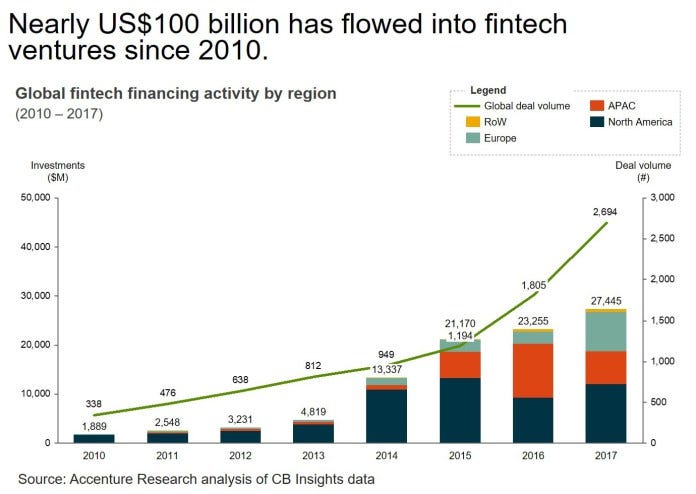
Post-2008, as Regulators grappled with the idea of coming up with a new effective regulatory model, an explosion of Fintech development took place, and this exponential growth in Fintech caused a major challenge for the regulators.
Since the whole idea of Fintech was the disruption of the pre-existing models of Markets, Industries & Finance, in general, it was in direct contrast with the regulators' sole aim of preventing any sort of disruption in the markets. But at the same time, there has been a strong regulatory focus on encouraging innovation & development in the financial system too.
Therefore the regulators had to find a middle ground to encourage innovation while dealing with the challenges that emanate from the adoption of the new technologies. They have been trying to balance innovation & growth with financial stability & consumer protection.
To enforce this new vision the regulators adopted four major approaches:
- Doing Nothing (Permissive or Restrictive) — China prior to 2015 is an example of this where it took a permissive approach by not enforcing any regulations which ultimately resulted in the phenomenal growth of Fintech (and TechFin). But as we have seen before doing nothing approach brings with it the associated risks & challenges. As a result, since 2015, the focus in China has shifted to building a new regulatory framework for digital financial services. Other jurisdictions have taken a more restrictive approach where new market entrants with innovative, technology-driven business models have been forced to comply with the existing regulatory framework which was designed for the traditional business models of finance like Banks & Insurance companies etc. This obviously results in choking the innovation spirit & growth prospects of these technology-driven startups. No wonder than most of these companies established their bases in friendlier jurisdictions.
- Contact points — This approach involved the regulators meeting with the new entrants to understand their business models and learn about new technologies to develop an adequate regulatory response.
- Sandboxes — Some regulators have established what is called sandboxes, which provides a platform for the new company as well as the regulators to experiment with different forms of regulations in a limited market context in the hopes of figuring out on how best to move forward.
- New Regulatory frameworks — With the new models of business like P2P lending, Alternative payment systems, and crowdfunding platforms countries like India & China are looking at developing entirely new regulatory frameworks to cater to the needs of these disruptive business models.
The massive acceleration & development of Fintech provided the catalyst for the establishment & subsequent development of RegTech or Regulatory technology. The idea of RegTech relates to FinTech but has a much wider application.
Regtech basically relates to the use of technology for regulatory design, monitoring & compliance of not only Fintech companies but in the broader context of digitized financial markets & any other sector of the Economy (Environmental regulation, Transport regulations, etc.).
However, for now, RegTech has been most developed in the context of Finance since this is the sector that has seen the most innovation & disruption of the traditional models.
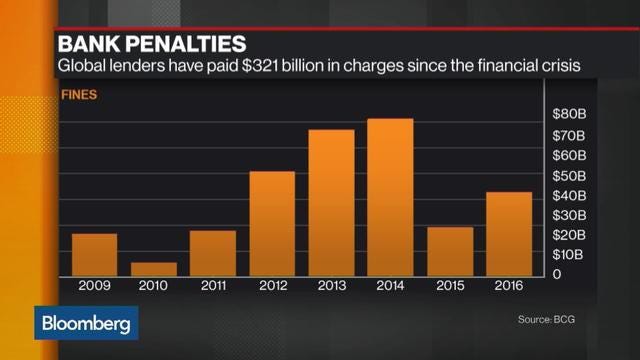
Ever since the financial crisis of 2008, we have seen an enormous amount of new regulations around the world with new regulations coming out of a major jurisdiction every hour resulting in thousands of new regulations every year, which becomes a big hassle for a financial institution doing business on a cross-border basis. This causes a major hindrance in their operations and a drop in their profitability apart from the costs associated with the compliance.
This has driven the established financial industry to apply technology to address their compliance requirements & the associated costs by seeking the assistance of new startups who can address their problems of regulatory & compliance burdens. Regulators themselves are increasingly using technology to do a better job in their regulatory functions.
The bigger issue with regards to RegTech still remains to be the one where there is a joint or uniform regulatory framework across different jurisdictions so it becomes easier for the companies to function effectively while the regulators can enforce the regulations in a streamlined fashion.
Recent developments are pointing towards the creation of such an initiative which will not only encourage innovation but also allow companies to launch their products in multiple jurisdictions at the same time without the need of having to comply with a different set of regulations.
Global ‘fintech sandbox’ has brought together 12 regulatory authorities across the globe to share policy ideas & keep up with the advancement of new technologies to be in a better position to tackle the issue of a uniform regulatory framework.
Related Articles: TechFin vs. FinTech — What’s the difference?, The rise of P2P Finance model, Evolution of Fintech — A timeline, The ABCDs of Fintech
Stay in touch: Twitter | StockTwits | LinkedIn | Telegram| Tradealike
Originally published at www.datadriveninvestor.com on August 17, 2018.


