avatarKenny Minker

Free AI web copilot to create summaries, insights and extended knowledge, download it at here

1114

Abstract

There were a few palm trees, each one with a pair of parakeets. It was a cute little neighborhood setting, although they were squawking at each other as if somebody’s car was parked on somebody else’s lawn.</p><figure id="eafa"><img src="https://cdn-images-1.readmedium.com/v2/resize:fit:800/1*sn757XRP8j8UDdoTWx3YIg.jpeg"><figcaption></figcaption></figure><p id="dc20">Above, you can barely see a nesting hole in the tree. These birds are “secondary cavity nesters”, which means they move into tree cavities that were formed by other animals, like woodpeckers or termites.</p><p id="50f6">Here’s one poking its head into the hole:</p><figure id="4804"><img src="https://cdn-images-1.readmedium.com/v2/resize:fit:800/1*fWuFTNxA0XcwiPwgsW_Rjg.jpeg"><figcaption></figcaption></figure><p id="833a">Red-masked parakeets have been targeted by the pet trade because they’re beautiful, intelligent, and capable of mimicking human speech. Unfortunately, this has <a href="https://readmedium.com/the-parrot-trade-in-peru-a-local-perspective-82af8081f41c">impacted their wild populations.</a></p><p id="abce">In Lima, I’m ha

Options

ppy for the wild parakeets that are descendants of birds that were stolen and caged. They probably find this place to be a strange home.</p><p id="5bea">The city is surrounded by an incredibly barren desert. I often imagine the local birds venturing out to explore their surroundings, and then returning to Lima to make do with the urban jungle and its parks.</p><p id="df92"><i>For a real treat, check out <a href="undefined">Christine D Richardson</a>’s beautiful encounter with a family of barred owls:</i></p><div id="581e" class="link-block"> <a href="https://readmedium.com/my-week-with-a-family-of-barred-owls-cab3a183bdd7"> <div> <div> <h2>My Week With a Family of Barred Owls</h2> <div><h3>A very lucky chance encounter</h3></div> <div><p>medium.com</p></div> </div> <div> <div style="background-image: url(https://miro.readmedium.com/v2/resize:fit:320/1*1JP-Cg0KMToreBNxi2YbUQ.jpeg)"></div> </div> </div> </a> </div></article></body>

Red-Masked Parakeets in Lima, Peru

Forest birds in a desert city
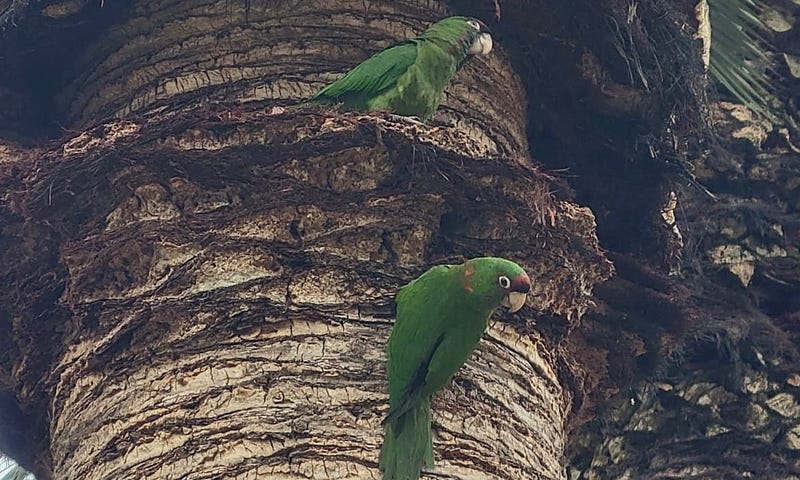
all photos by the author

Red-masked parakeets have a small native range in southern Ecuador and northern Peru. However, they’ve been distributed around the world as pets, resulting in feral populations in places like California, Hawaii, and Spain.

There’s a stable population here in Lima — descendants of former pets. This is one of the world’s driest major cities, but there are plenty of heavily-irrigated parks that provide habitat and food for both native and non-native birds.

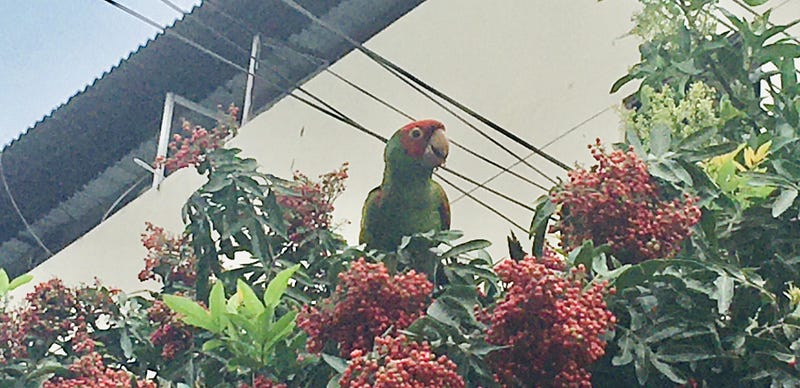
Occasionally, I see a flash of green flying overhead, or I spot this trademark “smile” in a tree:
The photos below are from a small park inside a traffic circle. There were a few palm trees, each one with a pair of parakeets. It was a cute little neighborhood setting, although they were squawking at each other as if somebody’s car was parked on somebody else’s lawn.
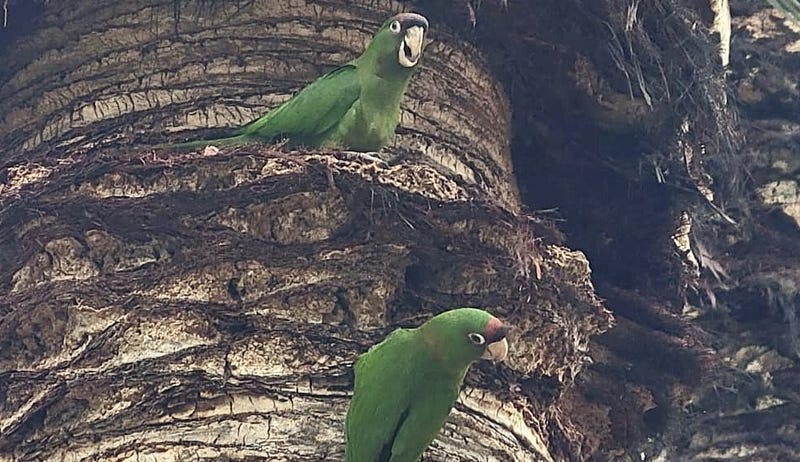
Above, you can barely see a nesting hole in the tree. These birds are “secondary cavity nesters”, which means they move into tree cavities that were formed by other animals, like woodpeckers or termites.

Here’s one poking its head into the hole:
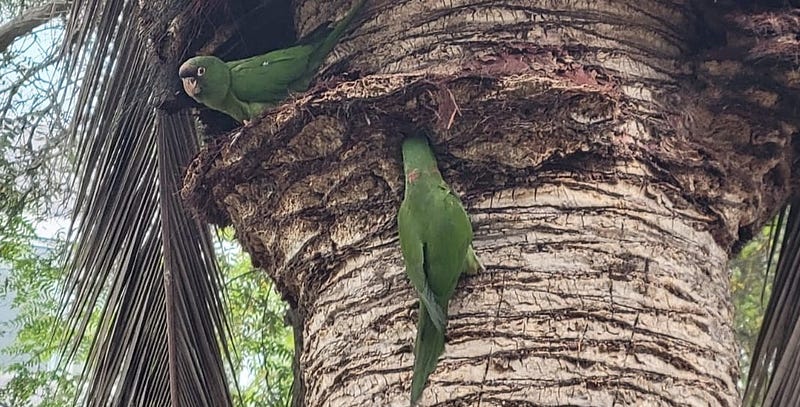
Red-masked parakeets have been targeted by the pet trade because they’re beautiful, intelligent, and capable of mimicking human speech. Unfortunately, this has impacted their wild populations.

In Lima, I’m happy for the wild parakeets that are descendants of birds that were stolen and caged. They probably find this place to be a strange home.

The city is surrounded by an incredibly barren desert. I often imagine the local birds venturing out to explore their surroundings, and then returning to Lima to make do with the urban jungle and its parks.

For a real treat, check out Christine D Richardson’s beautiful encounter with a family of barred owls:

Birds
Birding
Parakeet
Peru
Travel
Recommended from ReadMedium