The Parrot Trade in Peru: A Local Perspective
Growing up in Lima, Peru, I was used to seeing colorful parrots and parakeets at most of my friends’ homes and in local stores around the city. I was always fascinated by the macaws, especially the ones that were able to mimic my phrases. During the summer months, my mom would take me on her bike to the local plaza of Ancon, in northern Lima, to visit a macaw that lived on the second floor of an apartment building. I would scream “hola” and “guacamayo” to the macaw, and he would answer back. We did this every summer morning for several years.
It wasn’t until I visited the Amazon rainforest for the first time that I questioned the practice of keeping exotic birds as pets. Seeing thousands of scarlet, red and green, and blue and yellow macaws flying above the Amazon’s vast canopy, I started to question the idea of keeping these animals as pets. In the Amazon their colors look more vibrant and their calls sound louder. The scarlet macaws fly in pairs that remain together until death. They are not forced to live inside cages too small for them to fly, but instead look free and beautiful.
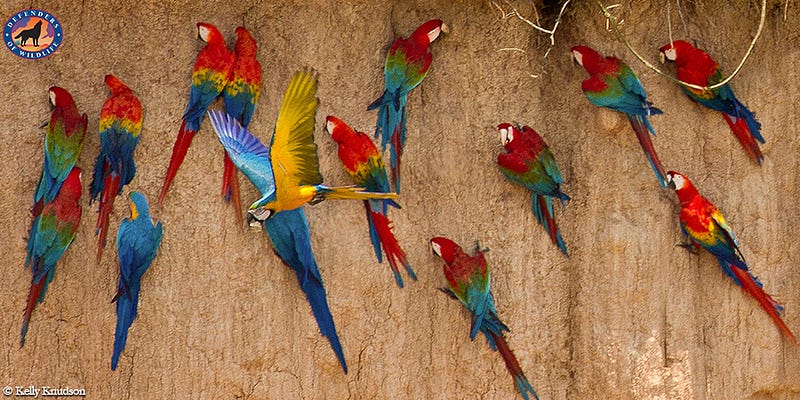
Peru has one of the highest diversity of bird species in the world, with 1,852 recorded species — 105 of which are endemic to Peru. Furthermore, Peru forms part of the ten “megadiverse” countries, classifying it as one of the most biodiverse countries in the world. While these numbers sound impressive, Peru’s wildlife diversity, especially bird populations, face constant threats from illegal wildlife trade. Between 80,000 to 90,000 parrots of 34 recorded species are poached on an annual basis in Peru. These numbers vastly surpass sustainable levels and are putting Peru’s avian biodiversity in jeopardy.
Parrots have been poached historically in large numbers in the tropics for pet ownership, and today about a third of all the parrot species in the world are threatened. Between 2005 and 2014 the total financial value of exports in parrots from Amazonian countries was estimated to be 5.2 million dollars per year. In this same time frame, 12,000 live parrots were exported from Amazon countries every year, nearly all of which were from Peru, Suriname, and Guyana. Over the last decade, Mexico, Russia, and Thailand have been the largest parrot importers. However, this is due to a recent ban on live parrot importation by the European Union. Before that, about 61% of parrot exportations from Amazonian countries were directed to Europe.
Peru’s parrot trade is multifaceted and unique because of the intersection between legal and illegal wildlife trade. Legal trade in wildlife species is regulated through CITES (Convention in International Trade in Endangered Species of Flora and Fauna). The legal export of wild-caught birds from Peru is conducted by a few exporters who obtain the necessary permits for harvest, transport, and export, all of which passes through Lima. Parrots taken through legal trade are mostly exported to other countries. On the other hand, illegal trade is characterized by poaching and trade in live animals without the necessary permits. This illegal take has been banned in Peru since 1973 but is still a common practice. While some of Peru’s live parrots are illegally exported to consumers around the world, the vast majority of species illegally captured remain in Peru and therefore are not commercialized at the international level. The parrot trade in Peru does not appear to possess the markers of organized crime, but rather involves common and affordable bird species as well as common people.
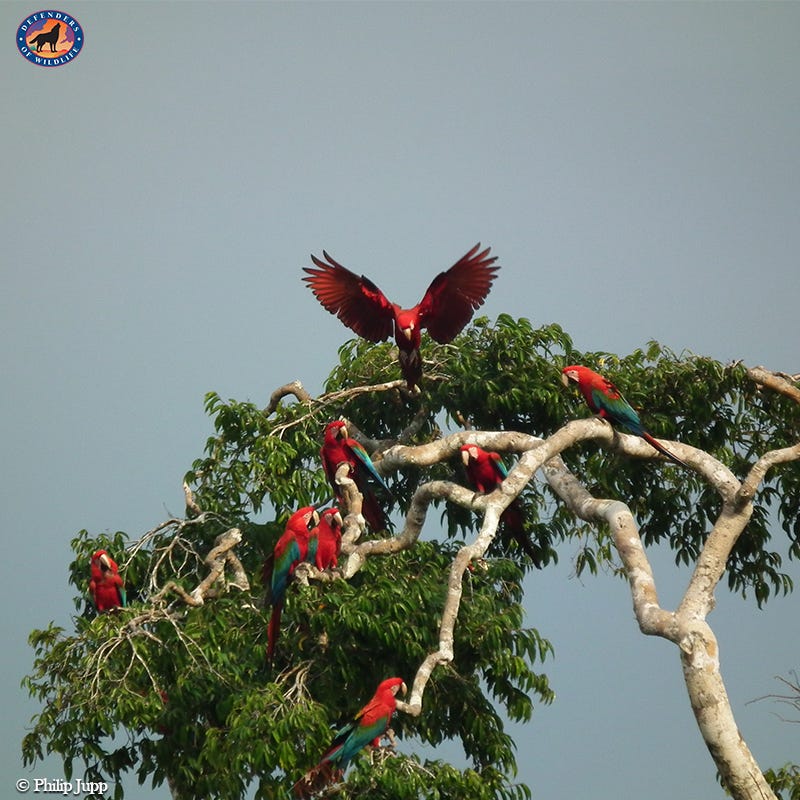
Most of the live bird trade in Peru originates from the Amazon rainforest. Iquitos, Pucallpa, and Puerto Maldonado tend to be the initial points for the domestic trade, where most of the species are caught from the wild. This often involves cutting down nesting trees for species like macaws or cutting open the nest cavities to remove all the chicks. These methods tend to be very destructive — mortality rates for Amazon species vary from eight percent to 48 percent in macaws. Once captured, species are transported to local Amazonian cities. Birds are usually transported in boats, enclosed in wooden boxes in groups of 50 to 150, and are soaked in water when approaching governmental controls so that they will remain quiet. Once in the city, birds are stored in warehouses where large numbers of commonly traded species await shipment, primarily through Lima, to other coastal cities for sale in illegal domestic markets.
Recent studies by Servicio Nacional Forestal y de Fauna Silvestre (SERFOR) indicate that in Lima there are around 18–20 markets dedicated to illegal wildlife trade. Moreover, SERFOR specifies that between the years of 2000 and 2016, birds were the animals with the most seizures every year in Peru, the most common being the Saffron Finch. Although laws are in place to regulate wildlife trade, lack of enforcement and education among citizens provide a viable platform for the increasing commercialization of birds and other wild animals. For example, while some of the species can be sold legally, much of the trade is illegal because the sheer number of individuals greatly exceeds the number that can be legally sold. Similarly, quota enforcement is barely present, because the agency responsible for determining the quotas is understaffed and underpaid. Therefore, Peru has no real basis on which to establish the number of parrots that can be safely removed.
As a result, Peru’s legal quota system may actually be incentivizing the commercialization of bird species classified within the legal quota. Recent studies on Peru’s domestic bird trade show that birds that have export quotas tend to make up a higher proportion of birds in the markets and a lower proportion in seizures because they are considered “more legal” by authorities. This applies to birds such as the scarlet-fronted parakeet, Pacific parrolet, and cobalt-winged parakeet, just three of the seven species that can be legally traded in Peru. Prices vary among the distribution standpoints within the illegal trade routes. They generally range from $15 to $227. In Peru the Festive Amazon and Blue and Yellow Macaw are the most important species in terms of gross profit for local people and from a conservation standpoint. Macaws are usually sold for at least $227. Other species with a high demand from the pet industry include the Dusky-headed parakeet ($69) mitred parakeet ($43), white-winged parakeet ($17), and saffron finch ($15). Cheap prices and a wide range in species make it easy for people to afford wild birds as pets. Furthermore, as Peru’s economy continues to grow, it may drive trade in rarer species as status symbols.
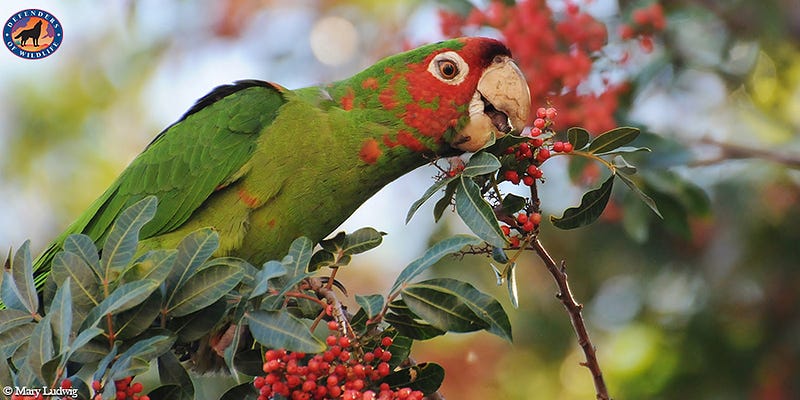
Having birds as pets is by no means a new trend within Peruvian society. This has been going on for generations and is common practice among people from all classes and regions of the country. Whether in Peru’s coastal deserts or Andean cities, it is common to see wild birds showcased in stores, restaurants, and homes.
As a result, the key to solving this issue is to bring light to the subject of Peruvian identity. Upon meeting a Peruvian, it is likely that the one of the first things they will mention about their country is that Peruvian food is the best food in the world. However, elevating Peruvian food to this level of international recognition was by no means an easy process. Several ambassadors of Peruvian culture, such as Gaston Acurio, a world-renowned chef, worked hard to conserve our natural ingredients, protect farmers’ rights, and unify the country through the concept of food. Today, gastronomy is fixed among our Peruvian identity and it makes us very proud.
Wildlife conservation efforts in Peru need to take a similar approach to that of gastronomy. We need to discourage the public from keeping wild birds and all types of wildlife as pets. Eradicating this common practice will eventually limit the demand for illegal wildlife trade. Government officials, as well as Peruvian conservationists, have a responsibility to educate and inform our citizens about our country’s rich biodiversity. We need to reach a point where Peruvians denounce all type of wildlife poaching as an act against our Peruvian identity. If we want to continue to view ourselves as one of the most biodiverse countries in the world, it is our responsibility to protect the resources that give us this title. Furthermore, we need to pressure government officials to continue the fight against wildlife trade by allocating more resources to conservation efforts that ultimately dismantle local trade within our cities. However, while this is effective in the short term, education and community involvement is the key to solving this issue. Last year, the Peruvian government approved the national strategy to reduce wildlife trafficking by implementing a ten-year plan to disseminate information to educate and raise awareness. Initiatives like this are essential to change the common practice of keeping birds. Similarly, Defenders of Wildlife is working on raising awareness and educating the public about the effects of illegal wildlife trade in South America. We need to publicly criticize the practice of keeping birds as pets because there is no better place for macaws and other wild bird species than their natural habitat.