
Recognizing My Trauma Helped Me See the Signs of Abuse
Thirty years later, I could come through for a little girl just like me

My eight-year-old is the kind of kid every adult loves.
She’ll have a conversation with you about anything, share her ruminations on life, and show you the latest contortion poses she learned from YouTube. She’s got a smile that lights up any room and, though many things are tough for her, she works harder than anyone else I’ve ever met.
Relationships with other children, however, don’t come very easily. She’s not very adept at reading social situations and, while she craves closeness with her peers and is desperate to be liked, it has proven very difficult for her to form lasting friendships. Her empathy and need for peer approval make her an easy target for abuse and bullying. Much like me, when I was a kid.

She’s been used as a pawn between other girls, made to believe she’s responsible for fixing their friendship troubles, fed conflicting stories from both directions and unable to decipher the truth.
She’s been involved in toxic friendships, where her so-called friends demand things of her that make her uncomfortable — from giving them her toys to showing them her underwear — and are unpredictable in their affections to her. Lizzy was one such friend, and over time (and through many tears) my daughter came to realize that, as much as she had compassion for Lizzy, the girl did not mean her well or wish to be a genuine friend. The two are in the same grade at the same school, though, and their paths still cross from time to time.
This year, my daughter began talking about her new friend, Nina. I knew Nina’s mother from a parent-school committee, and the girls seemed to be building a genuine friendship. The two of them really seemed to have fun together, and I was happy for my girl. They had a play date one weekend and planned a sleepover for school vacation week.
Red flags come at unexpected times
A few days before the sleepover, my daughter came to me as I was making dinner.
“Mom, I’m worried about the sleepover with Nina,” she said as I cut up hard-boiled eggs at the kitchen counter. My daughter worries a lot, and her affect is the same when she’s worried about what she’ll eat for dessert tonight as when she’s worried about an axe murderer coming to kill the whole family, so I didn’t quite know what to expect when I asked her why she was concerned.
…people knew something fishy was going on, but no one spoke up about it.
Immediately, she started hedging. “Lizzie told me this thing about Nina, and I know it’s not true. I know it’s not true because I know Nina would never do anything like this, but I’m still worried, because I’m afraid — what if it is true? But it’s not true, I know Nina and she would never — ”
“Sweetie, you can’t know whether or not something is true unless you were there to see it,” I said. “But we know about Lizzie and how she deals with friendship, so you might be right that she’s not telling the truth. What did she say?”
“It’s a little uncomfortable to say,” she said. Abruptly, she turned and started walking away. “It’s not true anyway,” she said. “I just won’t say it.”
“Well, I’d really like if you could tell me anyway, though,” I insisted. “Just so I can know what’s going on.”
She circled back around and nodded, taking a deep breath and looking up at me with those big hazel eyes that will soon be above even mine.
“Well,” she began, “Lizzie told me that when she had a sleepover with Nina, she woke up in the night and Nina was kissing her privates.”
Miraculously, I didn’t slice my finger off with the sharp knife. Instead, I put it down and said to my daughter, who until that conversation had probably never considered that one person might kiss another’s privates, “I’m really glad you told me about that. I can see why you’d think it wasn’t the truth, too.” I added some evidence that Lizzie was probably lying: “If Nina was kissing Lizzie’s privates, Lizzie would have had to be sleeping without any pants on, huh? Do you think it makes sense that she would be doing that during a sleepover?”
My daughter furrowed her eyebrows for a moment and then grinned in understanding. “That doesn't make sense,” she said. I could see the relief in her eyes.
It’s so much easier to believe the innocent explanation and move on
For a short moment, I was relieved, too. Well, I’m glad that was busted quickly, I thought. My judgment told me that, in the most likely scenario, my daughter was right. Lizzie made up the story and Nina hadn’t really kissed her privates.
I knew what I needed to do. I felt confident I was making the right choice in doing it. But it made me sick to my stomach to think about reporting this concern of mine.
It would have been simple to drop the story right then and there, to move on with my evening and my life without a second thought to Nina, or to Lizzie, or to the silly stories kids tell.
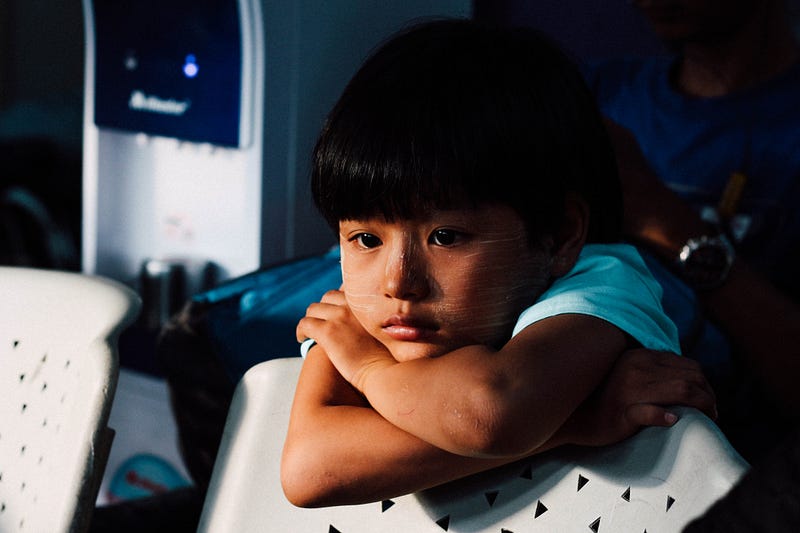
Except that just days earlier, I had published a column in which I laid out my experience with childhood sexual trauma. I was the same age as these girls when the abuse happened, and I recognized shards of myself in all of them — especially Lizzie.
In the column, I’d reflected on what I consider to be the biggest tragedy of all: that, for years of my childhood, people knew something fishy was going on, and no one spoke up about it. My cries for help were met with a patchwork of band-aids from different corners of my life, one-time halfhearted check-ins that I could easily bluff my way through. Before long, all was forgotten and I was left once more to my own devices with no skills to recognize what was happening in my life and also no control over it.
“In itself, the fact that I thought it was cool to have sex before I was even a teenager should have sent up some red flags,” I remembered writing, and I thought, what basis could a third-grader have to be thinking about people kissing each other’s privates?
Perhaps she walked in on someone in an intimate moment. Maybe she overheard a conversation or accidentally came across some adult content on television or the internet. It could be that she and her family have already discussed the logistics and mechanics of sex.
All of these are plausible explanations. I desperately hope one of them is true. But my consideration of the situation couldn’t stop there.
Because another possibility is that Lizzie had been subject to sexual abuse. And ignoring that possibility would be failing this little girl in the very same way I was failed so many times.
Reporting suspected child abuse isn’t easy
A small voice in my head asked, “But what if it’s nothing? What if you’re blowing it out of proportion?”
To which a louder voice responded, “But what if it’s true?”
I knew what I needed to do. I felt confident I was making the right choice in doing it. But it made me sick to my stomach to think about reporting this concern of mine.
I also didn’t know exactly to whom I should report it.
I knew Lizzie’s mother. She had expressed interest in having a friendship with me, though the idea made me uneasy. During our very first conversation she shared far too much personal information with me, leading me to wonder about her ability to establish boundaries, and talking to her brought back uncomfortable memories of my own troubled past. I didn’t want to call and tell her the secondhand story my daughter had told me, particularly given the fact that I’ve seen Lizzie lie directly to her mother, convincing her “someone got into my head” and forced her to say awful things to my daughter.

I could call Nina’s mother and alert her to the conversation, but that felt like telling tales out of school — especially if Nina hadn’t yet heard the story. It had the potential to create a lot of adult drama, and I wasn’t ready to go that route until I had more information.
I could file an anonymous report with the state agency in charge of investigating child welfare. Without knowing Lizzie’s last name or address, though, I didn’t know what would come of it.
In the end, I decided to call the school counselor, who knows all the girls involved and who has far more context than anyone else about not only the girls’ individual stories but also the dynamics at play in the friendships between them. She is also a mandated reporter, so if she determined there was a present situation going on that needed attention from the state, she could file the anonymous report on my behalf.
I felt legitimate relief after that conversation. I had taken my own advice and spoken up for a child who I suspected might be going through something no child should ever have to endure.
I did what I’ve wished so many times someone had done for me.
Followup is key
Now that I had advocated on Lizzie’s behalf I could have dusted off my hands, patted myself on the back, and moved on. And boy, did I want to. I was eight months pregnant, physically exhausted, and emotionally drained not only from reliving my own trauma but also from lying awake all night, worrying about Lizzie’s situation.
But in all this time working through my own trauma, I had realized I couldn't put my own comfort over my daughter’s need for processing and closure.
When she got home from school that day, I asked if we could talk. “Sure…” she said with more than a little suspicion in her eyes.
We snuggled up in my bed, a sanctified space where we both feel safe and protected.
“I want you to know how proud and happy I am that you felt comfortable telling me about the situation between Lizzie and Nina,” I said.
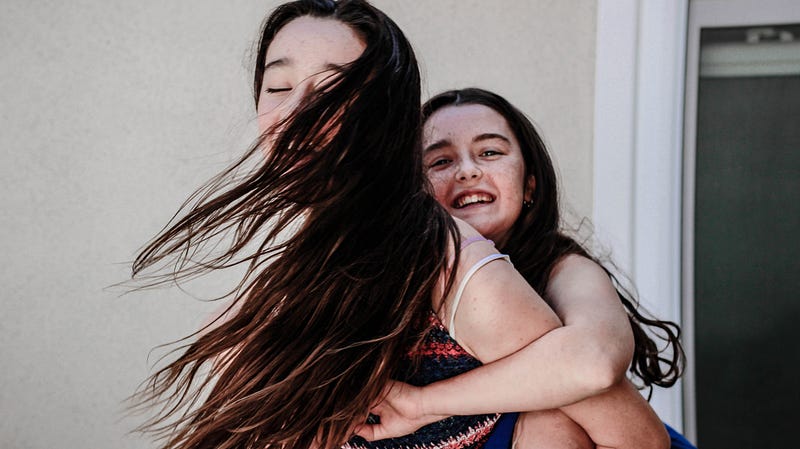
She smiled wide and hugged me tight.
“How did you feel when Lizzie started talking about that stuff?” I asked.
“I felt really scared and uncomfortable!” she said.
I’d thought maybe I would explain sexual abuse to her, but in the moment it seemed like too much information for the situation at hand. Instead, I said, “I want to tell you one more time how glad I am that you came to me when you felt uncomfortable. Any time you’re feeling that way, it’s a signal you need to get an adult involved. Because there may be things going on that you don’t understand that an adult might be concerned about.”
We went on to talk about strategies she could use if she got uncomfortable during the sleepover, or any other time, and in the end she was happy and settled.
“Thank you, Mama,” she said when we were finished with our conversation. “I trust you even more now.” She gave me one last hug on her way out the door, and finally, I felt settled as well.
I felt like crying. Crying for Lizzie, crying for the little girl I used to be, crying for the opportunity to do better for my children than my caregivers did for me.
Decision points
As a parent, we experience dozens of decision points every day.
Should the kids have cookies for snack or fruit? Should they be allowed to have device time before homework? Should we stay home or go to the trampoline park? Should I wash the stainless steel water bottle or just send them to school with a plastic bottle? Is this just kids telling stories, or is it a sign of something deeper?
Some decisions are more consequential than others. Even the minor ones, though, can pile up over time and form a schema for the way we cope with decisions, a model our kids follow as they learn to move through the world.
When we decide to make space for discussion and connection even when we’d rather plaster a smile on our face and move on, we show our children even their smallest worries matter.
And that’s how they learn where they can turn when the worries get big.
Invisible illnesses are so difficult to manage, in part because it’s hard for others to understand what they can’t see. It can be even more difficult to understand the debilitating effects of trauma on the developing brain, because “trauma” is not a diagnosis. Yet it still manifests itself for a lifetime, a double-invisible influence, informing the beliefs we hold about ourselves and the world and guiding our behavior, especially in times of struggle. For, me everything started with childhood trauma.
Join me here every second and fourth Monday, where I explore the invisible influence of past trauma on current beliefs and behavior. Find all my past columns and subscribe for updates here.


