
Ray Charles’ ‘Hallelujah I Love Her So’ by way of guitar hotshot Jerry Reed
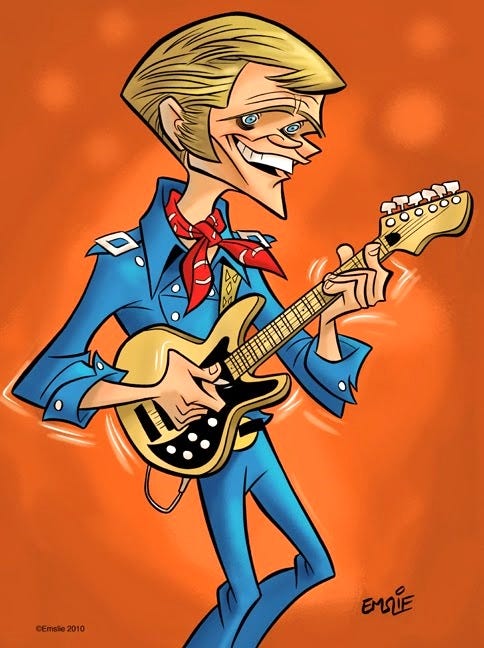
“When I’m in trouble and I need a friend, I know she’ll stick with me until the end, everybody asks me, how you know, I smile at them and say she told me so.” Seven years into his recording career on Atlantic Records, blind African American pianist Ray Charles composed “Hallelujah I Love Her So,” which soared to No. 5 R&B in May 1956. AllMusic’s Stewart Mason convincingly asserted that the gospel-inflected standard was accented by “one of Charles’ most infectious melodies, a jazzy, almost big band-style large horn section…and Charles sings the lyrics with an almost giddy edge.”
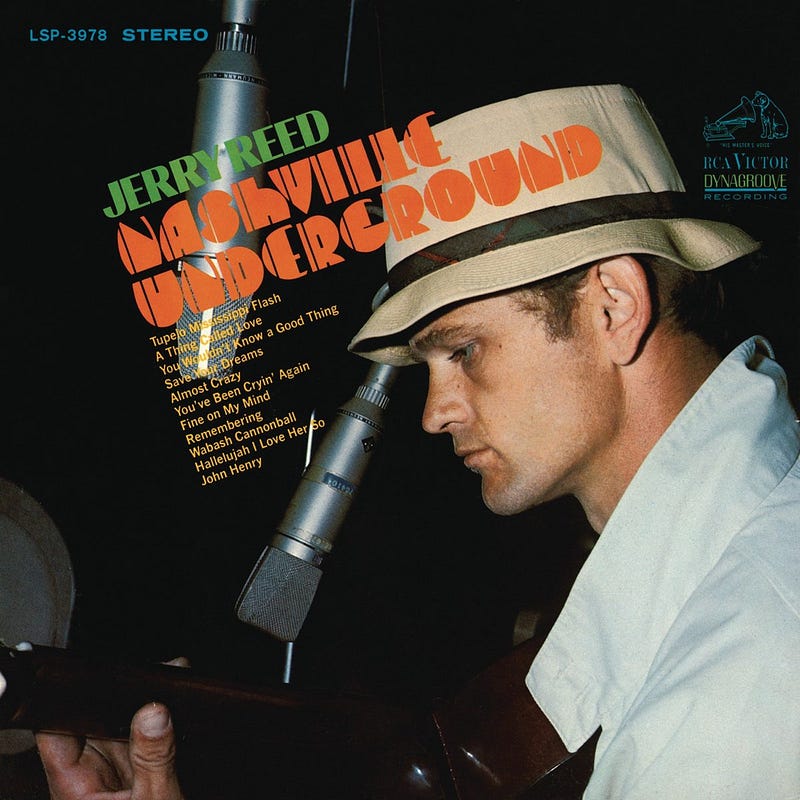
Leap forward to Elvis Presley’s 33rd birthday on Jan. 8, 1968. Jerry Reed was hunkered down with a trio inside Nashville’s hallowed RCA Studio B, tracking “Hallelujah I Love Her So,” the last song slated for second album Nashville Underground. Ten country pop tunes had been in the can since the previous fall, including two destined for Top 15 C&W status authored by Reed — the tongue in cheek Elvis homage “Tupelo Mississippi Flash” and the crooning ballad “Remembering.”
Reed’s producer Chet Atkins, about to ascend to Vice President of RCA Victor’s country division and a best-selling six string instrumentalist in his own right, corralled the last-minute session when he deemed that an additional song was needed. Reed was probably fishing on the Cumberland River. Atkins believed wholeheartedly in his protégé’s talent when not many others did, signing Reed to RCA at the start of 1965 after a decade of A-sides tanked on high profile labels Capitol and Columbia. Doing sessions for other artists and songwriting proved to be a vital oasis for Reed, as Brenda Lee and Porter Wagoner burnished his income with “That’s All You Gotta Do” and “Misery Loves Company,” respectively.
Why did Reed feel such an affinity for “Hallelujah?” “I’m Southern, so I’m funky,” the 68-year-old Smokey and the Bandit semi truck driver recollected in an interview with CMT’s Calvin Gilbert three and a half years before his death from emphysema complications during Labor Day 2008. “I grew up in the Deep South, and I loved R&B, rock ’n’ roll, country, and gospel. In Atlanta, when you played dances, you had to play it all. It just evolved into the way I played my guitar. [Future “Streak” novelty kingpin] Ray Stevens and I would work sock hops and bar mitzvahs. Every show Ray would do ‘Hallelujah.’ I loved the piano intro. It had the counterpoint — the bass line going up and the melody on top. I said, ‘Man, I want to do that.’” In an exchange with Jim Ed “Pop a Top” Brown before a televised 1969 duet of “Hallelujah,” Reed quasi-joked about the “clever little thing” that he “stole” from Charles’ left-handed prologue and transposed to guitar.
Three solid Nashville A-Team session cats backed Reed on his stripped back, supremely confident three-minute rendition. Wayne Moss of Dylan’s Blonde on Blonde sessions manned rhythm guitar, Roy “Junior” Huskey of the Byrds’ innovative country rock Sweetheart of the Rodeo contributed bass, and Elvis Country linchpin Jerry Carrigan supplied drums. All had played on Reed’s debut the year prior, The Unbelievable Guitar & Voice of Jerry Reed. Huskey and Moss continued their Reed association through 1969’s Explores Guitar Country. Carrigan’s sojourn lasted slightly longer, culminating with the Grammy-winning Me and Jerry instrumental collaboration with Atkins in 1970.
Five days before “Hallelujah” was waxed, Elvis and cunning manager Colonel Tom Parker authorized “Guitar Man” be sent to deejays. Reed wrote the churning country rocker for Unbelievable Guitar and was invited by Elvis to play lead acoustic guitar on his cover that shockingly missed the Top 40. Reed led a follow-up Elvis session between Jan. 15 and 17 at Studio B alongside fellow esteemed axemen Scotty Moore and Chip Young. Elvis sank his teeth into another Unbelievable Guitar pearl, the talking blues “U.S. Male,” which earned Reed his second consecutive Elvis A-side and an improved Billboard placement — No. 28 POP.
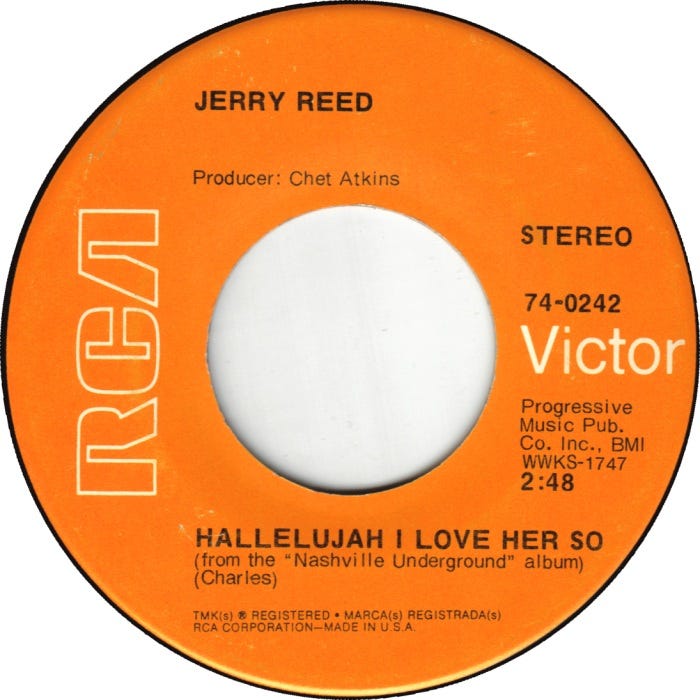
Nashville Underground was distributed in March 1968 and achieved minor Top 40 C&W bragging rights at No. 31. Over a year after its original release “Hallelujah” was belatedly attached as the B-side of Reed’s gentle gospel ode “A Thing Called Love” to earn the songwriter extra royalties. Neither side dented the charts. Both Johnny Cash and Elvis ultimately sensed the staying power of “A Thing Called Love.” The Man in Black’s string-laden version just missed the C&W top spot and became his biggest hit in Europe since “A Boy Named Sue.” Reed finally achieved stardom in 1971 courtesy of the dual crossover smashes “Amos Moses” and “When You’re Hot, You’re Hot.”
Reed was by no means finished with the Genius of Soul’s oeuvre. “Georgia on My Mind” opens Explores Guitar Country. iTunes’ album review insists that whatever song Reed was interpreting, “he always sounds completely casual and spontaneous, even as he’s unreeling an endless supply of jaw-dropping solos and inventive arrangements.” “All I Ever Need Is You,” recorded first by Charles on 1971’s Volcanic Action of My Soul but better known as Sonny & Cher’s penultimate hit, found a home on Reed’s second long player with Atkins, the instrumental Me and Chet [1972].
Much of Reed’s catalog remained unavailable in the CD and primitive streaming eras except in poor fidelity fan uploads. Real Gone Music came to the rescue with a CD coupling Unbelievable Guitar and Nashville Underground in 2012 that inexplicably went out of print. Four years later Beat Goes On Records compiled a double CD representing the 1967–1969 Reed discography — Unbelievable Guitar, Nashville Underground, Alabama Wild Man, and Better Things in Life. Spotify, iTunes, Amazon, Pandora, and YouTube are in on the action, too, so there’s absolutely no excuse not to revel in the faultless artistry of Reed’s “Hallelujah I Love Her So.”

© Jeremy Roberts, 2022. All rights reserved. To touch base, email [email protected] and mention which story led you my way. I appreciate it sincerely.


