
The Treachery of Ravens
Out of thin air of a nightmare
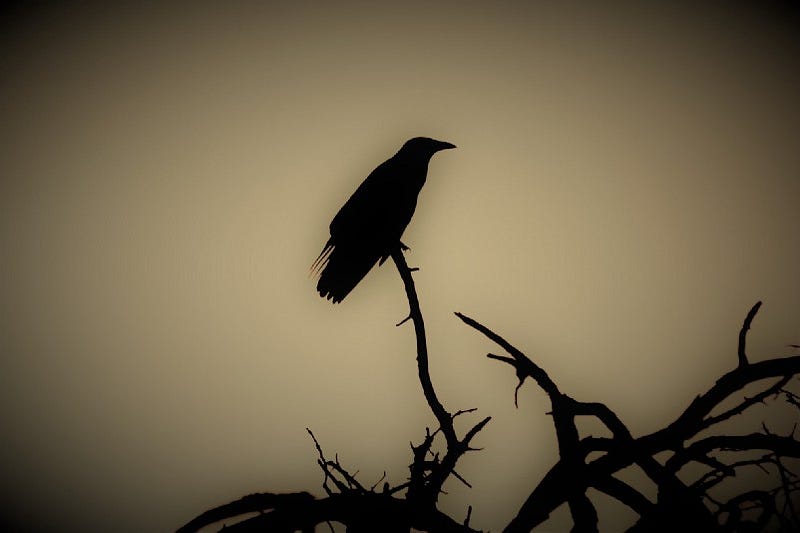
Out of thin air — of a nightmare — the treachery of ravens appeared — dark necromancers, descending from my clouded sky of sleep. Wings beating, relentless on the inside of my pillow. No escape — from the foreboding of their flapping — manifesting no wind — but a vacuum — sucking oxygen from the room— their caws, the echo — of memories hid long ago. As I flee —stumbling — so they follow— up floor upon floor of unsteady stairs — to the attic in my head. Claws catching at denial’s moth-gnawed edges. Shredding those shrouds over abandoned heirlooms — unwanted legacies — how they rise—and the ravens — to taunt me — turn to confront them — but they fade into the shadow.
Into thin air — force my lungs to inhale — for I’ve clambered so high in this tree that never was — in my childhood backyard — a dark dream’s slippery logic. Climbing to — make the memories — below — so small — to be rendered insubstantial. Look down at the little dollhouse — hiding quaint domestic horrors. Everyday nightmares. Little brother under the bed, curled into himself. His sister, shrinking, to crawl into a book — both trying to escape— get away from — caustic cries of unconscious caregivers. Hackling beaks. Crooked feathers. So I climb — but something worse is — ink-blotting the sky — descending — a black-winged cyclone. And I know this is a nighmare there were no ravens in that childhood sky — and I will myself to wake up — pull myself — out of the shadow.
Into the shadow — night has turned out the light. Draped once-familiar objects in shades and shapes of raven’s wings — those jagged, oblique edges could cut flesh like a knife. My blood on the floor — for those carnivorous corvids — would they swarm like sharks — once they got the smell of blood in their beaks. Ungainly black bodies — gather over me — preternatural mourners for my unplanned funeral. Scraping the soil of night over me with their claws. Rest in regret. Another nightmare — get up, get out of this chair. Even when I’m not followed by their ceaseless stare, their cries haunt me — erupting — out of thin air.
Out of the shadow of their wings, I can no longer keep — that inky void from where the nightmares seep. Unheard pleas for release, like Poe at his door. I hear only nevermore in the prophecy of their caws. I’m running to escape them in the bleak light of day. Running and running, but they’re no further away. Look above me — they’re swooping — in a dark-winged conspiracy. Blinding beaks, claws and wings — engulf me — as I whirl in despair. Then they rise — and I’ve vanished — into thin air.
© Melissa Coffey November 2021
Note: Collective nouns for ravens include treachery and conspiracy.
The Treachery of Ravens is in response to JD Harms and his brilliant prompt: “Into a Line”. I also combined it with the November month-long call for Corvid poetry. Although I used the line (out of thin air / into the shadow) as instructed in the first “stanza”, I improvised further on those phrases, noticing they also suggested promising imagery when you swapped a)the prepositions and the subjects and b) their order. I found a pattern that gave effective repetition and symmetry in contrast to my eerily askew nightmare scenes.
Ravens as symbols of the uncanny and subconscious fears were my driving themes. It was also Halloween when I began this draft — and as an insane number of ravens have actually recently flocked into my suburb — there was plenty of real life corvid figures to inspire.
I would like to acknowledge Jeff Langley for inspiring me with his brilliant “crow poem” (read it here) and I hope he’ll forgive me for using the same (eerie) photo.
More Dark Prosetry:


