
Rate Limit Concurrency Pattern with Unit Tests — (1) Overview Four Algorithms
In this article, I will explain the Rate Limit design pattern’s concept, objectives, pros, cons, and implementation steps, I also will introduce the four rate-limit algorithms and their exact scenarios.

Concept
The Rate Limit design pattern is a strategy used in software design to control the number of requests a user or service can make to a particular system or API within a given time frame. This pattern is crucial for maintaining the stability and reliability of a system by preventing overuse or abuse, such as denial-of-service attacks or resource hogging.
Objectives
The objectives of the rate-limit pattern are:
1. Security
Reducing the risk of attacks like DDoS by limiting the request rate.
2. Prevent Overload
Protect the system from being overwhelmed by too many requests.
3. Improve Service Quality
Distribute system resources fairly among users, and maintain a high level of service for all users.
Pros and Cons
The advantages of using the rate-limit pattern are:
1. Enhanced Stability
Reduces server response time by avoiding overloading.
2. Fair Resource Allocation
Ensures no single user monopolizes the system resources.
3. Increased Security
Helps mitigate certain types of cyber-attacks, reduces latency and increases reliability.
The disadvantages of using the rate-limit pattern are:
1. Potential for Blocking Legitimate Requests
If not configured correctly, it might block legitimate users.
2. Complexity
Can be complex to implement, especially in distributed systems.
3. Resource Overhead
Requires additional resources for tracking and enforcing limits.
Rate-limit Four Algorithms
There are four algorithms for rate-limit. They are Fixed Window Algorithm, Slide Window Algorithm, Token Bucket Algorithm and Leaky Bucket Algorithm. I will explain them one by one, and describe the exact scenarios for everyone.
1. Fixed Window
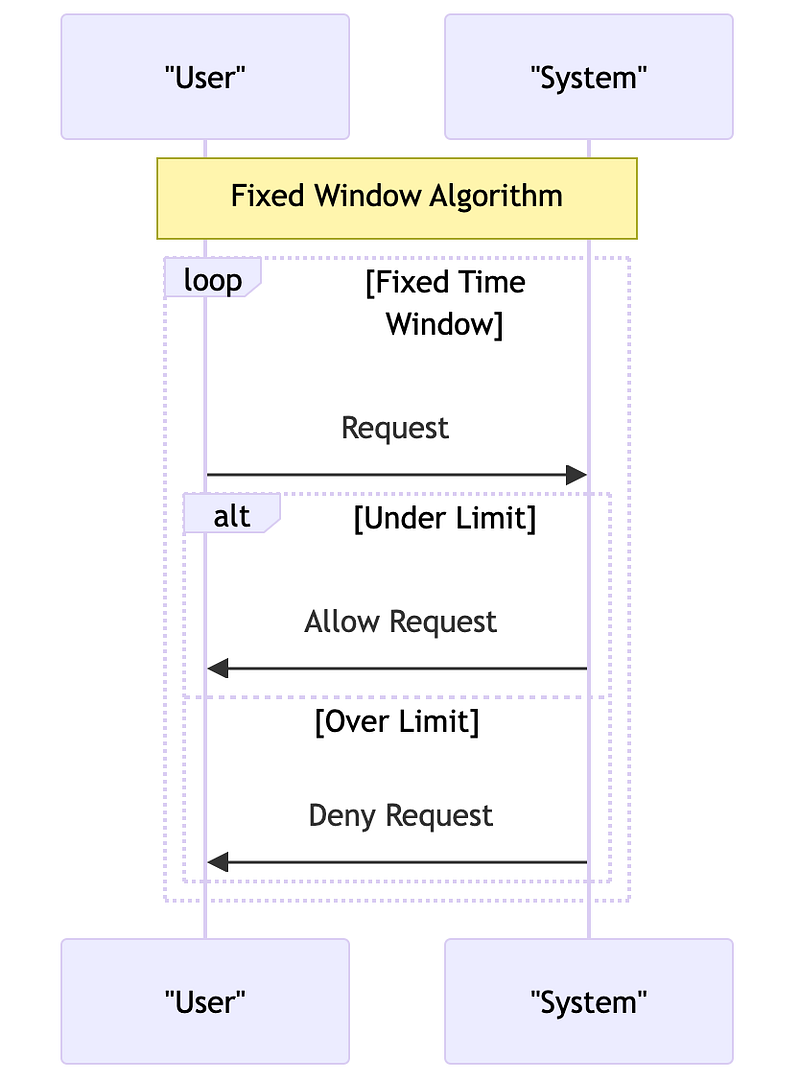
This algorithm tracks the number of requests within a fixed time window. If the number of requests exceeds the limit within the window, subsequent requests are rejected. This algorithm is simple and efficient but can be unfair to users with unpredictable request patterns.
Below is the fixed window algorithm diagram.
Scenario Examples For Fixed Window
1. Social media platforms can use the fixed window algorithm to limit the number of posts or comments a user can make per hour, preventing spam and promoting thoughtful interactions.
2. Online voting systems can use the fixed window algorithm to limit the number of votes per user per election, ensuring fair and secure elections.
3. Website Traffic Control. A news website implements a fixed window rate limit to control the number of page requests per user within an hour, preventing server overload during peak news events.
4. Rate limit brute force attacks. Servers use fixed window rate limiting to control the number of login attempts per user within a set time frame, preventing brute force attacks.
2. Slide Window
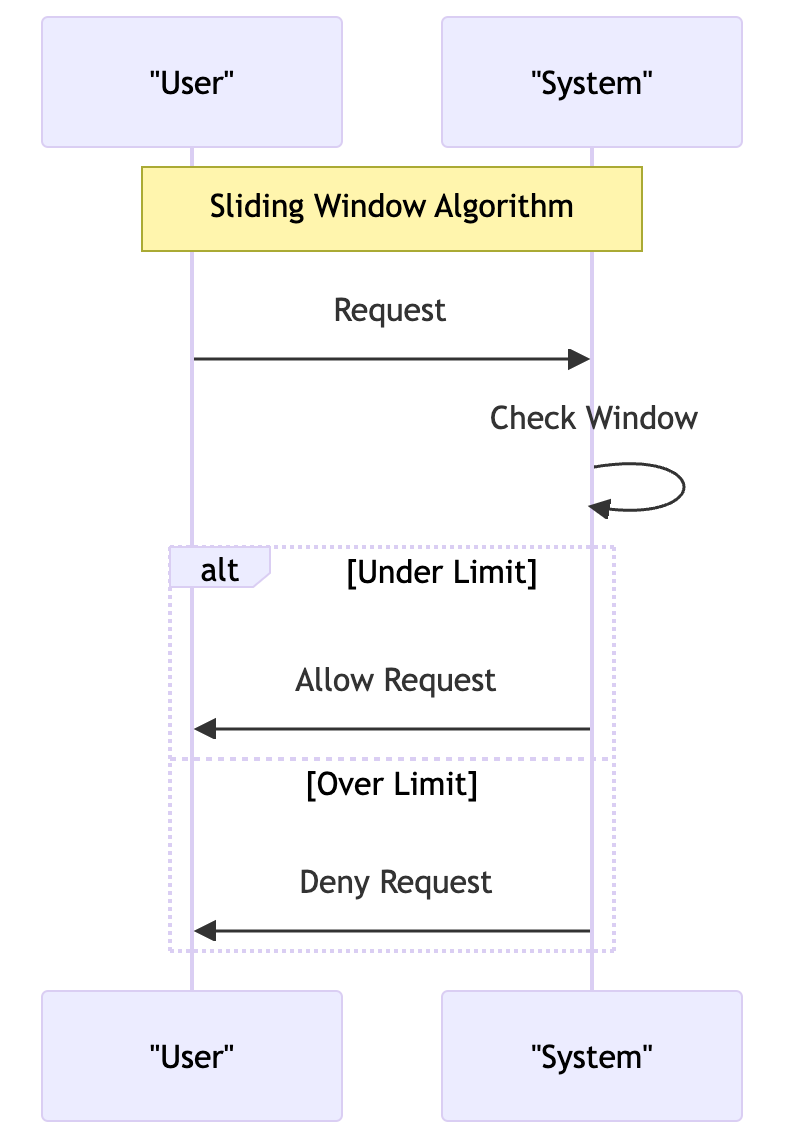
This algorithm maintains a window of time that slides forward continuously. Requests within the window are counted, and if the count exceeds the limit, subsequent requests are rejected. This algorithm balances fairness with responsiveness while being more complex to implement than the fixed window algorithm.
The following diagram is the slide window algorithm.
Scenario Examples For Slide Window
1. Stock trading platforms can use the sliding window algorithm to limit the number of trades a user can make within a rolling 1-minute window, preventing market manipulation and ensuring fair trading conditions.
2. High-frequency trading systems can use the sliding window algorithm to limit the number of orders per second, preventing over-reliance on high-frequency algorithms and promoting market stability.
3. Dynamic rate limiting. A service provider can use the sliding window algorithm to adjust the rate limit dynamically based on real-time traffic patterns, adapting to changing demands and ensuring optimal resource utilization.
3. Token Bucket
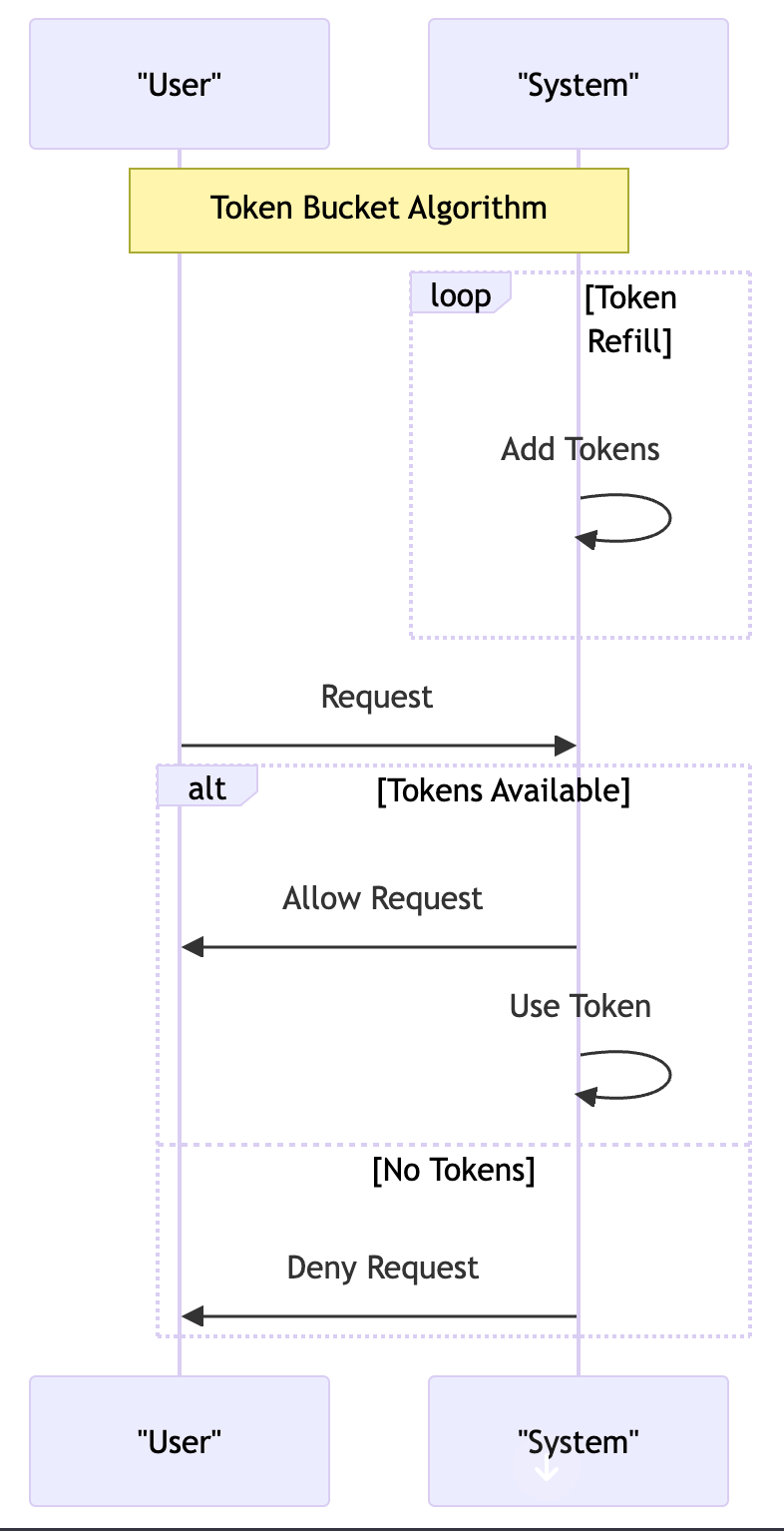
This algorithm uses a virtual bucket filled with tokens at a fixed rate. Each request consumes a token. If the bucket is empty, the request is rejected. This algorithm is simple to implement but can be bursty, meaning it allows bursts of requests exceeding the average rate.
Below is the token bucket algorithm diagram.
Scenario Examples For Token Bucket
1. API Access Control can use the token bucket algorithm to limit the number of requests per user per second, preventing abuse and ensuring smooth service for all users.
2. E-commerce checkout process. An online store can use the token bucket algorithm to limit the number of checkout attempts per user per minute, preventing fraudulent activities and denial-of-service attacks.
3. Traffic Management. A content delivery network (CDN) can use the token bucket algorithm to limit the bandwidth used by individual users, ensuring fair allocation of resources and preventing congestion.
4. Email Server Throttling. An email server uses the token bucket algorithm to control the rate of outgoing emails, allowing users to send a burst of emails but limiting the total number sent over a longer period to prevent spam.
4. Leaky Bucket
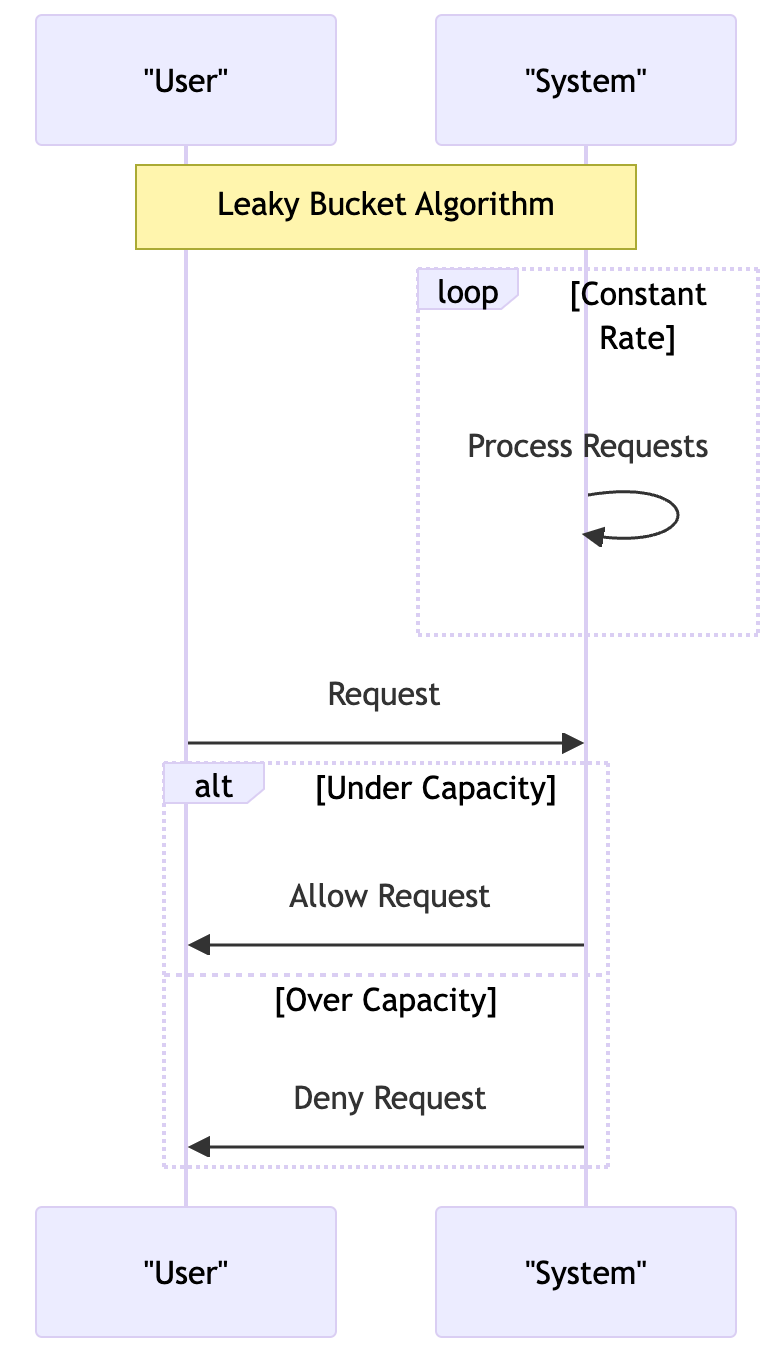
This algorithm has a bucket but with a small leak. Tokens are added at a fixed rate and removed at a constant rate regardless of requests. This algorithm prevents bursts but can be slow to respond to sudden increases in traffic.
The following diagram is the leaky bucket algorithm.
Scenario Examples For Leaky Bucket
1. Background job processing. A task queue can use the leaky bucket algorithm to limit the rate at which new jobs are added, preventing overloading the processing system and ensuring stable performance.
2. Real-time data streaming. A data streaming platform can use the leaky bucket algorithm to regulate the rate at which data is sent to consumers, preventing buffer overflows and ensuring smooth data delivery.
3. Resource consumption control. A cloud service provider can use the leaky bucket algorithm to limit the amount of resources (CPU, memory) used by individual users, ensuring fair resource allocation and preventing resource exhaustion.
4. Call Center Traffic Management. Call centers use the leaky bucket algorithm to manage incoming call traffic, queuing excess calls and handling them at a steady rate to maintain quality of service.
Conclusion
In summary, each of these scenarios demonstrates how different rate-limiting algorithms can be effectively applied in various industries and applications, depending on their specific requirements for managing traffic, resources, and user activity. I will implement code examples with some of the scenarios in the following articles.
Perhaps you’re also interested in the following articles.
Rate Limit Concurrency Pattern with Unit Tests — (1) Overview Four Algorithms
Rate Limit Concurrency Pattern with Unit Tests — (2) Fixed Window
Rate Limit Concurrency Pattern with Unit Tests — (3) Slide Window
Rate Limit Concurrency Pattern with Unit Tests — (4) Token Bucket
Go Back to Concurrency Design Patterns, please click here.
To View Design Patterns in Golang, please click here.
To view Creational Design Patterns in Golang, please click here.
To View Structural Design Patterns in Golang, please click here.
To View Behavioural Design Patterns in Golang, please click here.
To View Microservices Design Patterns in Golang, please click here.


