
Ratafia
I don’t know if this article will be short, but it will be very sweet
Today’s New York Times Spelling Bee letters:
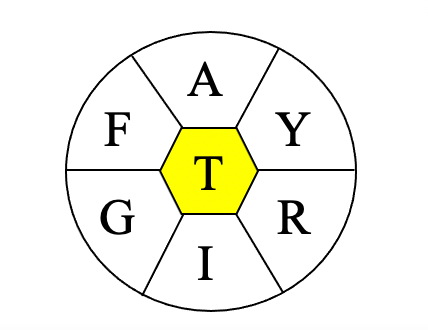
A, F, G, I, R, Y, and center T (all words must include T).
Merriam-Webster says…
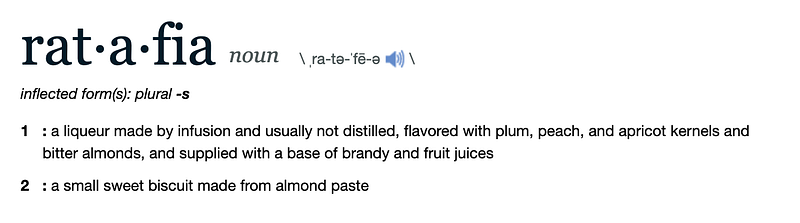
Silly little dictionary! Don’t you know that ratafia can’t possibly be a word if the New York Times says it ain’t?
For further fascinating facts, check out the Spelling Bee Master.
What’s your favorite dord* from today’s puzzle?
My Two Cents
The process of looking for a picture using Unsplash or Pixabay is interesting. Maybe I’m not that good at using keywords for searches. Or maybe it’s their algorithm.
On Unsplash I got zero hits for ratafia.

Pixabay displayed this:
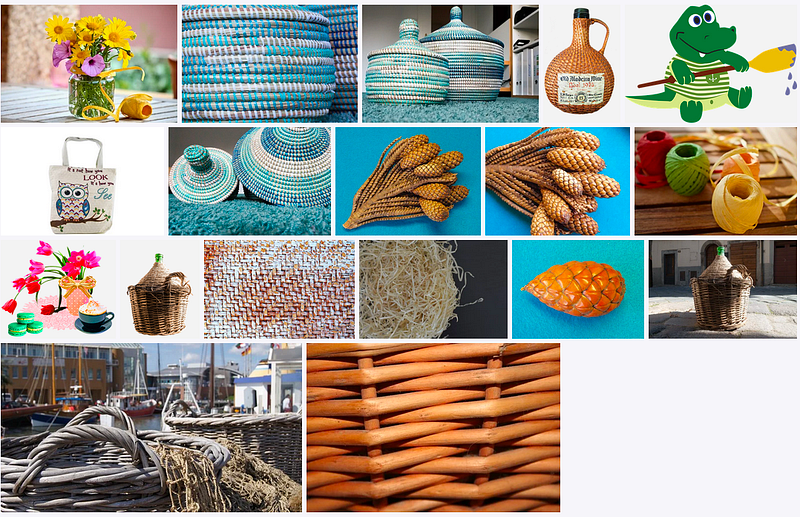
So, maybe their algorithm interprets ratafia as a cousin of rattan? By the way, that lone bottle is of Madeira wine, not a liqueur.
In case you’re wondering, screenshotted is a word. It’s a past tense that I invented for the verb screenshot. And it serves the utilitarian function of helping readers distinguish whether the word screenshot is being used as a noun or a verb. So, irregardless of what you might think, I’m going to keep using it. For clarity’s sake, of course.
Sugar and spice, and all things nice
Merriam-Webster is not very helpful when it comes to the history and etymology of the word ratafia.
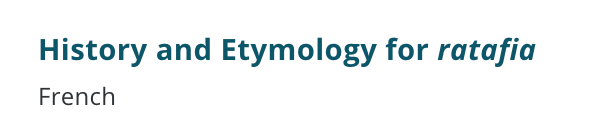
See? Told ya.
Lots of things are French, including kisses and fries. Unless you’re one of those who prefers to call sautéed potato slices Freedom Fries. And yes, french fries are strongly rumored to actually be Belgian. The country even petitioned UNESCO to endorse fries as a Belgian icon.
Lexico.com, powered by the all-powerful (and expensive to subscribe to) Oxford Dictionary, claims ratafia could be related to tafia, a rum-like drink.
Simon Difford explains that the term ratafia may come from rata fiat, a Latin expression used to ratify Catholic weddings and important treaties — regardless of whether they are Catholic or not.
There are actually two different types of sweet drinks with that name. So, that Madeira wine photo is not as far off the target as you might think.
The ratafia de Champagne is a mix of fortified wine and distilled spirit. This is known as a mistelle. In the case of France — and this time it is French, and not Belgian — they mix distilled marc (solid remains of grapes) and unfermented grape juice.
The more commonly known ratafia, on the other hand, is an alcoholic beverage made with macerated berries, walnuts, herbs, and spices. A classy Jägermeister, if you will. Here’s a photo of a bottle of ratafia taken by dear old Yeza:
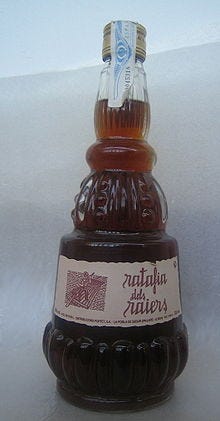
I have never met Yeza, but they are dear to me for taking that photo, and I assume they are old because they drink ratafia. But maybe Yeza is a tween who likes to publish photos on Wikipedia.
Ratafia can be flavored with almond, apricot, or peach kernels, and is usually favored in the Mediterranean regions of Italy, France, and Spain. The typical Catalan ratafia includes green walnuts, spices (cinnamon, cloves, star anise and nutmeg) and dried aromatic herbs such as sage, lemon verbena, thyme, mint, or basil.
A small macaroon flavoured with almonds
That’s how the Collins English Dictionary defines the ratafia biscuit. And because it’s Collins, I’ve kept the “u” in flavored. So please go back and read that title with a British accent.
Most likely, ratafia biscuits are called that because they used to be made with either ratafia or a ratafia-like liqueur. For example, Amaretto, which can be made with bitter almonds, apricot kernels, or even peach stones.
Here is a quick recipe, taken from Frederick Nutt’s The Complete Confectioner, called “№29. Ratafia Biscuits”:
“Take half a pound of sweet almonds, and half a pound of bitter almonds, and pound them in a mortar very fine, with whites of eggs ; put three pounds of powdered sugar, mix it well with the whites of eggs, to the proper thickness into a bason ; put two or three sheets of paper on the plate you bake on ; take your knife, and the spaddle made of wood, and drop them on the paper, let them be round, and about the size of a large nutmeg ; put them in the oven, which must be quick, let them have a fine brown, and all alike, but be careful they are not burnt at bottom, else they will not come off the paper when baked ; let them be cold before you take them off.”
Hmmm. The guy whose recipe includes nuts is actually named Nutt. Ironic? Well, yes, in an Alanis Morissette kind of way. (How weird that I make that reference two days in a row. Ironic? Not at all.)
Now, if you don’t have a mortar, a bason, and a spaddle, or if you simply are no good in the kitchen, you can buy some packaged ratafias.
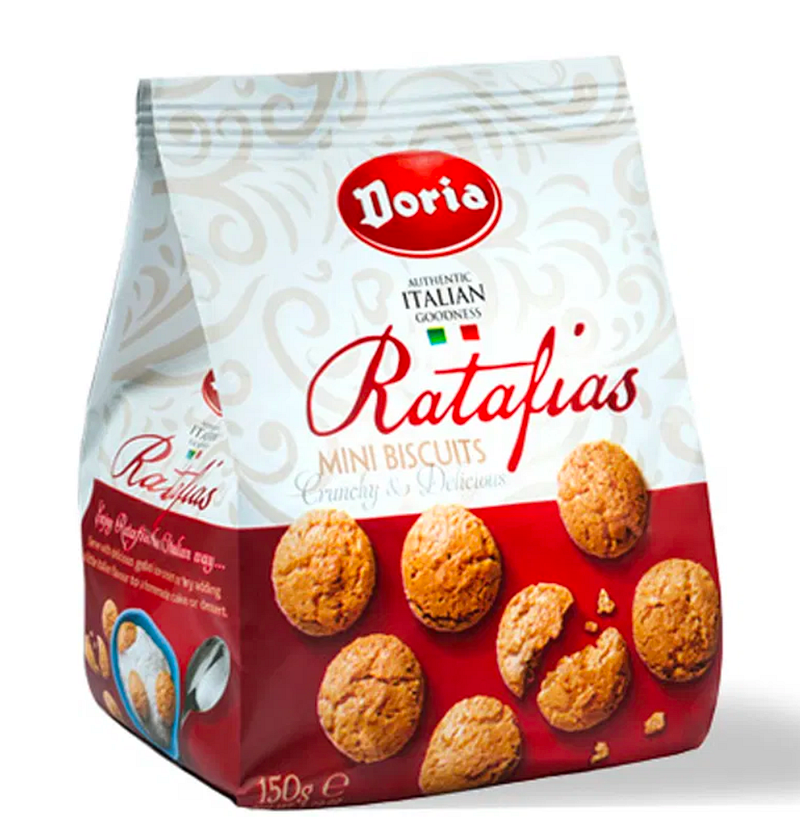
That company is Canadian. You may have to check your local ratafia dealer if you don’t live in Canada.
That’s about it today. If I had any ratafia liqueur and ratafia biscuits, I would do my usual evening unwind with them. Since I don’t, I’ll have to use some Scotch and shortbread biscuits instead.
So I will bid you adieu (in French, not Belgian), but not before complaining about the editors of the Spelling Bee puzzle, who despite all the evidence we have just presented about the existence of the word ratafia, still insisted on declaring it a dord.*
You can check out my previous entry on another dord* here:
*What the heck is a dord, you ask? Here’s the answer: