avatarSadie Seroxcat

Free AI web copilot to create summaries, insights and extended knowledge, download it at here

4070

Abstract

rank=1">‘The Labyrinth’ — Amanda Lohrey (2020)</a></figcaption></figure><p id="ecab">Most of the narrative of ‘The Labyrinth’ centres around a shack which the main character, Erica Marsden, buys on the south-east coast of Tasmania. She has moved there to be near a prison where her son, Daniel now resides after being convicted of ‘homicidal negligence’.</p><p id="b09c">We learn a little about Erica’s own early life and ‘sit in’ on her brief, monthly, visits to Daniel. The rest of the time and story become filled by her decision to build a labyrinth at the edge of her new property — and by the local people her life becomes entangled with.</p><p id="b653" type="7">“The word labyrinth comes from the Greek word labrys, a double-headed stone axe said to have been a weapon of the Amazons and to symbolise the early forms of matriarchal society. Said also to have been an early symbol of the act of creation, of techne, and making by hand.”</p><p id="a2ec" type="7">— p.26 ‘The Labyrinth’ (Amanda Lohrey, 2020)</p><p id="ba66">The labyrinth is representative of a meditative process:</p><ul><li>You slowly and intentionally walk into the centre thinking about a problem you are having.</li><li>You can spend as much time at the centre as you like, in contemplation.</li><li>By the time you walk back out your load with have lightened; you will be calmer; and you will hopefully have thought of the solution(s) you were looking for.</li></ul><p id="bc0f" type="7">“The maze is a challenge to the brain (how smart are you),the labyrinth to the heart (will you surrender). In the maze you grapple with the challenge but in the labyrinth you let go. Effortlessly you come back to where you started, somehow changed by the act of surrender.”</p><p id="a903" type="7">— p.26 ‘The Labyrinth’ (Amanda Lohrey, 2020)</p><p id="bddd">There is an atmosphere skilfully written into this novel which feels like we the reader also sink into a similar fugue state, a foggy meditativeness, such as Erica seems to be living within. She is rudderless, without direction and swimming through a sea of emotions — beautifully paralleled in the elements and landscape of this place she makes her new home.</p><p id="e959">The novel in itself is descriptive of a journey through a labyrinth — we wend in towards the centre, her centre, Erica’s own heart and mind as we see how her life has collapsed; then out again as she rebuilds herself and starts again, in a new place, with new people, discarding or finding peace with people who had been important in her old life.</p><p id="6a7d">According to Bec Kavanagh in a Guardian book review from August 27th 2020 ‘The Labyrinth’ is a “<b><i>deeply meditative book</i></b>”:</p><p id="d885"><b><i>ideal for the meandering certainties of 2020. The characters who wander the pages are searching for meaning beyond the various trappings of their lives.</i></b>” — “<b><i>as she explores the design and history of the labyrinth, Erica remakes and reimagines herself and the lives of those around her.</i></b><a href="https://www.theguardian.com/books/2020/aug/28/the-labyrinth-by-amanda-lohrey-review-a-meditative-and-sprawling-novel-to-lose-yourself-in">The Labyrinth by Amanda Lohrey review — a meditative and sprawling novel to lose yourself in | Australian books | The Guardian</a></p><p id="0662">This novel is only around 170 pages long, but Lohrey has packed so much into such a short book. For me, everything that is in there to make us consider ‘found family’ as opposed to biological family is perhaps the main thing of interest. It felt deeply personal and real at times, while the ‘action’ moved along on the other side of the world to me — involving completely fictional people, in a completely fictional setting and situation.</p><p id="2ca5">This is not a book for intellectual exploration, this is a book you feel. That said, it might, as happened with me, inspire you to look at your own situation and see in a different light the relationships you have with those around you — to perhaps redefine the meaning of ‘family’ or see

Options

anew where your purpose may lie.</p><p id="e111">As we come to the end of this novel, Amanda Lohrey may have guided us through our own version of ‘The Labyrinth’. If you read as I myself do — immersing myself in a novel, empathising heavily with the characters and investing myself deeply in the twists and turns of their story — you could well reach the end of this short novel feeling that you have come to a similar place of clearer sighted peace as Erica seems to.</p><p id="fde0" type="7">“By now it is almost dark, and as I walk back along the drive towards the house the small solar lights planted in the sand begin to flare. At the garden tap I fill a ceramic pitcher with water and carry it across to the fire pit to douse the coals. Yesterday was my mother’s birthday, and by now Irene would be eighty-nine. Her face is beyond imagining, indeed I can barely recall the fragile image of it that I carried with me as a child. And so here is her labyrinth, its opening curves the nub of the cervix, its outer wall the lining of the womb. And at its centre, the iron fire pit. Labrys: the womb and the axe.”</p><p id="70d4" type="7">- Lohrey, Amanda. The Labyrinth: Winner of the 2021 Miles Franklin Literary Award (p. 155).</p><p id="2265">If you’re interested in exploring the mythological aspect of the labyrinth further, try some of these pieces from Counter Arts and Rainbow Salad:</p><div id="9d95" class="link-block"> <a href="https://readmedium.com/minotaur-75a7cdc2f44f"> <div> <div> <h2>Minotaur</h2> <div><h3>Hermes speaks, “You have lost your way. Your ancestors demand penance.” He raises his caduceus and the world spins.</h3></div> <div><p>medium.com</p></div> </div> <div> <div style="background-image: url(https://miro.readmedium.com/v2/resize:fit:320/1*bPCNL0i_tOu5me-_wlAOBg.jpeg)"></div> </div> </div> </a> </div><div id="202d" class="link-block"> <a href="https://readmedium.com/poem-on-asterion-the-lord-of-suffering-4bb90efae15"> <div> <div> <h2>Poem on Asterion. The Lord of Suffering</h2> <div><h3>“Free verse” in two parts. Asterion (the Minotaur)</h3></div> <div><p>medium.com</p></div> </div> <div> <div style="background-image: url(https://miro.readmedium.com/v2/resize:fit:320/1*i0jnETl7BRuhzmc74Kx7pw.jpeg)"></div> </div> </div> </a> </div><div id="e3cb" class="link-block"> <a href="https://readmedium.com/averno-c9c40a940ba9"> <div> <div> <h2>Averno</h2> <div><h3>Canto I</h3></div> <div><p>medium.com</p></div> </div> <div> <div style="background-image: url(https://miro.readmedium.com/v2/resize:fit:320/1*[email protected])"></div> </div> </div> </a> </div><div id="10df" class="link-block"> <a href="https://readmedium.com/bring-your-beautiful-souls-to-my-ruinous-mindscape-f7591a9de79"> <div> <div> <h2>Bring Your Beautiful Souls To My Ruinous Mindscape</h2> <div><h3>Stay a while and we’ll take tea</h3></div> <div><p>medium.com</p></div> </div> <div> <div style="background-image: url(https://miro.readmedium.com/v2/resize:fit:320/0*VU9-FXkFFqfj9aTR)"></div> </div> </div> </a> </div><p id="0513">I will be publishing a fully fleshed out and unabridged longform version of my book review at some point.</p><p id="6af4">With many thanks and much love to <a href="undefined">Carlos Garbiras</a> and <a href="undefined">Jess the Avocado</a> for your faith and trust.</p><p id="027e">Thank you for reading.</p></article></body>

Rainbows and Labyrinths

Pride Month, a change of management and the Counter Arts Book Club
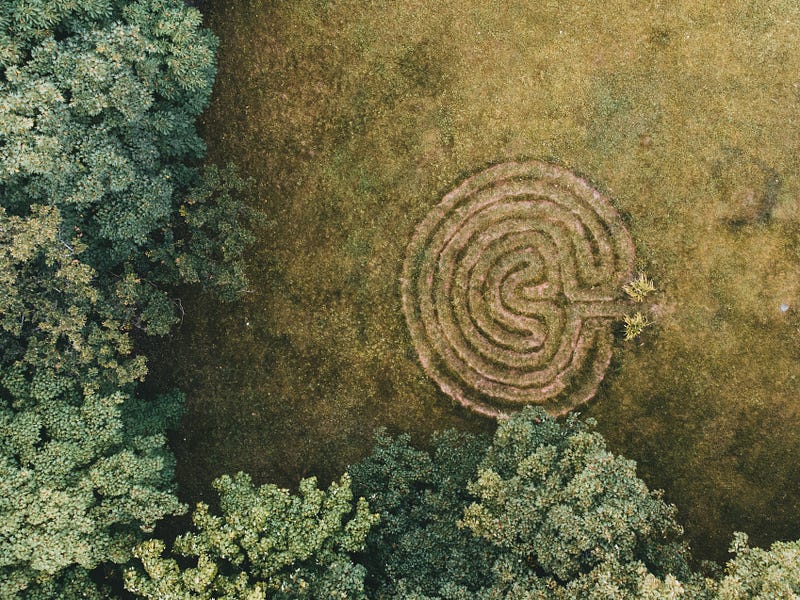
Photo by Erik Mclean on Unsplash

Hello Everyone, Writers and Readers All.

This is Sadie Seroxcat here and I am very proud to be able to say I’ve been asked to be an editor for the Counter Arts publication — plus I’ve taken over as owner of Rainbow Salad, the sister publication to Counter Arts which is dedicated to poetry and fiction.

To celebrate our new positions, alongside Pride Month, Will Hull and I have issued a collaborative prompt for writers at both Counter Arts and Rainbow Salad:

Please pitch in with some responses where you can!

Just to remind you all, the Counter Arts Book Club is open to participation at any point, so please do jump in and read any of the books which take your fancy — and it would be good if you could drop a quick review piece in for us too. Remember, proceeds go to a good cause!

Details can be found here, where I’m also trying to gather a collection of essays which are inspired by these books:

‘The Labyrinth’ — Amanda Lohrey (abridged version of review)

I want to start out this review by saying that I absolutely LOVED this book. There’s so much packed into it. The main themes I’ve identified have been about family, isolation/incarceration, mental health and the restorative power of the creative arts. The symbolic motif of the labyrinth in particular runs throughout. It really spoke to me on an emotional level.

If you read our reviews about last month’s book, you’ll know that the subject matter got the better of me and I had to stop reading ‘How We Disappeared’ (Jin-jing Lee). My own personal history and C-PTSD was rubbing up against the sexual violence inherent in a novel about the ‘Comfort Women’ of Singapore under Japanese occupation (WWII) — and emotionally I was struggling.

This month’s book also involved themes which are difficult for me, around family issues mainly, but in this case I found the novel cathartic and affirming.
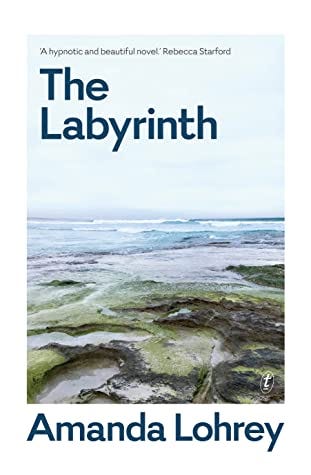
front cover of ‘The Labyrinth’ — Amanda Lohrey (2020)

Most of the narrative of ‘The Labyrinth’ centres around a shack which the main character, Erica Marsden, buys on the south-east coast of Tasmania. She has moved there to be near a prison where her son, Daniel now resides after being convicted of ‘homicidal negligence’.

We learn a little about Erica’s own early life and ‘sit in’ on her brief, monthly, visits to Daniel. The rest of the time and story become filled by her decision to build a labyrinth at the edge of her new property — and by the local people her life becomes entangled with.

“The word labyrinth comes from the Greek word labrys, a double-headed stone axe said to have been a weapon of the Amazons and to symbolise the early forms of matriarchal society. Said also to have been an early symbol of the act of creation, of techne, and making by hand.”

— p.26 ‘The Labyrinth’ (Amanda Lohrey, 2020)

The labyrinth is representative of a meditative process:

  • You slowly and intentionally walk into the centre thinking about a problem you are having.
  • You can spend as much time at the centre as you like, in contemplation.
  • By the time you walk back out your load with have lightened; you will be calmer; and you will hopefully have thought of the solution(s) you were looking for.

“The maze is a challenge to the brain (how smart are you),the labyrinth to the heart (will you surrender). In the maze you grapple with the challenge but in the labyrinth you let go. Effortlessly you come back to where you started, somehow changed by the act of surrender.”

— p.26 ‘The Labyrinth’ (Amanda Lohrey, 2020)

There is an atmosphere skilfully written into this novel which feels like we the reader also sink into a similar fugue state, a foggy meditativeness, such as Erica seems to be living within. She is rudderless, without direction and swimming through a sea of emotions — beautifully paralleled in the elements and landscape of this place she makes her new home.

The novel in itself is descriptive of a journey through a labyrinth — we wend in towards the centre, her centre, Erica’s own heart and mind as we see how her life has collapsed; then out again as she rebuilds herself and starts again, in a new place, with new people, discarding or finding peace with people who had been important in her old life.

According to Bec Kavanagh in a Guardian book review from August 27th 2020 ‘The Labyrinth’ is a “deeply meditative book”:

ideal for the meandering certainties of 2020. The characters who wander the pages are searching for meaning beyond the various trappings of their lives.” — “as she explores the design and history of the labyrinth, Erica remakes and reimagines herself and the lives of those around her.The Labyrinth by Amanda Lohrey review — a meditative and sprawling novel to lose yourself in | Australian books | The Guardian

This novel is only around 170 pages long, but Lohrey has packed so much into such a short book. For me, everything that is in there to make us consider ‘found family’ as opposed to biological family is perhaps the main thing of interest. It felt deeply personal and real at times, while the ‘action’ moved along on the other side of the world to me — involving completely fictional people, in a completely fictional setting and situation.

This is not a book for intellectual exploration, this is a book you feel. That said, it might, as happened with me, inspire you to look at your own situation and see in a different light the relationships you have with those around you — to perhaps redefine the meaning of ‘family’ or see anew where your purpose may lie.

As we come to the end of this novel, Amanda Lohrey may have guided us through our own version of ‘The Labyrinth’. If you read as I myself do — immersing myself in a novel, empathising heavily with the characters and investing myself deeply in the twists and turns of their story — you could well reach the end of this short novel feeling that you have come to a similar place of clearer sighted peace as Erica seems to.

“By now it is almost dark, and as I walk back along the drive towards the house the small solar lights planted in the sand begin to flare. At the garden tap I fill a ceramic pitcher with water and carry it across to the fire pit to douse the coals. Yesterday was my mother’s birthday, and by now Irene would be eighty-nine. Her face is beyond imagining, indeed I can barely recall the fragile image of it that I carried with me as a child. And so here is her labyrinth, its opening curves the nub of the cervix, its outer wall the lining of the womb. And at its centre, the iron fire pit. Labrys: the womb and the axe.”

- Lohrey, Amanda. The Labyrinth: Winner of the 2021 Miles Franklin Literary Award (p. 155).

If you’re interested in exploring the mythological aspect of the labyrinth further, try some of these pieces from Counter Arts and Rainbow Salad:

I will be publishing a fully fleshed out and unabridged longform version of my book review at some point.

With many thanks and much love to Carlos Garbiras and Jess the Avocado for your faith and trust.

Thank you for reading.

Newsletter
Book Review
Prompt
Nonfiction
Counter Arts
Recommended from ReadMedium