
Queer Since 13 Years Old and Choosing Not to Come Out
How to live freely and unapologetically without defining ourselves
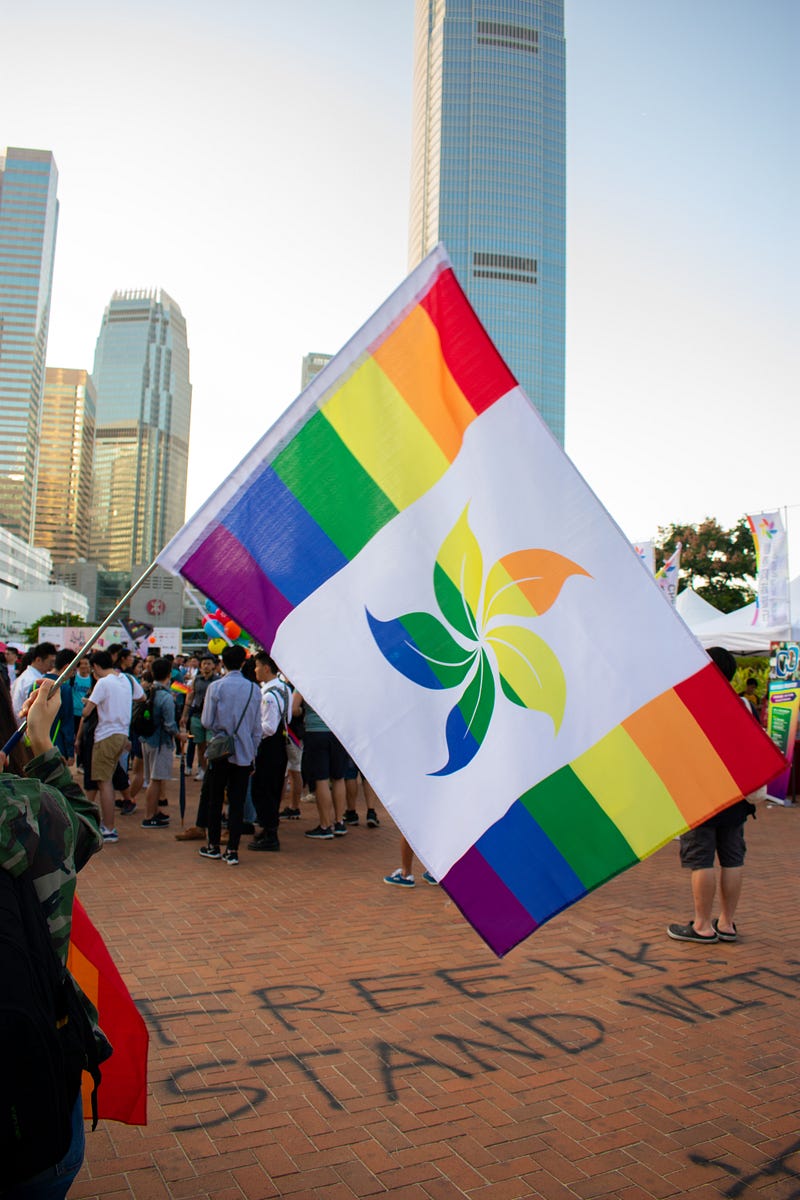
I’ve had a crush on almost all the famous lesbian icons on popular media since I was13 years old.
Shane from the L Word, Cate Blanchett, Kristen Stewart, Tilda Swinton, Yuki Amami. My current crush is the-one-and-only Kate McKinnon.
It has never occurred to me that I needed to ‘come out’. I don’t know what will exactly happen when I come out, to declare I like all genders? To share my choice of porn categories? To self-define as bisexual?
My queer friends all have their stories of coming out, and most of them came out before they were in a long-term relationship. Some of the stories are sad, some are uplifting, mostly depend on how their families reacted.
But my key questions remain: why are we coming out? What does it really do to ourselves?
Reasons we have to come out
Christianity has a deep influence on most cultural behaviours and presentations in the West. From capitalism to Madonna.
So we can’t rule out that the ritual of coming out has a strong Christian undertone.
Some other assumptions Christianity (or even Judaism and Islam) has laid include: people are heterosexual and sex outside marriage is sinful. It starts all the way from the first book of the Holy Bible that a family unit is made out of a man and a woman — Adam and Eve.
In this regard, it means that union outside of one man and one woman is adultery. This includes having sex with other people and having sex with the same sex/gender.
It’s exactly because we are assumed to be heterosexual and have a defined binary gender/sex that coming out becomes an important event to defy these assumptions, and coming out stories are supported and celebrated.
But does coming out itself have strong Christian undertones?
Around the same time I had a crush on my female PE teacher, I also became a Christian.
In a Christian retreat, after some emotional hymn singing and soul searching, I felt connected to God. So when we closed our eyes and prayed, and the pastor asked us to put up our hand if we were ready to confirm our faith. I did just that.
This ritual is called a decision prayer.
I got baptised when I turned 18 years old. Baptism is a ritual to declare publicly that we’re now reborn as a Christian, and we are separate from the non-believers because our sins are washed away by Jesus.
I can’t help but think that coming out is a bit like that — a public declaration that my sexual orientation or sexuality is [insert definition], so we are separated from others who are automatically assumed to be heterosexual and/or cisgender.
Maybe there’s no need to come out
It takes two hands to clap.
On the one hand, Christianity declares one set of assumptions. On the other hand, these assumptions only have value if people recognise them, agree or disagree with them.
The opposing voice is as crucial as the supporting voice in establishing a point. The people who hated Jesus and pushed him on the cross contributed to his status as the Son of God.
What if we recognise but not oppose the assumptions declared by religions and society? Note I am not talking about the fight for equality here, I’m just talking about non-opposition.
By not coming out, we don’t defy the religious norm, and the credibility of this norm slowly dissolves.
My own story of not coming out
I never felt the need to declare my sexuality.
When I lived at the dormitory above my church I hung a life-size poster of a bikini model on the wall. People, including church friends, didn’t miss it when they came into my room. No one demanded my explanation, and in fact, if they did, I would have told them I found her effing hot.
I also watched a lot of gay and lesbian movies, partied in gay and lesbian clubs all the time. I’ve done plenty of other stuff. I never hid these facts, and I discussed these experiences just like every other movie and party.
People might have had questions, but I never felt the need to justify my actions. My true friends bought me calendars and photobooks of bikini models as gifts, but no one questioned why I liked women whilst dating guys.
A friend of mine cut her hair short one year and started dressing less femininely. People were gossiping behind, but she didn’t explain her decisions.
We choose who we trust and share our thoughts and experience with.
I felt lucky to have been at ease about this from a young age, but I believe that the ability to be true-to-self and free will become stronger as you grow older.
No one should feel that they are queer and hence they need to come out. If this becomes a must-do ritual for gays, then it is as pressurising as baptism, which ironically, we don’t like it very much.
This is why I felt that it’s not a bad thing to hold off the urge to come out young, the time when we’re finding and defining ourselves.
The only two occasions coming out is needed
We don’t even need to come out to support the equality movement. We don’t need to be gay to support gay rights, just like we don’t need to be a woman to support feminism. We can simply support.
The first occasion I believe coming out is meaningful is when we have found the love of our life. The relationship is mature and stable enough that we believe we’ll be together in the foreseeable future. Then just like heterosexual couples, that’s the beautiful moment to make sure people know that you are taken and be recognised as an item.
It’s a declaration of loyalty and a celebration of love.
The second occasion coming out is important is when we feel that a different pronoun or name should be used to address ourselves. I did have questions about this whole pronoun thing, but I respect this urge is not something a ciswoman like myself can easily comprehend.
The takeaway
The equality movement in all areas is hot at the moment and almost everyone is an activist of something.
It is tempting to use personal stories to appeal to the audience and add our voices to these movements.
However, I’m here to encourage everyone, especially young people, to pause for a moment before revealing vulnerable and personal information about ourselves.
I would ask myself these questions before I come out to anyone:
- What is the reason we are coming out or sharing vulnerable, personal information?
- Are we doing that because everyone else seems to be doing so, or do we feel there’s a reason for everyone to know about our personal matters?
- Are we coming out to the right people? Would they facilitate communication, or creating differences that can never be resolved?
- Are there any other ways to support these movements?
There’s nothing wrong with coming out. But picking the right moment and the right audience to share something deeply personal is first and foremost, the most important consideration for our own wellbeing.
Coming out is very similar to the ritual of baptism. In hindsight, 10 years later after I was baptised, I felt that this ritual was largely redundant. It didn’t do much to my own spirituality but had added unnecessary pressure for me to seek truths and wisdom of life. Because I was a Christian publicly, it made me uncomfortable and subject to others’ judgements when I visited temples and mosques or read texts from other religions.
For me, both my spirituality and sexuality remain a personal experience and my identity and self-knowledge are never affected by a ritual that’s more for others than for myself.