
Psychological Habits That Have Saved Me 30+ Hours Per Week, Taught By 3 Zen Stories
The ancient Zen masters understood the mind to be like fire. The more you feed it, the bigger it burns and the more it consumes.
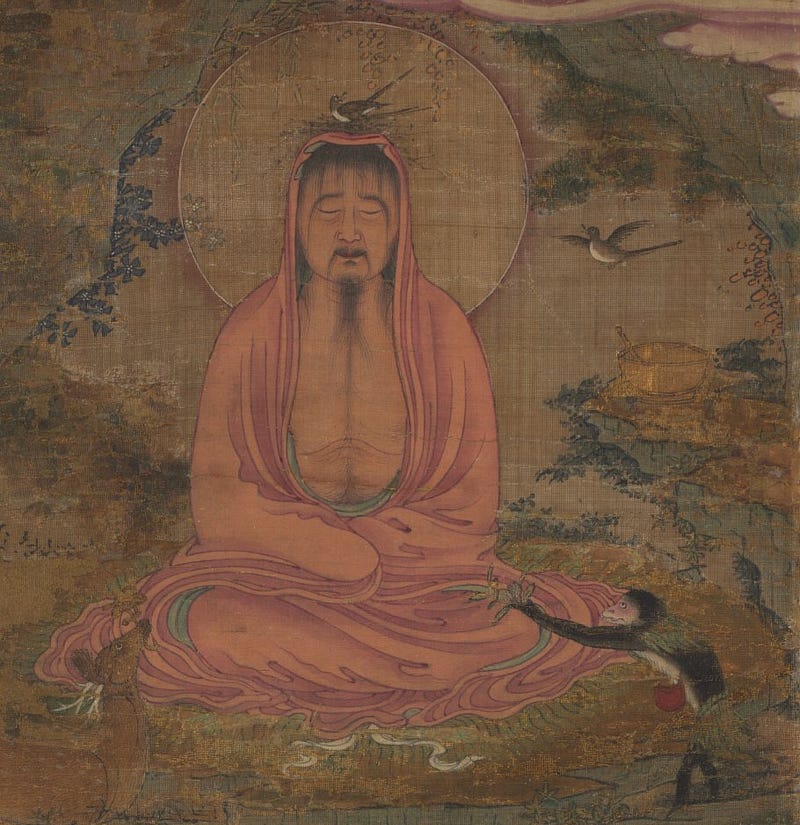
The timeless Zen teachings state that time is psychological.
I have experienced the pliability of time through being lost in an enthralling novel or when bogged down by a self-created problem.
When I am confused by the modern-day spruikers in the personal development world, I always go back to the basic and powerful teachings from the eternal wisdom discovered by the Zen masters.
Here are 3 of the most powerful Zen stories I have come across (you can find all of these in the classic book Zen Flesh, Zen Bones: A Collection of Zen and Pre-Zen Writings):
1. No Loving-Kindness
There was an old woman in China who had supported a monk for over twenty years. She had built a little hut for him and fed him while he was meditating. Finally, she wondered just what progress he had made in all this time.
To find out, she obtained the help of a girl rich in desire. “Go and embrace him,” she told her, “and then ask him suddenly: ‘What now?’”
The girl called upon the monk and without much ado caressed him, asking him what he was going to do about it.
“An old tree grows on a cold rock in winter,” replied the monk somewhat poetically. “Nowhere is there any warmth.”
The girl returned and related what he had said.
“To think I fed that fellow for twenty years!” exclaimed the old woman in anger. “He showed no consideration for your needs, no disposition to explain your condition. He need not have responded to passion, but at least he should have evidenced some compassion.”
She at once went to the hut of the monk and burned it down.
Reacting when triggered may lead you down a rabbit warren that is unnecessary. The reaction itself is not the problem. Acting on it is.
Things that can lead to feeling like you have a boiling volcano inside:
- Unresolved trauma or a similar negative experience from the past.
- High expectations of the other person.
- Incorrect judgment on the person’s intention behind their action.
Feasible alternatives:
- Write out your feeling and any memories that have come up from the past. If your feelings and memories are intense, consider speaking to a therapist.
- Acknowledge that how you expect a person to behave can be different from their expectations of acceptable behavior.
- Speak with the person using the 4 prompts from non-violent communication to be clear about what their intention was and what you consider to be an appropriate outcome.

This is an example I used with my mom. Setting a respectful boundary has saved me time in unnecessary phone calls, and text messages, and helped me avoid arguments.
The best way to ensure your needs are met is by stating what they are and suggesting to others what you require.
People are not mind readers.
2. Great Waves
In the early days of the Meiji era, there lived a well-known wrestler called O-nami, Great Waves.
In his private bouts, he defeated even his teacher, but in public, he was so bashful that his own pupils threw him.
O-nami felt he should go to a Zen master for help. Hakuju, a wandering teacher, was stopping in a little temple nearby, so O-nami went to see him.
“Great Waves is your name,” the teacher advised, “so stay in this temple tonight. Imagine that you are those billows. You are those huge waves sweeping everything before them, swallowing all in their path. Do this and you will be the greatest wrestler in the land.”
O-nami sat in meditation trying to imagine himself as waves. Then gradually he turned more and more to the feeling of the waves. As the night advanced the waves became larger and larger. They swept away the flowers in their vases. Even the Buddha in the shrine was inundated. Before dawn, the temple was nothing but the ebb and flow of an immense sea.
In the morning the teacher found O-nami meditating, a faint smile on his face. He patted the wrestler’s shoulder. “Now nothing can disturb you,” he said.
The same day O-nami entered the wrestling contests and won. After that, no one in Japan was able to defeat him.
How to put this lesson into practice:
When faced with a problem, instead of battling over the issue by yourself, reach out to someone qualified (for instance, a coach specialized in your issue) for guidance. In my experience, this can save you many hours each week!
Performing in public or launching a business that requires personal branding can be daunting:
- What will people think of me?
- Will my friends make fun of me?
- How do I publicly deal with criticism and judgment?
A qualified coach, one that has the battle scars and now has the industry knowledge to navigate you from zero to hero, is invaluable.
To give you a personal example: My business partner and I launched an online Amazon business in March 2022. While we shut it down due to a split in the partnership, it became successful in a short period of time:

For this start-up, we used a business coach that had a successful $5 million-a-year business on Amazon. The business coach provided a long list of reliable and cost-effective contacts (China sourcing agent, logistics company, artwork designers, and content/SEO writers) and business plans.
Due to his advice, problems were avoided and high-quality contractors were engaged (that we wouldn’t otherwise have had contact with) which saved us years in time and costs.
3. The Moon Cannot Be Stolen
Ryokan, a Zen master, lived the simplest kind of life in a little hut at the foot of a mountain. One evening a thief visited the hut only to discover there was nothing to steal.
Ryokan returned and caught him. “You have come a long way to visit me,” he told the prowler, “and you should not return empty-handed. Please take my clothes as a gift.”
The thief was bewildered. He took the clothes and slunk away.
Ryoken sat naked, watching the moon. “Poor fellow,” he mused, “I wish I could have given him this beautiful moon.”
The ancient zen masters understood the mind to be like fire. The more you feed it, the bigger it burns and the more it consumes.
One of the biggest time-wasters is allowing your mind’s desires to run unchecked. It will lead you down paths that have you chasing things that are unimportant to your happiness.
Being aware of what you have and strategically only following those things that are essential will lead to a life of expansion.
Here are some things you can do when being overcome by multiple desires:
- Go against the pull to rush and walk and talk slowly.
- Be grateful for what you have, even if it’s an appreciation of nature (birds, moon, sunset.)
- Have only those things in your personal space (house, workspace, car) that have either a special meaning or purpose.
- Each year (normally more) I do a minimalist clean-out in each room of my house, mobile contacts phone, and work desk and either give away or delete those things which are no longer important.
Time savings include:
- Not spending time on those things which you don’t value.
- Ability to quickly find what is needed at the time.
- Saving time doesn’t need to be quick fixes.
Concluding Thoughts
The starting point is focusing on those psychological shifts in perception that lead to beneficial behavioral outcomes.
In the heat of the moment, recalling various techniques can be difficult.
Research shows that character-driven stories with emotional content enable better recall of the points (weeks later).
Therefore, commit these age-old zen stories to memory to save time for achieving business and personal goals.
Join my email list of +1,000 people to receive your FREE Zen Checklist


