
Artificial Intelligence versus Human Intelligence
Proving Your Humanity Online Is Trickier Than You Think
The world could urgently use an anti-Turing test. Can you improve on my suggestion?
Who’d have thought we’d move so quickly beyond AI demonstrating human intelligence to questioning who’s human online?
We should have seen it coming
ChatGPT and its soulless cousins have passed the Turing test and are being used to generate works passing for human-created content.
Already, authors on Medium are lamenting not just the flood of AI-generated stories but an even worse problem: being accused of using AI tools to write their all-too-human content. This is galling, particularly for those many authors who pride themselves on NEVER using AI assistance.
I know many here who are confident they can reliably detect the AI-wielding grifters among us. I’m not so sure.
While that battle rages, it is already high time for us to devise a reliable way of proving who is still human. Our challenge is to devise an anti-Turing test, for which we need some simple definitions.
The Turing test
If a machine can engage in a conversation with a human without being detected as a machine, it has demonstrated human intelligence.
The anti-Turing test
If two entities communicate with one another, is there any way for the human to reliably distinguish itself from an AI?
Mimicry makes the exercise difficult
The large language models are trained on human content and lots of it. This means the tools often craft content just as quirky as the humans who first created it.
Not only that, but all the things we humans might seek to do to distinguish our writing as original, the tools can quickly copy. (Don’t be taken in by the early and free models. AI tools are developing rapidly.)
- Have you considered deliberately including typos in your work? Nothing could be easier for AI to copy, right down to optimizing the number of mistakes and their distribution.
- What about using unusual vocabulary to make our writing colorful? No matter how voluminous is our personal store of high-syllable words, ChatGPT knows them all and more. (Sorry, John Pearce!)
- Writing incomprehensibly is a strategy that some humans already employ, but who likes to read those stories? I find myself wondering what the author is up to. Are they shoddy thinkers, poor writers, or both? In any event, I have no doubt AI can create incomprehensible works just as well.
- Humor is presently a bastion of human superiority. ChatGPT knows all the jokes ever told but struggles to create a new one. Whereas the authors of satire, parody, and other humor here on Medium demonstrate ingenuity I’ve yet to see AI rival.*
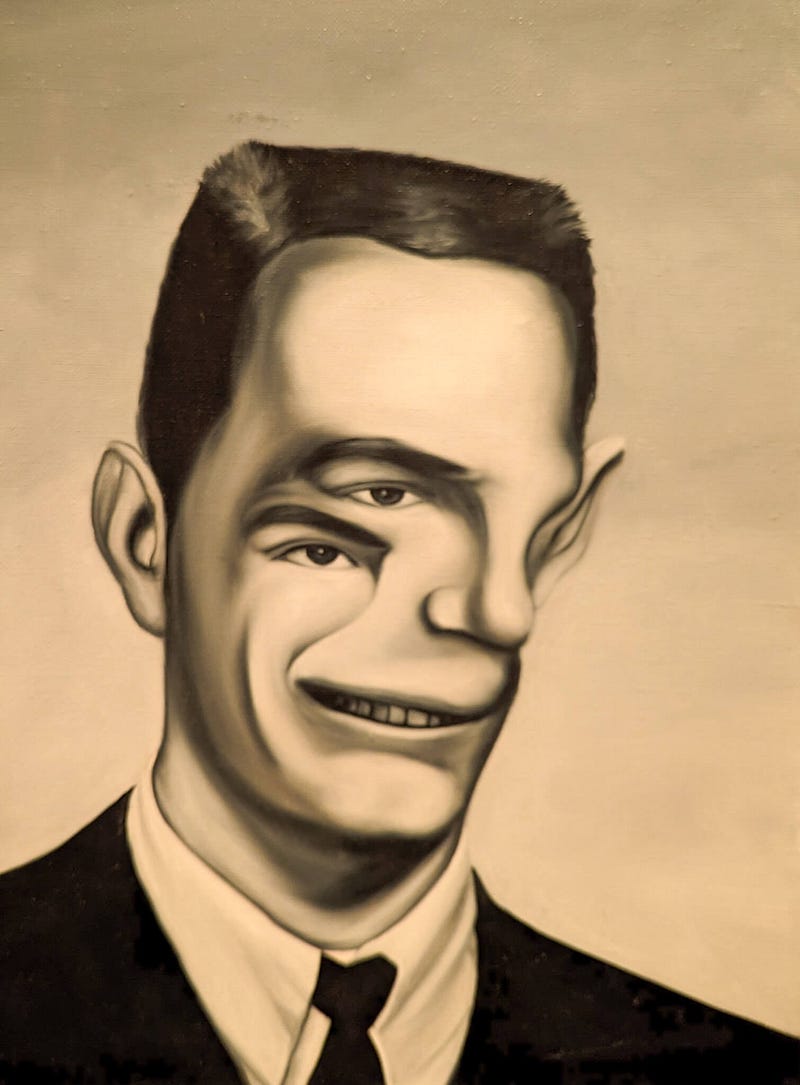
What do you think best signals our humanity?
We feel our humanity through our thoughts and emotions. We can describe these things in our writing. But is that enough for a reader to detect that there is a human behind the words?
Let’s face it. This is challenging because humans are fantastic liars.* (And not just when it comes to writing about our Medium earnings.) We pretend, we exaggerate, we make stuff up for fun and profit. Of course, the machines trained on our content will be able to do the same.
For now, I will suggest that humor most reliably separates humans from machines.
Let’s turn the question over to the wisdom of the human crowd. What do you think it is that not only makes us human but signals our humanity to others?
Be well.
* Check out Annie Trevaskis, Carlo Zeno, Robin Wilding 💎, Smillew Rahcuef, and Uvebruce to name just a few such delightful examples. [For alert readers who noticed that I applied the same footnote to both geniuses and serial liars, exactly.]
If you want just plain fallible human writing, including big words, typos, occasional incomprehensibility, and a bit of humor, subscribe to see more of my work.


