
SERIAL FICTION
Professional Teams Clear The Crash Site In The Desert
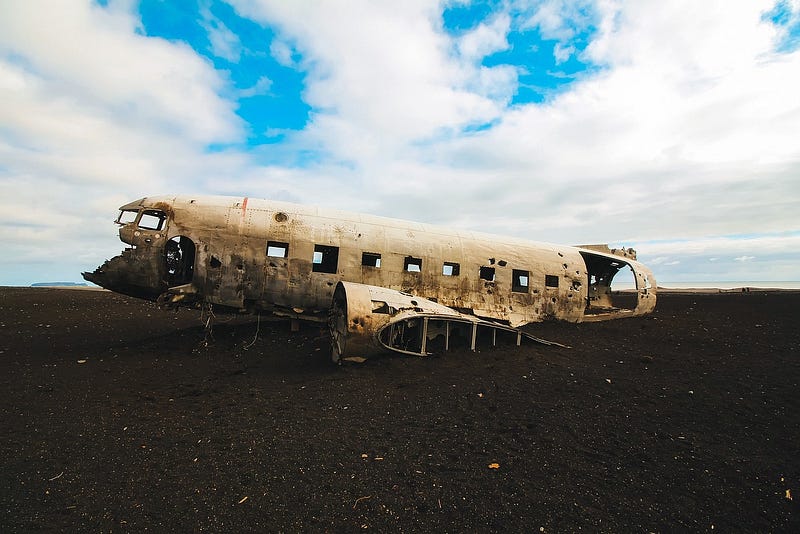
Shadows Of Mayday #29: The hard and emotional work starts for teams to clear the site from personal items and pieces of the crashed plane
Start reading here
Chief Inspector Victor Reede gathered the group in the tent once they arrived. Captain Clarke and the three police officers from Swakopmund were present at the briefing. They had been assigned to help.
“In the next weeks, the wreckage will be removed from the crash site and taken to a hanger on the military base in Walvis Bay,” Chief Inspector Victor Reede — nicknamed ‘Reed’ — said, “The goal is to remove the wreckage as soon as possible, but we are doing this according to specific international guidelines.”
Reed cleared his throat and looked at the papers in front of him. It was quiet for a long time. Only when feet shuffled on the canvas of the tent floor, he seemed to realize where he was. He looked up, looked at his papers again, and continued talking.
“First and most important, the cockpit voice recorder and the flight data recorder have to be retrieved. Since the tail section of the aircraft is still intact, it shouldn’t be a problem retrieving either of these devices.”
His eyes scanned the faces in front of him.
“I will divide you into two teams. One team will work on either side of the plane. We need photos of every piece of debris. Take photos from different angles, including the surroundings but also close-up photos of the pieces. Tag the piece you’ve photographed, give it a number and log it in a list I will provide.”
He tapped a stack of papers on the edge of the table where he sat. Once again, he scanned the faces in front of him. Eyes as serious as his own, looked back at him.
“Once you’ve tagged and logged all pieces of the plane, the army will provide transport to take them to the hangar in Walvis Bay.”
He was quiet for a while, reading his papers again.
“Before we tag the pieces, personal items of the deceased have to be removed from the crash site. Everything you find — briefcases, handbags, toys, laptops, mobile phones, pieces of clothing, even packages with food or snacks — absolutely everything must be taken to the same hanger in Walvis Bay. Investigators will match personal items to the victims once the medical team has identified them. For as far as is possible…”
His voice trailed off. It was quiet again, but only for about a minute.
“Personal items will be sent to the next of kin.”
Everyone present in the tent knew that this part of their job was almost as grim as the part where emergency workers had removed the bodies of the victims.They understood they might find more victims under the bigger pieces of wreckage. It was unknown whether they had taken all victims to the morgue yet.
“Now,” Reed continued, “we are in the desert here and working when the sun is at its highest will be irresponsible. No need to get people sick. We start at 6am in the morning and will continue until 11am. Then you can have lunch, sleep, go for a walk, do whatever you want. We start again at 2pm and continue until night falls. I want you to work by daylight, for obvious reasons.”
Even though they would work for eight to nine hours every day, the work might go on for weeks. Working according to this schedule meant people could concentrate properly on the work at hand, and not be exhausted by the heat before they were done.
The briefing ended. Some people went to find something to eat, others went to bed to sleep. The army had set up camp on the Walvis Bay side of the crash site. Military staff supplied this temporary camp with food and drink and maintained the communication devices.
Breakfast was served in the military mess tent the next morning, an hour before the work was about to start. At six o’clock, the teams and Chief Inspector Reede were present at the crash site.
“Your priority is to get all the personal items of the deceased removed from the site. Please take photos of the debris in relation to the personal items before you remove it. Take all personal items to this side,” he waved his arm to the Walvis Bay side of the wreck, “where army personnel will take it over from you and bring it to the trucks. Those trucks will take the personal items to Walvis Bay.”
Only the investigators were inside the perimeters of the crash site. They were careful not to disturb anything that might give a clue to the cause of the plane crash.
Low-ranked military men and women walked on and off between the crash site and two trucks that waited to take the personal items to the hangar in Walvis Bay. They carried each item with respect.
As soon as a truck was full, it drove off and returned later, empty and ready for the next load. Both trucks left the crash site that morning and returned, ready for the afternoon shift.
By eleven o’clock, the investigators were sweaty and tired. The sun burned down fiercely. Work stopped for the lunch break. Some investigators chose for an early lunch, others took a nap first and had a late lunch before they returned to the crash site to continue their work.
While the team members took a break, Reed called his superiors in Windhoek. He briefed information through for a press statement to be released that afternoon.
The media speculated on the cause of the crash, and some of those speculations were horrific. Next of kin needed to know the truth as soon as possible.
One speculation was the plane had been hijacked and forced to fly a different route, and that the Namibian military forces had shot it from the air because it had ignored warnings.
“We cannot confirm or deny a hijacking, but I can confirm the military has not taken down the plane. It has not been shot down. I repeat: the plane has not been shot down. We must wait until the investigators reach a conclusion before we’ll know what caused the crash.”
It could be months before the investigation was completed.
It was almost a week later before the teams had removed all personal items. They worked extremely accurately.
Work stopped several times.
Grown men wiped away tears on finding a toy car, a teddy bear, or a Barbie doll between the rubble. All mobile phones were silent because the batteries had died. It was the same for laptops, tablets and handheld game devices. Investigators found a lot of books — some well used and others brand new and unread. Jewelry, clothes, toiletries and any kind of item that could have belonged to a passenger were taken from the site and transported to the hangar by the trucks.
Once all the personal stuff had been removed from inside and outside the plane, Victor Reede ordered for all activity to stop.
“Take the rest of the day off and rest. It’s been tough days and there are more to come. Sleep, walk, go out. Relax. Rest. I’ll see you all back tomorrow morning at daybreak.”
Most of the team members slept through the afternoon and the night and were ready to start again the next day. Only a handful of the investigators asked soldiers to drive them to Walvis Bay, where they had a couple of drinks and enjoyed adult entertainment. At least for that evening, they wanted to forget about the horrors of the past days or the horrors that awaited them the next.
The next day they started at the beginning again; the same place where they had started when they removed the personal items of the passengers.
This time, they focused on the wreckage.
Again they took photos of everything, and they even shot video footage of the pieces of torn and bent steel that once was an aircraft. They tagged each piece of debris, no matter how small or big it was. Those pieces they could lift by hand were taken to the side of the crash site, from where army personnel moved it to the waiting trucks. Bigger pieces stayed in place.
Once everything was photographed and tagged, bigger equipment would be brought in to lift the wreckage onto flatbed trucks. Those trucks took the pieces of the plane to the hangar at the military base.
It took almost two weeks for the teams to complete the documenting process and another week for the bigger pieces to be removed from the site. When all pieces were gone, the teams did another search of the crash site to check for human remains or personal items.
They found some.
The members of the air crash investigation team were the first to leave the crash site the next day. The three police officers and Captain Clarke stayed. They helped the soldiers to pack up everything as the military camp was dismantled. The troops readied themselves to return to their base in Walvis Bay.
The police force repeated the exercise to close off the coastal road right outside the two towns, Swakopmund and Walvis Bay. This gave the infantry time to remove the detoured road. Infantry soldiers removed the pontoons. Technical military staff cleared away oil and sand from the coastal road. The road was damaged where the plane had crashed and the military repaired this, getting the road ready to be opened again by the end of the day.
The police officers returned to Swakopmund. Military vehicles drove off one by one, taking the soldiers and equipment back to Walvis Bay.
By the time the first traffic reached the crash site early that evening, there was no evidence that there had ever been a plane resting across the road.
One man remained — the emergency response team leader.
Captain Clarke was the first who arrived there and the last to leave.
On the beach, he watched as the sun set into the sea, not quite ready to depart from the disaster site.
Continued: Shadows Of Mayday #30
Find all chapters here.
This story is a work of fiction, and the author’s tribute to all victims of air crashes. Names and characters are the product of the author’s imagination, and any resemblance to actual people, living or dead, is entirely coincidental.
🦋 About Me | 💻 Follow and subscribe | 📚 My stories | 🦜 Twitter