
Product Placement: Marketing That Isn't as Obvious
Remember when you saw that brand you like on your favourite T.V. program? No, you don't… But it was probably there.

Have you ever noticed how often you see major brands in the big movies?
More often than not, the P.C. or mobile phone somebody is using is an Apple or perhaps a Samsung. All the vehicles could be Fords, or there might be several BMWs.
Your favourite influencers on social media? The chances are that brands sponsor them to promote their products.
This practice is called product placement, a form of advertising but attempts to persuade in a far less obvious way than traditional advertising.
What is Product Placement?
Also known as embedded marketing, product placement is a multi-billion dollar industry.
Companies pay to have commercial content such as their brand, products or services incorporated into non-commercial content such as film, T.V. or other mainstream media.
The idea is to use the placement whilst maintaining realism with context or plot.
A scene exposes the audience to the consumption of a brand, product, or service in its natural setting, positively influencing their perceptions and opinions.
The audience is less likely to notice that it is advertising — the power of product placement.
“In its simplest form, product placement consists of an advertiser or company producing some engaging content in order to sell something.” (Falkow, 2010)

Product placements can be subtle or more pronounced. It ranges from an unobtrusive appearance within the setting or more prominent incorporation and acknowledgement of the brand as part of the plot.
The scene does not have to show the product itself; it could be a logo, signage or brand name, for example.
More subtle product placement could avoid showing the brand itself instead of a distinct colour scheme or other feature synonymous with that brand.
For example, consumer products such as electronics (Apple products, for example) or automobiles and service placements (such as McDonald's) that target ultimate household consumers are the most common placement.
However, business-to-business product placements are becoming more common.
The vast number of media that use product placements includes:
- films
- television programs
- celebrities/influencers via social media
- video games
- blogs
- music videos concerts
- magazines
- books
- comics
- musicals and plays
- live sport
- radio
- the internet
- and mobile phones.
Product placement on television has increased in popularity to try and combat people skipping commercial breaks.
According to Priceonomics, television accounts for over 70% of all paid product placements. Moreover, approximately 75% of all network T.V. shows feature some form of product placement.
Films can often use multiple brands as product placements. 'Superman: Man of Steel' reportedly used $160 million worth of product placements promotions with over 100 brands.
“Since Unilever’s deliberate insertion of Sunlight Soap into several early Lumière films of the late 1890s, the practice of placing branded products within films for commercial purposes has developed into a distinct promotional tool.” (De Gregorio & Sung, 2010)

A Brief History of Product Placement
Product placement has only been around to describe this practice as recently as the 1980s; it is not new, and they are dating back to the first appearance of brands in Lumière films in 1896.
Media producers have not always monetised product placement.
Many product placement deals were cash-free; instead, the arrangement was often reciprocal, items were borrowed and used as props by studios and television networks, reducing production cost.
Movies helped sell products as well as selling movie tickets.
Studios have been integrating commercial product placements into mass media content as early as the 1920s. The first spurt of popularity came in the 1950s when tobacco companies tried to glamorise smoking cigarettes on T.V. and in film.
In the 1980s, product placements became widely used after E.T. followed a trail of Reese's Pieces out of the woods, resulting in a reported 65% increase in profits for Hershey's.
“In E.T. the Extra-Terrestrial, the alien followed a trail of Hershey’s Reese’s Pieces to his new home. The movie was a hit, sales of Reese’s Pieces increased dramatically, and to some the product placement industry was born.” (Newell, Salmon, & Chang, 2006)
The Benefits of Product Placement
This fusion of advertising and entertainment helps brands reach and engage with many of their target audiences.
Because many people find traditional ads are annoying or irrelevant, it is estimated that two-thirds of T.V. viewers mute or skip ads.
Unlike traditional advertising, a significant benefit of product placement is that viewers of a media piece cannot skip the marketing. The placement is a part of the T.V. program, movie or other media itself.
The brand is often associated with the characters or context of the placement, so they must match to create a compatible match, which usually achieves positive evaluations.
Brands placed on the screen with attractive characters or settings can often be more appealing to the audience/consumers. This influence is called the 'halo effect', a positive association with a show or person that creates a positive association with the related product or brand.
Viewers can become emotionally invested in the storyline presenting a brand; thus, the placement can encourage purchase intent.
When a placement is integrated seamlessly into a piece of media, the brand is seen in context and therefore marketed to consumers less directly.
Consumers' persuasion knowledge is less likely to be triggered, a barrier that consumers use to resist persuasive attempts from marketing too obtrusive.
Product placements can also boost brand recognition — the audience is also more likely to recognise and name a brand after seeing it in product placement.
A study by Williams, Petrosky, Hernandez, & Page Jr (2011) found that just over 57% of T.V. viewers recognised a brand after its product placement in a show.
The final significant benefit to product placement is that movies and T.V. programs can be watched repeatedly over several years, so their value is not limited to the original broadcast.
“Viewers are able to correctly recognize brands placed in films and consumers do not really mind seeing products placed in motion pictures.” (La Ferle & Edwards, 2006)
How Product Placement Works
Product placement places a brand in the natural context that brands would usually use in a piece of content or media.
The audience is subjected to a brand's marketing more naturally than advertising marketing to consumers directly.
Product placements can be initiated directly through a brand's marketing team suggesting their products to a studio or producers for a T.V./Movie, or it could go the other way. Some companies and agents work as intermediaries to match companies with product placement opportunities.
Studios should match brands' placement with that media piece's projected target audience as closely as possible.
Product placement should be ethical because of this potential influence over an audience. For example, product placement of tobacco or alcohol brands might be viewed as unacceptable by much of the audience, especially in youth content.
There are two primary forms of product placements: visual and verbal.
A visual placement involves placing a brand into a piece of media that is viewable. It could be an advertising hoarding in the background of a shot, or it could be of more importance in a scene, such as a cast member eating a packet of branded potato chips.
A verbal placement is naming a brand or product in the dialogue. There are varying degrees of audio placement, depending on the context of the mention, frequency, and emphasis on the product name.
Purely verbal placement is called script placement.
Placements of a brand both on-screen and in the conversation provides an opportunity for both verbal and visual encoding. In contrast, other situations would activate only one form of encoding.
If a brand's product becomes part of the plot, playing a role in the storyline, this is a plot placement.
A brand has high intensity by identifying with a character, e.g. James Bond and his Aston Martin in a chase scene. A brief mention and appearance on screen low intensity, e.g. a car is driving past.
The basis for product placement is the coding redundancy hypothesis (See Paivio 1971), "…memory increases directly with the number of alternative memory codes available for an item".
Visual and audio activate different codes, and therefore different combinations of screen and script placement vary in effectiveness and brand recall.
“Virtual product placement” has been used to insert products and/or advertisements into portions of a media stream, where the products and/or advertisements may not actually exist.” (Gajdos & Pettersson, 2011)
The Digital Age of Product Placements
Advances in digital editing technology allow producers to update existing placements or create new ones in post-production, sometimes changing items used in shows long after the filming.
Producers of live sports broadcasts can even create advertising on virtual billboards and change an ad from what physically exists.
It may be another ad, or there might not even be an advertisement there in the first place.
Producers can insert virtual product placements in post-production on TV and in movies. Examples are an advertising sign inserted into the background of a scene advertising a brand or altering a beverage a person is drinking to display a specific brand.
Advances in A.I. allow the insertion of product placements into a media stream based on information about the consumer watching it, allowing the use of brand placements more relevant to that individual.
Therefore, marketing becomes more personalised and targeted.
Product placement has exploded on social media in the form of influencer marketing. An influencer is a social media personality with a large following, paid to include products in their content to boost that brand's popularity. If an influencer matches the target market of a brand, they are a good fit.
Influencer marketing can range from a small mention in a post to the topic of a piece of content. The more pronounced the product placement, the more it is considered too 'commercial' by the followers of that social media influencer and the less effective it is likely to be.
“The extent to which the placement is prominent, whereby more prominence seems to evoke more negative reactions.” (Ewers, 2017)
Product Placement in Retail Settings
Product placement not only applies to media — but it can also apply to physical retail shop space. Brands will pay top dollar for prime space on the retail floor and shelves.
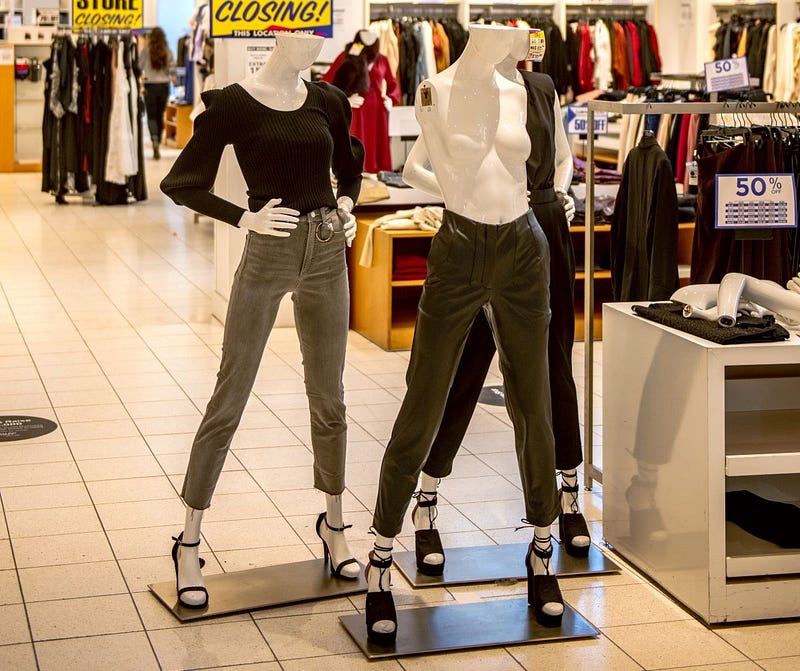
Retail placements include large endcap (end of an aisle) displays, the area next to the register where you checkout, or having items at eye level on the shelves and limiting shelf space their competitors — known as a slotting or shelving fee.
Large brands pay good money for this premium shelving space; this makes it harder for small brands and new businesses to break into the commercial retail market.
Summary
In summary, product placement is when a company pays to have commercial content such as their brand incorporated into a piece of media such as a film, or T.V. program, to expose it to the audience, which is usually a good fit with their target market.
Product placement positively influences consumers' perceptions and opinions in a less intrusive way than traditional advertising.
This article has explored product placement, how it works and its benefits as a marketing strategy.
Thank you for reading.
If you enjoyed this content, you might be interested in this article about using sponsorship as a marketing tactic.
Read More Medium Articles
Non-Medium members can only read 3 articles a month.
Become a Medium Member for unlimited access to my content and articles from thousands of other writers, for just $5 a month.
Subscribe to be notified when I publish new content.


