
The Benefits of Using Sponsorship as a Marketing Strategy
That sports team that you follow…They probably wouldn’t exist without sponsors.
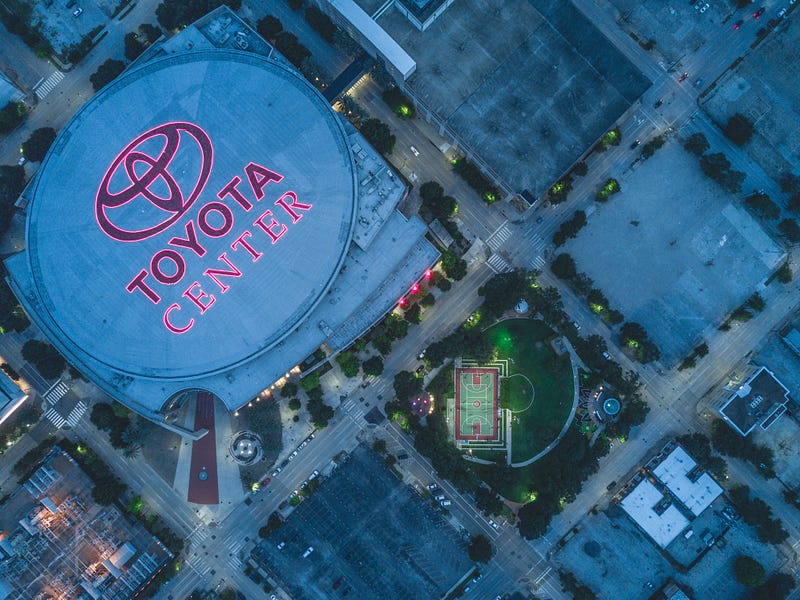
Do you have a favourite sports team? The chances are that sponsors help them operate by providing funding or support in other ways.
The biggest sports teams in the world have sponsorship splashed across their uniforms. Some events you attend probably also receive sponsorship to ensure they go ahead.
Sponsors add value to our lives.
This article explores what sponsorship is, how it works, and how it benefits brands and businesses by implementing it as a marketing tactic.
“The provision of assistance either financial or in-kind to an activity by a commercial organisation, for the purpose of achieving commercial objectives.” (Meenaghan, 1983)
What is Sponsorship?
Sponsorship involves a business relationship between two parties. One party (sponsor) supports the other (beneficiary) through funding, resources, or services. The beneficiary provides rights and associations to the other party for use and commercial advantage.
The sponsored party could be an event, organisation, or an individual; this second party's involvement distinguishes sponsorship from advertising.
You can find the first sponsorship examples over 100 years ago, but they are rare and minor. Its use has exploded since the 1970s.
According to Meenaghan (2001), in the UK, spending on sponsorship increased from £4 million to $1075 million between 1970 and 1997. In the US, spending increased from $850 million in 1985 to $8.7 billion in 2000.
“Sponsorship involves two main activities: (1) an exchange between a sponsor and a sponsee, whereby the latter receives a fee and the former obtains the right to associate itself with the activity sponsored and (2) the marketing of the association by the sponsor.” (Cornwell & Maignan, 1998)
Funding sports clubs is a common form of sponsorship.
Your favourite sports teams probably have the logo of their key sponsor/s on their uniforms. The brand's exposure on television, social media or other media through the sports team provides value to the sponsor.
Sports teams often provide sponsors with access to players for their events or PR and corporate hospitality at their events or games.
How does sponsorship work?
Through the affiliation with an entity people care about, sponsorship helps to enhance the sponsors' brand's public perception. This affiliation creates a 'halo effect' of goodwill, reflecting the positive associations with the sponsor.
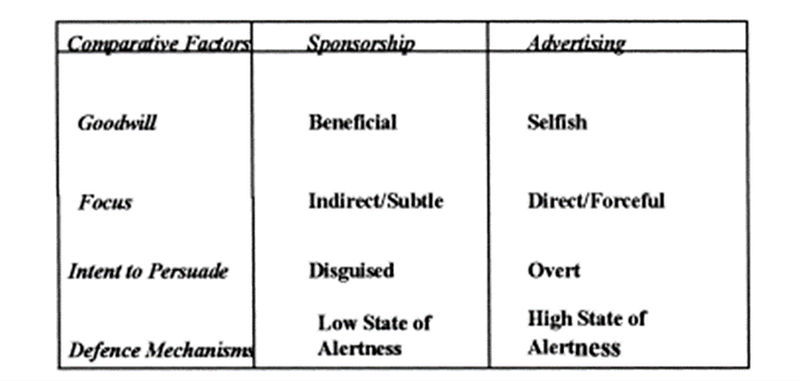
Because sponsorship provides a positive benefit to society through empowering the existence of entities consumers care about, sponsorship is typically more positively perceived than advertising's sole focus on commercial goals.
Advertising's only interest is its profitability, thereby having no apparent benefit to the greater society. Advertising can also be coercive, resulting in alerting consumers' defence mechanisms. Sponsorship's commercial intent is more subtle and indirect, lowering consumer defence mechanisms.
Read more about persuasion knowledge for a better understanding of this process.
“Sponsorship works differently in relation to the consumer than do other forms of advertising and promotions in that it engages the consumer differently by bestowing benefit on an activity (e.g., sports or the arts) with which the consumer has an intense emotional relationship.” (Meenaghan, 2001)
Leveraging the partnership
To maximise their sponsorship's commercial result, sponsors should focus their branding and marketing communications efforts on leveraging the association.
For example, a brand could display its branding on flags or banners at a sponsored event, social media posts promoting the event and the businesses' role as sponsors.
Consumers can hold positive associations and deep loyalty towards sponsors of the sport, events, causes or other entities that are their passion.
Sponsors proactively promoting their relationship enables these brands to leverage this emotional connection these consumers hold. The values of the sponsored activity or entity are then associated with the sponsor's brand.
“Sponsorship appears to be another area of marketing, along with source effects, store atmospherics, brand extension, and brand alliances, where the consumer’s ability to see an association between marketing assets enhances the effectiveness of these assets.” (Cornwell, 1995)
Sponsorship fit
Sponsors invest in sponsorship to establish their credibility with their target market. For this practice to be effective, there needs to be an organic link in terms of similar goals, values, and vision between the sponsor and the sponsorship's beneficiary. The fit should make sense to the public.
If a sponsor's target market is similar to the beneficiary's target market, sponsorship becomes a good fit by subjecting the right consumers to the relationship.
Passionate followers, fans or consumers of sponsored entities are emotionally connected, so judge the relationship's fit and respond more (or less) positively than the typical consumer.
The sponsorship is perceived as sincere and authentic if there is a fit.
“Events, activities, and venues have been fully recognized for their ability to target a particular demographic or psychographic segment.” (Cornwell, & Maignan, 1998)
What are the benefits of sponsorship?
Sponsorship works in a way that provides mutual benefits for the sponsor and the beneficiary. The beneficiary of the sponsorship receives funding or resources to operate.
Sponsorship has replaced other forms of funding, such as government support in some countries to the extent that some sponsored activities rely on corporate funding to exist.
Some of the critical motivations for investing in sponsorship are improving goodwill, enhancing public relations, increasing brand awareness, and improving brand image.
Improving profitability is obviously the end goal for any business's strategic planning — these motivations enhance the probability of this.
“The sponsor’s investment benefits the activity generates a goodwill effect among activity fans, which in turn influences their attitude and behaviour toward the sponsor’s brand.” (Meenaghan, 2001)
Goodwill
One of the critical factors distinguishing sponsorship from advertising is the presence of goodwill. Goodwill from the sponsor supports the beneficiary and gratitude from consumers to the sponsor, grateful to them for helping out a favourite event, sport or organisation.
According to Meenaghan (2001), the intensity of an individual's involvement or connection with the sponsored entity mediates goodwill effects.
Highly involved fans have deeper connections with their teams, so their awareness of the sponsor's brand is likely higher than a casual fan.
Therefore, the sponsor's goodwill effects are likely to be more significant, and they are more likely to develop a favourable opinion of the sponsor. This goodwill effect can trigger a strong preference for a sponsor's products or services, increasing purchase intention.
Goodwill exists at different levels depending on the type of entity the sponsor supports. For example, the sponsorship of social causes typically generates more goodwill toward the sponsor than the sponsorship of the arts or a building.
Enhancing public relations
Through sponsoring entities such as sports clubs that consumers care for, fostering a socially responsible reputation. Improving community relations is a common sponsorship objective for corporations, especially banks, as they often do not have the best reputation.
As well as sponsoring well-known sports clubs, the organisation also sponsor local events or not-for-profit groups that benefit the local community where they are based. Other ways to help the community might be by providing computers to a local school.
Sponsorship can be a relationship marketing tool. Relationship marketing is the marketing activity that attracts, develops, maintains, and enhances customer satisfaction and fosters customer retention.
Sponsorship can be a vehicle for developing relationships with the target market by signalling that our business shares similar interests and supports the same causes.
In B2B, sponsorship also helps create bonds with business partners who share a joint sponsorship or strengthen their relationship with current and potential clients through perks of sponsorship such as a corporate box at events.
Increasing brand awareness
The publicity of the entity they are supporting increases the sponsor's brand awareness. This publicity could be through advertising, TV coverage, other media such as social media or news articles, or people attending and seeing sponsors' branding.
Local businesses can increase awareness of what they are doing in the local community through an article in a local newspaper. In contrast, large corporations or consumer brands can put their brand in front of thousands or even millions of people by sponsoring a high-profile sports team with an audience on a global scale.
For example, The All Blacks, Los Angeles Lakers and Manchester United have global audiences for sponsors.

Sponsorship can provide a broader reach than advertising which will only reach a finite audience, depending on the platform.
“Activity followers, being most knowledgeable of the image values embodied in the activity, transfer these specific image values to the sponsor.” (Meenaghan, 2001)
Improving brand image
Businesses cultivate favourable and favourable brand associations (traits consumers attribute to a brand) and enhance sponsorship benefits with sponsorship. Because of the goodwill factor, people view sponsors more favourably, positively influencing their brand equity.
Brand equity is brand knowledge’s influence on the consumer response to marketing. Brand equity is more substantial when a consumer is familiar with the brand and holds strong and favourable associations.
Types of sponsorship
Sponsorship is typically associated with a sports team or event, but there are multiple sponsorship forms. It can include concerts or the performing arts, and clothing companies like Nike often sponsor sports stars such as LeBron James because of their global appeal.
Other sponsored entities include not-for-profit groups, charity or business events, associations, social media influencers and celebrities, buildings (often banks support skyscrapers), and local government-funded venues such as stadiums.
One event could have multiple sponsors. Those sponsors might all contribute an equal amount for equal benefits, or there might be different tiers of sponsors. These have different investment levels, and sponsors receive individual benefits based on the value of their investment.
For an example of a business event — I run a networking event called Linkedin Local Hamilton, funded through sponsorship. It's probably not what you expect — I wanted it to have an atmosphere more like a cocktail party.
Sponsors pay for the food and beverages of the people attending the event — usually around 150 people. Venues are offered for free, and in-kind sponsorship (discussed shortly).
Tickets to attend the event are free or donation-based, so there is little income. The events rely on sponsorship to exist. The benefit to sponsors is the exposure of their brand as a sponsor in social media promotion and the people attending the event.
It has worked well — I have run 13 events and counting.

Financial sponsor
There are two main types of sponsorship—financial and in-kind sponsors.
A financial sponsor is also known as a cash sponsor, and it is the most popular form of sponsorship. It is pretty simple — they give money to an entity in return for a promotion or other benefits outlined in their sponsorship agreement.
Some different types or levels of financial sponsorship are:
- Series sponsor — the highest status of sponsorship, incorporating the sponsor's name and logo into the title of the series. Other promotions include the right to use teams, team members, players, coaches, and the series body to conduct joint promotions and the right of presence at all official events.
- Title sponsor — similar to series sponsor, but for a one-off event. I mention many of the same benefits of a series sponsor, another being branding placed around the stadium.
- General sponsors — are also significant contributors (usually exist in the absence of a title sponsor). They receive the right to promote their association as sponsors and often receive media coverage.
- Team sponsor — fund individual teams. They often receive mention in a team's media coverage on the uniforms and at their stadium and usually provide unique access to the team.
- Official sponsors make up a specific part of raised funds (usually around 20–25%). Typically, the given status may be granted by category — for example, 'official insurance partner'.
- Participating sponsors are often more numerous than other sponsors. The size of their fee usually does not exceed 10% of the total raised funds.
In-kind Sponsors
- Venue Partners — host events at their venue for a discounted or free rate, allowing them to gain exposure to a specific demographic.
- Prize Sponsors — donate items to events such as spot prizes for activities or items in a charity auction.
- Food Sponsors — at events, food sponsors offer free food to attendees, and catering can be a significant expense for the organiser.
- Digital Sponsors — might provide a custom app for an event or live stream to social media or a webpage.
- Media Sponsorship — marketing is provided on multiple communication platforms and PR, which can be valuable for not-for-profit/small businesses who do not have the budget or expertise themselves.
- Technical sponsor provides goods or services to a sports team, such as medical skills, equipment or perhaps, supplements.
Final words
In summary, sponsorship is a marketing tactic involving a business relationship between two parties.
One party is the sponsor who provides support through funding, resources, or services to the other party (beneficiary), who allows access to the sponsor for rights and associations used for commercial advantage.
This article discussed how sponsorship works and its benefits, different types of sponsorship, and what needs to happen for sponsorship to be a helpful marketing tool.
Thank you for reading.
If you enjoyed the content, you might be interested in this article about community.
Subscribe to be notified when I publish new content.
If you quickly scrolled through the article, you might prefer to check out the video to learn how sponsorship works!


