
How Community Provides a Sense of Belonging
People crave to belong to something — to feel like they fit in.

People crave social interaction, especially with people with similar tastes and interests.
People you can talk about music with your favourite movies, your favourite sports stars, or maybe just how the kids are doing.
Communities provide a context for these interactions between like-minded people. The great thing for brands is that brand communities provide them with an opportunity to strengthen their connection with loyal customers and potential customers.
What is a community?
A community is a group of people with a common characteristic. The characteristic could be a geographic area or a particular interest: Church or an online forum for fans of a specific musician. Members of the community are committed to a set of shared values and meanings.
Three critical criteria that define a community are locality, social interaction, and a social bond.
- The locality is geographic characteristics that differentiate it from other communities.
- Social interaction is communication and relationship-building activities amongst community members.
- Bond is the feeling of comfort and a sense of belonging that communities give to members/participants.
Members of a subculture must believe in a common set of values (Schouten & McAlexander, 1995).
How communities have evolved
We are more connected as a human race in the Internet age than we ever have been before. Peoples' desire for social interaction and information has formed new social phenomena such as online communities.
Communities online are quite different from those in the physical world.
Traditional boundaries have changed; now, you can get to know someone online and feel like you have a strong connection with that person, even though you may have never met face-to-face.
Participation in communities is also now a voluntary pursuit, while traditionally, geographical factors restrict community memberships.
Every community has its unique frameworks, ideas, stories, experiences, knowledge and documents that community members share.
Why community is important to people
A sense of being 'one' is influential in forming and maintaining consumption communities.
Temporary communities such as those at concerts or on a rafting trip are examples of extraordinary experiences where participants experience strong bonds with other members.
Not all businesses can create a physical "extraordinary experience" for community members. But if it is possible, it is something to consider how you can do this. The implications for businesses and marketers are discussed later in this document.
Community members are often motivated by their desire to interact with other like-minded people. It gives people a sense of their authentic "true selves" as they feel a sense of belonging with the others in the community and believing in a standard set of values.
By having an experience of kinship and belonging to a group, tribe, or community, humans have a desire to be recognised community members.
Individuals have other motivations for taking part in communities — some are looking for emotional support and encouragement. Others are just gathering information about a specific topic and have no desire to connect with people.
“Members have many community-related needs — including cultivating interests, expanding networks, and relaxing in a safe haven. Discern these needs, then help community members fulfil them.”
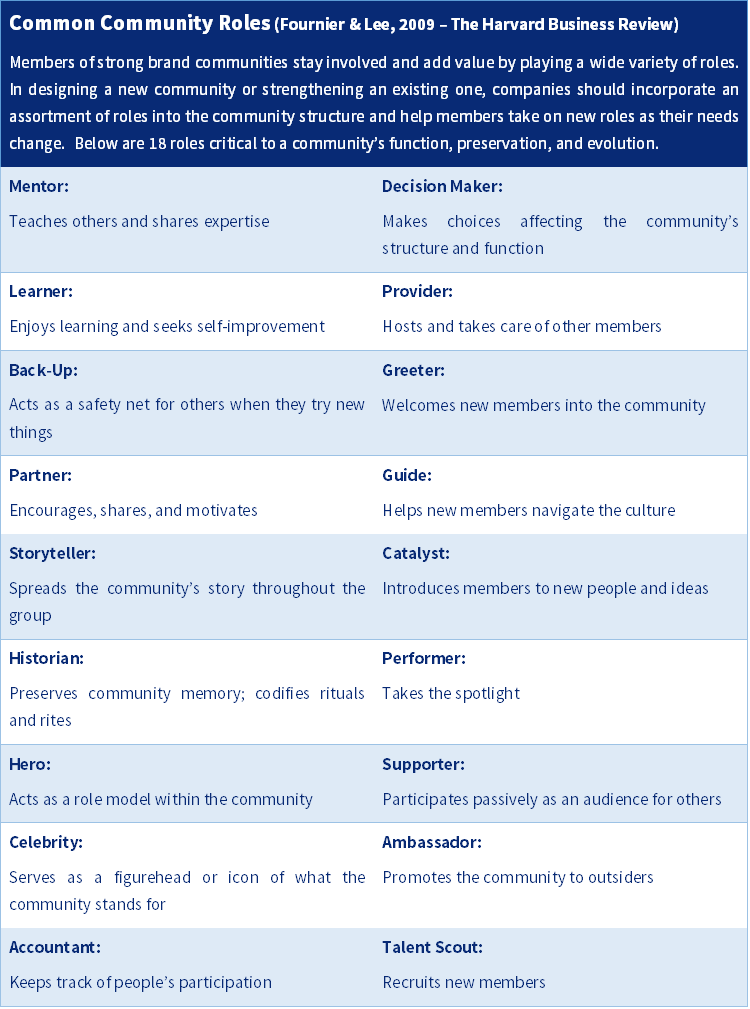
The benefits of brand community
Social networks are everywhere online, and given the capability of technology for a low cost to businesses, it seems like a logical tool that brands can use for marketing.
A community-based brand builds loyalty not by driving sales but by helping people meet their needs. Community commitment increases brand loyalty.
If you have a strong brand community, you will have a strong brand.
Brand community members purchase more often, and they are loyal. Because we do not have to use marketing to attract these customers, reducing the cost per customer.
People express who they are through their consumption of different brands. Brands meaningful to customers can become a community source; people seek kinship through conversations about this brand or topic of interest.
As community members seek kinship, they adopt the "branded lifestyle" to fit into their norms and project their desired social identity.
For new members of the subculture, brands act as a signal or ticket for group membership. Thus, new members adopt brands with iconic connections to the community.
It is vital to research the best approach for your business and customers; it is easy to invest in the wrong areas given the number of options.
You also risk investing in something that ends up being market research and not a genuine community where people connect and interact. They help people find solutions to their problems.
Marketers will benefit from paying attention to conditions that foster bonds with customers, leading to reliable repeat business.
“Creating a brand community is a tactic of relationship marketing, which is marketing activities that attract, develop, maintain, and enhance customer relationships.” (Grönroos, 1994)
Different types of community
Online communities provide companies with the means to facilitate bonding with multiple participants. Online communities usually have three key elements of service value, technical infrastructure and interactivity.
The number of communities available has skyrocketed in the age of the smartphone.
There are two groups of communities, based on who set them up:
- Consumer-initiated communities are voluntarily built by their members.
- Company-initiated communities, built by companies & brands
There are three primary forms of community membership: pools, webs, and hubs. Businesses should try and combine aspects of all three in their community strategy.
- Pools — United by a shared goal or ordinary meaning that holds members together
- Webs — People have strong personal relationships with others who have similar or complementary needs
- Hubs — People have strong connections to a central charismatic figure and weaker associations with each other
User-based communities
Usually, a brand, type of product, industry, or activity are the basis for a community.
Communities are built on consumer needs' response, becoming a source of great information about products and services. They have less bias to one specific brand than that of a brand community. Creating knowledge is the focus of these communities.
Brand communities
Companies set up brand communities for their customers.
User interactions also share substantial amounts of information within a brand community, and members often support the products/services endorsed or recommended by essential others in the community. Usually, these opinions bias the brand.
For example, Apple brand community members often will not even consider non-Apple products or welcome non-Apple users into the community.
A brand community does not exist to serve the business; it exists to serve its people. Managers must remember that people have unique needs, interests, and responsibilities.
Types of Brand Community
There are four main types of online brand communities.
Social communities
Social communities include popular social networks such as Facebook, YouTube or LinkedIn. These networks are typically used for advertising and content marketing to build brand awareness and reach more significant audiences for campaigns and messaging. These are a reliable source of finding broad consumer trends.
Support communities
Support communities are designed to be built into the company's website and are suited to enable members to offer product tips to other customers, helping companies reduce customer support costs.
These communities are a more structured way of gathering innovative ideas from community members. Any term can be searched and analysed.
Advocate communities
Advocate communities focus on their most passionate and loyal customers. Often, firms reward members for writing testimonials, posting about the company on social media and other similar activities.
A significant aim for these communities is to boost positive word of mouth.
Insight communities
Carefully selected groups of customers who support a long-term relationship with brands make up Insight communities.
These communities allow companies to gather continuous, high-quality feedback from engaged stakeholders like customers, partners or employees—a valuable tool for marketing, customer experience and innovation.
Facilitating Community
Community members need to interact with one another and not just the service provider. People have different motives for being committed to a community, so the community manager's job is to allow all users to function.
The characteristics of interaction, quality of information and reward for activities are the most crucial membership drivers, so brands should focus on these areas.
Community Strategy
Online social networks are only a tool — not your comprehensive community strategy. Use online tools selectively to support your brand community's needs.
Companies should use more than one community, as different online community types carry out various business goals. Similarly, firms should not isolate community-building efforts within marketing.
In large organisations, ensure these efforts support business-wide goals and integrate them into your overall strategy.
Other options for communities are BBS (bulletin board systems) and messenger services. Interaction strongly influences community commitment. Include rewards as they significantly impact community commitment and filter out low value to keep the community helpful to members.
Online networks are one tool of a community strategy — Try and support brand communities offline. For example, you could provide community members with physical places for offline activities where the community can meet up. E.g. skateboard brand sponsoring a skate park.
Don't over-manage your community — Conflict means passion
Brand communities mainly focus on their unifying characteristics, but it is also vital to embrace conflict amongst members.
Brand communities tend to avoid conflict, but it is important not to control community management excessively. It is important not to put corporate interests over those of the customers.
Brand communities generate more value when companies create conditions in which communities can thrive, but members control them.
Communities are fundamentally political, “In-groups” need “out-groups” to define themselves.
Not everyone in the community will agree with each other, and brand communities thrive on conflict and contrast.
Embrace the inner conflicts of your communities, and it will succeed.
Create a sense of contrast, conflict, and boundaries.
For example, when a customer in the Apple community buys a Samsung product, they would be shunned into the out-group and alienated from the group. Similarly, PlayStation fans do not like Xbox fans.
Not everyone will value social interaction, or all care strongly about one particular cause. Each community will have unique norms, expectations and conflicts based on these.
Choosing the right online community for your business
Each kind of community offers unique business benefits. When deciding which type best suits your business needs, you need to consider your goal and whose problem are you solving?
Some community types are better suited for specific situations. Are you more after in-depth feedback or just a place for people to hang out? If you want people to hang out, creating a topic or brand based Facebook group is a suitable place to start. Then you can migrate people to a community based on your website.
If your community aims to gauge feedback, it is harder to holistically measure the demographics and other social community characteristics. A small but loud minority often dominates them, and you do not get the complete picture.
Customers go to support communities to find solutions to product problems; this category is a potential source of innovation insight. But these are not set up for a two-way conversation to dig deeper on business issues like social media.
Similarly, firms do not design advocate communities for customer insight.
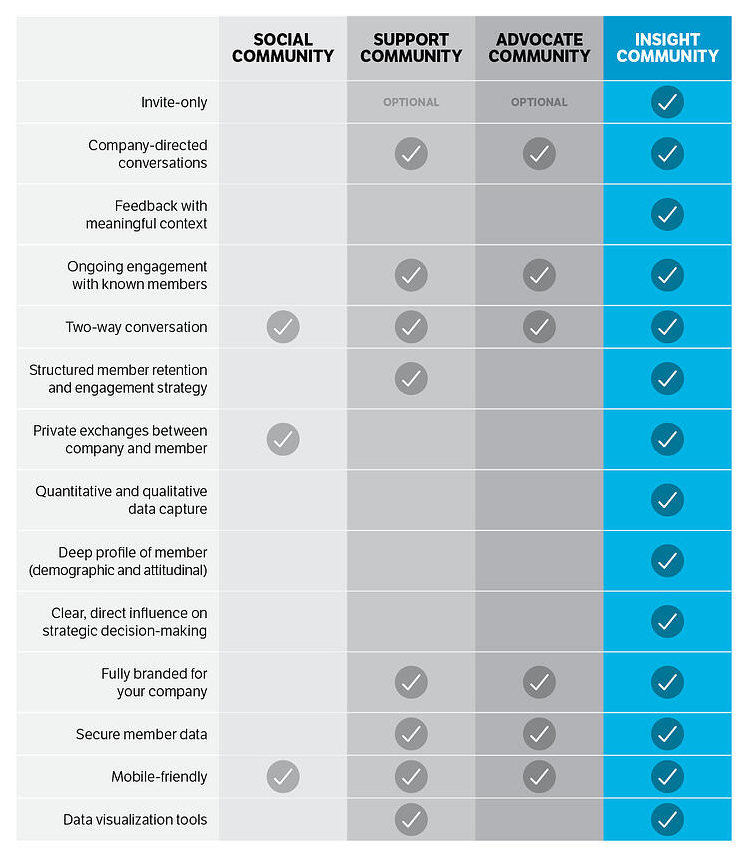
The opt-in nature of insight communities means members are more likely to participate often.
Insight communities allow brands to get a deeper understanding of their consumers. Members agree to take part, allowing your business to gain reliable feedback from highly engaged customers. Because members have opted in, they are more likely to take part. Companies can then build detailed customer profiles.
This checklist can help businesses to choose the most relevant type of community for their needs.
Summary
In sum, if a brand can create and nurture a living and breathing community around their products or services, that means they should have a pretty loyal customer base.
This article has explored strategies that businesses can implement to increase customer loyalty through a relationship marketing orientation.
Thanks for reading,
Dan.
If you enjoyed this content, you might find this one on co-created experiences.
Become a Medium Member
Non-Medium members can only read 3 articles a month.
If you liked the content and would like to read more articles like this, sign up to become a Medium Member for only $5 a month.


