
How the Cocreation of Value Works
If a customer and firm create value together, they both get what they want.

As customers, we're becoming more accustomed to getting what we want.
So how do businesses give customers precisely what they want?
One way is by letting them co-create value.
This article explores the co-creation of value as a strategy and how it creates a unique value for customers, creating a competitive advantage.
What is co-creation?
Co-creation is the actions of more than one person or party, bringing something into existence. The relationship is interactive; customers and staff function as active participants. Co-creation is also a strategy and process focusing on the joint creation of value by customers and businesses.
It is becoming more common for service providers to let customers co-create value — this mutual creation of services enhances customers' consumption experience.
Value co-creation is an application for products and goods-based businesses and services and experiences.
Marketing helps facilitate this mutual creation and enjoyment of value — business has moved away from the traditional model of customers purchasing goods or services.
Now, customers can engage in dialogue with suppliers during each product design and product delivery stage.
Value co-created at multiple points of interaction.
“Co-creation is about joint creation of value by the company and the customer. It is not the firm trying to please the customer.” (Prahalad & Ramaswamy, 2004)
Characteristics of co-creation include:
- Allowing the customer to co-construct personalised service experience to suit her context
- Joint problem definition and problem-solving
- Creating an experience environment in which consumers can have active continuous dialogue and co-construct personalised experiences
- A variety of unique customer experiences
- Innovative experience environments
Co-creation of value vs co-created experiences
There are two distinct categories of firms that use co-creation as a marketing strategy: co-creation of value and co-created experiences.

The co-creation of value
Encouraging active involvement from the customer, co-creation of value from products or services is on-demand and made-to-order. It is a collaborative effort, and customers help make it happen to reach their goals.
Customer experiences and perceptions influence their value considerations and highly informed consumers are willing to pay more for businesses that meet their requirements.
Customers and other stakeholders such as suppliers are actively involved in problem-solving, suggesting ideas, designs, concepts, and solutions for products and services.
Co-creating value can be throughout the entire process, from idea generation to the end-user.
Unilever is an example of a brand embracing co-creation of value. Their Open Innovation platform communicates their specific challenges to the public and encourages people or businesses to submit responses for potential solutions.
“Marketing should be viewed as a set of processes and resources with which the company seeks to create value propositions. Processes include the procedures, tasks, mechanisms, activities and interactions which support the co-creation of value.” (Storbacka, 2007)
Co-created experiences
Inviting and encouraging active involvement and participation from customers, Co-created experiences are unique and value-rich. An interactive relationship between the customer and the experience focuses on facilitating the co-creation of consumers' diverse backgrounds.
An example of a co-created experience is concerts. The audience can choose whether they have a seat or stand near the stage and their active involvement as a community in singing and dancing. Staff are also actively involved in co-creating the customer experience.
“…Involving the customer in the service system more broadly and in various stages and functions of the service value chain.” (Oertzen, Odekerken-Schröder, Brax, & Mager, 2018)
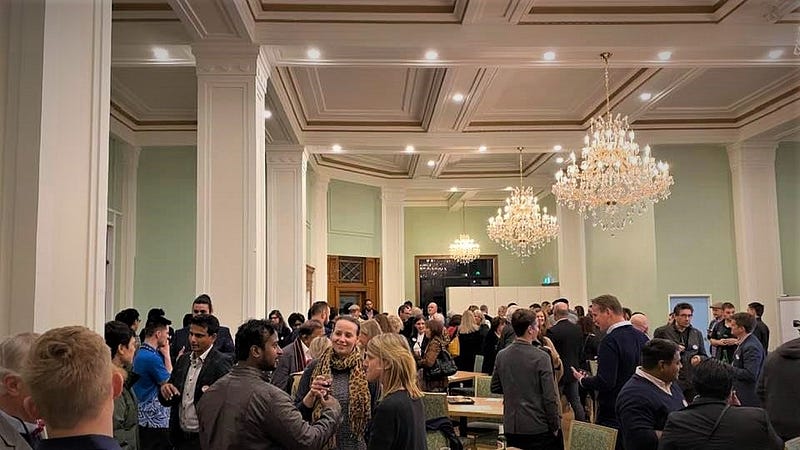
From a product to customer-focused strategy
Co-creation is becoming a central focus in the management and marketing of services. Customers' value creation has evolved from a product-centric focus to a consumer-centric approach.
The 21st century has seen a mindset shift, firms now recognising customers as active collaborators, co-creation efforts are now a competitive strategy.
The customer and their experiences with the firm now dictate much of the decision-making process. Service providers should ditch their product-centred approach instead of focusing on helping customers co-create their desired personalised experience.
"Companies must escape the firm-centric view of the past and seek to co-create value with customers through an obsessive focus on personalised interactions between the consumer and the company." (Prahalad & Ramaswamy, 2004)
Acknowledging the customers' point of view should help define the design of experiences, and therefore businesses should be active in understanding consumer trends, desires, and preferences.
Customer experiences
Often, the quality of the consumer experience depends on the nature of their involvement. Rather than playing a passive role, consumers want to take more active co-creating experiences.
Consumers wish for the empowerment to co-create a personalised experience. That is where the real value resides to them.
Experiential marketing emphasises emotional benefit to consumers rather than the utility of the goods or service itself.
“The experience is the brand. The brand is co-created and evolves with experiences.” (Prahalad & Ramaswamy, 2004)
Prerequisites of co-creation
The marketing literature discusses several terms as either synonyms for co-creation or prerequisites. Whether they sit alongside co-creation or are fundamental in creating co-creation is probably irrelevant.
Some of these prerequisites for co-created experiences include: collaborative, customer involvement, engagement and participation.
Co-design, co-development, co-production, co-consumption are also discussed as types of co-creation.
Application and management of co-creation
There are many diverse applications for co-creation in business. The rapidly evolving nature of technology provides new opportunities and breakthroughs in allowing consumers the opportunity to co-create value.
Interaction and exchange of information are critical components of co-creation — a series of two-way interactions between the customer and the provider.
Businesses utilise customers' knowledge to improve innovation with the co-design and development of new goods and services, and customers can customise products or services to fit their exact needs.
Processes and resources are set in place for customers to manage their experience to fit their requirements. The amount of information, knowledge, skills and other resources available to consumers will influence their ability to co-create value.
One example of this is self-service, where there is a transfer of labour to the customer—such as the McDonald's interactive screens where customers can customise their order,
Online, businesses can use “social media as a real-time interactive channel to co-create value with consumers and develop authentic engagement” (Buhalis & Sinarta, 2019).
The use of online communities helps businesses engage in digital co-creation to improve customer support, facilitate meaningful relationships with customers, and develop innovative ideas.
Set goals and put strategies in place for both the customer and the provider to create shared value.
Each industry and customer group will have their preferences and opportunities to co-create value, so this process is ongoing to evaluate the unique situations. Every interaction between them makes a cumulative contribution to co-created value.
In the case of co-created experiences such as live sport, the theatre or a concert, the aim should be to create an atmosphere concurrent to high customer involvement.
Create an environment where different audience types can successfully immerse themselves. There are three co-creators of the experience in this context: the artist/athletes, the servicescape (venue) and the audience.
“Organizations require a long-term view of customer relationships, which does not fit well with the short-term financial goals that tend to drive Western capital markets.” (Payne, Storbacka, & Frow, 2008).
The benefits to customers of co-creation
Cocreation provides unique experiences for customers. Customers expect more personalised and customised services to choose how they interact with the firm.
Co-created value can provide customers with financial benefits. It can be cheaper for them to design a custom offering rather than paying more and receiving some features or services they do not want or need.
The most significant benefit to customers of co-create is that it makes them happier.
Well-being
The enjoyment of the consumption of experiences increases the well-being of those individuals.
These collaborative experiences provide both hedonic and eudaimonic well-being through the co-creation process.
Hedonic well-being comes from a sense of pleasure, whereas eudaimonic well-being comes from meaning.
The social benefits from connecting with other people during an experience can provide both these benefits (See Hopper, Costley, & Friend, 2015 — YES! That is me).
If consumption experiences become 'extraordinary' (See Arnould & Price, 1993), consumers experience personal growth, self-renewal and heightened feelings of pleasure through the co-creation of this optimal experience.
Through ritualised practices, emotional intensity, and interaction with like-minded others, co-creation becomes a part of an authenticating act.
Having a feeling of authenticity contributes to consumers' happiness — an internal reward for their consumption-related behaviour.
The benefit to businesses of co-creation
There are several benefits to businesses managing value co-creation with their customers.
Some of those benefits include (See Oertzen, Odekerken-Schröder, Brax, & Mager, 2018):
- High-quality interactions result in improved efficiency and effectiveness in operations
- Enhanced relationships and enhanced customer loyalty
- Maximise the lifetime value of desired customer segments
- New sources of competitive advantage
- Enhanced knowledge and skills to develop new offerings and improve existing ones.
- Shorter time-to-market for new offerings
- Increased financial performance of profit margins and sales of new offerings
- Improved working environments and teamwork
In summary, firms can use co-creation as a business strategy to provide value to customers by giving them the product, service or experience they want.
This process provides unique value to a customer that competitors cannot replicate.
Dan
If you enjoyed the content, you might like this article on customer service.
Read as many Medium articles as you like!
Non-Medium members can only read 3 articles a month.
If you liked the content and would like to read more articles like this, sign up to become a Medium member for only $5 a month.


