avatarWorld As One 4PEACE

Free AI web copilot to create summaries, insights and extended knowledge, download it at here

4319

Abstract

ENA would be benefical to OPEC oil supplies and exports. China would need ALOT MORE oil, and the supply chains would improve the prospects of getting more oil moved around North Africa, set to become one of the world’s next industrial and energy hubs.</p><figure id="59d1"><img src="https://cdn-images-1.readmedium.com/v2/resize:fit:800/0*vom3mRI4CF1MdzvE"><figcaption></figcaption></figure><p id="ddd0">It was reported by <a href="https://www.reuters.com/markets/deals/berkshire-hathaway-boosts-stake-occidental-petroleum-244-2023-05-18/"><b>Reuters</b></a> that Berkshire Hathaway has once again increased its stake in the Permian Basin oil and gas producer Occidental Petroleum (OXY).</p><p id="c4a1">This brings their overall investment stake in the company to 24.4%.</p><p id="9005">Warren Buffet’s company has increased shares in OXY since the company acquired Anadarko Petroleum Corporation in 2019.</p><p id="4a55">This is a big story in stock market and financial news, as it revealed a much bigger focus on <a href="https://www.cnbc.com/video/2022/12/05/energy-sector-is-well-positioned-heading-into-2023-says-goldman-sachs-jeff-currie.html?__source=androidappshare"><b>energy equities</b></a> and an overall bullish environment for capital investments in the energy sector, especially in oil. However, it must be taken into consideration how much of an impact <a href="https://www.bbc.com/news/world-asia-india-60783874"><b>China and India</b></a> will have on global oil markets. They are the biggest importers of Russian oil. But they are also competing for global industrial production capital and foreign direct investments (FDI) vis-a-vis one another.</p><p id="a92f">That’s why the increased attention put on the United States’ oil and gas production markets are only one part of the story: it is not necessarily the driving factor for global energy markets. This is evident in the decision of OPEC+ to decrease their oil production output in spite of competition from US oil and gas production.</p><figure id="eac4"><img src="https://cdn-images-1.readmedium.com/v2/resize:fit:800/0*GO9MbD0968gcJjbG"><figcaption>Photo by <a href="https://unsplash.com/@coloradohiker?utm_source=medium&amp;utm_medium=referral">Allan Nygren</a> on <a href="https://unsplash.com/?utm_source=medium&amp;utm_medium=referral">Unsplash</a></figcaption></figure><p id="594f">In the game of mergers there was one: American PGA Golf Tour and Saudi-led LIV will merge, per reporting on <a href="https://www.reuters.com/sports/golf/pga-golf-liv-deal-trump-loves-it-democrats-hate-it-regulators-may-have-questions-2023-06-06/?utm_source=Sailthru&amp;utm_medium=Newsletter&amp;utm_campaign=Daily-Docket&amp;utm_term=060723"><b>6 June 2023</b></a>, to create a new company in the competitive pro-golf battleground.</p><p id="3b36">Controversy over Saudi Arabia’s Crown Prince Mohammed-Ben Salmane — known just by MBS — is getting the attention of some of the pro golfers. But I was to diverge from this narrative and focus on another critical aspect of the Saudi-led Public Investment Forum (PIF): mining.</p><p id="957c">With more than <a href="https://www.arabnews.com/node/2315431/business-economy"><b>$1.3 trillion in critical minerals</b></a> reportedly in Saudi Arabia, it’s not difficult to explain why the metals and mining sector would become a critical driver of the Saudi economy going forward.</p><p id="2e1f">The company to watch here is Ma’aden, a joint-venture with Saudi Arabia’s PIF to lead the push into metals and mining in the country.</p><p id="271f">In the words of one of the PIF’s leading voices, Mohammed Aldawood, Head of industrials and mining sector for Middle East and North Africa (MENA), the PIF investments in metals and mining “will initially focus on investing in iron ore, copper, nickel and lithium as a non-operating partner taking minority equity positions.” <a href="https://www.arabnews.com/node/2315431/business-economy"><b>Arab News</b></a></p><p id="eef3">We need to get <i>more </i>serious about Climate Change, but also look at how the world’s most valuable commodities are going to be needed and secured in the future; hence the critical nature of future-facing commodities.</p><p id="db81">The geopolitical trends point to this conclusion: the future of global economic development is g

Options

oing to depend heavily on the effective production and supply of global commodities around the world. That’s why one of the biggest industrial trends for global mining projects is related to Environment, Social, Governance (ESG) frameworks and shareholder values.</p><p id="d82b">The examples of China and Russia do indeed prove how crucial commodities are becoming to geopolitics. One aspect of the China-Russia relationship depends on how much damage the sanctions from the United States and European Union will cause to metals and mining.</p><p id="682f">The world has seen numerous export bans on critical inputs to fertilizer and food production since the outbreak of Covid-19 in 2020. This circumstance has created a massive ripple effect on economies of the underdeveloped and undeveloped worlds, where civil unrest has become a source of tension for government stability in many countries of Middle East, Sub-Saharan Africa and South Asia.</p><p id="537c">Ukraine’s agriculture production has had an impact on the world’s food supply, notably due to wheat cultivation and production. Sanctions on China would only exacerbate the ongoing global food crisis which has seen significant strain to economic production all over the world, including in developing economies, where the historical highs in fertilizer prices has led to high crop prices and thus higher consumer prices at the wholesale and broader marketplace levels.</p><p id="aa6e">Imagine if the same tactics were applied by countries to target China’s and Russia’s metals production and supply? It would be disastorous for the Global Economy, as the massive rollout of EVs, renewable energy installations and more construction projects require massive amounts of copper and nickel — among other metals.</p><p id="0a7d">These trends are part of the much larger geopolitical trends that have been kickstarted by the global COVID-19 pandemic. The global pandemic has caused several countries to unravel, with socio-political instability that was building up for decades, and causing the global economy to be shaken up with uncertainties, putting the world’s largest companies in some of the most vulnerable areas.</p><figure id="b30e"><img src="https://cdn-images-1.readmedium.com/v2/resize:fit:800/0*6ZbX5pwMdT1CTBW1"><figcaption>Photo by <a href="https://unsplash.com/@i1darkz?utm_source=medium&amp;utm_medium=referral">Mohammed Alzubidi</a> on <a href="https://unsplash.com?utm_source=medium&amp;utm_medium=referral">Unsplash</a></figcaption></figure><p id="2b9d"><a href="https://medium.com/areas-producers"><b>Curious About Culture, Intellectual About The World</b></a>. Discover this publication’s content writers explaining scenarios/shifts related to geopolitics, future industrial policies and advanced technologies.</p><p id="be6b"><a href="https://medium.com/areas-producers/newsletters/the-weekend-brief-twb?source=collection_about-------------------------------------"><b>Sign up for The Weekend Brief (TWB)</b></a> newsletter to stay on top of what’s happening with publicly-traded companies operating in global markets (including stock markets) at the nexus of tech, industrials and global commodities.</p><p id="06e9">TWB: <a href="https://readmedium.com/everybody-wants-some-nickel-phosphates-demand-are-going-to-explode-with-volatile-commodities-728eae46ef36?sk=605c1043ab38c23435fd96041b0785ec"><b>Everybody Wants Some — Nickel & Phosphates Demand Are Going To Explode With Volatile Commodities Markets in the Future</b></a>.</p><div id="7eb6" class="link-block"> <a href="https://readmedium.com/everybody-wants-some-nickel-phosphates-demand-are-going-to-explode-with-volatile-commodities-728eae46ef36"> <div> <div> <h2>Everybody Wants Some — Nickel & Phosphates Demand Are Going To Explode With Volatile Commodities…</h2> <div><h3>The Weekend Brief (TWB) is inspired by one of the ultimate American rock and roll bands to ever step into the history…</h3></div> <div><p>medium.com</p></div> </div> <div> <div style="background-image: url(https://miro.readmedium.com/v2/resize:fit:320/0*EHR8UgzDitrRGFAY)"></div> </div> </div> </a> </div></article></body>

Producers Overview: Saudi Aramco & Ma’aden

An overview of content about Saudi Aramco and Ma’aden in Areas & Producers
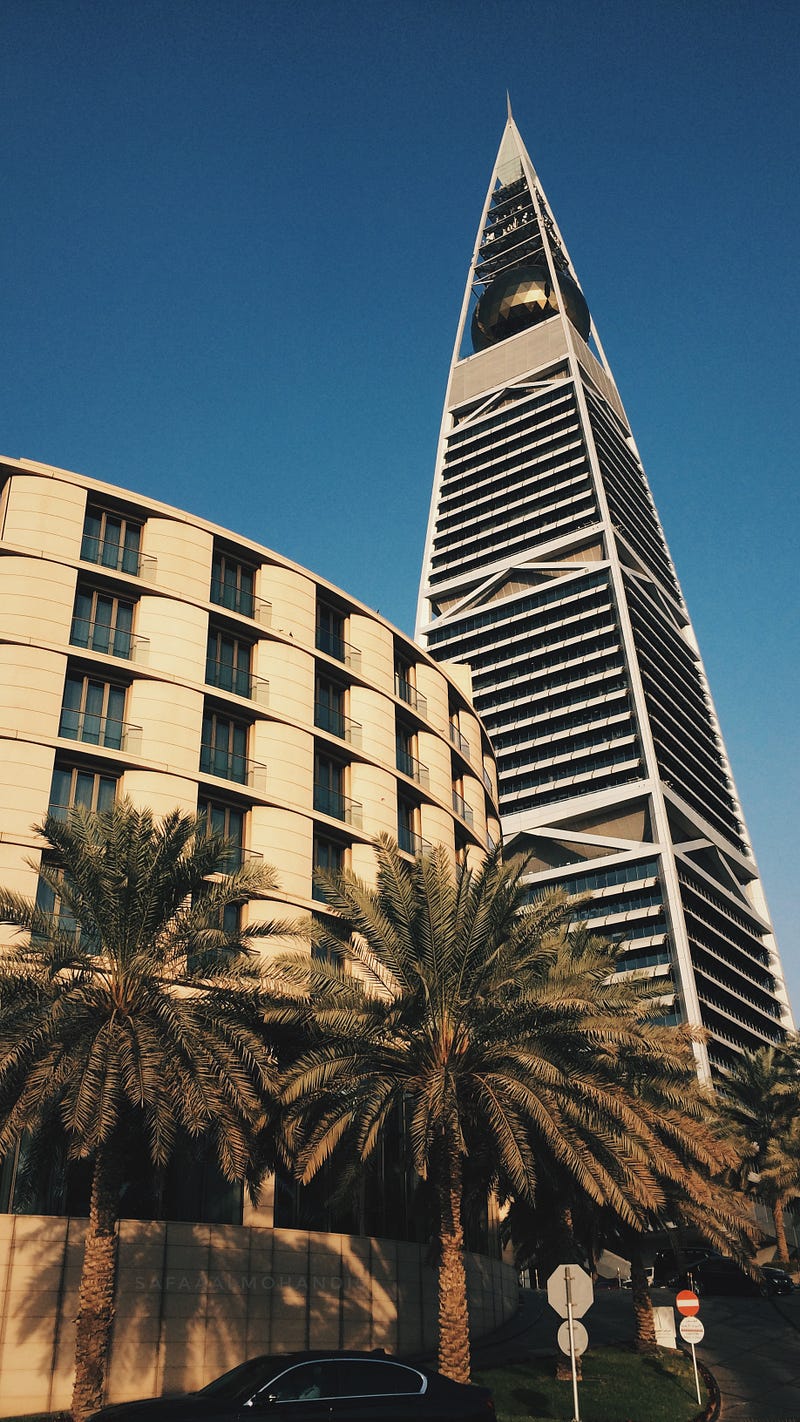
Photo by Safaa Almohandis on Unsplash

In what is likely to be one of the biggest headlines about business partnerships in industrials, Saudi Aramco and TotalEnergies have agreed to give out engineering and production contracts (EPC) to begin building a world-class petrochemicals facility at the SATORP refinery in Saudi Arabia.

On 24 June 2023 Saudi Aramco president and CEO, Amin H. Nasser, and TotalEnergies chairman and CEO, Patrick Pouyanne, signed the agreement with government officials from South Korea and Saudi Arabia in attendance.

According to a report about the signing ceremony by Arab News, this new petrochemical complex at the SATORP refinery will become the base for one of the largest mixed-load steam crackers located in the Persian Gulf.

These business agreements carry some significant weight to how producers are thinking about the geopolitical trends. For isntance, one of the key concerns for Saudi Aramco is how it will balance its most important partners, like France and United States, with some of its most important customers, like China.
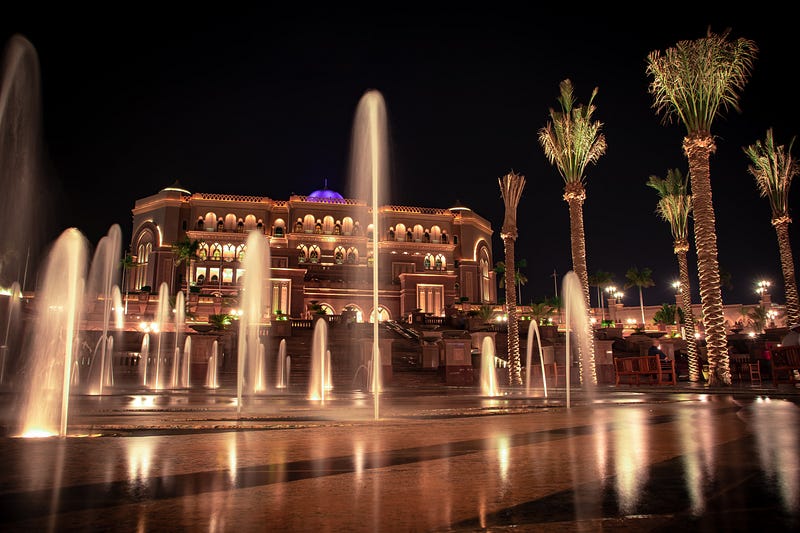
Photo by Artur Aldyrkhanov on Unsplash

It was reported by Reuters on 25 May 2023 that the Saudi oil and gas giant, Saudi Aramco, intends to invest in the development of Iraq’s Akkas gas field. It was reportedly discussed at the Saudi-Iraqi Coordination Council.

Meanwhile, on the same news day, Upstream reported that Saudi Aramco had reached an agreement with China’s Offshore Oil Engineering Company (COOEC) for an engineering, procurement, construction and installation (EPCI) contract at the Safaniyah oilfield in Kingdom of Saudi Arabia.

China, through companies like COOEC, is becoming a leading EPC or EPCI player in the global oilfield services industry. According to the news agency Oil & Gas Middle East the contract will be worth $1 billion as it is “the world’s biggest conventional offshore oil field…”

The First Arab-Chinese Summit signals a change in the thinking on Saudi Arabia’s control over oil production, and how they wish to court China as a major oil importers. Increasing military and defense ties would be a big step, though I don’t think that’s the overall concern here.

A bigger concern is how and to what extent China is going to roll out its Belt and Road Initiative (BRI), where the Middle East and North Africa (MENA) is poised to play a pivotal role in linking up supply chains and transport routes throughout the European, African and Asian continents.

This is relevant to global oil supplies in a number of ways. Let me just say that the countries with increased leverage over oil markets are more likely to use this advantage to achieve political ends. A successful roll out of the BRI in MENA would be benefical to OPEC oil supplies and exports. China would need ALOT MORE oil, and the supply chains would improve the prospects of getting more oil moved around North Africa, set to become one of the world’s next industrial and energy hubs.
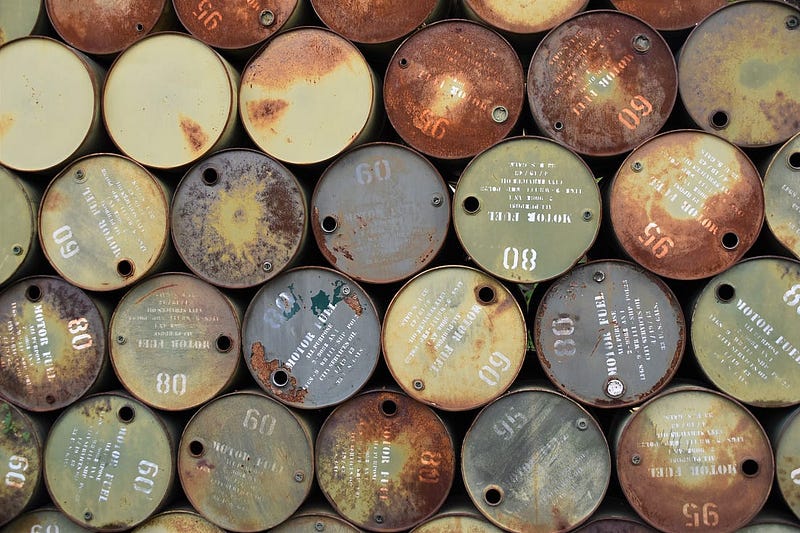
It was reported by Reuters that Berkshire Hathaway has once again increased its stake in the Permian Basin oil and gas producer Occidental Petroleum (OXY).

This brings their overall investment stake in the company to 24.4%.

Warren Buffet’s company has increased shares in OXY since the company acquired Anadarko Petroleum Corporation in 2019.

This is a big story in stock market and financial news, as it revealed a much bigger focus on energy equities and an overall bullish environment for capital investments in the energy sector, especially in oil. However, it must be taken into consideration how much of an impact China and India will have on global oil markets. They are the biggest importers of Russian oil. But they are also competing for global industrial production capital and foreign direct investments (FDI) vis-a-vis one another.

That’s why the increased attention put on the United States’ oil and gas production markets are only one part of the story: it is not necessarily the driving factor for global energy markets. This is evident in the decision of OPEC+ to decrease their oil production output in spite of competition from US oil and gas production.

Photo by Allan Nygren on Unsplash

In the game of mergers there was one: American PGA Golf Tour and Saudi-led LIV will merge, per reporting on 6 June 2023, to create a new company in the competitive pro-golf battleground.

Controversy over Saudi Arabia’s Crown Prince Mohammed-Ben Salmane — known just by MBS — is getting the attention of some of the pro golfers. But I was to diverge from this narrative and focus on another critical aspect of the Saudi-led Public Investment Forum (PIF): mining.

With more than $1.3 trillion in critical minerals reportedly in Saudi Arabia, it’s not difficult to explain why the metals and mining sector would become a critical driver of the Saudi economy going forward.

The company to watch here is Ma’aden, a joint-venture with Saudi Arabia’s PIF to lead the push into metals and mining in the country.

In the words of one of the PIF’s leading voices, Mohammed Aldawood, Head of industrials and mining sector for Middle East and North Africa (MENA), the PIF investments in metals and mining “will initially focus on investing in iron ore, copper, nickel and lithium as a non-operating partner taking minority equity positions.” Arab News

We need to get more serious about Climate Change, but also look at how the world’s most valuable commodities are going to be needed and secured in the future; hence the critical nature of future-facing commodities.

The geopolitical trends point to this conclusion: the future of global economic development is going to depend heavily on the effective production and supply of global commodities around the world. That’s why one of the biggest industrial trends for global mining projects is related to Environment, Social, Governance (ESG) frameworks and shareholder values.

The examples of China and Russia do indeed prove how crucial commodities are becoming to geopolitics. One aspect of the China-Russia relationship depends on how much damage the sanctions from the United States and European Union will cause to metals and mining.

The world has seen numerous export bans on critical inputs to fertilizer and food production since the outbreak of Covid-19 in 2020. This circumstance has created a massive ripple effect on economies of the underdeveloped and undeveloped worlds, where civil unrest has become a source of tension for government stability in many countries of Middle East, Sub-Saharan Africa and South Asia.

Ukraine’s agriculture production has had an impact on the world’s food supply, notably due to wheat cultivation and production. Sanctions on China would only exacerbate the ongoing global food crisis which has seen significant strain to economic production all over the world, including in developing economies, where the historical highs in fertilizer prices has led to high crop prices and thus higher consumer prices at the wholesale and broader marketplace levels.

Imagine if the same tactics were applied by countries to target China’s and Russia’s metals production and supply? It would be disastorous for the Global Economy, as the massive rollout of EVs, renewable energy installations and more construction projects require massive amounts of copper and nickel — among other metals.

These trends are part of the much larger geopolitical trends that have been kickstarted by the global COVID-19 pandemic. The global pandemic has caused several countries to unravel, with socio-political instability that was building up for decades, and causing the global economy to be shaken up with uncertainties, putting the world’s largest companies in some of the most vulnerable areas.
Photo by Mohammed Alzubidi on Unsplash

Curious About Culture, Intellectual About The World. Discover this publication’s content writers explaining scenarios/shifts related to geopolitics, future industrial policies and advanced technologies.

Sign up for The Weekend Brief (TWB) newsletter to stay on top of what’s happening with publicly-traded companies operating in global markets (including stock markets) at the nexus of tech, industrials and global commodities.

TWB: Everybody Wants Some — Nickel & Phosphates Demand Are Going To Explode With Volatile Commodities Markets in the Future.

Business
Energy
Oil
Mining
Investment
Recommended from ReadMedium