
Was Princess Diana ‘queer’?
Let’s look at the oddly gendered legend
Was Princess Diana ‘queer’? The question erupted in British media when the actor Emma Corrin, who played her in ‘The Crown’, suggested so.
“In many ways Diana was so queer,” Corrin told the Sunday Times. “She was the definite ‘other’ within the family and always embraced ‘outsiders’.”
To say that Diana is a ‘queer icon’ is uncontroversial, but many seemed mystified and even angered by the idea that she was ‘queer’ herself.
I stopped to wonder: Are we thinking of the same Princess Diana?
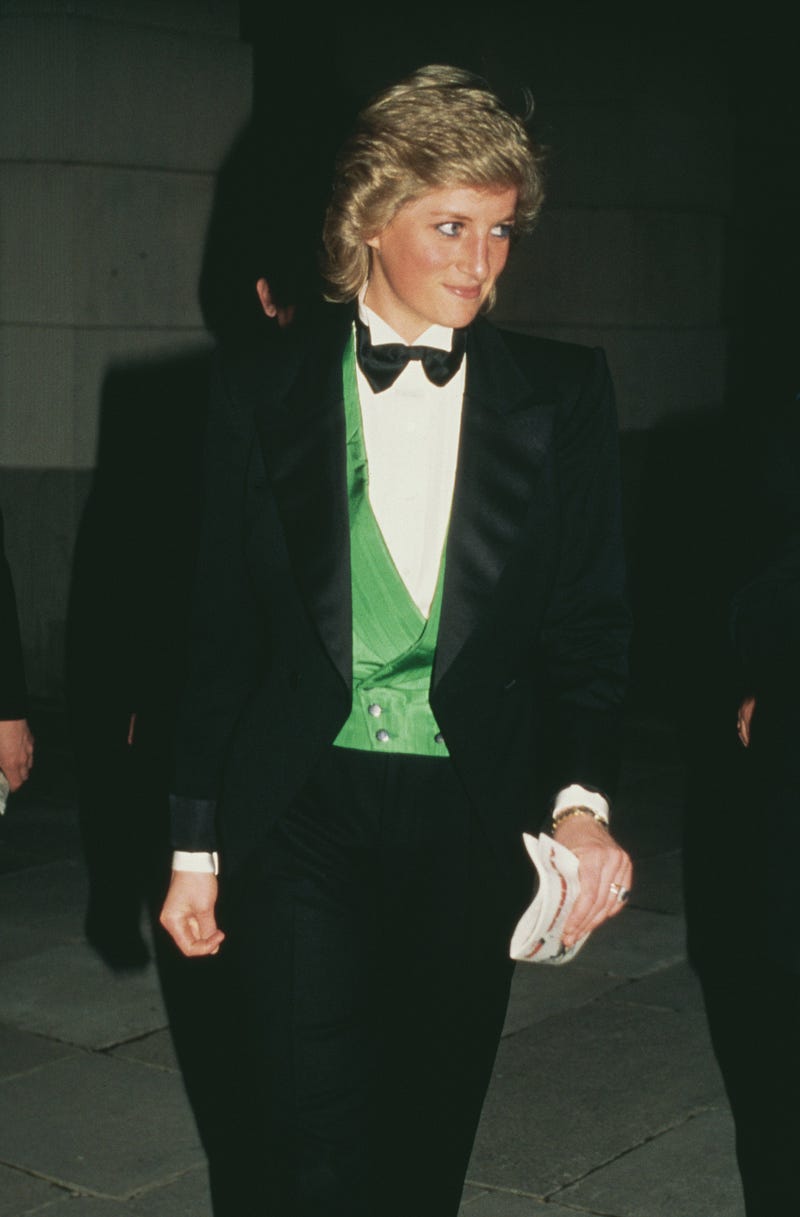
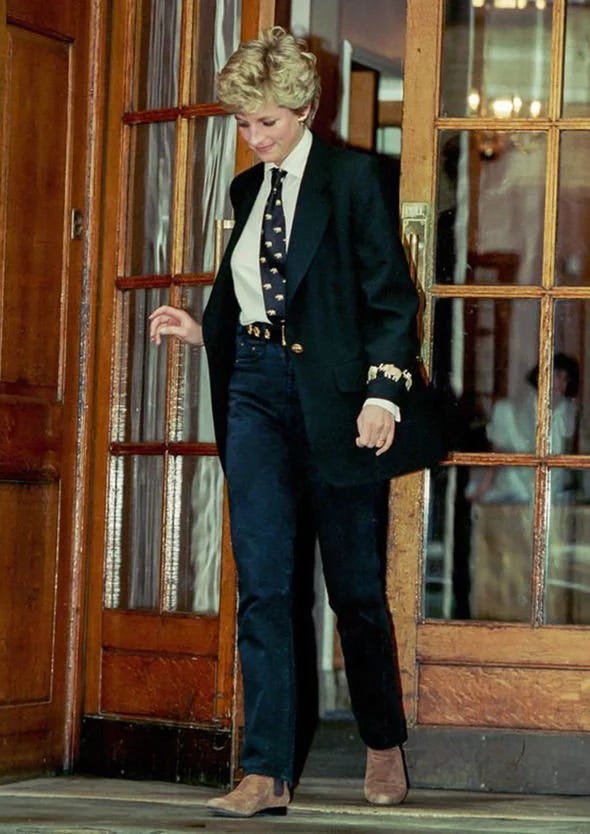
Over the years, Diana often dressed in a tuxedo.
Her stylist Anna Harvey recalled the first time. It was an evening of 1984 when Diana was to attend a Genesis concert. Harvey recalls thinking: “She’s taken it all the way.”
Princess Diana was a man — in ruby red shoes.
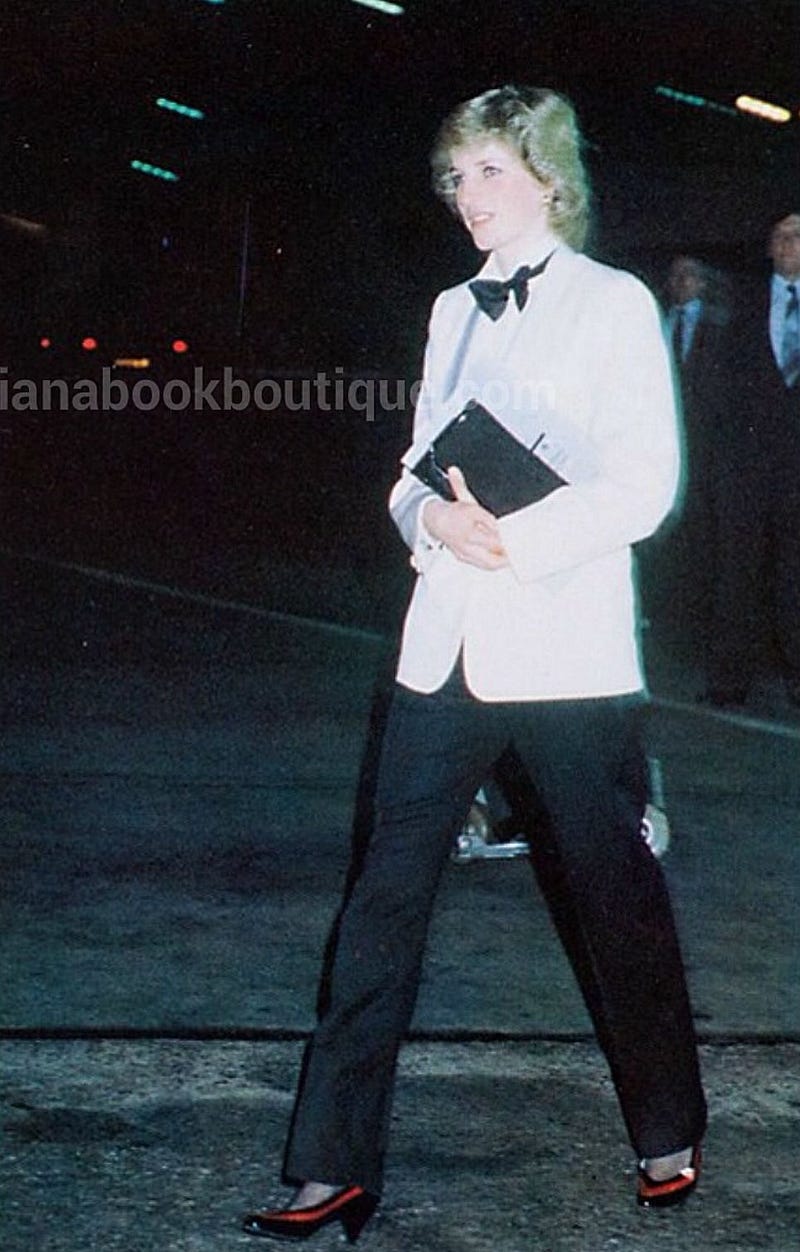
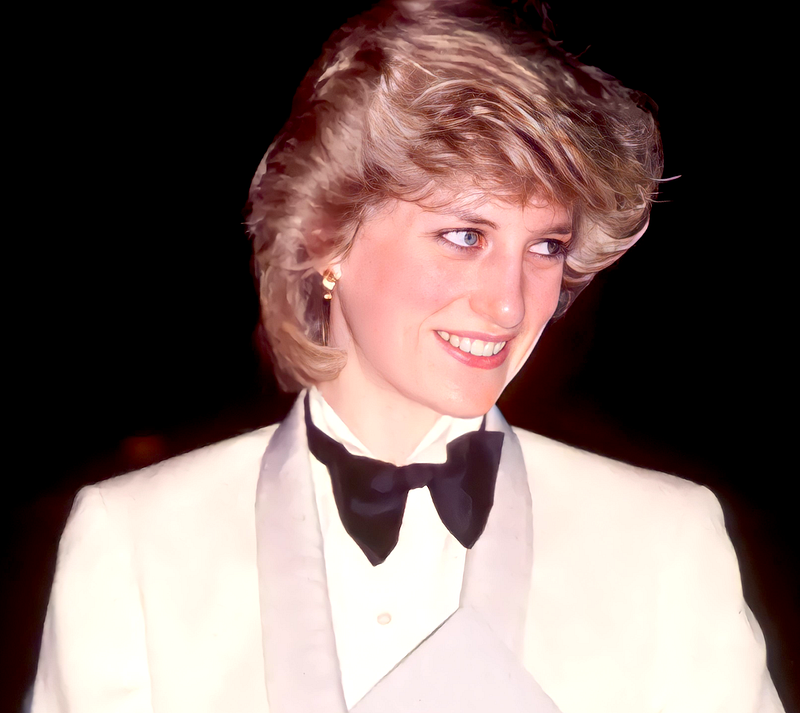
But I guess I’m left thinking about what “queer” means.
Diana seems clearly to have been ‘genderbending’ in her style.
Is that ‘queer’?
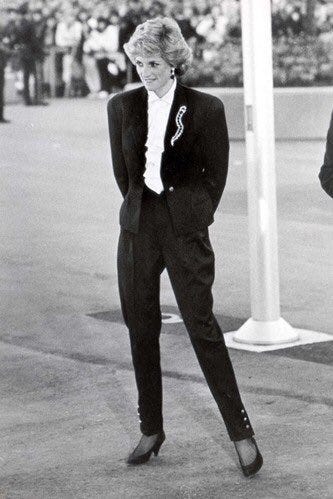
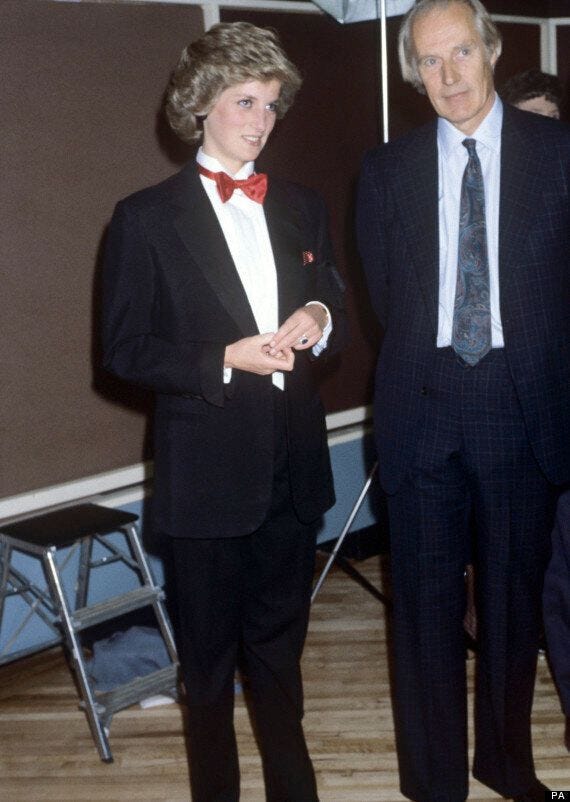
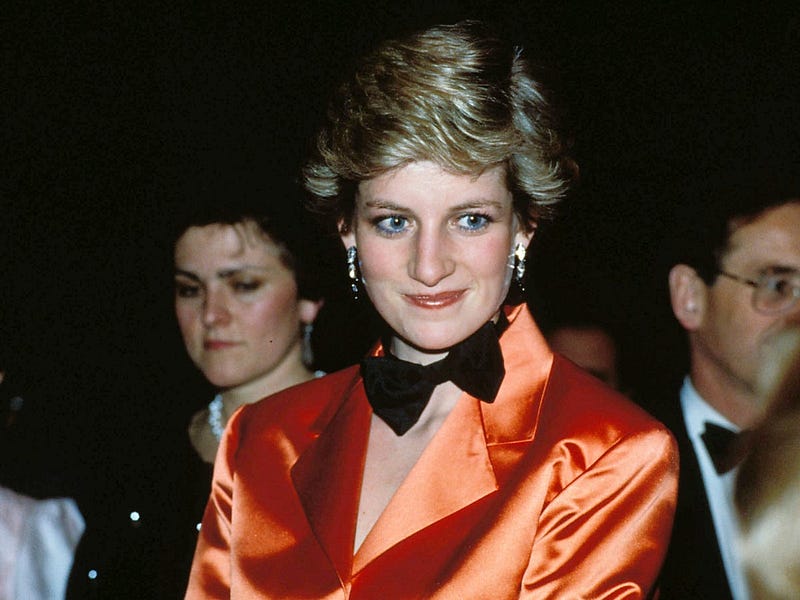
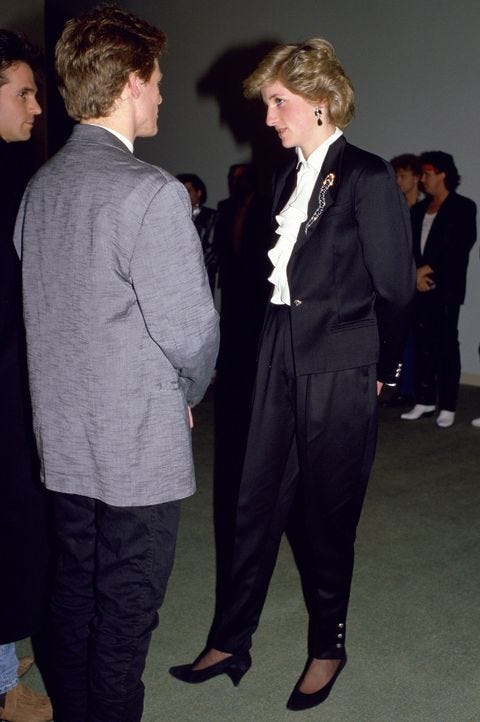
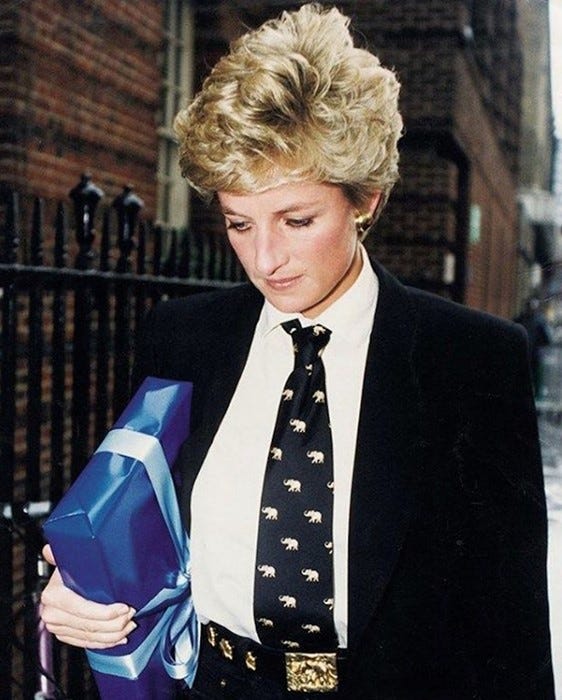
Dressing in menswear wasn’t just for formal events.
Most any day, Diana could appear styled, basically, as a man. How amazing it’d have been to stroll down the streets of London, and see her — or him?
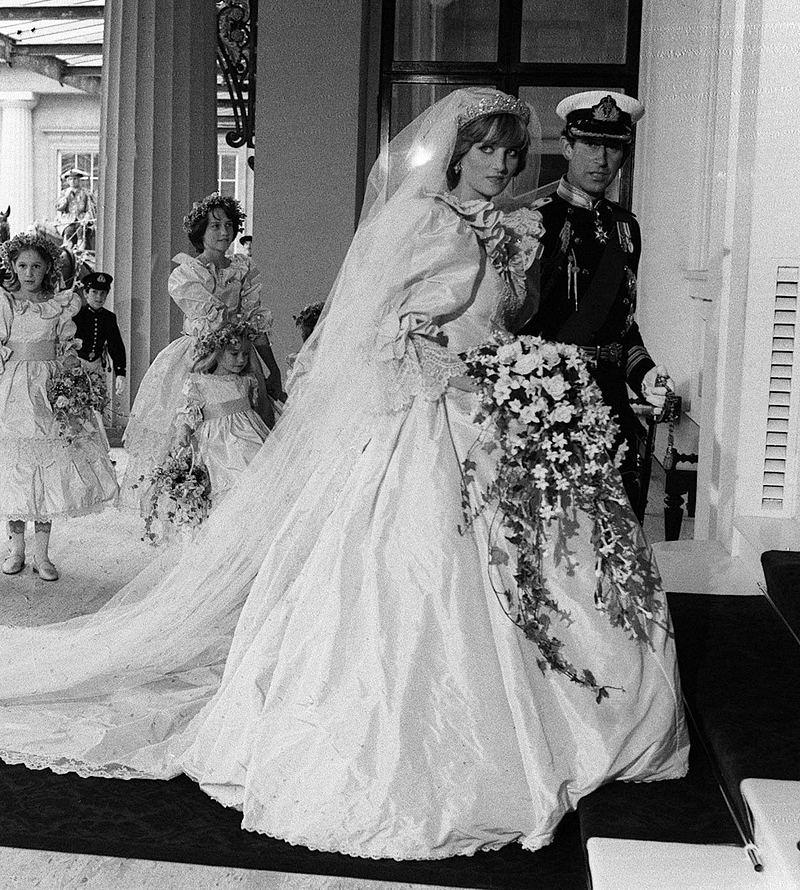
She married Prince Charles in 1981.
And suddenly, around the world, life wasn’t boring anymore. Her appearances were epic events. Marrying a prince, he became the ‘commoner’, for she carried some strange light inside her.
Her wedding seemed like Cinderella come to life. To look at her now — how absurd it was to have put a woman in that mountain of fabric and fantasy.
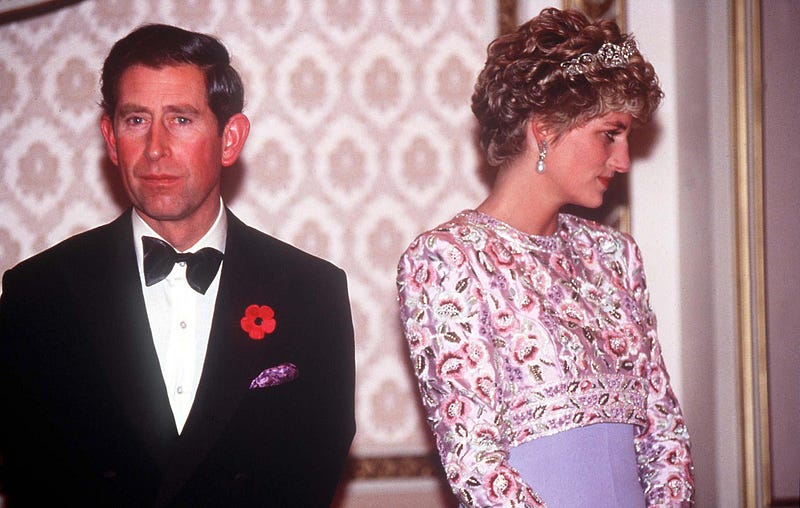
Scholars write about Princess Diana as ‘queer’.
Or as Elizabeth Stuart puts it, “capable of being read through a queer lens.”
Diana had many of the markings and narrations associated with queer people. She tried on identities like costumes, finding they weren’t her. She was the fairy tale princess. She was the wife.
She’d reveal information in sensational disclosures. She was bulimic. She was unhappy. She’d thrown herself down the stairs.
The whole story “came out.”
Where ordinary people seek to keep their dramas contained, private, concealed, Princess Diana was a perpetual fountain of secrets. (It continued long after her death, as her gay butler Paul Burrell made regular disclosures about her.)
Her marriage had to be drastically re-read. She’d been hired—without knowing it—to play the role of dutiful wife, as her husband was actually ‘with’ another woman, Camilla Parker-Bowles.
All the ‘fairy tale’ boy-girl stuff had been an illusion, or a prison.
Queer people could relate to that. Was Diana one of them?
I think over all the magical scenes.
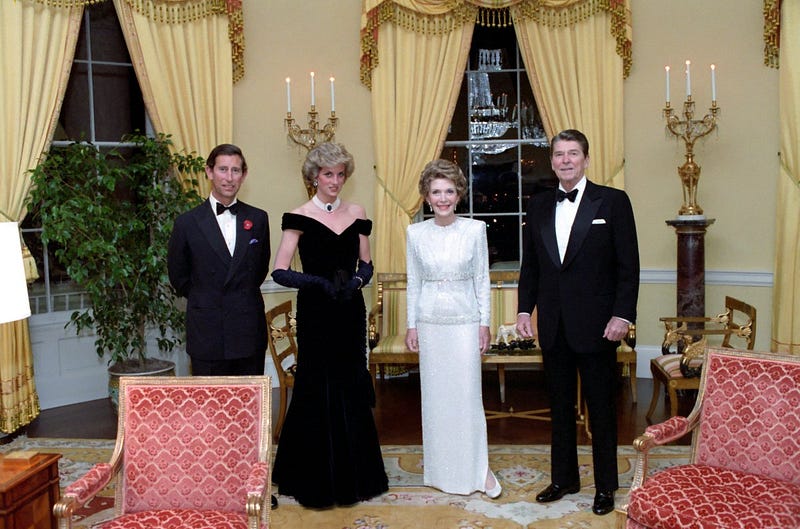
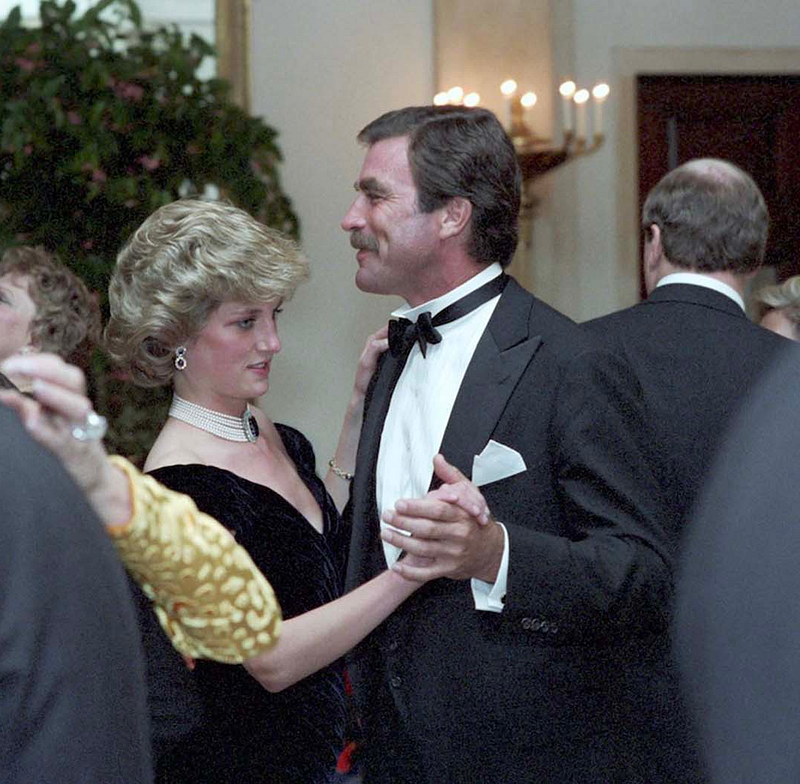
There’s the evening of November 9, 1985, when she and Charles arrived at the Reagan White House. At age 24, Diana could at first seem to fade into the backdrop. That’s when she was with her husband.
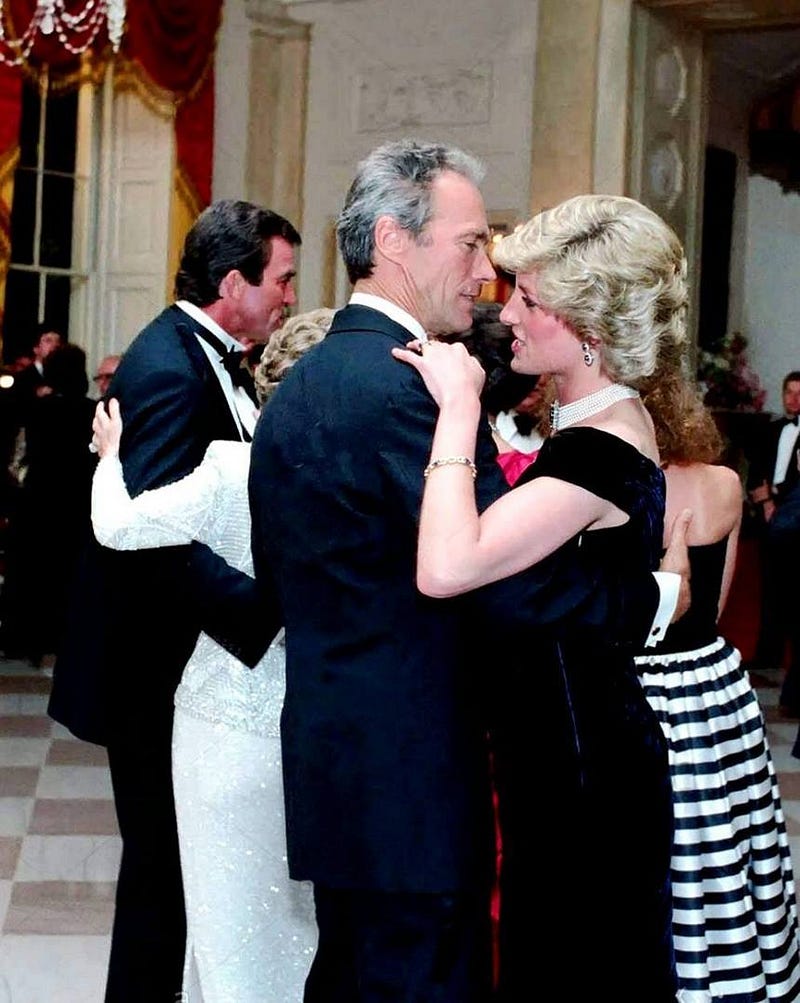
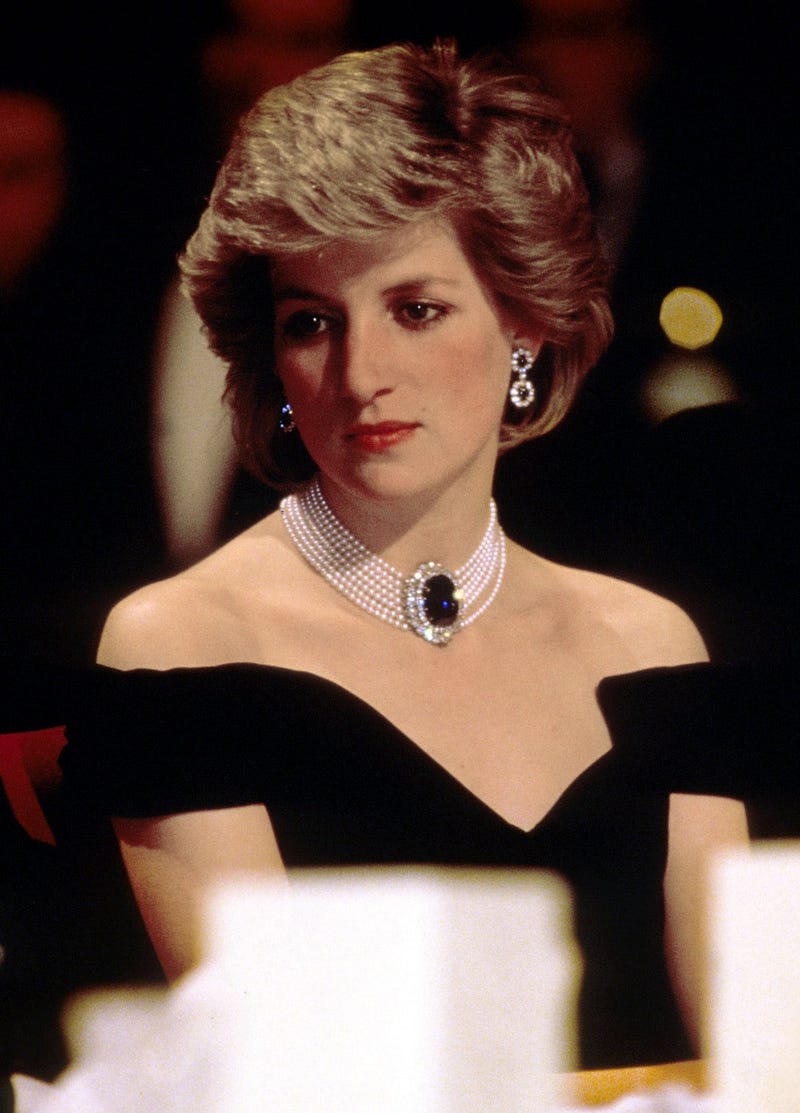
This was the first occasion she was photographed wearing the sapphire choker which became so much a part of her style. It had originally been a brooch, and she had it reworked—one thing becoming another.
She danced many times—though not with Charles.
As I look over photos, how lifeless she feels with more conventional suitors—Tom Selleck, or Clint Eastwood. She’s taking the female role. She’s proper. A well-behaved lady.
That’s not Diana.
But then there were those fifteen minutes with John Travolta.
He did not ask her to dance. A staffer whispered in his ear that it’d be Diana’s “fantasy.” The military band fired up a medley from his movie Saturday Night Fever—a bizarre blending of militarism and disco.
How magical they seem together, but it’s peculiar. That Travolta is gay is part of it. She was released from the “rules” and rituals, the male-female patterns. They could be playful, theatrical, strange. Free.
They don’t need to be stepping the same steps. They perform for each other. They’re together across distances.
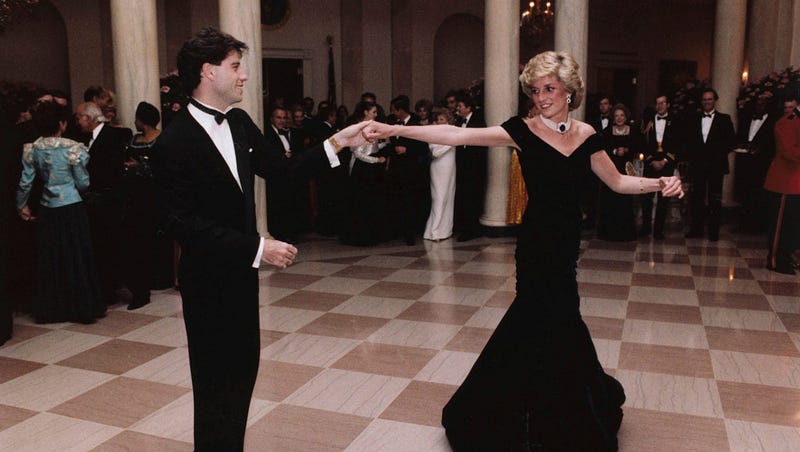
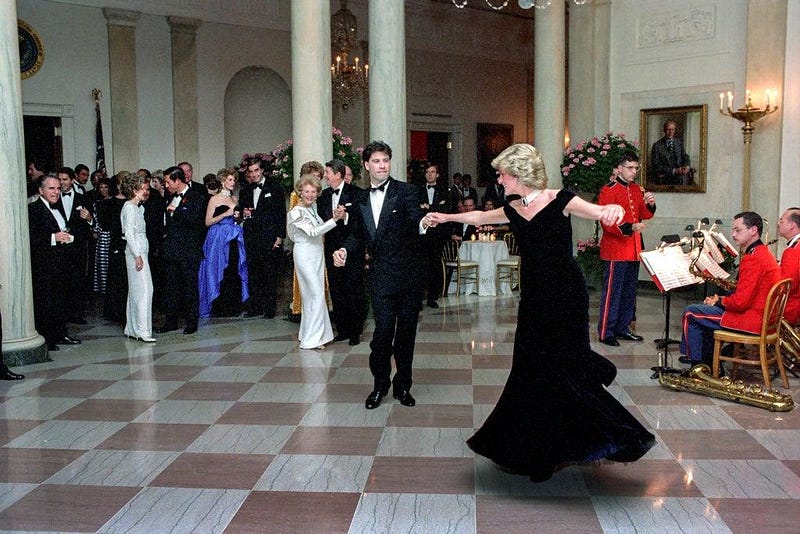
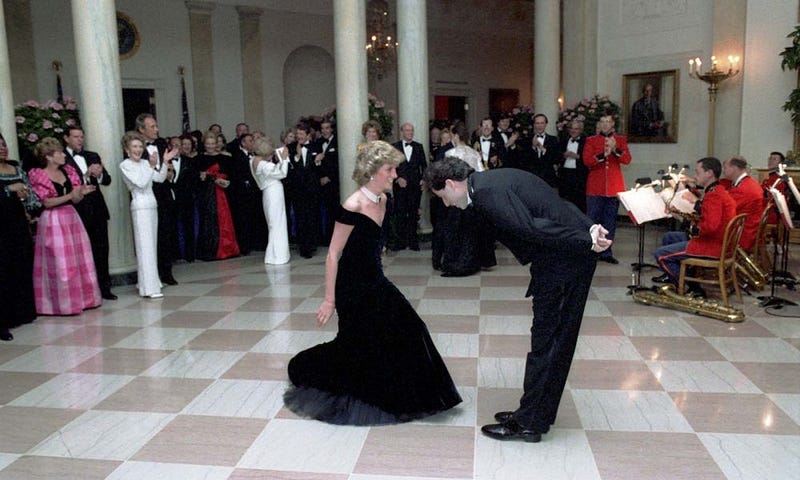
“It was a storybook moment,” Travolta later recalled. “We bowed when she finished, and, you know, she left, and I left, and my carriage turned into a pumpkin.”
He was Cinderella?
She found herself in AIDS activism.
She began doing hospital visitations to victims of the virus, so often viewed as public pariahs, their sexuality widely said to have brought a terrible plague into the world.
Those meetings were famous. Looking at her now, moving from hospital to hospital, sufferer to sufferer, it’s a remarkable effect. She seems not even to see their gayness or wasting, or the nearness of their deaths.
She sees only their life.
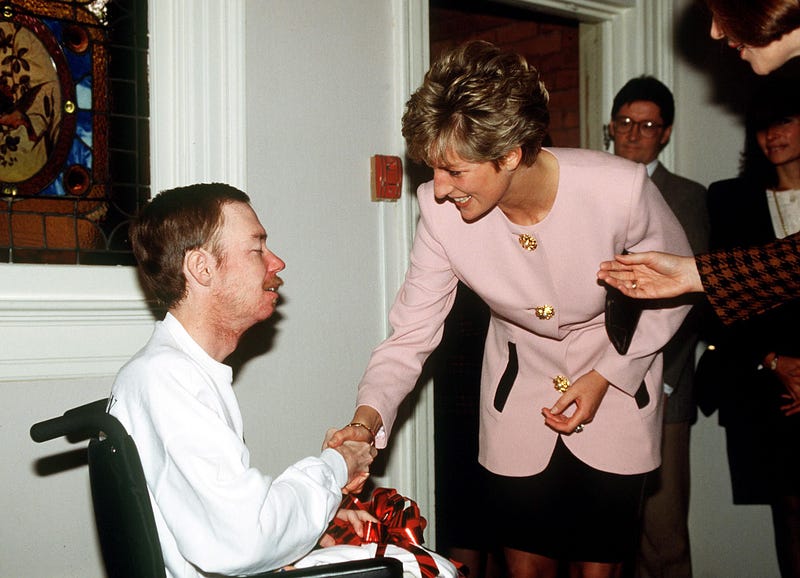
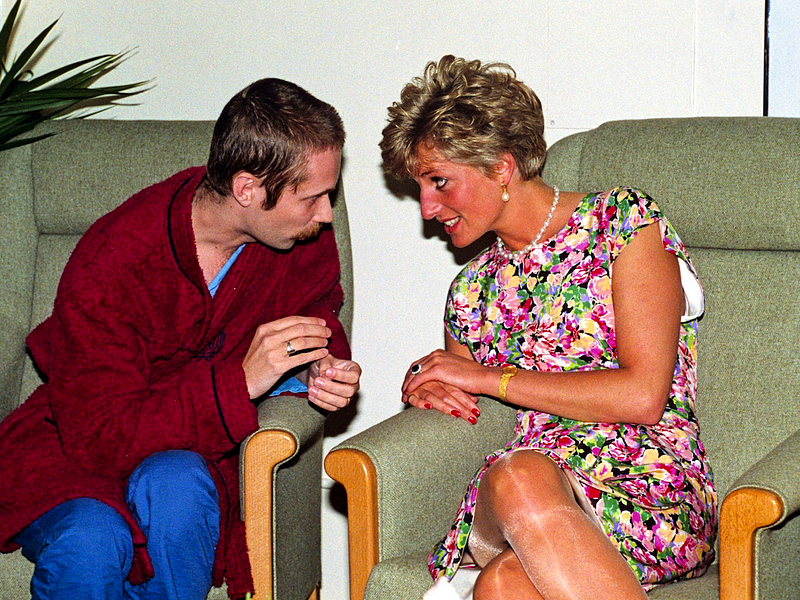
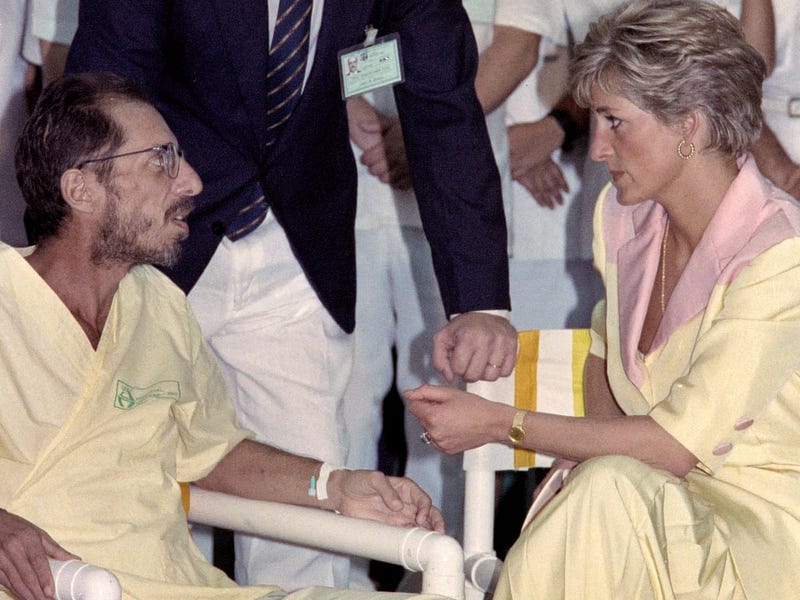
Diana was bridging the gay-straight divide.
A 1999 scholarly paper, “The Alternative Fairy Story: Diana and the sexual dissidents,” by Gill Valentine & Ruth Butler, reads Diana’s AIDS visits.
They note that Diana, in such moments, “helped to rupture the boundaries between heterosexuality and homosexuality, inclusion and exclusion, being reinforced by the moral panic.”
Diana was also bridging the divide between human and deity. Doing her AIDS work she was read as a sacred figure. She was recalled “gliding through the AIDS wards as a Madonna of the Damned.”
Or does this unnecessarily feminize her? The more obvious Christian reference is Francis of Assisi, as the saint goes out to minister to the lepers.
Or Jesus himself.
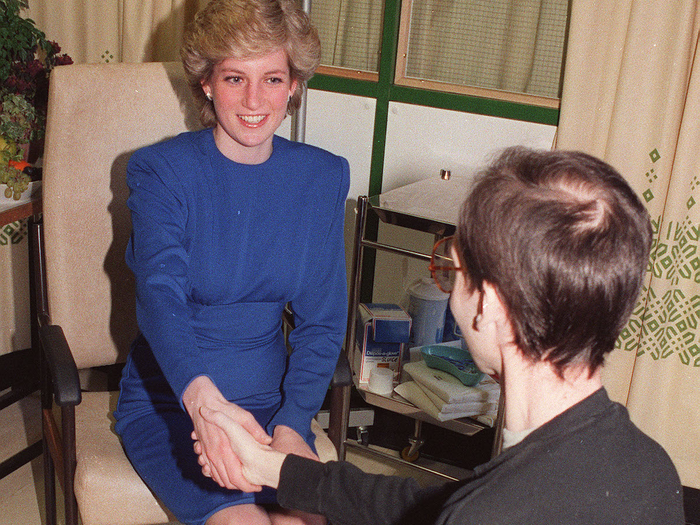
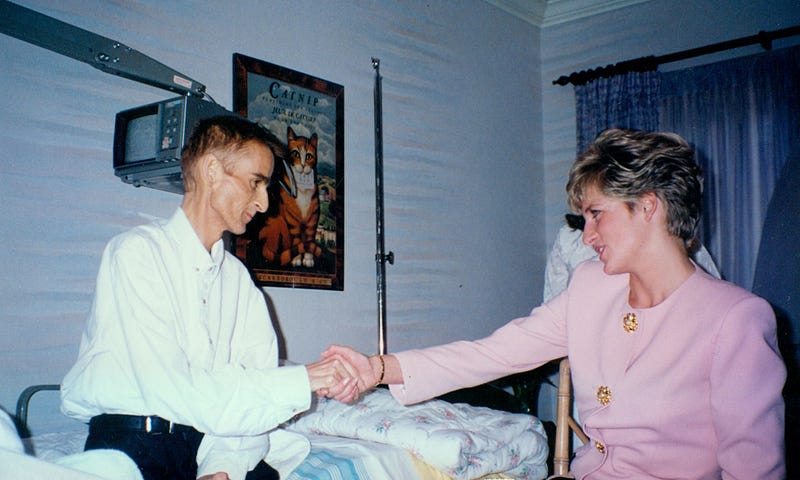
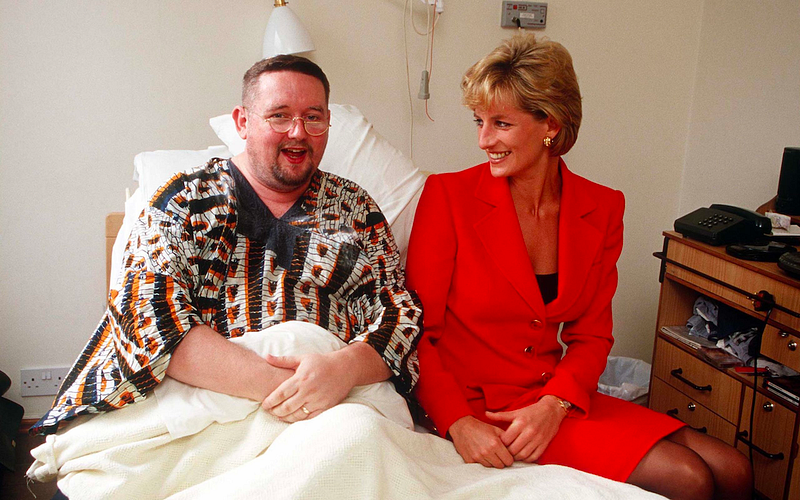
It was the era of ferocious gay activism.
Against images of weakness, of gays sick and distressed, gay activists as in ACT-UP staged vehement protests, refusing to seem ‘weak’.
All that can seem to have triggered some deeper activation in Diana herself. Valentine & Butler think of the culture of gay activism as “a cauldron of homophobic anxiety and queer rage” in which “Diana located and mobilised her own body.”
She had once been the doe-eyed girl, lost in thought. Her hair shortened. Her gaze focused. She was not so ‘feminine’ as before.
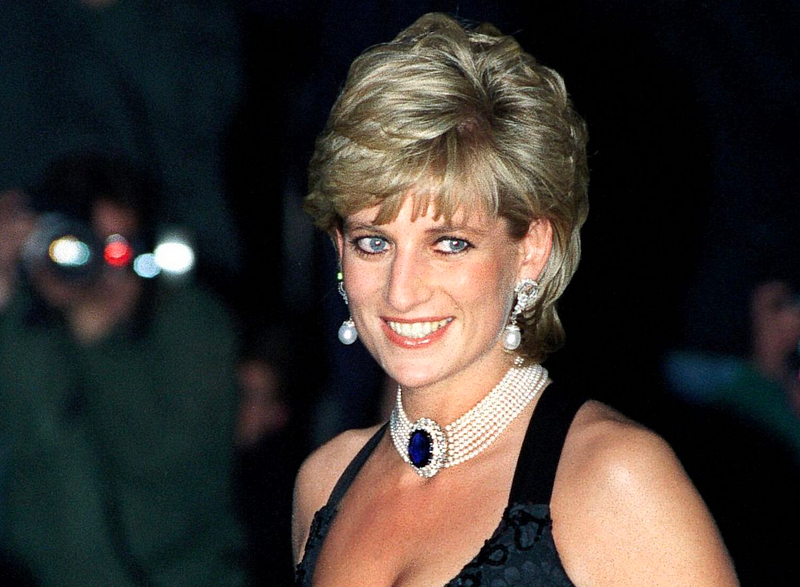
Diana was close with many famous gay men.
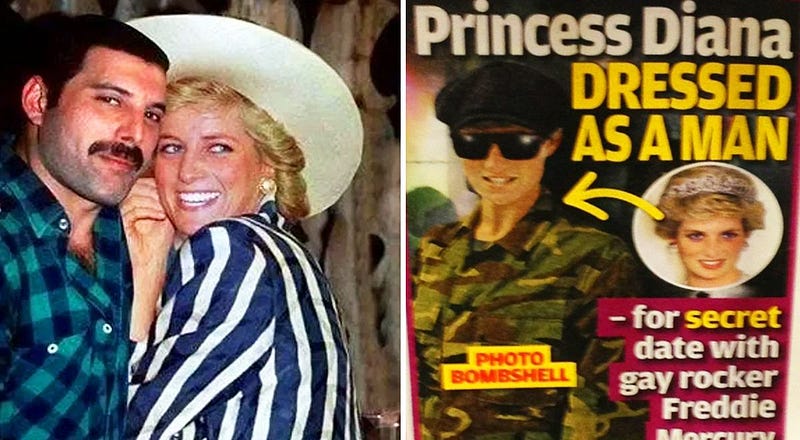
There was Elton John, Wayne Sleep, Giovanni Versace, Freddie Mercury. She could seem happier around them, it seems, than with her husband.
The tabloids reported in fascinated horror on scenes like the princess in drag in a gay bar, as Cleo Rocos recalls Diana presenting herself as “a rather eccentrically dressed gay male model.”
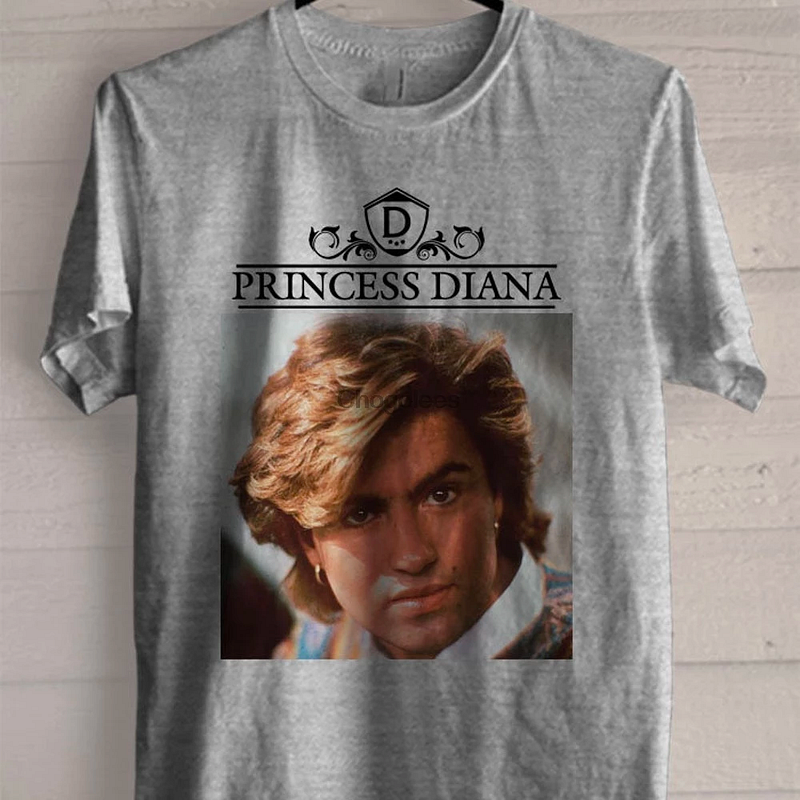
Above all, there was George Michael.
She was often said to be fascinated by the popstar, even in love.
Though they seem more like doubles, or conjoined presences. She’d looked like him, or he her, as if they were male and female versions of the same person — thought it might not be clear which was which.
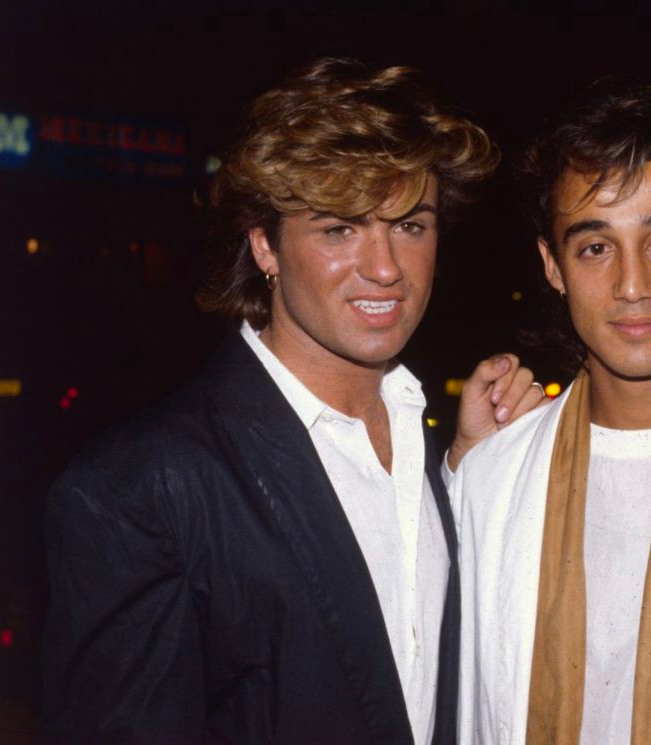
I love scenes, like a 1993 meet-and-greet. Diana seems nearly the masculine suitor — George the woman.
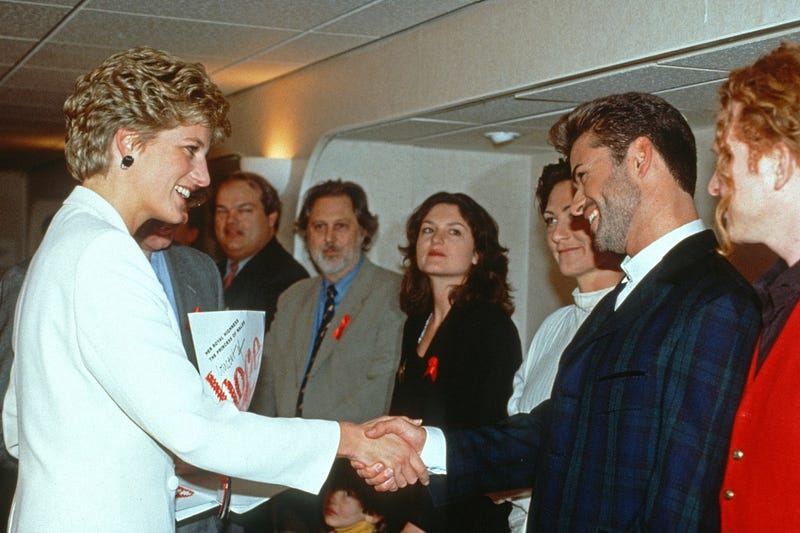
Diana was often not very ‘feminine’.
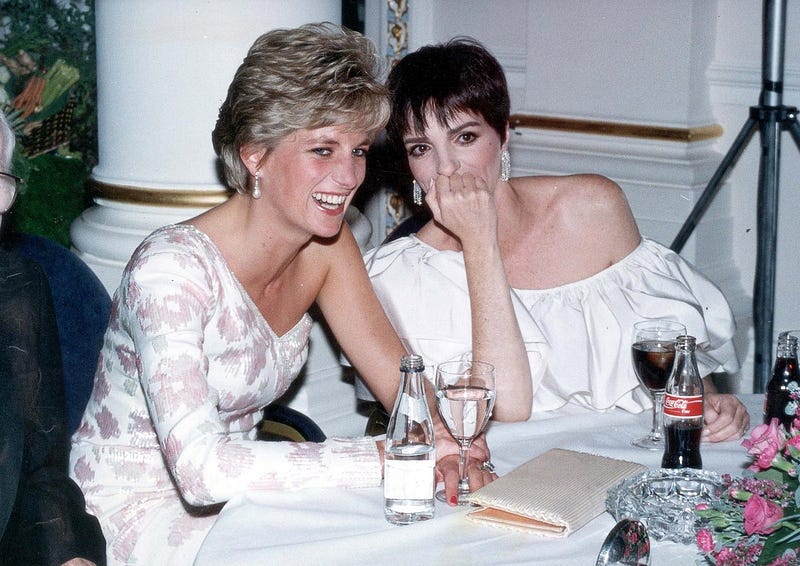
I think of the famous 1991 photo with Liza Minelli. The talk of the time was that Diana was remarkably ‘natural’—on the largest stage in the world.
But I wonder if the startling effect was more in her unfeminine body language. Diana could be Liza’s boyfriend.
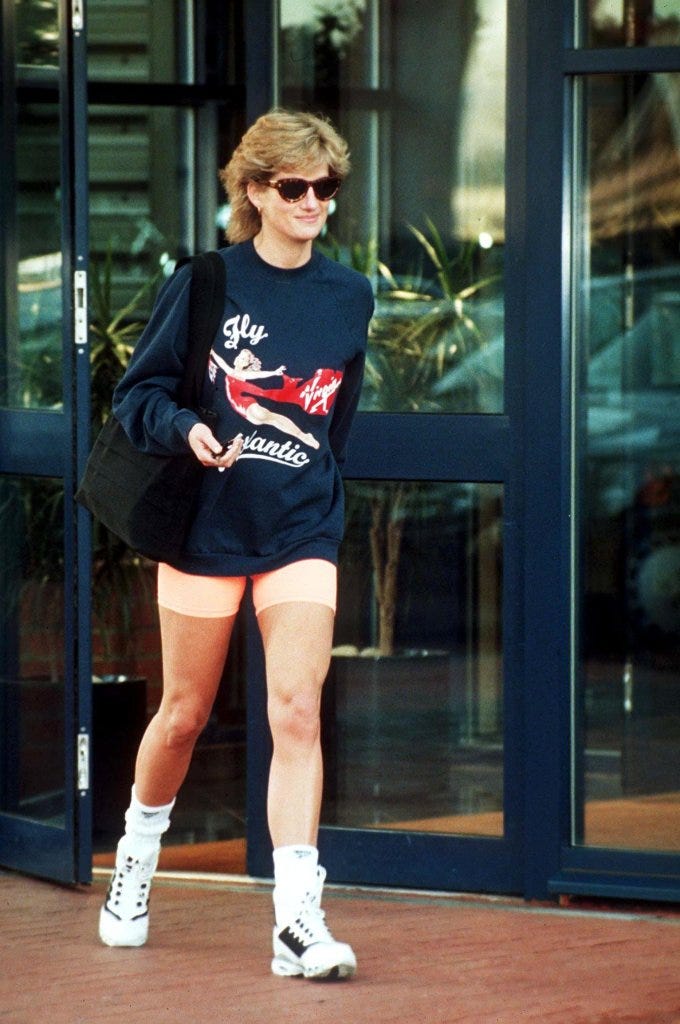
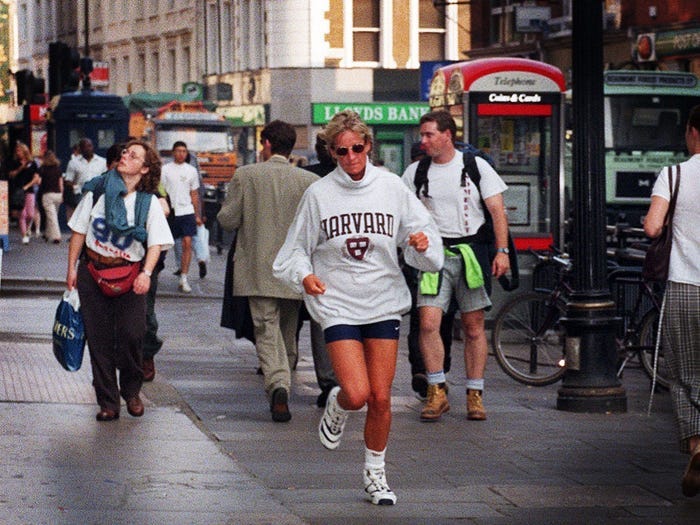
I think of her famous fitness photos, during which she let go of being a ‘lady’, or even feminine.
Was her political activism a bit ‘queer’?
Politics is gendered, after all. A famous wife would usually seem like a kind of cosmic mother, taking on maternal causes.
Diana did not do that. As in her activism over land mines, she went after the bombs that men place in the world itself.
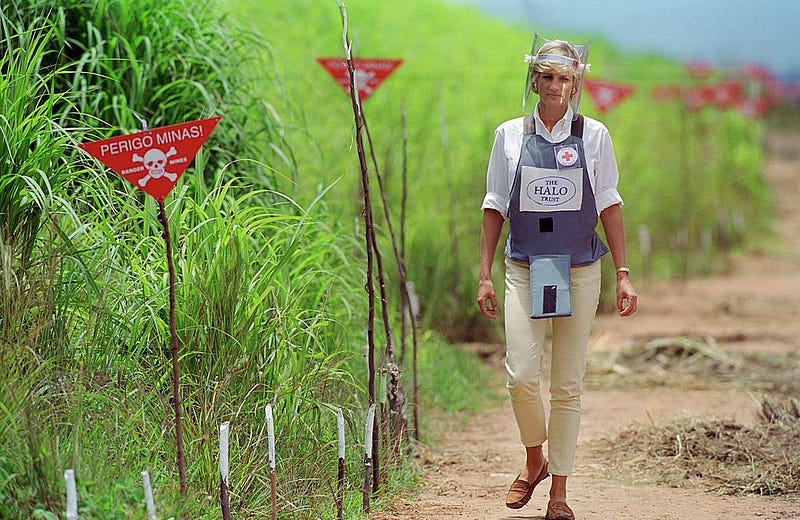
Then she’d swing back to performing the female.
Though I find that I think of Diana, finally, as most herself when alone—extending herself. Smiling and ready. Hair fringed in sunlight.
She reads to me as a strange array of effects—female, male, everything in between.
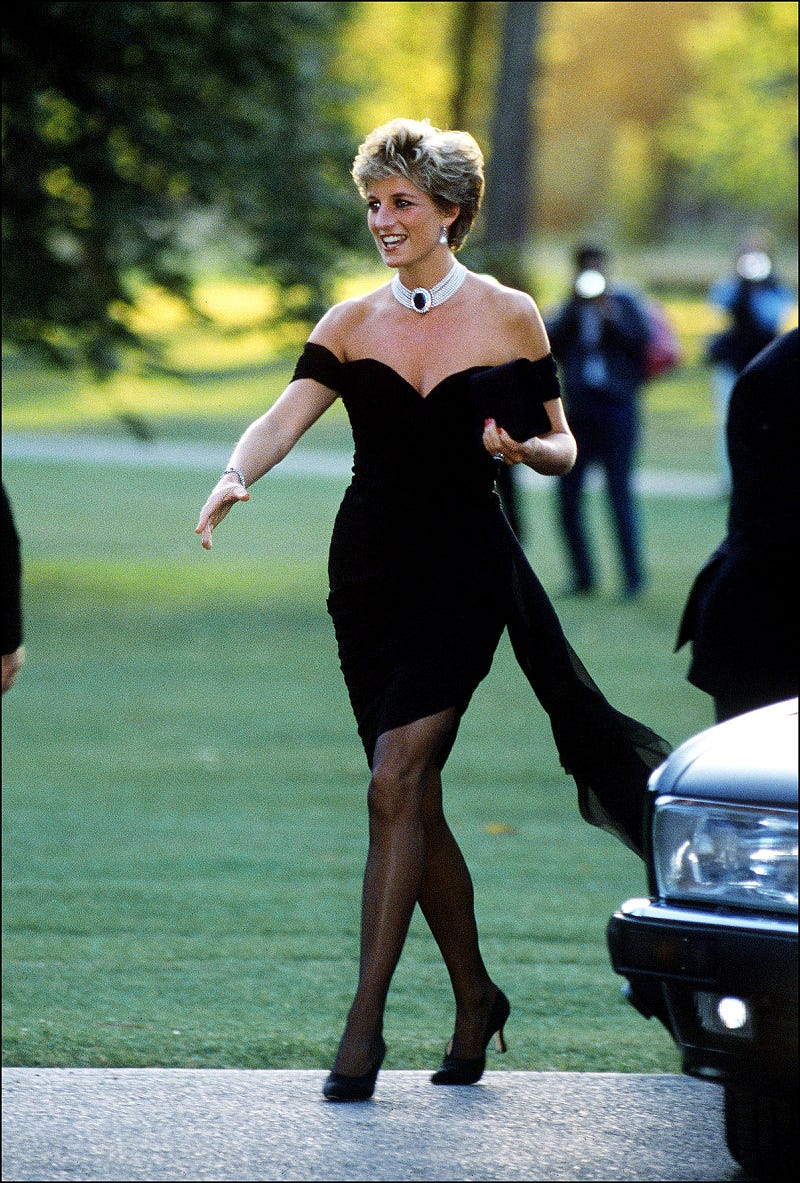
Was she the queerest one of all?
A straight woman on the same difficult journey, feeling that constant, terrible drive to be openly, independently oneself.
All along, I suppose, she was a fearful, fragile self, as we all are. But she made it seem possible to be free — of history? That kept pursuing her.
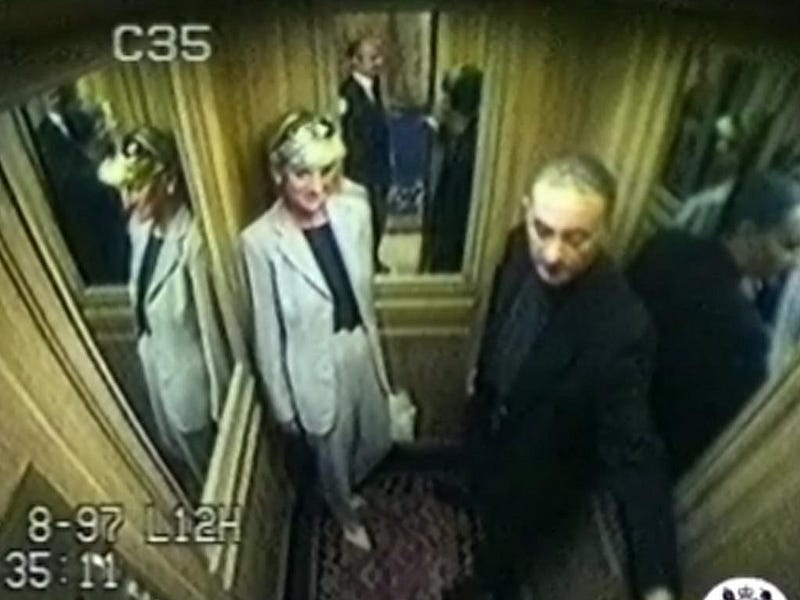
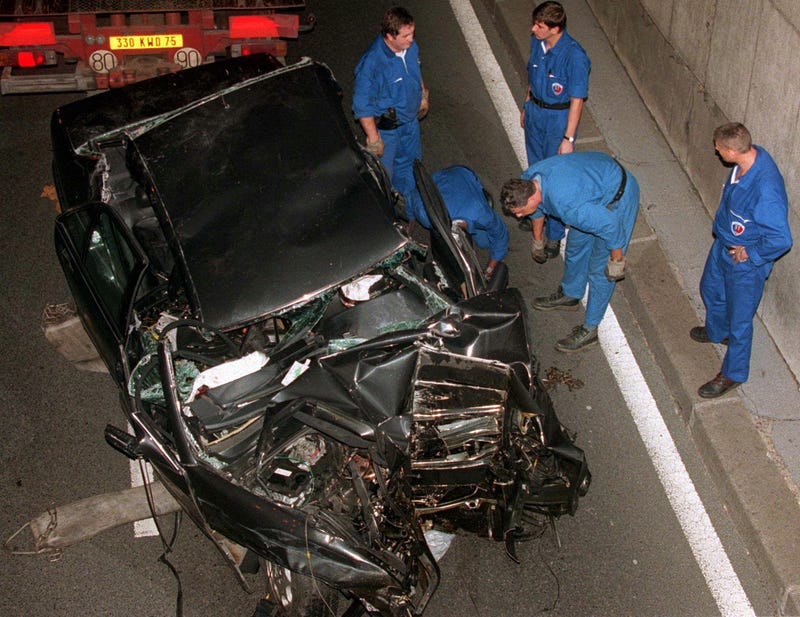
Her funeral was superqueer.
The church used for the worship of God was repurposed, this time, for a woman. There was George Michael and Elton John—with his male partner—all of them looking clerical in their mourning clothes, as if the worship of Diana involved these gay priests.
A boys’ choir performed “Make Me a Channel of Your Peace,” an adaptation of the Prayer of Saint Francis. It was her favorite song.
Elton sang his hymn to her. Back in 1973, “Candle in the Wind” had been a gay tribute to Marilyn Monroe:
“From the young man in the twenty second row Who sees you as something more than sexual”
Re-written for Diana, the song has no reference to sex or gender. She appears before him only as a “golden child.” 🔶


