
Prince Sharming
Brutal life and death of aggressive water birds
I planned on writing a bird-related article today. Recently I uploaded one of the last recordings from fish ponds in Niezgoda, so I thought to myself that publishing another reed story may be a good idea.
I wanted to complain about shy water birds, who, even if common, really don’t like to be seen. I wanted to talk about seating on a tree trunk, looking down for more than 40 minutes, and not seeing any member of the Rallidae family. I wanted to say something about BirdNet and realize I’ve recorded a water rail 2 months after I heard that noise.
But I’ve decided to read more about the bird instead.
How to spot a water rail?
As I learned after running my mysterious recording through BirdNet and reading, water rails communicate in a series of grunts followed by a high-pitched piglet-like squeal and ending in more grunts. Some bird songs (as bird groups) have specific names, and this is the case for water rails — their main call is called sharming.
I’ve recorded a couple of those sharmings, starting from 11:21 they start and stop for about 7 minutes.
Unfortunately I didn’t see a single water rail, even if the pair could be clearly heard. Water rail is a medium size bird, and similarly to other birds from the Rallidae family, has a body that is flattened laterally, allowing it easier passage through the reed beds.
Even though water rails are pretty common, they like to hide in the reeds. Their plumage definitely helps them to stay unnoticed by humans.
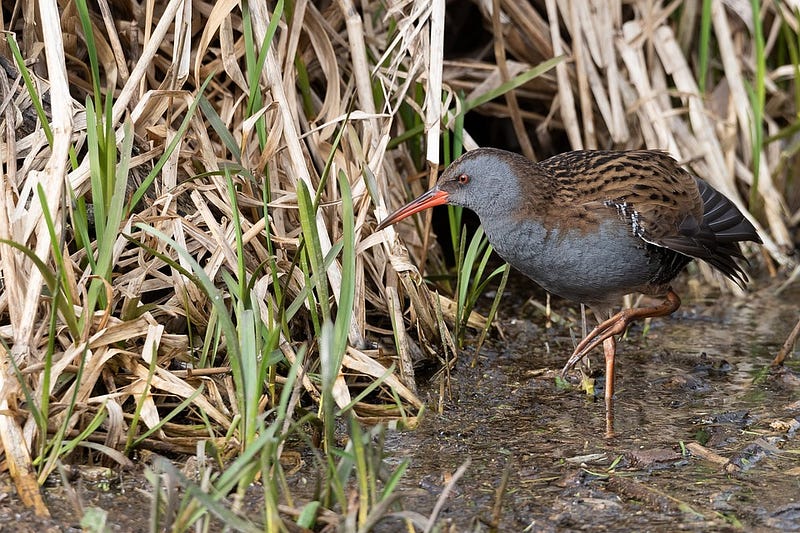
What if the water rail spots you?
Well, I assume you’re a human — in that case, it will most likely stop and pretend not to be there, hoping for its plumage to act like camouflage.
On the other hand, if you’re another water rail (how did you learn to read?) you may not be treated so nicely. Water rails are extremely aggressive. If you happen to pass through their territory, both water rails from the pair will charge at you.
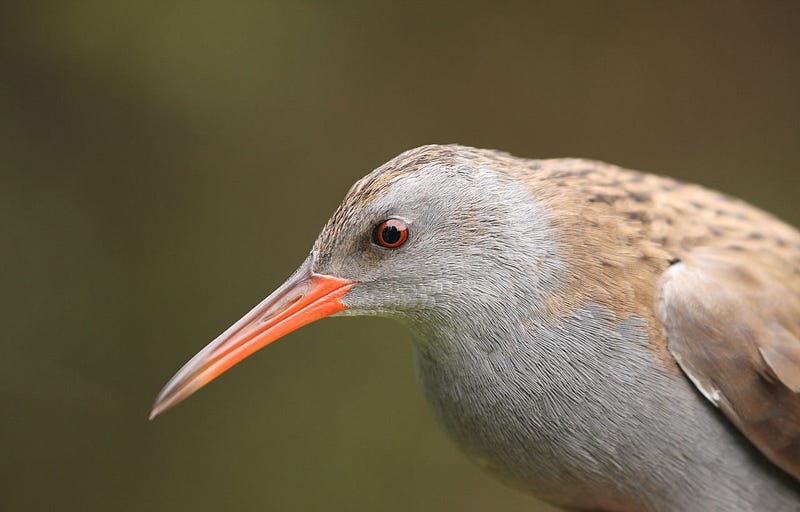
If you’re a bird, but not a water rail, don’t think that you have it easier.
They are nest predators, so they eat small birds that haven’t yet gone out of the nest. They often attack species from the same Rallidae family to defend their territory. They were observed to kill small birds, caught in traps made by ornithologists for bird banding purposes. Their weapon of choice is their beak (great for impaling someone) and their legs (great for drowning someone).
I was shocked by the cruelty of water rails. Having so many ways to kill another avian seems cruel. Reading that water rails impale and drown wasn’t something I expected from the evening research preceding article publication.
How to fight a water rail?
Well, if you’re an Amerikan mink, you’ve already fought off Icelandic water rails to extinction.
If you’re a human, you have a good chance of causing water rails some bad time by doing everything that may negatively impact marshes and reeds.
If you’re a larger bird, cat, or dog roaming next to water beds, you’re probably hungry enough to feed on a water rail.
Maybe, dear reader, you think that there should be someone to take revenge on poor young great reed warblers and other defenseless birds. You may think that simply eating someone is not enough. I’m not here to judge if we should be so vengeful, but I can tell you that nature is an ongoing cycle. If you’re eating, then you’ll be eaten.
So who could be killing those aggressive, violent, and repulsive water rails? Well, here it comes —the Eurasian bittern.
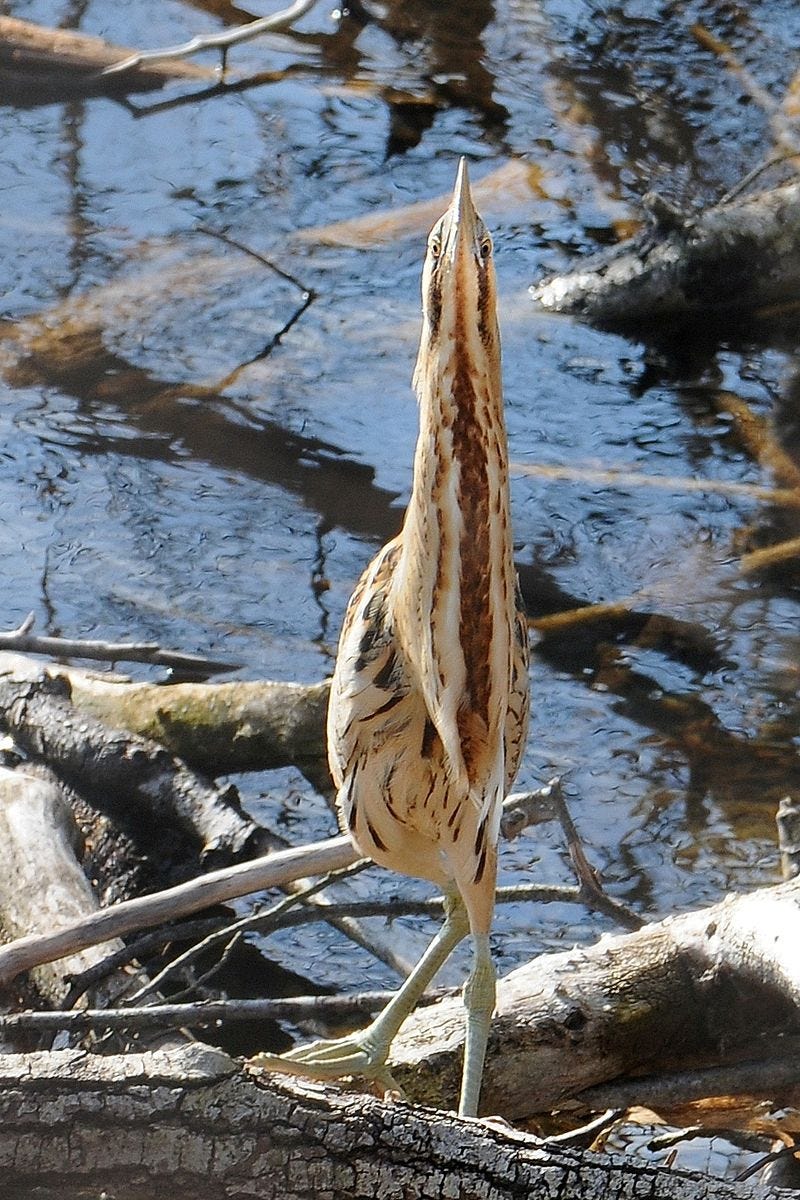
Imagine those eyes being the last thing you see. Here’s the revenge part, water rail.


