
Prevent the Pain, Get the Shingles Vaccine
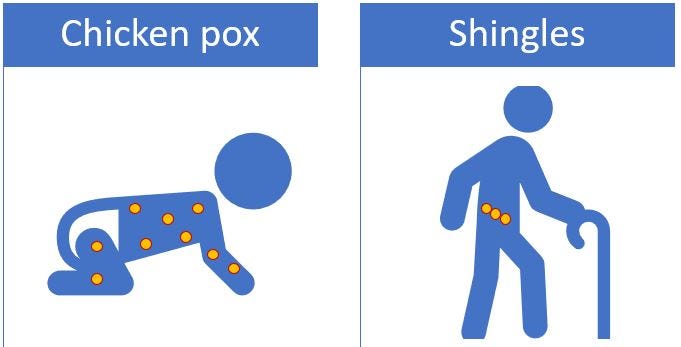
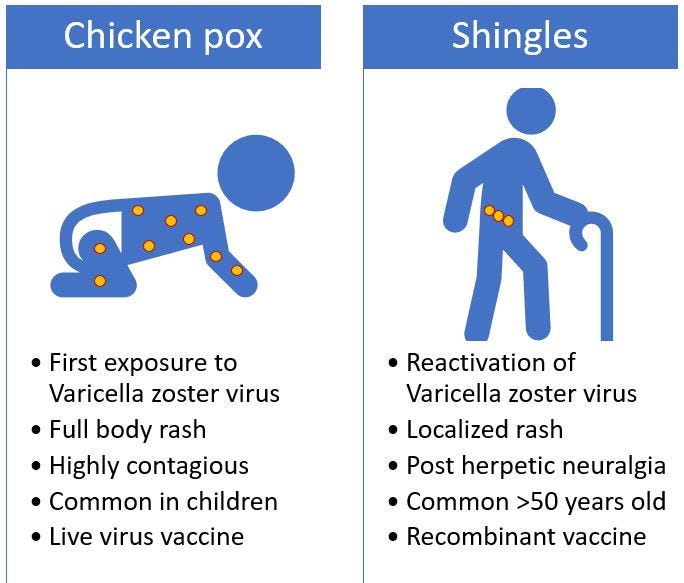
As someone who has had the distinctly unpleasant experience of shingles, I decided to research the vaccines available for this viral disease. Shingles is caused by the varicella-zoster virus (VZV), which also causes chickenpox (Figure 1). VZV is a type of herpes virus. Presently, in the US, most children are vaccinated against chickenpox. The vaccine used in children is called a live virus vaccine, which means that it has a modified version of VZV that is not as infectious or able to cause symptomatic disease. This type of weakened virus that is used for vaccination is called an attenuated virus. Those who had chickenpox as a child can get shingles. People with active shingles can spread the virus to anyone who has not been vaccinated with the chickenpox vaccine or has not had chickenpox. Those people won’t get shingles, they will get chickenpox.
Chickenpox happens when the virus first infects a person. The person develops skin lesions (itchy blisters that pop and then scab). These lesions are highly contagious, and the infection is spread by contact (directly by touching the lesion or indirectly, for example, by sharing a towel) or through the air by coughing or sneezing. The sores eventually heal and the active infection resolves, but the virus is not gone. Instead, the virus enters the nervous system and the viral genome remains in the sensory nerves as a latent virus, which means it is no longer replicating and being released (Figure 2). Children receiving the live attenuated virus vaccine could have the attenuated virus persist in a latent form in their sensory nerves; but this is very uncommon because the virus is weakened.
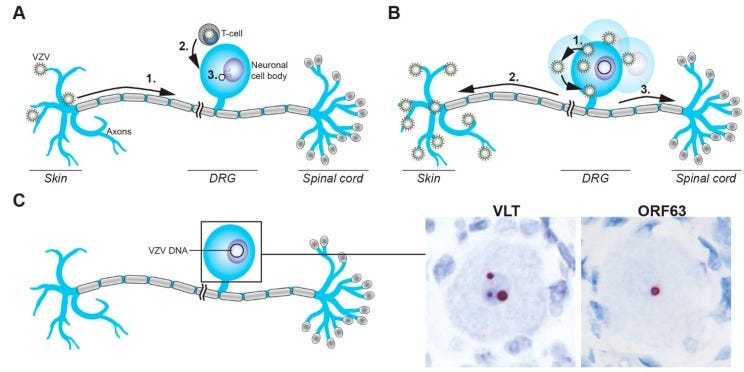
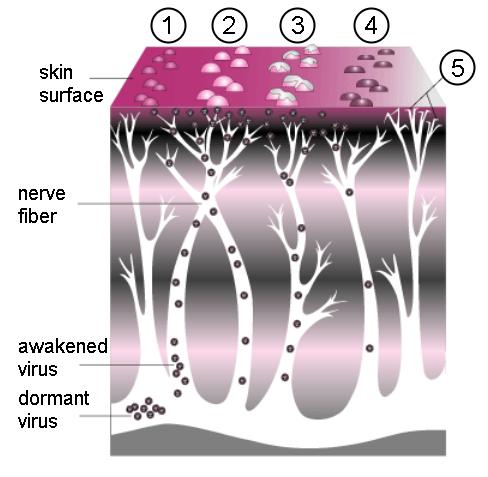
Later in life, something triggers the virus to stop being latent and start reproducing (Figure 3). In a young person, the immune system counters this re-activated virus so quickly and effectively, most people would not realize the virus had awakened. In an older person (over 50 years old) or a person with a compromised immune system, the immune system is less effective in combating this re-activated virus. When the virus reactivates, the virus replicates in and is released from the nerve and infects the skin causing a blistery, painful rash. Because the virus replicates and is released from the nerve, the nerve becomes injured and needs to recover after the active infection stops. Caught very quickly, shingles is treated with antiviral medications, such as valacyclovir (brand name Valtrex). This does not cure the infection, but it can limit the replication of the virus and thus the amount of nerve injury and the duration and intensity of the rash. If shingles is not quickly diagnosed and treated with antiviral medication, then the nerve damage can be very long-lasting. Indeed, this common outcome is called postherpetic neuralgia (PHN).
Valacyclovir is also used to treat other types of herpes virus infections, such as the ones that cause cold sores or genital herpes (herpes simplex viruses), both of which also cause skin lesions. It is sometimes also used to limit chickenpox infection by VZV. The medicine does not cure the infection in any of these cases. It only limits the frequency of occurrences of re-activation of the virus or the duration of the active period of the viral infection.
There are 2 shingles vaccines available in the US. The latest one is called Shingrix; the earlier one is called Zostavax. Zostavax is a live virus vaccine like the vaccine used for children, but Zostavax has a higher amount of the attenuated virus than the vaccine used in children. Shingrix is a recombinant vaccine and has 2 components: One is a protein (glycoprotein E) from the virus and the other is a set of immune-boosting molecules (ASO1b). Such immune-boosting components in vaccines are called adjuvants. Because Shingrix has this adjuvant component, the discomfort associated with the vaccine is greater than that caused by Zostavax, but Shingrix is more effective. Consequently, Shingrix is the vaccine recommended by the CDC, because it has a higher rate of successful long-lasting immunization than Zostavax. However, effective immunization with Shingrix requires 2 doses of the vaccine. People who have received the Zostavax vaccine can get the Shingrix vaccine. Neither vaccine cures the infection, but they can reduce the length of time that the virus remains re-activated, thus reduce the amount of the nerve damage, decrease the time that the skin lesions take to resolve, and limit PHN.
Although the initial recommendations were for people over age 60 to receive the shingles vaccine, the Center for Disease Control is now recommending the Shingrix vaccine for people over 50. I wish my doctor had offered the vaccine to me when I had my 50-year-old physical. If you get shingles, you have to wait until fully recovered before getting the vaccine.
Find out my experience with the vaccine: What to Expect from the Shingles Vaccine
Related Resources
Curran et al., Quality of Life Impact of a Recombinant Zoster Vaccines in Adults ≥50 Years of Age. J. Gerontol. A Biol. Sci Med. Sci. 2018 June 7 DOI: 10.1093/gerona/gly150. PubMed
Depledge et al., Molecular Aspects of Varicella-Zoster Virus Latency. Viruses 10, 349 (2018). PubMed
New Shingles Vaccine Fact Sheet for Adults. Center for Disease Control and Prevention. (accessed 15 October 2018) https://www.cdc.gov/shingles/fact-sheets/shingles-factsheet-adults.html
Chickenpox (Varicella) Vaccine Safety. Center for Disease Control and Prevention. (accessed 15 October 2018) https://www.cdc.gov/vaccinesafety/vaccines/varicella-vaccine.html
Slideshow: A Visual Guide to Shingles. WebMD (accessed 16 October 2018) https://www.webmd.com/skin-problems-and-treatments/shingles/ss/slideshow-shingles-pictures
Cite as: N. R. Gough, Prevent the pain, get the shingles vaccine. BioSerendipity (17 October 2018) https://www.bioserendipity.com/shingles-vaccines/
Originally published at https://www.bioserendipity.com on October 17, 2018.


