avatarAvi Kotzer

Free AI web copilot to create summaries, insights and extended knowledge, download it at here

3627

Abstract

nd common pegger (as in one who stands on a peg). Not to mention the Spanish onomatopoeic names like <i>guajojó</i>, <i>guiaguigué</i>, and <i>ayaymama</i>. More about that last one later.</p><p id="2849">Potoos come in seven species, some of which are quite have stark physical differences from each other. Earlier I mentioned the common potoo (<i>Nyctibius griseus</i>), which is not just known for its ability to mimic a dead tree branch, but also for its large eyes (the better to see you in the pitch darkness of the jungle) and weirdo hoot (the better to scare the crap out of you, so you never return to the pitch darkness of the jungle).</p> <figure id="d76c"> <div> <div> <img class="ratio" src="http://placehold.it/16x9"> <iframe class="" src="https://cdn.embedly.com/widgets/media.html?src=https%3A%2F%2Fwww.youtube.com%2Fembed%2FYbIQ_hUwz9A%3Ffeature%3Doembed&amp;display_name=YouTube&amp;url=https%3A%2F%2Fwww.youtube.com%2Fwatch%3Fv%3DYbIQ_hUwz9A&amp;image=https%3A%2F%2Fi.ytimg.com%2Fvi%2FYbIQ_hUwz9A%2Fhqdefault.jpg&amp;key=a19fcc184b9711e1b4764040d3dc5c07&amp;type=text%2Fhtml&amp;schema=youtube" allowfullscreen="" frameborder="0" height="480" width="854"> </div> </div> </figure></iframe></div></div></figure><p id="10c1">Meanwhile, the great <i>potoo</i> (<i>Nyctibius grandis</i>) sounds more like a huffy teenager saying “mom” right before rolling their eyes.</p> <figure id="928d"> <div> <div> <img class="ratio" src="http://placehold.it/16x9"> <iframe class="" src="https://cdn.embedly.com/widgets/media.html?src=https%3A%2F%2Fwww.youtube.com%2Fembed%2FDlRsRdVpudM%3Ffeature%3Doembed&amp;display_name=YouTube&amp;url=https%3A%2F%2Fwww.youtube.com%2Fwatch%3Fv%3DDlRsRdVpudM&amp;image=https%3A%2F%2Fi.ytimg.com%2Fvi%2FDlRsRdVpudM%2Fhqdefault.jpg&amp;key=a19fcc184b9711e1b4764040d3dc5c07&amp;type=text%2Fhtml&amp;schema=youtube" allowfullscreen="" frameborder="0" height="480" width="640"> </div> </div> </figure></iframe></div></div></figure><p id="02ac">The great <i>potoo</i> also looks quite different from the common one.</p><figure id="cd8a"><img src="https://cdn-images-1.readmedium.com/v2/resize:fit:800/0*-oA4Rbl21PGIhu7M.jpg"><figcaption>Photo by Allissondias</figcaption></figure><p id="daef">And yes, I agree: <i>potoos</i> definitely need to be given their own horror movie. Preferably directed by the awesome Jordan Peele.</p><p id="96f7">Ornithologists are still finding out a lot about <i>potoos</i> because these birds are not easy to study. One of the things that is known is that instead of building nests, the <i>potoos</i> lay a single egg in any suitable crevice they can find in a branch or tree stump.</p><p id="3934">These birds mostly sleep throughout the daytime. They star stirring around dusk, opening their huge eyes to spot any insect suitable for dinner, open their ginormous mouths…</p><figure id="d42d"><img src="https://cdn-images-1.readmedium.com/v2/resize:fit:800/1*2u7KEEBacLm2YmRCy70IfA.png"><figcaption></figcaption></figure><p id="ada7">…and swallow the human being who was taking that picture.</p><p id="8e7f">Again, calling Jordan Peele. Calling Jordan Peele!</p><h2 id="9eef">Mommy! Mommy!</h2><p id="1717">Earlier I mentioned several nicknames that <i>potoos</i> have in Spanish. One of them is <i>ayaymama</i>, which literally translates as “Oh, oh, mother!” Similar to what a young child might say while lost and looking for their mom. There are a couple of i

Options

ndigenous Amazonian legends about these birds to explain their nighttime howls.</p><p id="913e">The first one involves an evil stepmother, because, well, it’s a legend. There was once a happy family: mom, dad, and two kids. Mom died and dad remarried. The woman was a cold-hearted meanie because, well, again… legend. In any case, stepmom saw the pair of children as an obstacle to happiness, and hatched a plot to abandon them in a forest to have dad all to herself. Succeeding, she went back home with him to have endless sex presumably without conceiving any babies to make up for the loss. Meanwhile, the abandoned kids grew wings at night, flew back home, and started calling out “Ay, ay, mamá; ay, ay mamá”.</p><p id="4d80">I have no idea what happened next.</p><p id="216f">The other myth is less cliché and perhaps more romantic, in a sad way, of course. There was an epidemic in an Amazon village, and one mother took her children deep into the rainforest to keep them safe. She left them by a river surrounded by plenty of fruitful trees. Come darkness, and seeing their mother had not come back for them, the children began wandering around looking for her. But the Amazon jungle is large and dense, and the children couldn’t find their way back to the village. The spirit of the rainforest saw them crying, felt pity, and changed them into birds so they could fly out of the jungle and back home. But when the birds reached the village, they discovered everyone, including their mother, had died from the epidemic.</p><p id="53d4">Since then, every night the <i>potoos</i> cry out in permanent grief over their tragedy.</p><p id="34a4">Personally, I like this second origin story better. Hopefully Jordan Peele will too, and credit me as the inspiration for his next Oscar-nominated horror movie, <i>Get</i> <i>Pote</i>.</p><p id="b542">Now you know. Next time you’re in the jungle of a South American country with your friends and you hear a shrill, spine-tingling scream, don’t worry. You can calm down your buddies by telling them it’s just a harmless <i>potoo</i>. They may still run away leaving you alone to face whatever horrible creature they imagine is coming to get them… because the editors of the Spelling Bee decided that <i>potoo</i> is a dord*.</p><p id="73ee">You can check out my previous entry on another <b>dord* </b>here:</p><div id="29eb" class="link-block"> <a href="https://readmedium.com/noria-9b45d21a4eae"> <div> <div> <h2>Noria</h2> <div><h3>The wheel on the river goes round and round</h3></div> <div><p>medium.com</p></div> </div> <div> <div style="background-image: url(https://miro.readmedium.com/v2/resize:fit:320/0*GQkn5esUajHAaMtg)"></div> </div> </div> </a> </div><p id="9e95">*What the heck is a <b>dord, </b>you ask? Here’s the answer:</p><div id="21a6" class="link-block"> <a href="https://www.merriam-webster.com/words-at-play/dord-a-ghost-word"> <div> <div> <h2>'Dord': A Ghost Word</h2> <div><h3>One of the questions people like to ask lexicographers is this: Can you sneak something into the dictionary? Can you…</h3></div> <div><p>www.merriam-webster.com</p></div> </div> <div> <div style="background-image: url(https://miro.readmedium.com/v2/resize:fit:320/0*nuUL8TfsyJEKT14u)"></div> </div> </div> </a> </div></article></body>

Potoo

This bird might scare the potty out of you
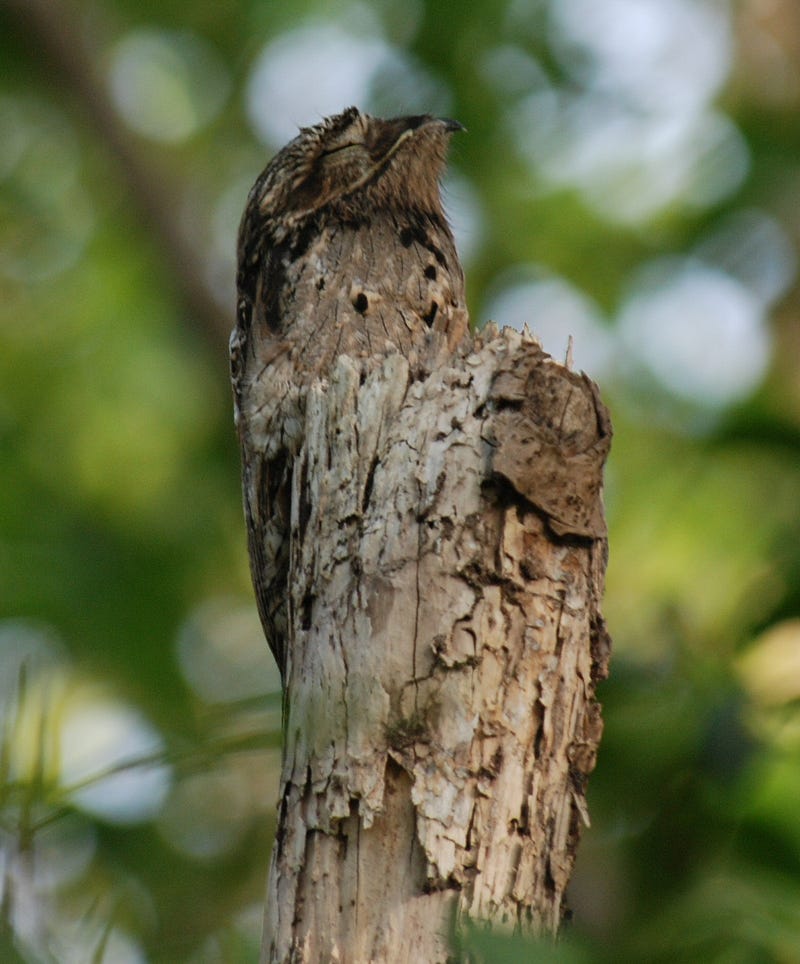
Photo by Chiswick Chap

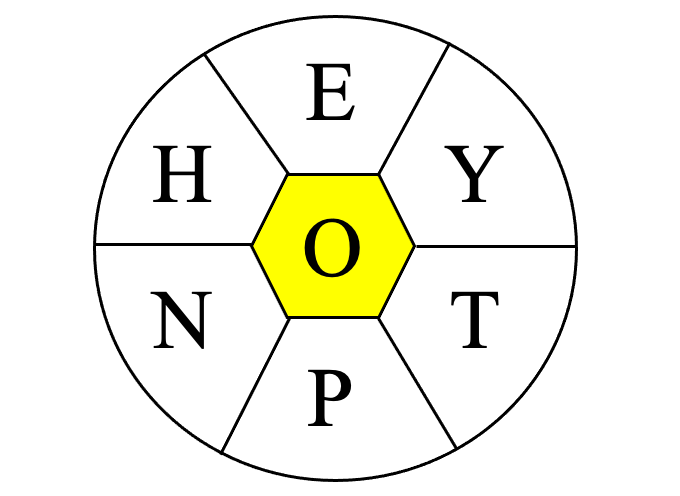
Today’s New York Times Spelling Bee letters:
Art: Iva Reztok

E, H, N, P, T, Y, and center O (all words must include O)

Merriam-Webster says…
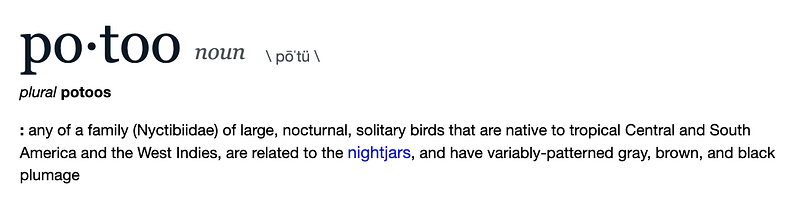
Credit: merriam-webster.com

Silly little dictionary! Don’t you know that potoo can’t possibly be a word if The New York Times says it ain’t?

For a complete list of rejected words, check out the Spelling Bee Master.

What’s your favorite dord* from today’s puzzle?

My Two Cents

When selecting images to grace the top of the articles I write, I usually prefer rectangular pictures that are longer horizontally. And if you do a quick scan on Medium, you’ll see that most writers seem to prefer that format, too.

But I couldn’t resist using a “vertical photo” today. Firstly, I didn’t find any pictures of pottos on Unsplash when I searched. Zero results. so I used one from Wikipedia (with its corresponding credit/attribution and link) because I thought it was really, really good.

Did you notice the bird in the picture, by the way?

If you didn’t, that’s because some species of potoos are known to be expert camouflagists. (Yes, that’s a word that exists and that I did not just make up. Go with the flow; English is an adaptable, ever-growing language.) The one at the top of today’s column is the common potoo, which, like all the birds in its genus, spends most of the day inactive. To avoid being attacked or eaten by predators, it sleeps in that position. At night, however, it looks a bit different…
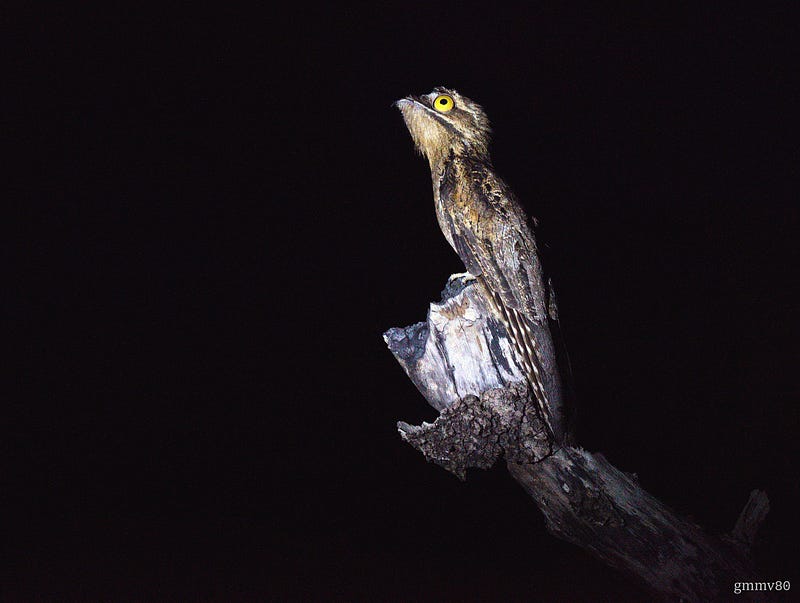
Photo by Gmmv1980

…sort of like the bastard child of a chameleon and a sparrow.

This is just one feature of what some consider to be the scariest effin’ bird on the effin’ planet. Read on to find out more!

Poor me

Our friends at Merriam-Webster tell us that potoo is likely of imitative origin, meaning it’s an onomatopoeic noun, just like kaboom, for example. (See how I tried to sneak in another 13 cents in earnings, there?) The birds are also sometimes called poor-me-ones due to their haunting night calls that can send shivers down your spine.

These “New World” birds are found throughout the tropical jungles of Central and South America, and let me tell you, Spanish speakers got a a lot more creative with the nicknames, which I’m translating here: witch bird, ghost bird, northern goodstanding, minor stake bird, and common pegger (as in one who stands on a peg). Not to mention the Spanish onomatopoeic names like guajojó, guiaguigué, and ayaymama. More about that last one later.

Potoos come in seven species, some of which are quite have stark physical differences from each other. Earlier I mentioned the common potoo (Nyctibius griseus), which is not just known for its ability to mimic a dead tree branch, but also for its large eyes (the better to see you in the pitch darkness of the jungle) and weirdo hoot (the better to scare the crap out of you, so you never return to the pitch darkness of the jungle).

Meanwhile, the great potoo (Nyctibius grandis) sounds more like a huffy teenager saying “mom” right before rolling their eyes.

The great potoo also looks quite different from the common one.
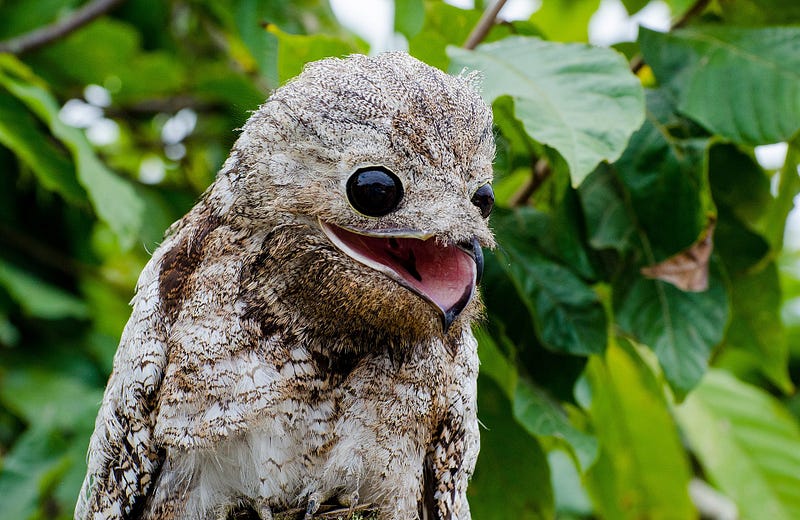
Photo by Allissondias

And yes, I agree: potoos definitely need to be given their own horror movie. Preferably directed by the awesome Jordan Peele.

Ornithologists are still finding out a lot about potoos because these birds are not easy to study. One of the things that is known is that instead of building nests, the potoos lay a single egg in any suitable crevice they can find in a branch or tree stump.

These birds mostly sleep throughout the daytime. They star stirring around dusk, opening their huge eyes to spot any insect suitable for dinner, open their ginormous mouths…
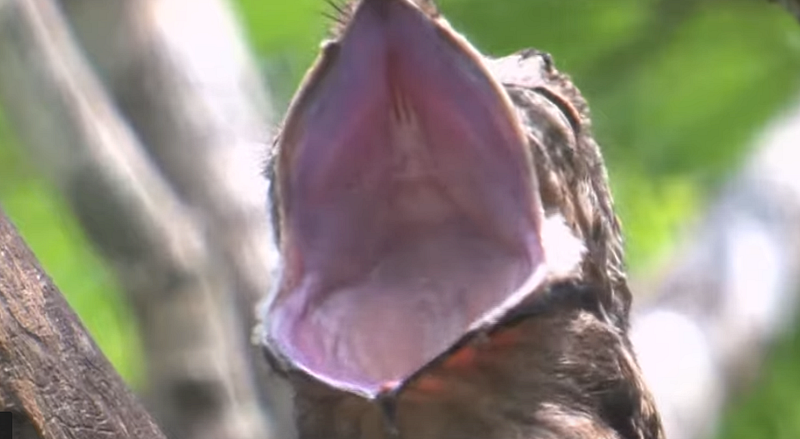
…and swallow the human being who was taking that picture.

Again, calling Jordan Peele. Calling Jordan Peele!

Mommy! Mommy!

Earlier I mentioned several nicknames that potoos have in Spanish. One of them is ayaymama, which literally translates as “Oh, oh, mother!” Similar to what a young child might say while lost and looking for their mom. There are a couple of indigenous Amazonian legends about these birds to explain their nighttime howls.

The first one involves an evil stepmother, because, well, it’s a legend. There was once a happy family: mom, dad, and two kids. Mom died and dad remarried. The woman was a cold-hearted meanie because, well, again… legend. In any case, stepmom saw the pair of children as an obstacle to happiness, and hatched a plot to abandon them in a forest to have dad all to herself. Succeeding, she went back home with him to have endless sex presumably without conceiving any babies to make up for the loss. Meanwhile, the abandoned kids grew wings at night, flew back home, and started calling out “Ay, ay, mamá; ay, ay mamá”.

I have no idea what happened next.

The other myth is less cliché and perhaps more romantic, in a sad way, of course. There was an epidemic in an Amazon village, and one mother took her children deep into the rainforest to keep them safe. She left them by a river surrounded by plenty of fruitful trees. Come darkness, and seeing their mother had not come back for them, the children began wandering around looking for her. But the Amazon jungle is large and dense, and the children couldn’t find their way back to the village. The spirit of the rainforest saw them crying, felt pity, and changed them into birds so they could fly out of the jungle and back home. But when the birds reached the village, they discovered everyone, including their mother, had died from the epidemic.

Since then, every night the potoos cry out in permanent grief over their tragedy.

Personally, I like this second origin story better. Hopefully Jordan Peele will too, and credit me as the inspiration for his next Oscar-nominated horror movie, Get Pote.

Now you know. Next time you’re in the jungle of a South American country with your friends and you hear a shrill, spine-tingling scream, don’t worry. You can calm down your buddies by telling them it’s just a harmless potoo. They may still run away leaving you alone to face whatever horrible creature they imagine is coming to get them… because the editors of the Spelling Bee decided that potoo is a dord*.

You can check out my previous entry on another dord* here:

*What the heck is a dord, you ask? Here’s the answer:

Spelling Bee
Language
Birds
Amazon
Myths
Recommended from ReadMedium