
Porphyry
This rock was a big deal for the Romans; much less so for the Spelling Bee
Today’s New York Times Spelling Bee letters:
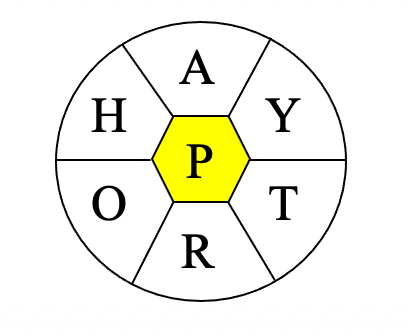
A, H, O, R, T, Y, and center P (all words must include P)
Merriam-Webster says…
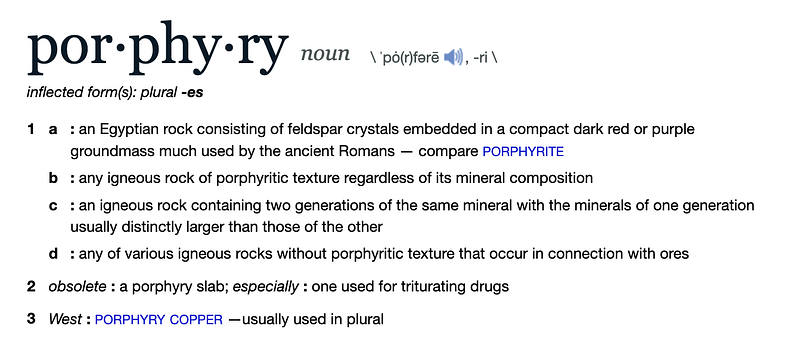
Silly little dictionary! Don’t you know that porphyry can’t possibly be a word if the New York Times says it ain’t?
For further fascinating facts, check out the Spelling Bee Master.
What’s your favorite dord* from today’s puzzle?
My Two Cents
The dictionary explains that the word porphyry comes from Middle English porphiri, from Medieval Latin porphyrium, an alteration of the Latin porphyrites, itself from the Greek porphyritēs (lithos), literally, “stone like Tyrian purple”, from porphyra purple.
With a lowercase “p” the word refers to the Egyptian rock or any igneous rock with or without porphyritic texture. So that’s a bit confusing, I’d say.
With a capital “P”, the word is used to name several things:
- Porphyry Island, an island in Unorganized Thunder Bay District in northwestern Ontario, Canada. In my opinion “Unorganized Thunder Bay” would be a great name for a heavy metal band.
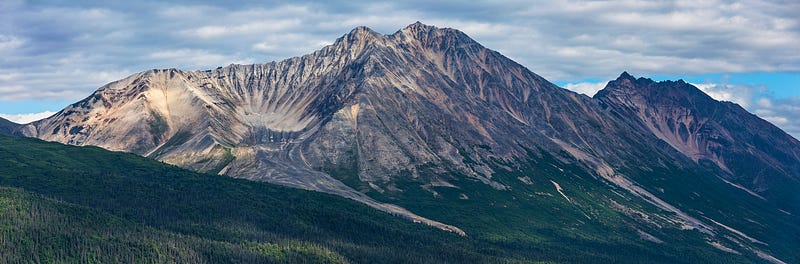
- Porphyry Mountain is a 6,375-foot (1,943-meter) mountain summit located in the Wrangell Mountains of Alaska, so named because it is mainly composed of… you guessed it: porphyry! (The photo at the top of this article shows the Northwest aspect of Porphyry Mountain.)
- Saint Porphyry, bishop of Gaza from 395 to 420, known for Christianizing the city.
The philosopher’s stone
Porphyry refers to any igneous rock consisting of large-grained crystals such as feldspar or quartz dispersed in a fine-grained silicate rich, generally aphanitic matrix or groundmass. Porphyry deposits are formed when a column of rising magma is cooled in two stages.
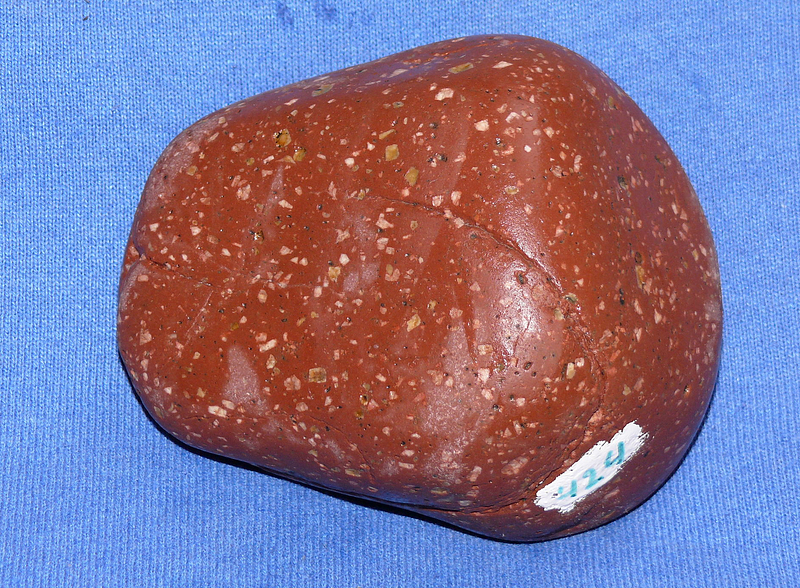
Yeah, I didn’t understand too much of the above paragraph, either. Oh, well, a picture is worth a thousand words, so here is one of porphyry rock 424.
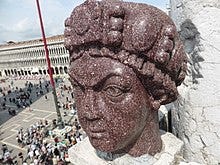
Some historians think this was the hardest rock known about 2,000 years ago, which is why it was used in Imperial Rome for building and honoring people with monuments. Like this one in Venice, thought to represent emperor Justinian:
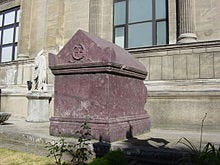
Here is a porphyry sarcophagus from the Istanbul Archaeological Museum…
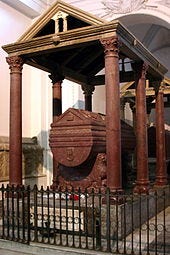
…and another porphyry sarcophagus, belonging to King of Sicily Frederick II, in the Cathedral of Palermo:
And here is the porphyry sarcophagus of Napoleon (yes, the Napoleon) in Paris:
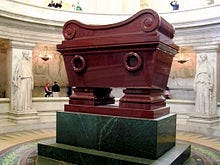
Ha! Gotcha! You were clearly not paying attention. Napoleon’s sarcophagus is actually made of quartzite.
I can’t blame you, though, since talking about rocks bores me a bit, too. That’s why I included so many pictures.
But here’s an interesting fact to keep you from dozing: in Scandinavian countries where people outfit their cars with spiked winter tires, many highways are paved with asphalt made of porphyry aggregate to help the road withstand the extreme wear those winter tires cause.
The stone’s philosopher
Porphyry with a capital “P” was a Greek philosopher born as Malchus either in Tyre (modern Lebanon) or Batanea (modern Syria), around the year 234. No one is quite sure where and when he died, either, although one theory is that it happened in Rome in the year 305… or thereabouts.
It’s also not clear what he looked like, although there is a French 16th-century engraving that would pass as a selfie today:
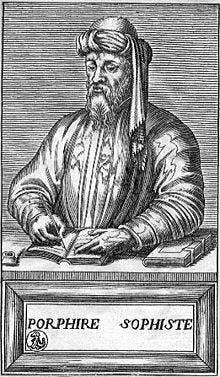
In the equivalent of the 14th century’s New Yorker, someone sketched a cartoon of Porphyry debating the Andalusian polymath Averroes.
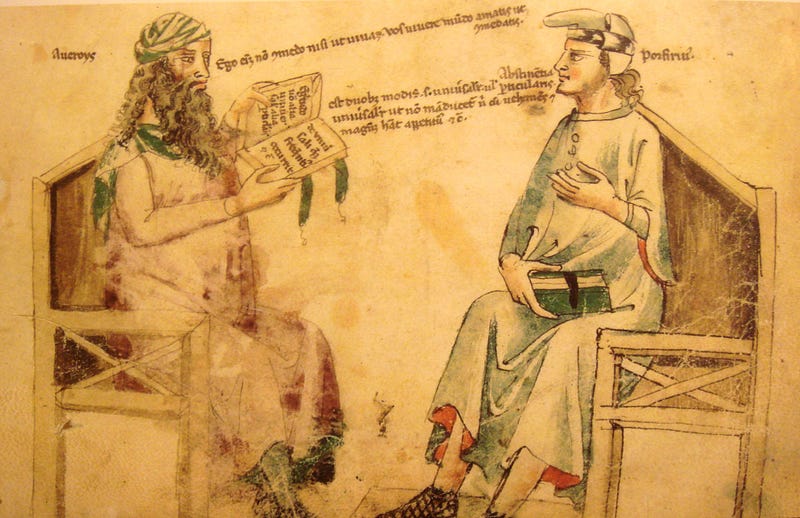
And just like the cartoons in the New Yorker, this one was understood by very few people. (I think the joke is that Averroes lived some 800 years after Porphyry died, but I’m not sure.)
Unlike us, Porphyry wasn’t concerned with unimportant details like birth and death dates and cities and countries. He was busy studying philosophy, astrology, and metaphysics, and wrote a lot of books. He was interested in music, vegetarianism, and Homer — the author of the Iliad and the Odyssey, not Bart Simpson’s dad.
One of his major works is Introduction to Categories, which became a standard medieval textbook and helped develop logic and the problem of universals.
Porphyry was a defender of Paganism; this was happening during the beginnings of Christianity, which he was vigorously against. So much so that he wrote not one, not five, not ten, but fifteen books against the relatively new religion. Unsurprisingly, the collected works are called Against the Christians.
A bunch of defenders of Christianity stood up to him and wrote a ton of refutations against Porphyry’s arguments. And thank goodness they did, because his original arguments have been reconstructed through those refutations. You see, about 150 years later the Roman emperor Theodosius II got upset by what Porphyry had written and ordered all copies of those fifteen books burned. In fact, he was so upset… (how upset was he!?!) that he ordered them burned again in 448. I guess they burned the ashes, then? Hmmm…
So, how did this philosopher named Malchus (meaning “king”) by his parents get the name Porphyry? The story goes that Cassius Longinus, his teacher in Athens, honored Malchus with a punning reference to his original name and the color of royal robes, which back then were purple. Either that, or Cassius Longinus was just one of those sadistic teachers who loved to make fun of their students.
Maybe that’s what the editors of the Spelling Bee are doing: sadistically making fun of us by decreeing that the word porphyry is a dord.*
You can check out my previous entry on another dord* here:
*What the heck is a dord, you ask? Here’s the answer:


