Pop Songs Inspired by Classical Music
I cover the classics in this article
Some people might argue that no more completely original music can be made. I strongly disagree. Music is not always about the chords, the riffs, the patterns. It’s about the emotion it evokes. Don’t worry, I won’t bother you with cover songs. Instead, I have compiled a list where artists were directly inspired by classical music. I’ll leave it down to you to determine whether they arouse your feelings. I limited myself to tracks I could only name from the top of my head.
Erik Satie
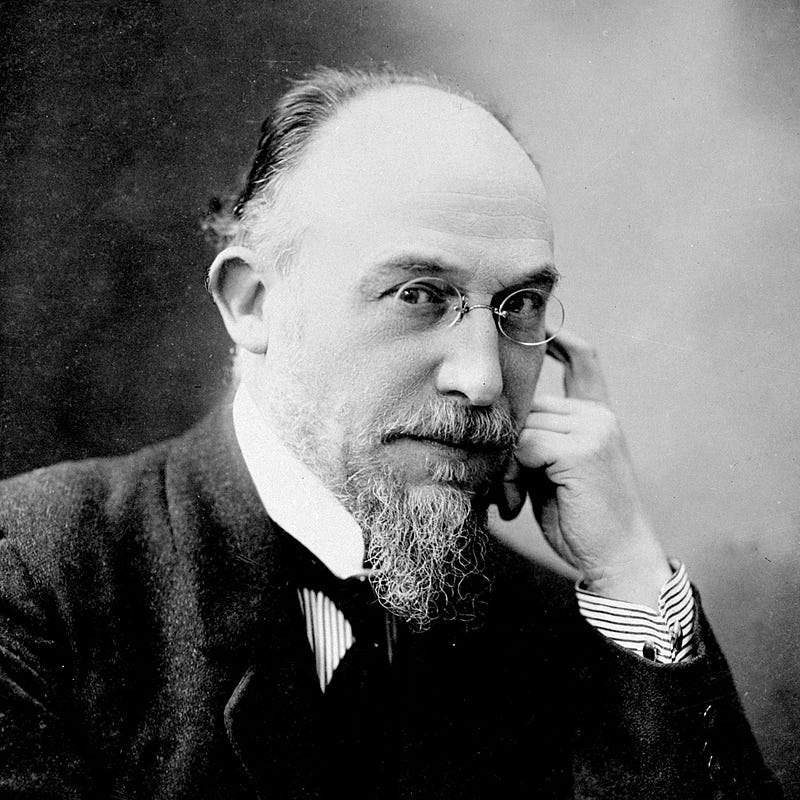
A colleague of mine asked if I put on music just to annoy them. I was playing Erik Satie (1866–1925) at the time. In the 1970s his work gained popularity due to the success of Reinbert de Leeuw.
There’s a lot to interpret when you play classical music if no recordings exist. With Satie, the main question is how fast to play. Aldo Ciccolini was the first to record Satie’s piano works in the late 1970s. Reinbert de Leeuw, however, did not agree with how Ciccolini interpreted Satie’s notes found on the sheet music. How slow is ‘très lent’ (very slow), and how one earth would one play “lent et douloureux” (slow and painful)? Reinbert experimented by going slower and slower. He finally settled on awfully slow. For comparison: the version of Ciccolini takes 2:43 minutes, while the De Leeuw needs 5:35 minutes.
I fell in love with Reinbert de Leeuw’s recordings of Satie. Although, I must admit I understand why my coworker was not very fond of hearing it from my workstation. After all, his music birthed the term ‘elevator music’.
Feel sufficiently warned? No go have a listen to Gnossiene No. 1 by Reinbert de Leeuw. Or go crazy with G-Eazy x Carnage featuring THIRTYRACK in their slightly too fast Gualla. Don’t forget to (ab)use Youtube’s feature to play videos at a different speed. Half the speed seems just about right for me. I’m not kidding.
Ludwig Van Beethoven
It is well known that The Beatles have put hidden messages in some of their songs. Strawberry Fields is the most notable of them. If you play it backwards, the messages can be heard. Back in the sixties, you didn’t need to download an app to do so. It was easy to reverse them. Just put your finger on the record and spin your record player backwards manually. My father admitted he spent endless nights playing his albums in reverse.
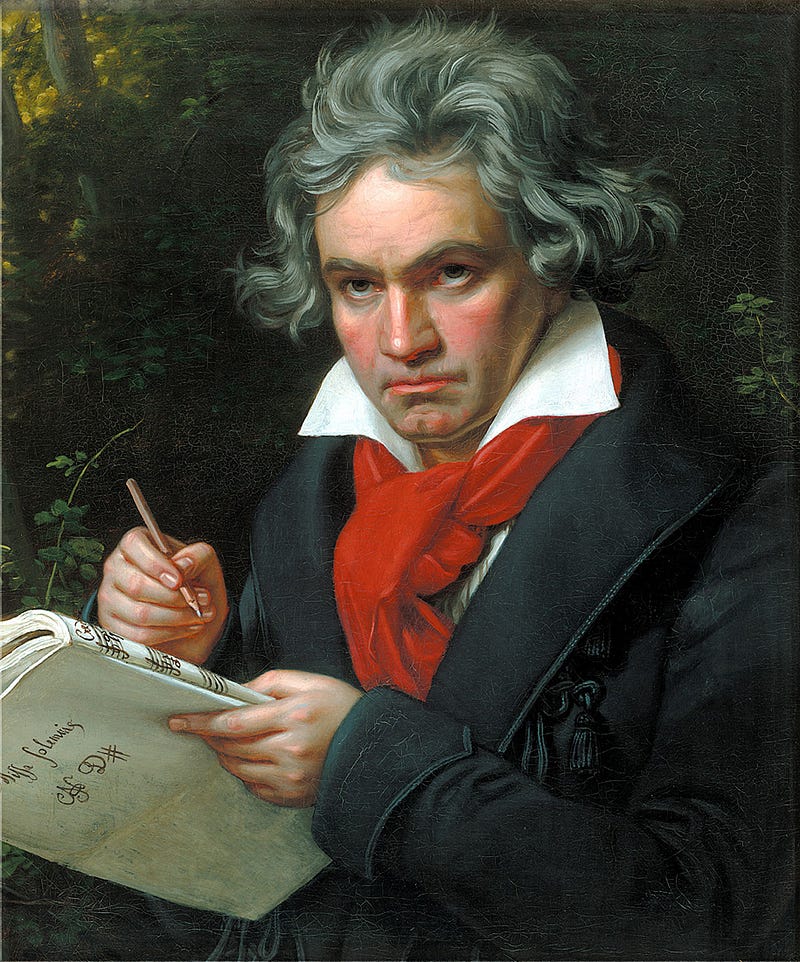
A little less known is the chord progression heard in Because. Supposedly, John Lennon asked his wife Yoko Ono to play Moonlight Sonata by Beethoven (1770–1827) backward for him. It proved to be a great foundation for the song.
What has been heard cannot be unheard. My mind always plays tricks on me when the intro to Because starts to play. I cannot recognize the tune directly, because I somehow think of Moonlight Sonata first.
Don’t forget to set YouTube’s speed back to normal if you choose to play either Because or Moonlight Sonata. For the latter, you get to choose. The first I ever heard on the MSX (my first encounter with this song in 1986), a classical one, or the dubstep nightmare.
We have all had our share of Für Elise. It’s maybe a song that is everyone on the planet is able to recognize and put a name to. It’s no surprise that it has made its way to more than a few pop songs. Don’t dig The Beatles right now? Or want to get that Dubstep out of your head? The positivity-laden ditty I can by NAS comes to the rescue. If you yearn for more Moonlight Sonata someday, check out Neneh Cherry’s Somedays.
The Rolling Stones
I had always thought that The Verve’s used a classical score to create their hit song Bittersweet Symphony. It turns out I was wrong, so let’s set this straight once and for all.
Despite the song being a pan-European hit when it was released, the band made exactly $1000 from it. Although they had acquired the rights to a sample, they were sued nonetheless. They apparently had used a larger portion of the song than they had agreed to.
“We were told it was going to be a 50/50 split, and then they saw how well the record was doing. They rung up and said we want 100 percent or take it out of the shops, you don’t have much choice.”
— The Verve’s bassist Simon Jones
The song received critical acclaim from a lot of music media, like Rolling Stone magazine. It’s more than ironic that Mick Jagger and Keith Richards held the rights to the chord progression used by The Verve and claimed all proceedings.
So, okay. This has nothing to do with classical music. I hope I was not the only one to think the music to Bittersweet Symphony was based on one composer’s dream a century ago.
Do watch the iconic video by The Verve. And while you’re at it, check out the Rolling Stones orchestral version of The Last Time here. For those interested: The Verve kept fighting for their rights. The dispute has now been settled. All future royalties now go to David Ashcroft, The Verve’s frontman.
Sergei Rachmaninoff
Recognized all songs so far? Congrats! How about we go head towards more obscure territory? I’m not all that familiar with either Rachmaninoff (1873–1943), or Blackalicious. It just happened a friend of mine imitated playing the piano when The Fall and Rise of Elliot Brown came up.
After I heard Alphabet Aerobics, I made a mental note to listen more to Blackalicious. This next track is wildly different from AA, although it does contain some tongue-twistingly fast rap as well. Give it a listen and consider reading my AA-version along with it. It’s an abecedarian poem using only one word per letter.
Experience Rachmaninoff here. This version is played by himself, actually. Then check whether you recognize it in Blackalicious’s song. This time I managed to find a version that is played by themselves as well.
Claude Debussy — honorable mention
No pop song this time, but an album paying tribute to the wonderful Claude Debussy (1872–1918). This album has received high rotation in my house for quite some time. The Art of Noise entrances you from the start of the album by blending atmospheric drum and bass, electronica, breakbeat, and hip hop. The album is best enjoyed when doing the dishes, cleaning up, or anything else that doesn’t require talking. There is a narrator that binds the album wonderfully together.
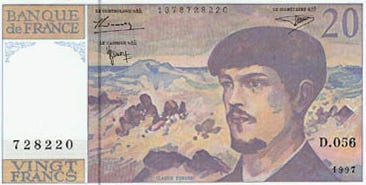
Think that you’re not familiar with Debussy? Think again. Check my favourite rendition of his Moonlight Sonata. See? You did recognize that piece, didn’t you?
Enjoy Art of Noise’s emotional rollercoaster rife with opera singers and a hefty dose of breakbeat here.
Final thoughts
I was inspired to write this article after listening to M.A. Mercier’s Top 50 songs of all time. So many possibilities! But do the songs deserve to be on a list? What should I do with the ones I need to leave out?
I still can’t bring myself to start compiling the list. But it will be fun to revisit some old friends I haven’t listened to in a while. That’s maybe for another time.
His playlist contained a lot of hidden gems that were unknown to me. The one that inspired me to write this is the track Gualla. It’s the one that features Erik Satie Gnossiennes.
Mercier has kindly provided a Spotify playlist to accompany his review. Whenever I read something here at The Riff, I always try to play matching music. It makes an article so much more enjoyable.
I decided to go with Youtube links instead. It’s easier to compare if you’re in full control. Let me know if you would have wanted a playlist in the comments.
There are many more pieces that could have been included in this list. But, with music, there is always a story to tell. I don’t want to keep you away from the music much longer. If you feel I have made a huge omission by not including your favourites, let me know!
Want to read more about music (and other interesting things) on Medium? Consider subscribing by using my referral link. Remember: there are no ads here!


