
Polynya
Ice, ice, everywhere… nor any drop to drink!
Today’s New York Times Spelling Bee letters:
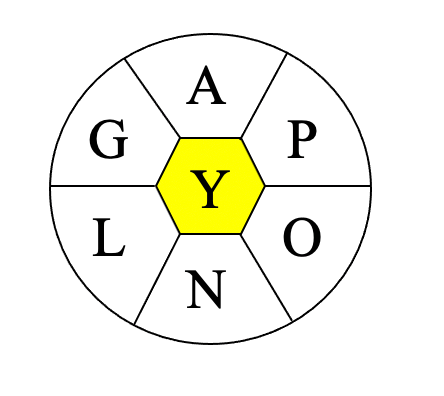
A, G, L, N, O, P, and center Y (all words must include Y)
Merriam-Webster says…
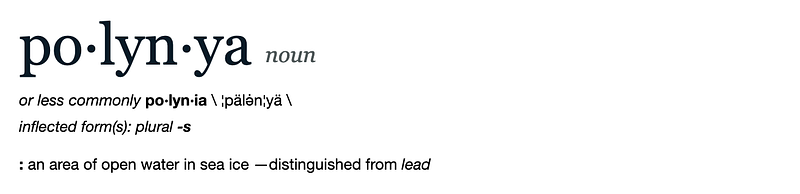
Silly little dictionary! Don’t you know polynya can’t possibly be a word if the New York Times says it ain’t?
For further fascinating facts, check out the Spelling Bee Master.
What’s your favorite dord* from today’s puzzle?
My Two Cents
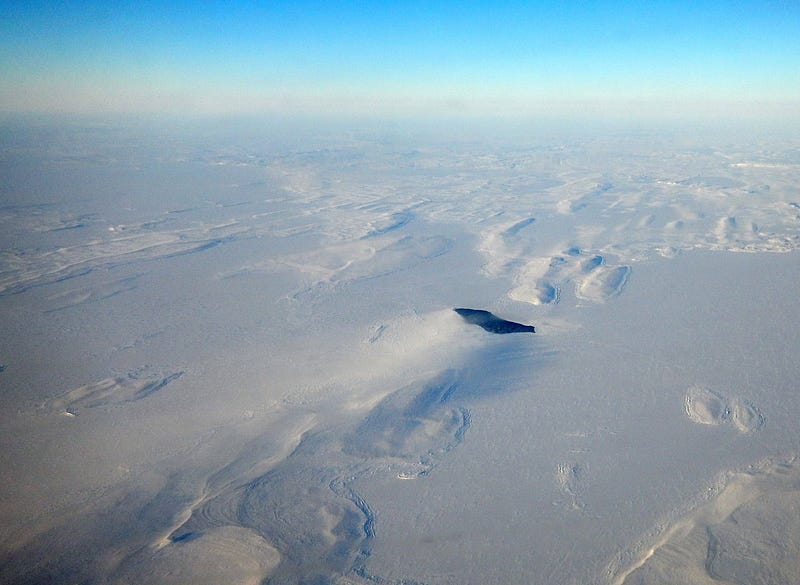
Look at the photo at the top of today’s article. See that small opening in the middle of the huge sheet of ice? That’s a polynya. Not to be confused with a Pollyanna, someone who seems to have a constant and unflappable optimistic view of life.
Polynyas are probably not very optimistic, seeing how they are usually surrounded by tons of ice and are not as popular as leads (rhymes with reeds), better-known for their usefulness in arctic and antarctic navigation. More about those later.
Can you sea me?
The word polynya came to the English language borrowed from the Russian полынья, which originally refers to any natural hole in the ice. Polar explorers in the 19th century started using this term to describe navigable portions of the sea.
There are two main types of polynyas.
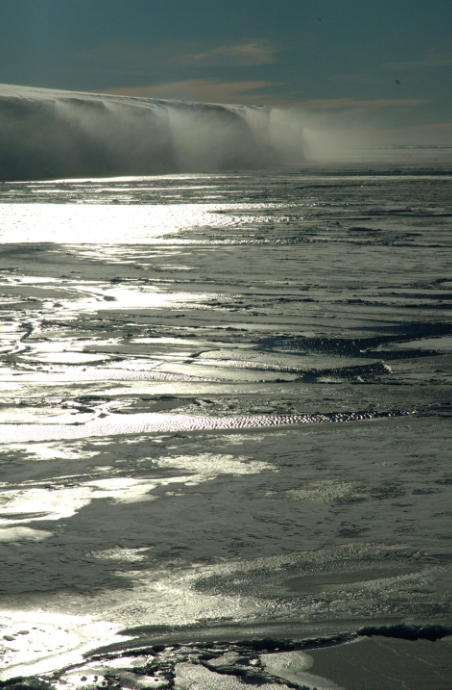
Coastal polynyas are usually found year-round around the shores of both poles of the Earth. In Antarctica they are created by strong winds that push the ice offshore. These are called katabatic winds (from the Greek κατάβασις katabasis, meaning “descending”) and they carry high-density air downwards because of gravity. Apparently, these winds can be captured in photos:
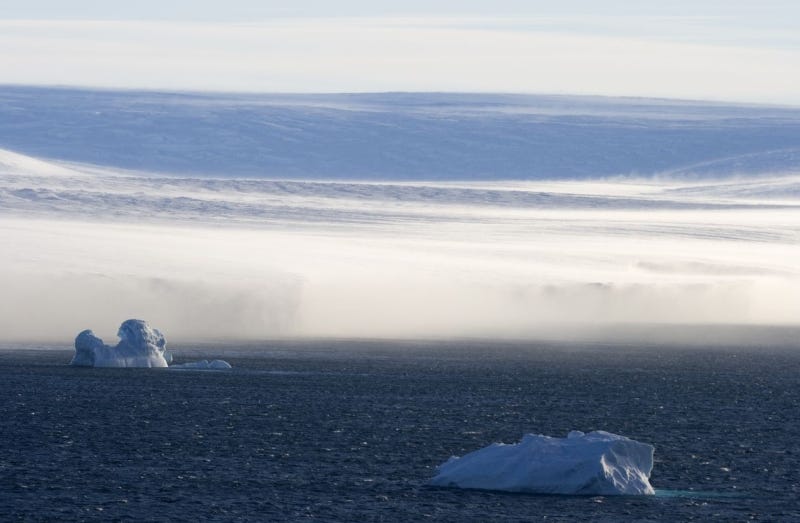
See the wind? Hear it? Feel it?
Here’s another pretty picture I found of winds being very katabatic:
Mid-sea polynyas are not found as regularly as their coastal sisters, and appear in the middle of winter sea ice packs in certain locations, mostly around Antarctica.
One of the most famous mid-sea polynyas is the Weddell Polynya (also known as the Maud Rise Polynya). It’s so popular that Diana Francis, Clare Eayrs, Juan Cuesta, and David Holland published a scientific article on it in 2019.
Here’s a cool satellite photo of the Maud Rise Polynya…
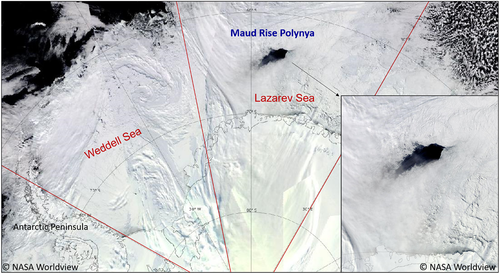
…also known as the Weddel Polynya.
Some polynyas pop up (or rather, pop through) seasonally at the same time and place each year. Sort of like that old Batman TV show from the 1960s. Because animals can adapt their life strategies to this regularity (the polynyna, not the TV show), these types of polynyas have ecological research implications.
In winter, marine mammals that do not migrate south, such as walruses, narwhals, and belugas, stay there. In spring, the thin or absent ice cover allows light to penetrate the surface as soon as the long winter night ends. This helps microalgae bloom of at the base of the marine food chain.
Yeah, I know, the pictures are much more interesting. Here’s one of a narwhal in a polynya waving hello to Ansgar Walk. And who is Ansgar Walk, you ask? Look under the photo.
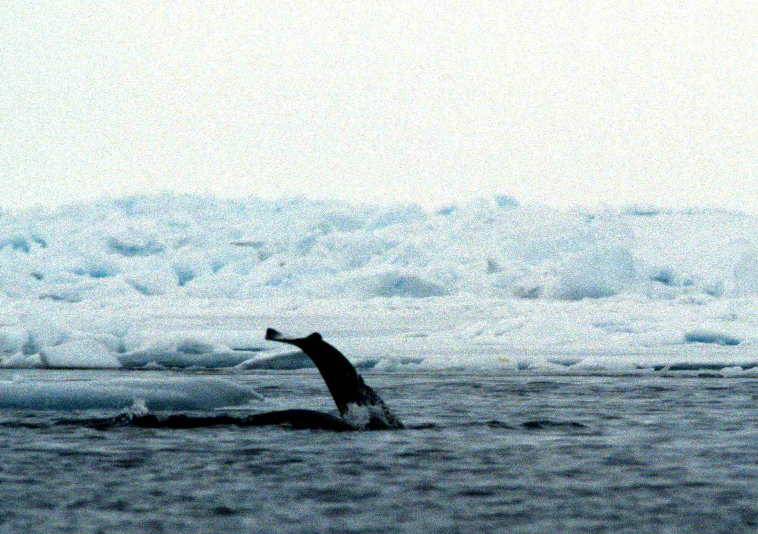
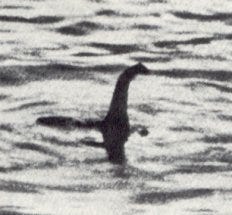
Maybe the narwhal isn’t waving but flipping up Ansgar. Or maybe that’s not a narwhal but the Polynya Ness Monster. The photos are uncannily similar:
A bit of epic history with polynyas: In 1962, both the USS Skate and USS Seadragon surfaced inside the same polynya near the North Pole. This was the first time the U.S. Atlantic Fleet and the U.S. Pacific Fleet met at one of the poles.
Lead the way
As the dictionary mentions, polynyas should be distinguished from leads. You forgot about that? Well, I didn’t. Now, there are several definitions for the word lead, depending on whether it’s a verb, a noun, an adjective, a noun, a verb, an adjective, or a noun. Don’t believe me?
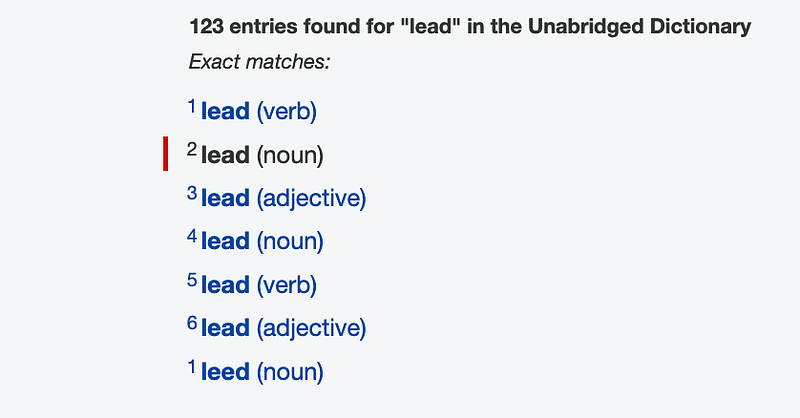
See? Anyway, here is the entry just for that ²lead definition:
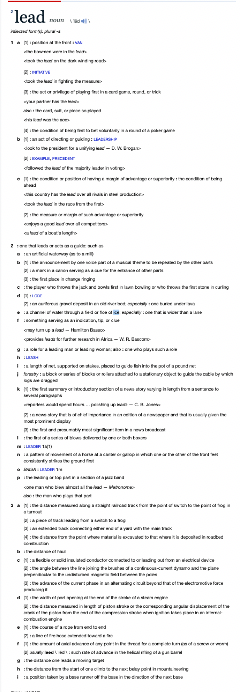
Okay, let’s zoom in for goodness sake!
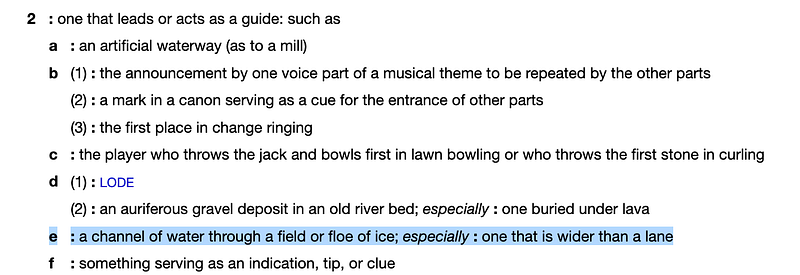
So many screenshots and photos. Can you tell I don’t feel like writing much today? But the Spelling Bee is a daily game and takes no vacations — or prisoners. And neither do I!
A lead is a large fracture of sea ice that reveals open water that can be navigated. Some leads can reach hundreds of meters (yards) in width. But you gotta be careful about crossing through them. If the air is cold enough, the water within a lead can quickly refreeze and form a thin layer of new ice. That thin layer can then become a thick layer… and then you and your kayak are stuck.
What? Never gone kayaking in the middle of the winter sea, you say? Well, then, I highly recommend not doing it. It’s dangerous.
What else can I say about leads? They are seen as a stress-relieving mechanism in drift ice, as a response to diverging current flows or the effects of the wind. So leads are cracks or fissures that can open up for long distances, sort of like those pavement or sidewalk cracks in cartoons.
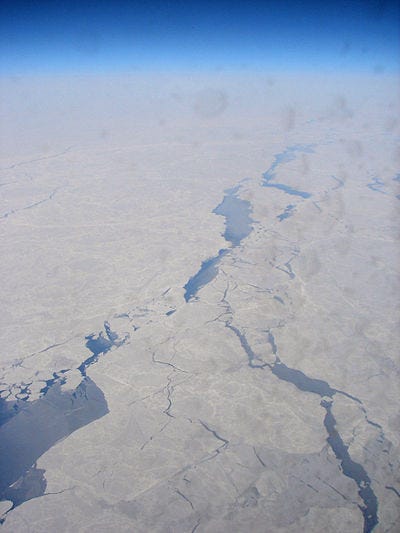
The description of the above photo is as as follows: “Aerial view of the Chukchi Sea between Chukotka and Alaska, displaying a pattern of leads.” So I guess P199 was not kayaking but flying. Or maybe P199’s kayak hit a piece of ice at high speed and launched into the air, whereupon P199’s quickly took that picture. Told you it was dangerous!
Okay, I’m officially rambling, so let’s end today’s article here, with my usual rant:
Despite the importance of polynyas in certain ecological systems of freezing waters where you should not kayak, the editors of the Spelling Bee decided that polynya is a dord*.
You can check out my previous entry on another dord* here:
*What the heck is a dord, you ask? Here’s the answer: