
Plica
So many meanings… and one single rejection by the Spelling Bee
Today’s New York Times Spelling Bee letters:
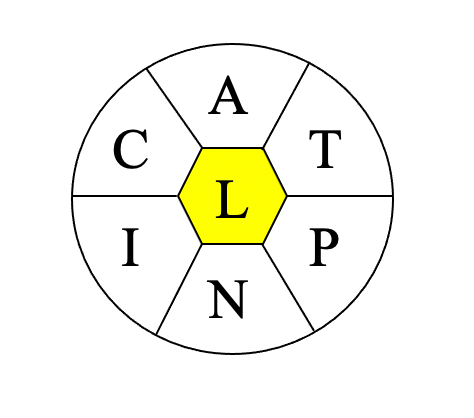
A, C, I, N, P, T, and center L (all words must include L)
Merriam-Webster says…
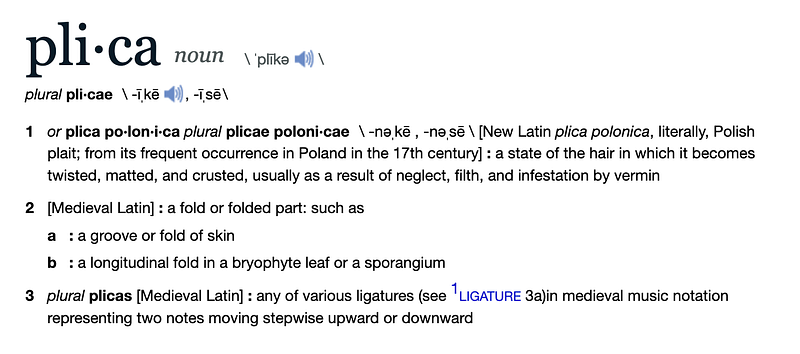
Silly little dictionary! Don’t you know plica can’t possibly be a word if the New York Times says it ain’t?
For further fascinating facts, check out the Spelling Bee Master.
What’s your favorite dord* from today’s puzzle?
My Two Cents
If you happened to click on the Merriam-Webster link I always provide for the daily dord*, you may have noticed that it shows only one definition, not three like the screenshot above.
That’s because the screenshot is taken from the Unabridged Merriam-Webster, which is subscription-based. I subscribed once I decided I was going to write about words on Medium, but I don’t expect my readers to do so. That’s why I provide the link to the Collegiate edition, which is free. Most times the two versions of the dictionary coincide when it comes to the number and order of the definitions… but not always, as is the case today.
Being a Spanish speaker and having worked in healthcare, I am familiar with several meanings of plica. But today I learned a few more. This word is certainly versatile.
Medical a-plica-tions
There are several medical-related definitions of the word plica. The one mentioned first in the screenshot above, plica polonica, is also known as the Polish plait, which is the English translation of the Latin name.
Although it was a common condition in previous centuries — especially among peasants — due to neglect in grooming hair, it became associated with Poland because the long, matted hair was considered an amulet against illness. It was believed the disease had left the body to live in the hair; this also explained why some people did not even cut off their plicas.
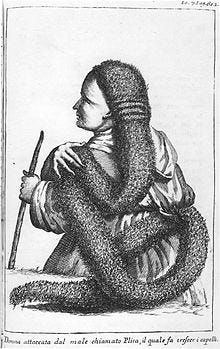
The effect on the hair shaft was notable: it would become irreversibly entangled and form a sticky, sometimes moist mass. The only solution was to cut it off, something that is more accepted in today’s society. Not that we aren’t superstitious — just look at all the weird reactions to the pandemic — we just aren’t too superstitious about hair. Well, sports players excepted, of course.

Hey, it worked in 2013 for the Red Sox!
Here is a picture of an actual Polish plica in a Polish museum in a Polish city:
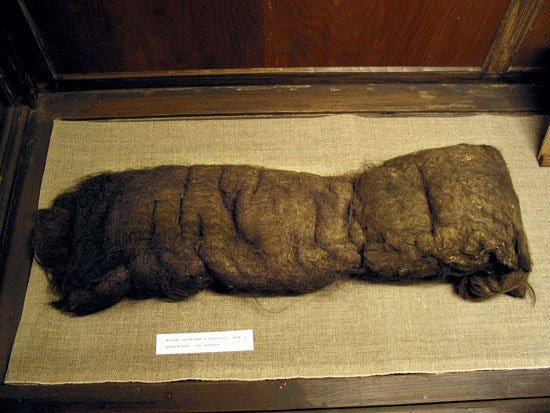
In some European countries, plica was believed to be caused by elves or fairies. Supposedly, one of the Brothers Grimm fairy tales is about a girl who stops combing her hair for a year and finds gold coins in it. No wonder the custom became popular!
Several folds in the human body are also called plicas.
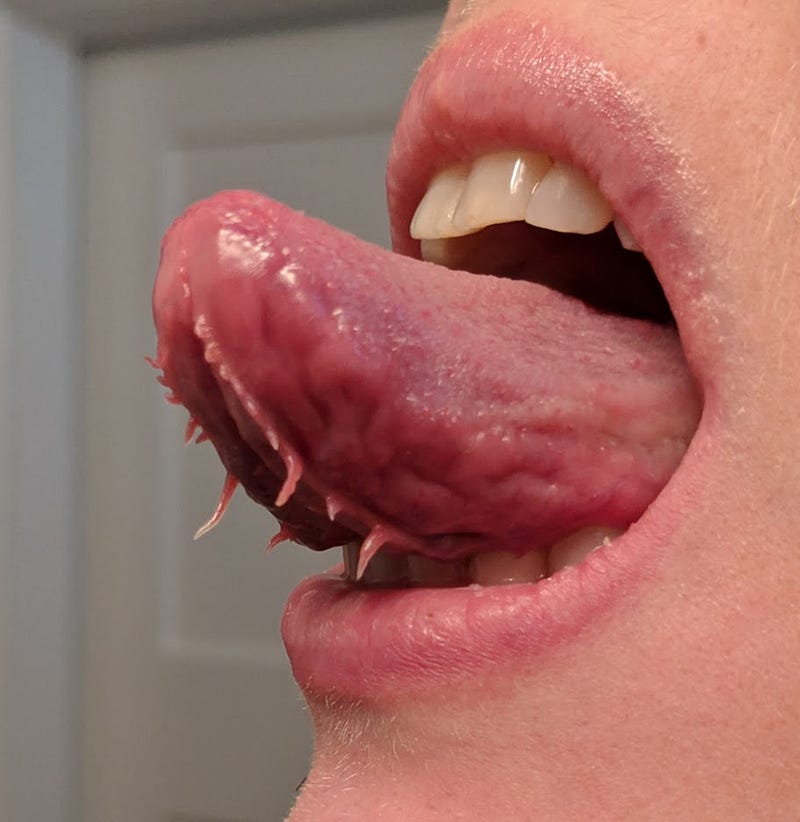
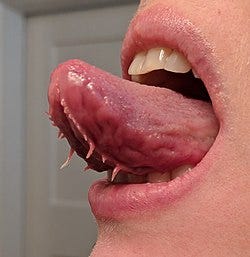
The fimbriated fold of the tongue is also known as the plica fimbriata. It’s the creepy tongue in the big photo at the top of today’s article. Here is a smaller, equally-creepy version:
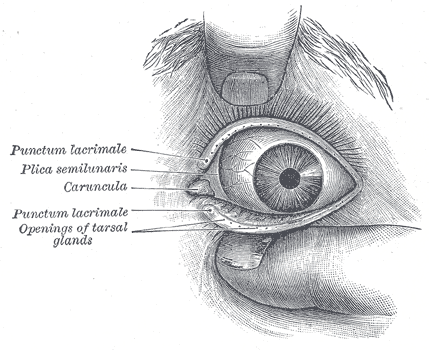
The small fold at the edge of the inner part of the eye is called the plica semilunaris of the conjunctiva.
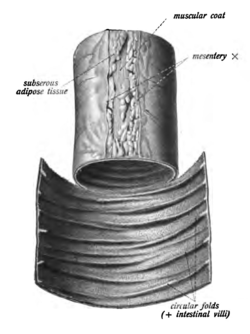
The circular folds inside your small intestine have several aliases: valves of Kerckring, valves of Kerchkring, valvulae conniventes, and… plicae circulares.
The plica semilunaris is the thin upper part of a fold of mucous membrane above your tonsils. Sorry, no image for that one. Just stand in front of a mirror, open your mouth, shine a light into it, and take a look.
Your knees probably have an extension of the protective synovial capsule; these remnants of the fetal stage of development (when the knee has three compartments) usually get smaller during the second trimester of pregnancy. In adults, these plica exist as sleeves of tissue called synovial folds.
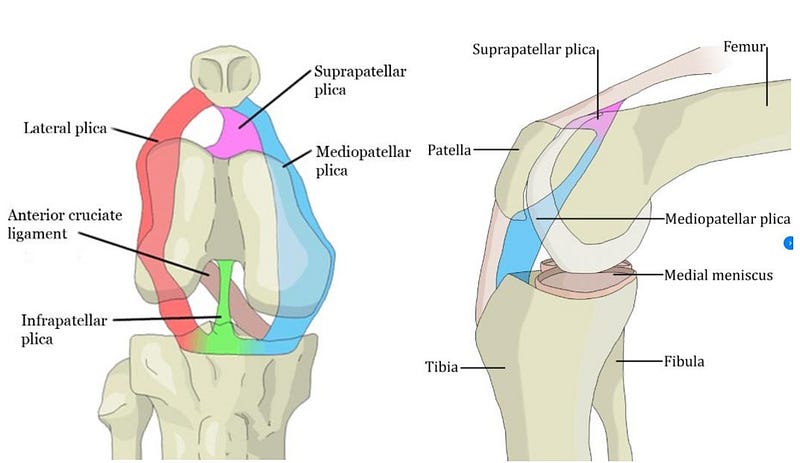
The plicas are mostly harmless, but if the knee capsule becomes irritated (for example, if you piss it off), the plica can get thicker, sort of like what happens to Bruce Banner when he gets irritated. Then you develop plica syndrome, which is about as pleasant as the Hulk.
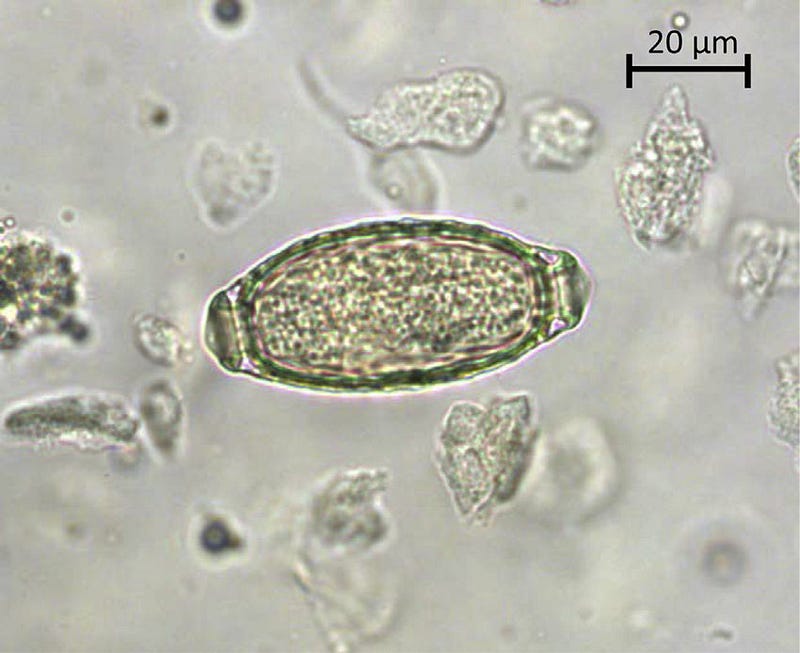
Another medical-related plica is Capillaria plica, a parasite most often found in the urinary bladder of dogs, foxes, and other mammals. Here is a really enlarged photo of one. (I guess someone irritated it…)
Non-medical plicas
In sigillography (the fascinating study of he wax, lead, clay, and other seals used to authenticate archival documents) a plica (from the Latin plica, meaning “fold”) is a reinforcement of the lower edge of a charter or deed, produced by folding up the bottom of the sheet of parchment to achieve a double thickness.
This gives the seal a more secure anchorage and keeps the parchment from tearing. Slots were normally cut in the double thickness of parchment, a cord or tag of parchment threaded through them, and the seal attached to that. Like so:

Between 800 to 1650 AD, music notation included the ligature, a graphic symbol that indicated one should perform two or more notes in a single gesture, and on a single syllable.
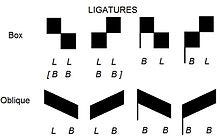
A tail at the end of a ligature indicates an additional note be sung or played, called a plica, that is not part of the ligature. Plicas were especially common with the rhythmic modes, to accommodate in practice what could not be accomplished within the very strict theoretical basis for modal music.
In Spanish, however, the word plica has a different meaning in music notation. It’s the stem of the note (number 2 below).

Finally, we have Plica plica (double the pleasure, double the fun!), a lizard native to South America. In Colombia, some in the Tucano culture revere the Plica plica. It is one of the most important animals in their mythology, and they call it vai-mahse, meaning “lord of animals”.
It is also a phallic symbol.
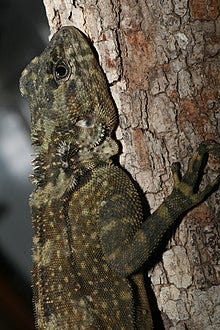
Clearly! And also… doesn’t it remind you of Jeff Bezo’s giant dildo… I mean rocket ship?

Now, despite the abundance of meanings for this tiny word, the editors of the Spelling Bee still decided that plica is a dord*.
You can check out my previous entry on another dord* here:
*What the heck is a dord, you ask? Here’s the answer: