
Philip Roth Was A Jerk, But His Advice For Writers Is Dead On
9 writing tips from the man who won more literary awards than any other writer, ever.
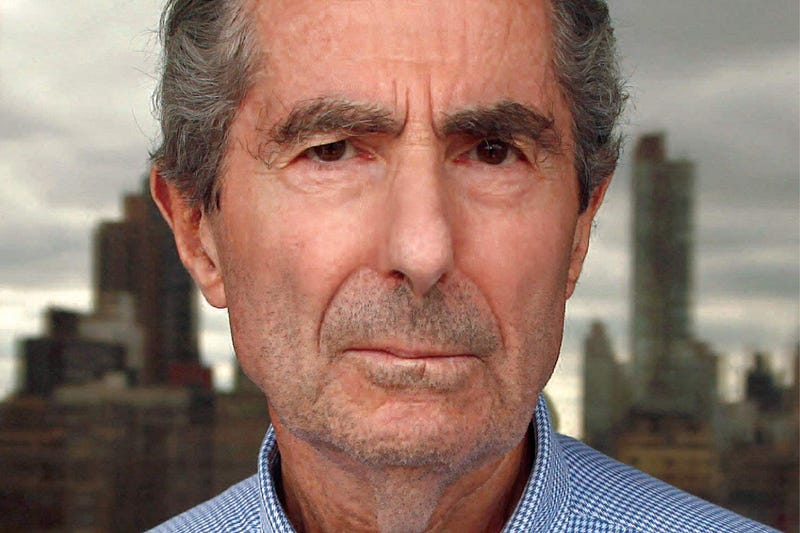
Philip Roth was kind of a jerk.
That’s not new. A lot of writers are jerks.
Charles Dickens was a cruel man with bizarre obsessions. Flannery O’Connor Was A Raging Racist. J.D. Salinger liked little girls. Norman Mailer stabbed his wife in rage.
Writers are just people. Sometimes, people are jerks.
Skill doesn’t turn a jerk into a nice person.
Truth is, if we expected writers to live up to the moral expectations of our time, our bookshelves would be bare.
Let me tell you a story.
It’s short, ugly and true.
In 2002, students at Columbia University were super excited. They were about to meet Roth, the man who’d won more literary awards than any other writer, ever.
He won a Pulitzer. The National Book Award, twice. The PEN/Faulkner, three times. The WH Smith Literary Award. The inaugural Franz Kafka Award. And more. It’s too long a list to include all his awards here.
He won every major American literary award, some multiple times.
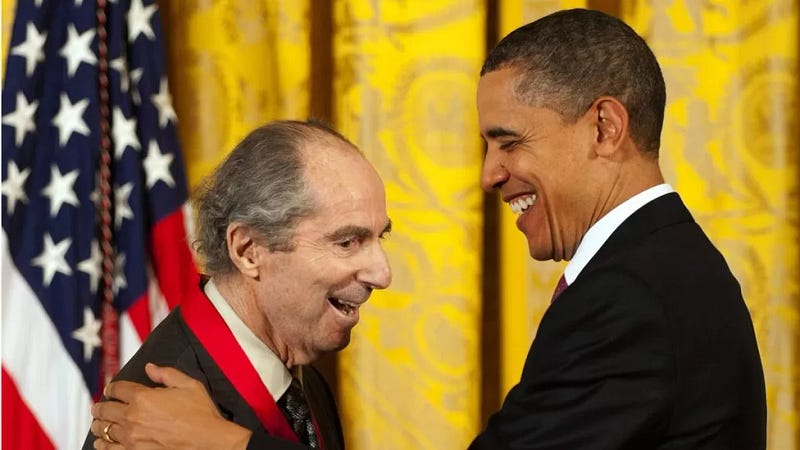
The wins would keep coming. In 2011, President Obama awarded him the National Humanities Medal for his contribution to literature. He also won a Man Booker International Prize for lifetime achievement.
But on that day? He was 69 years old and wildly respected when he walked into that class at Columbia to talk to a room full of aspiring writers.
He invited the students to ask questions for discussion.
One young girl raised her hand and asked about an oral sex scene in one of his books where a professor violently forces himself on a young girl.
She referred to it as a “rape scene.”
“We all watched as a shadow came over Philip Roth’s face. Then he started to yell. Spittle formed on the corners of his mouth. He didn’t answer the question. He silenced Laura for daring to ask it, silenced her, just as he’d silenced the female character in his novel.” (source)
Faced with his red-faced, screaming anger, the girl who asked the question fled and spent the class crying in the hall.
True story from an essay called Why I Wish I’d Never Met Philip Roth.
He had no problem screaming at a young student barely out of her teens until she ran away crying. I felt sad for the students in that class that day. I’ve never read any of his books. After reading the essay about meeting him, I have no desire to.
But his writing advice? Dead on.
1. Nevermind what everyone else does.
“I don’t ask writers about their work habits. I really don’t care. Joyce Carol Oates says somewhere that when writers ask each other what time they start working and when they finish and how much time they take for lunch, they’re actually trying to find out, “Is he as crazy as I am?” I don’t need that question answered.” — Philip Roth (source)
I don’t know that I agree with Oates. I don’t think writers wonder if other people are as crazy as they are. I think maybe it’s curiosity. Or validation. If other writers share our habits, maybe it validates us a little. Regardless, it doesn’t really matter, does it?
He didn’t care how much other writers wrote, where they wrote or why. Didn’t care about any of that stuff and he liked to tell writers they shouldn’t either. Doesn’t matter. All that matters is what works for you. Figure that out and keep the words flowing.
2. Ignore the crap about finding your “voice”
“You write differently in each book. It may appear to be similar to readers, but you’re a different writer in each book because you haven’t approached that subject before. And every subject brings out a different prose strain in you. Fundamentally, yes, you’re contained as one writer. But you have various voices. Like a good actor.” — Philip Roth (source)
Roth didn’t believe “voice” is something writers need to think about. It’s not something you find. Instead, he believed writers should think of themselves like actors and find the way each story needs to be told.
Here’s the real glory of that. Not worrying about “voice” is one less pressure. One less thing to think about. Just focus on telling the best story you can based on the story. Let the rest take care of itself.
3. Stop thinking writing is “hard work.” It’s not.
“Writing isn’t hard work, it’s a nightmare. Coal mining is hard work. This is a nightmare. . . . There’s a tremendous uncertainty that’s built into the profession, a sustained level of doubt that supports you in some way. A good doctor isn’t in a battle with his work. In most professions there’s a beginning, a middle, and an end. With writing, it’s always beginning again. — Philip Roth (source)
Roth got pretty crusty when people suggested writing is “hard work.” He’d say no, coal mining is hard work. He was the first to say writing is filled with uncertainty. You never know what’s going to work. But that doesn’t make it hard work.
There’s a benefit to that approach. When we repeatedly tell ourselves something is hard, we make it more mentally daunting. So, why?
4. Writing isn’t enough. You need to learn to edit.
“Part of being a writer is being able to read what you’ve written and see what’s missing, see what needs development, see what’s suggested by what you wrote. It’s like a trampoline. You know, you’re jumping up and down on this draft, and each jump is an idea.” — Philip Roth (source)
Stephen King says when the reader puts a story aside because it got “boring” it’s because the writer got fascinated with their power of description and lost the focus of the story. He’s not wrong.
Roth says you need to be able to look at your writing and see the story, not just the words. Figure out where you’ve lost the trail, where you need to trim the fat and where you need to zoom in.
5. No one gets what “write what you know“ means…
It isn’t that you write down what happens to you every day. You wouldn’t be a writer if you did that. But it gives you a sense, you know from your experience , what life is like. And you weigh what you invent against your sense of actuality. — Philip Roth (source)
People have been talking about what “write what you know” means since Mark Twain said it in the 1800's. No one gets it, said Roth. Don’t take it so darn literally. It just means to write in a believable way, and that comes from tapping into your life experience. If you’ve ever read a badly written book filled with sappy descriptions and purple prose, you know exactly what he means about infusing actuality and reality.
6. You need to figure out what the focus is
How does it feel looking through a microscope, when you adjust the focus? Everything depends upon how close you want to bring the naked object to the naked eye. And vice versa. Depends on what you want to magnify, and to what power. — Philip Roth (source)
Honestly, I think Stephen King said this better when he said when a book gets “boring” it’s because the writer lost the focus and became attached to their words. We’ve all seen writers run off on a tangent that’s not related to the story they’re trying to tell. Once you have a first draft down, whether it’s a book or an essay, you need to figure out what the story is. Once you know that, you’ll have a better idea where to zoom in and where to zoom out.
7. Words mean things. Use the right one.
“The novelist’s obsession, moment by moment, is with language: finding the right next word.” — Philip Roth (source)
Ever notice that a lot of successful authors say the same things in different words? Mark Twain said the difference between the right word and the wrong word is like the difference between lightning and a lightning bug. Stephen King said if you need to use an adverb, you’ve got the wrong verb.
It’s all the same advice. Don’t say shouted loudly if you mean screamed or screeched. William Zinsser, who wrote the #1 book on writing, says read every sentence and ask yourself if you used the words that say what you meant to say.
8. Sit down and finish what you started…
“The road to hell is paved with works-in-progress.” — Philip Roth (source)
Stephen King likes to say the road to hell is paved with adverbs. Roth says the road to hell is paved with unfinished work. He calls it lazy. Says the best thing a writer can do is figure out what’s worth finishing. Then sit down and finish it. If it’s not, then trash it and free up the mind space.
He believed writing is a discipline and writers need to learn to plant their butt and finish their work. He believed the ability to consistently produce good work depends on the ability to sit down and finish what we start.
9. You’re going to fail. Get used to it.
“Writing is frustration — it’s daily frustration, not to mention humiliation. It’s just like baseball: you fail two-thirds of the time.” — Philip Roth (source)
Roth said when writers get to thinking writing is “hard” it’s because of the high risk of failure. That’s not “hard” it’s just frustrating. Not all careers come with a high risk of failure. An accountant doesn’t worry about failing every time they add a column of numbers. But with writing, there is constant risk of failure. You need to stop taking that personally. It’s just part of the job. Maybe people like what you wrote, maybe they don’t. It’s like playing ball. Maybe you hit it out of the park, maybe you don’t. The only way to deal with it, he says, it to write something else.
“Literature takes a habit of mind that has disappeared. It requires silence, some form of isolation, and sustained concentration in the presence of an enigmatic thing.” — Philip Roth (source)


