
Coronavirus
Pfizer’s Vaccine May Not Be as Effective at Stopping Delta as Moderna’s, New Research Suggests
Study Compares Two Popular COVID-19 Vaccines
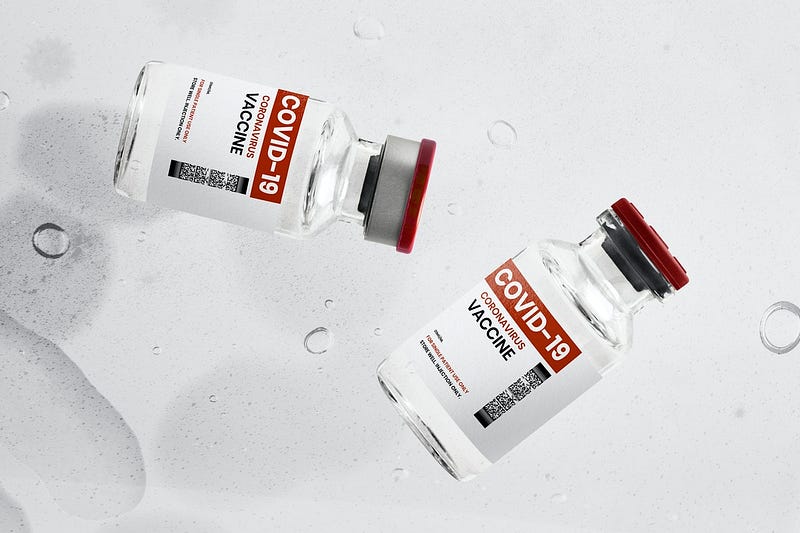
There’s been a lot of confusion about the vaccines, particularly in terms of efficacy, as the newest strain of SARS-CoV-2, the coronavirus that causes COVID-19, rocks the United States along with the rest of the world.
Just as we were starting to get back to something that resembles real life, lurking in the backdrop was a fear that many of us shared about the spread of the new Delta variant of COVID-19. And now, Delta is the dominant strain in the United States.
Experts say it’s more than twice as contagious as the original strain of SARS-CoV-2. And as we all know, the strain was initially discovered in India where it ripped through that country, tearing the nation to shreds. Six thousand people died in a single day in India from the variant. And while regular COVID has a relatively low death rate, experts also believe the delta variant may be more deadly, with a Canadian pre-print study suggesting that it’s up to twice as deadlier as other variants.
From there, the variant made it over to the UK and eventually to the United States. At present, it’s spreading at an incredibly fast rate across five states which are particularly vulnerable to the strain. While more than 600,000 Americans have already died from the coronavirus at the time of this writing, it seems like that number may go up in the pockets of the states that are hit hard by delta that still remain unvaccinated.
It’s important to note, this data isn’t conclusive, which is why American public health experts have refrained from saying causality has been established. We can’t quite yet say with any certainty that Delta is more deadly than other strains, though evidence suggests it might be.
As I reported elsewhere, a few months ago as Delta was only beginning to take America by storm, it appeared as if the vaccines we have available were going to hold up with little difference in rates of infection:
On the one hand, if you’re vaccinated, you can rest assured that according to the CDC, the delta variant only causes a minor reduction in the effectiveness of the vaccine. The vaccine still protects against the strain, but to a lesser degree. If you’re unvaccinated, however, I’ve got bad news for you. Emergency rooms across the US are being filled to the brim with people who need emergency services, ventilators, and medical intervention just to (maybe) keep them alive.
But the results from scientific research are progressive. This means that we’re always getting new data and we constantly have to shift our conclusions in light of new evidence.
It might be time to reanalyze that message.
The Israeli Data on the Pfizer Vaccine
Pfizer is particularly the vaccine of interest, here, after a recent Israeli study called into question the efficacy of the Pfizer vaccine.
At first, it was believed that the Pfizer vaccine protected against infection a whopping 95% of the time. Then, they changed their story. As new information came out, Israel then believed that the Pfizer vaccine held up to the new Delta strain 90% of the time, protecting against infection. Then new research came out that brought that number down to 64%. And then, even later research in Israel came out saying the protection Pfizer offered is only 39%, with only a 41% effectiveness of preventing symptomatic infection.
To make matters more complicated, a recently-released study from the U.K., printed in The New England Journal of Medicine, found that the Pfizer vaccine was 88% effective at stopping infection of the delta strain. This is a far cry from the meager 39% that Israel found in their latest study.
That study concluded:
Only modest differences in vaccine effectiveness were noted with the delta variant as compared with the alpha variant after the receipt of two vaccine doses. Absolute differences in vaccine effectiveness were more marked after the receipt of the first dose. This finding would support efforts to maximize vaccine uptake with two doses among vulnerable populations.
Many heralded this as proof that the Israeli data was flawed, citing the fact that Israel didn’t control for non-vaccinated people (of which there are very few in Israel) properly. So, what is going on?
And who’s data should we trust, Israel’s or the United Kingdom’s?
Pfizer Vs Moderna
As it turns out, the answer may lie in a degression in vaccine effectiveness over time. A new pre-print study now suggests that there may be differences in vaccine efficacy depending on which vaccine you’ve gotten.
The study is titled Comparison of two highly-effective mRNA vaccines for COVID-19 during periods of Alpha and Delta variant prevalence and the goal was to compare two of the common vaccines used to fight off the SARS-CoV-2 virus, Pfizer and Moderna.
As the study authors state:
Here we compare the effectiveness of two full-length Spike protein-encoding mRNA vaccines from Moderna (mRNA-1273) and Pfizer/BioNTech (BNT162b2) in the Mayo Clinic Health System over time from January to July 2021, during which either the Alpha or Delta variant was highly prevalent. We defined cohorts of vaccinated and unvaccinated individuals from Minnesota (n = 25,589 each) matched on age, sex, race, history of prior SARS-CoV-2 PCR testing, and date of full vaccination. Both vaccines were highly effective during this study period against SARS-CoV-2 infection (mRNA-1273: 86%, 95%CI: 81–90.6%; BNT162b2: 76%, 95%CI: 69–81%) and COVID-19 associated hospitalization (mRNA-1273: 91.6%, 95% CI: 81–97%; BNT162b2: 85%, 95% CI: 73–93%).
In essence, the results showed that Moderna’s vaccine effectiveness against infection and hospitalization are 86% and 91%, respectively. These numbers are 76% and 85% for Pfizer’s, respectively.
However, this isn’t the end of the story. They also recognized that in July, the Pfizer vaccine’s effectiveness against infection was considerably lower than it was in months prior. They go on to say:
In Florida, which is currently experiencing its largest COVID19 surge to date, the risk of infection in July after full vaccination with mRNA-1273 was about 60% lower than after full vaccination with BNT162b2 (IRR: 0.39, 95% CI: 0.24–0.62). Our observational study highlights that while both mRNA COVID-19 vaccines strongly protect against infection and severe disease, further evaluation of mechanisms underlying differences in their effectiveness such as dosing regimens and vaccine composition are warranted.
(Note: IRR is the incidence rate ratio, where IRR of >1.00 means ↑ and <1.00 means ↓ in incidence rate. So, an IRR of 0.39 in the Moderna group means a 61% lower incidence compared to the Pfizer group.)
The sensible explanation seems to be that Israel vaccinated the earliest and thus their vaccines are losing their effectiveness over time. Not to mention, Israel received a lot of Pfizer vaccines.
Another explanation, as the study authors pointed out, could be that Moderna’s vaccine dose is higher than Pfizer’s, resulting in stronger immune responses that are also paralleled by the higher rate of side effects seen from Moderna’s clinical trial than Pfizer’s.
By tracing the hospitalization rates in Minnesota between February and July, the authors were able to get a good picture of how effective the vaccines are over time and how well they held up as the Delta strain became more and more dominant in the United States.
It’s important to note that this study is in pre-print, and it has not gone through peer review, so it’s not set in stone. But if the findings pan out and prove to be true, it’ll suggest that boosters may eventually be needed (something Israel has been asking Pfizer for, for quite some time).
But as of now, the data from the most recent study suggest that the Moderna vaccine’s effectiveness only experienced a minor drop, from 86% to 76% over the time period in question, while the Pfizer vaccine dropped from 76% to only 42%, bringing the latter closer in line with the latest Israeli findings.
If you add all this up, it seems the U.K. study is the outlier at present, though more data will certainly be collected and will inform us more.
So what are the takeaways here?
Takeaways
Full disclosure: I’m vaccinated with the Pfizer, not the Moderna vaccine. And while this is informative, it’s not a reason for me to start panicking. Thanks to the studies in Canada that have shown that we can mix and match vaccines, it may be as simple as getting a Moderna booster on top of my Pfizer vaccines.
Some have suggested this would be a good solution, though we should suspend all judgment until the paper is at least peer-reviewed.
But this speaks to the unfortunate reality that many don’t understand about the COVID-19 pandemic. That we can’t just wish the virus away. We can’t just go get a shot and return to normal and everything will be perfect. It doesn’t work that way. Viruses mutate, they evolve, and new information might tell us that we need to take extra precautions to be safe against the threat.
The good news is, masks are still effective, but it’s important that we don’t wear stylish cloth masks. Not all masks are created equally. N95 masks are what many medical practitioners are wearing, but they’re heavy, hot, and can be tough to wear for long hours. KN95 masks are similarly effective and are a little more comfortable.
I like the black KN95 masks which can be found here on Amazon through an affiliate link. Full disclosure: I may make a small commission from these links.
After the Delta variant hit Israel, they reinstated their mask policy as an additional precautionary measure, once cases and deaths ticked up again, and we’d do well to take a cue from their lead and do the same.
I’d suggest checking out Shin Jie Yong’s article on masks below for more.