
Knowledge Discovery: The “Perspectives — Views” Mapping
How to become an independent thinker?
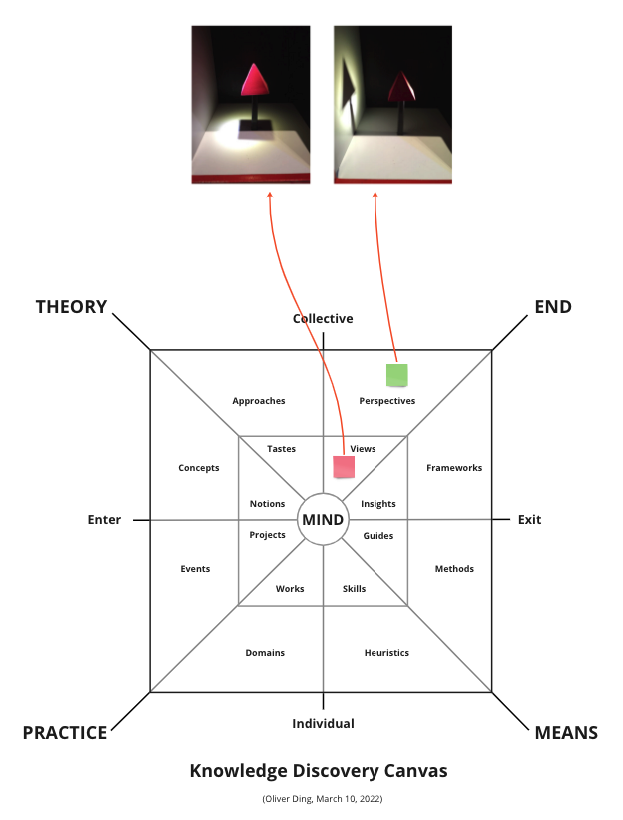
This article is part of the Slow Cognition Project which focuses on Developing Tacit Knowledge with Thematic Space Canvas. The Knowledge Discovery Canvas is an application of the Thematic Space Canvas.
The Knowledge Discovery Canvas has two nested squares which divide the thematic space into two sub-spaces: inner space and outer space. For Developing Tacit Knowledge, the inner space is all about personal knowing activities while the outer space is related to social interactions.
Based on the above settings, I generated a series of mapping between outer space and inner space:
- Approaches — Tastes
- Concepts — Notions
- Events — Projects
- Domains — Works
- Perspectives — Views
- Frameworks — Insights
- Methods — Guides
- Heuristics — Skills
Today I’ll focus on the Perspectives — Views mapping and discuss a related issue: independent thinking.
Perspective is not Reality
In the middle of 2016, I took pictures below while I visited Children’s Museum Houston with my two sons.
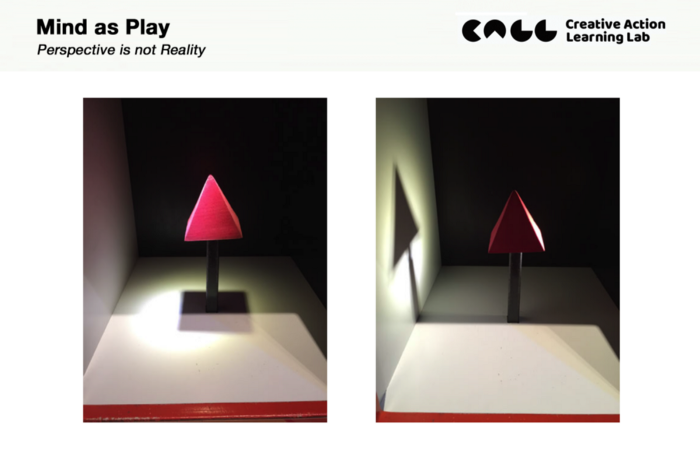
That was an Aha moment for me. I realized two things: 1) Mind as Play. The museum is all about play, but these plays are cognitive activities for kids. Thus, we can understand the Mind as a process of Play. 2) Perspective is not Reality. The above picture shows two perspectives of one object. Though perspectives are not reality, we do rely on perspectives to know reality.
These two ideas inspired me to develop a metaphor for the mind and knowing. Later, the metaphor became my framework for cognition and the terminator of my learning journey in cognitive psychology.
The Mind as Play metaphor has three core elements:
- Objects of Knowing = Actors
- Perspectives = Stage Lights
- Domain = Stage
The second element of Mind as Play is Perspectives. The picture below shows three-stage lights which refer to three perspectives. Everyday life is complex, a simple way to understand it is by adopting several perspectives to view it. Each perspective represents a unique point of view, a mental frame, a cultural significance, etc.
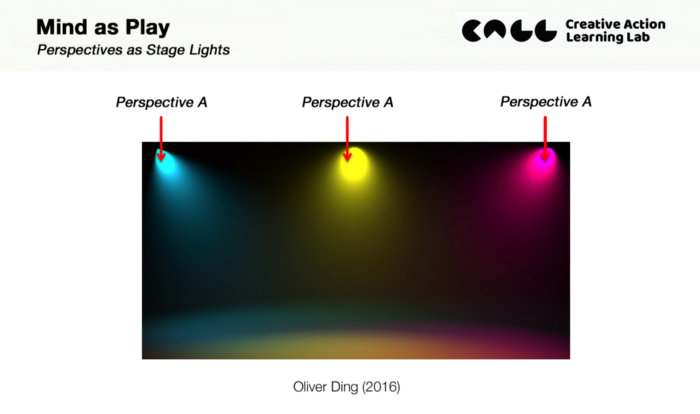
I made a distinction between spontaneous or naive perspectives and scientific or theoretical perspectives.
The former is common sense such as “teacher’s perspective/parent’s perspective”, “the inner perspective / the outer perspective”, “the process perspective / the outcome perspective”, etc.
The latter is adopted from academic theories, for example, the cognitivism perspective, the 4E perspective, the Affordance perspective, the Activity-theoretical perspective, the Autopoiesis perspective, etc.
Views are Your Perspectives
The Knowledge Discovery Canvas has two nested squares which divide the thematic space into two sub-spaces: inner space and outer space. For Developing Tacit Knowledge, the inner space is all about personal knowing activities while the outer space is related to social interactions.
I use “Perspectives” for the outer space and use “Views” for the inner space.
In other words, Views are Your Perspectives.
Here Your Perspectives refer to brand new perspectives you developed, not perspectives you learned from others.
The difference between Others’ Perspectives and Your Views is also related to the issue of independent thinking.
If you don’t have your views on a particular issue, then you can adopt others’ perspectives to cope with the issue. We can say that you don’t think independently on the issue.
However, you can think independently on the other issue. For some specific issues, you have enough experiences, skills, and knowledge, you can develop unique views.
If you develop a brand new view on a normal issue and reject common sense. You will be perceived as an independent thinker by others. If you develop many brand new views on many issues and successfully establish your views, then you are going to be perceived as a super independent thinker, or an innovative thinker.
Most people don’t have to become super independent thinkers. Why? Because we need to balance exploration and exploitation.
Taking Perspectives/Views Flexibly
The Mind as Play metaphor was born in 2017. Later, I moved to ecological psychology and Activity Theory. I almost forgot the metaphor in the past several years.
However, I returned to the Mind as Play metaphor and a related epistemological framework in Nov 2021 and adopted it for the D as Diagramming project.
The framework was developed with four thematic spaces to curate various theoretical approaches together in order to understand Mind, Meaning, and Experience. See the diagram below.
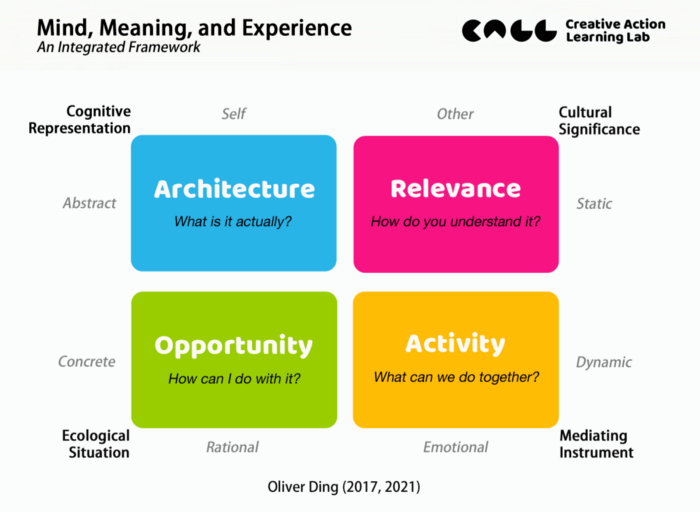
I used “Architecture”, “Relevance”, “Activity”, and “Opportunity” to name four thematic spaces. Each thematic space refers to a set of similar theoretical approaches.
It is an epistemological framework for curating my learning outcome and reflecting on my work experiences. As a lifelong thinker, I was satisfied with this practical framework as an outcome in the middle of 2017. The four thematic spaces refer to four ways of connecting theory and practice.
- The “Architecture” thematic space connects my work experiences in Information Architecture and my learning of cognitive science.
- The “Relevance” thematic space connects my work experiences in advertising/media/marketing and my learning of semiotics/communication study/culture study.
- The “Opportunity” thematic space connects my life experience in my kids’ childhood and my learning of ecological psychology’s Affordance theory and my work on the Ecological Practice approach which was born in 2018.
- The “Activity” thematic space connects my work experience with various domains and my learning of Activity Theory.
For the D as Diagramming project, I selected the following Practical Perspectives:
- Cognitive Representation
- Cultural Significance
- Ecological Situation
- Mediating Instrument
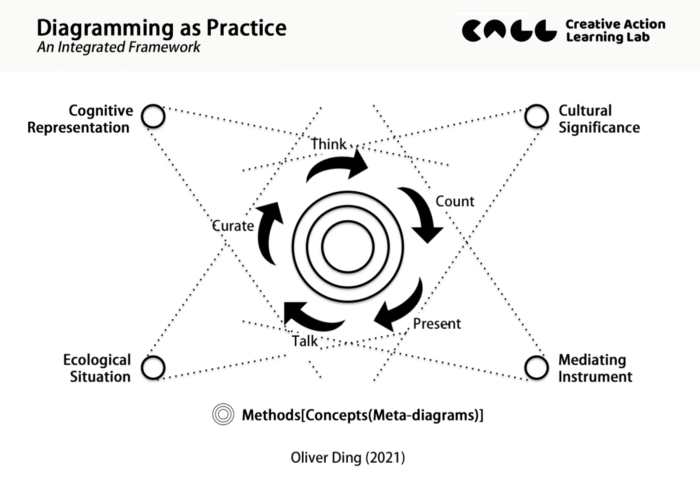
The above is the final framework for the D as Diagramming project. You can find more details about it here.
Though I worked on ecological psychology and activity theory for the past four years. I didn’t only consider them for the D as Diagramming project. We have to notice that the framework considers one perspective from Ecological Psychology, one perspective from Activity Theory, and other two perspectives from other fields.
Perspectives on Life and Strategy
In Feb 2022, I also applied the epistemological framework to discuss the theme of “Life” and the theme of “Strategy”.
For the “Strategy” theme, I used the framework to generate the following practice perspectives:
- Architecture > Strategic Thinking
- Relevance > Strategic Discourse
- Activity > Strategic Acting
- Opportunity > Strategic Awareness
For the “Life” theme, I generated the following practice perspectives:
- Architecture > Life Patterns
- Relevance > Life Themes
- Activity > Life Performance
- Opportunity > Life Discovery
Why can I generate two different Practical Perspectives from one thematic space? Because a thematic space is a large cognitive container, if we apply a thematic space to understand something, we can have many choices. We can generate a Practical Perspective for a particular thing.
Approaches v.s. Perspectives
For the Knowledge Discovery Canvas, I use “Approaches” and “Perspectives” for two blocks. What’s the difference between these two terms?
- I use “Approaches” to refer to Theoretical Approaches.
- I use “Perspectives” to refer to both Theoretical Perspectives and Practice Perspectives.
Theoretical approaches and Theoretical perspectives are the same things. For example, I mentioned the ecological approach in D as Diagramming: The Mind as Play Metaphor.
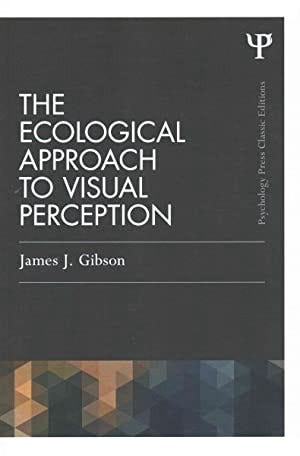
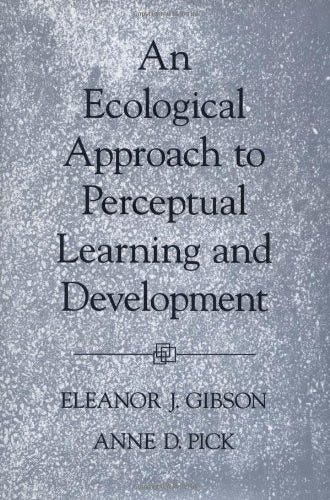
The above two books show two examples of Perspectives, Objects of Knowing, and Domains. Both two creative works adopt the same perspective: the ecological approach for psychological study. However, they work on different Objects of Knowing and Domains.
The Ecological Approach to Visual Perception (James J. Gibson, 1979)
- Perspective: The ecological approach
- Object of Knowing: Visual Perception
- Domain: Perceptual psychology
The Ecological Approach to Perceptual Learning and Development (Eleanor J. Gibson and Anne D. Pick, 2000)
- Perspective: The ecological approach
- Object of Knowing: Perceptual Learning and Development
- Domain: child development psychology
I use “perspective” to describe the ecological approach for the above two examples. It means theoretical perspective.
However, some knowledge projects are not about developing theoretical approaches but applying theoretical approaches to some domains. During the process of application, we can develop practical perspectives from theoretical approaches. For example, Activity Theory is an established theoretical approach, I only selected “Mediating Instrument” as a practical perspective for the D as Diagramming project. See the diagram below.
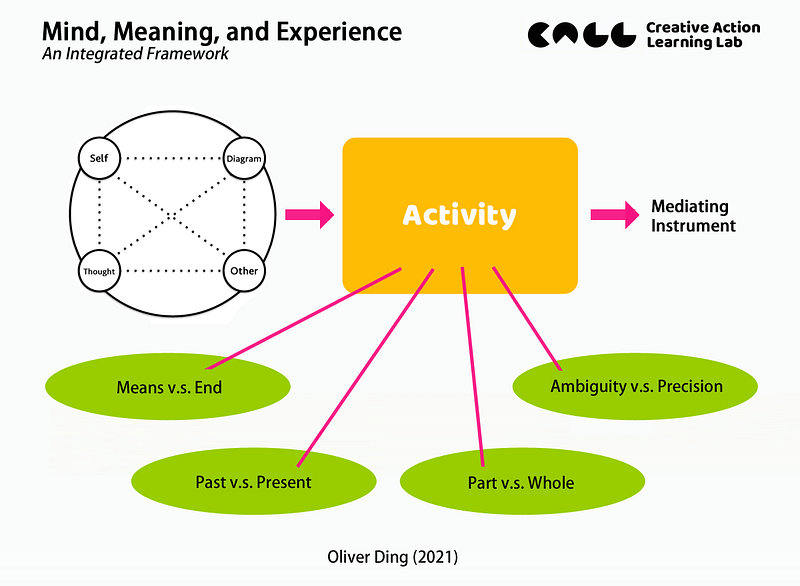
As mentioned above, each thematic space refers to a set of similar theoretical approaches. Each theoretical approach could generate a set of perspectives. For discussing diagrams, I selected Mediating Instrument as a practical perspective. Though Mediating Instrument is adopted from Activity Theory, other social practice theories also emphasize the importance of Materials in human activity and social practices. Scholars even use the Materiality Turn to describe this trend.
I adopt the Mediating Instrument perspective to discuss the diagramming practice and highlight four essential issues for discussion.
- Mean v.s. End
- Past v.s. Present
- Part v.s. Whole
- Ambiguity v.s. Precision
Some issues are inspired by Activity Theory, other issues are defined by the “Diagram — Thought” curating practice. You can find more details here.
Point of Observation
Where do perspectives come from?
The above discussion only highlights the source of perspectives. We generate some perspectives from some theoretical resources.
What about our positions and situations?
Inspired by Ecological Psychology, I use the term “Point of Observation” to discuss Ecological Perspectives.
The diagram below is one of the classical diagrams the Ecological Psychologist James J. Gibson made, it shows two points of observation. Gibson said, “The thin solid lines indicate the ambient optic array for the seated observer, and the thin dashed lines the altered optic array after standing up and moving forward. The difference between the two arrays is specific to the difference between the points of observation, that is, to the path of locomotion. Note that the whole ambient array is changed, including the portion behind the head. And note that what was previously hidden becomes unhidden.”(p.65)
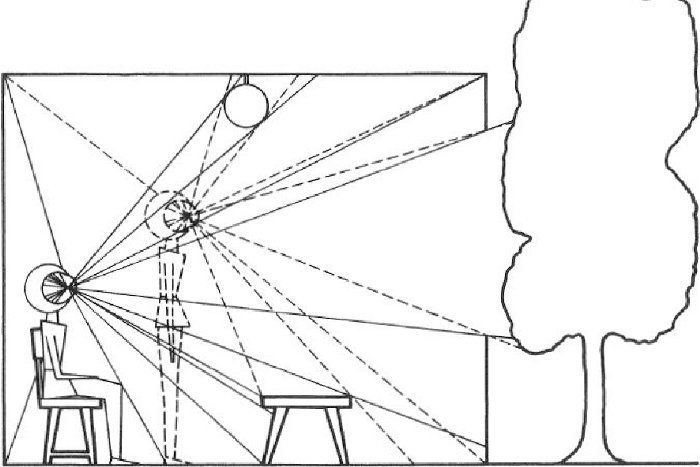
Gibson argued that there are two kinds of structure for discussing ambient optic: Perspective Structure and Invariant Structure.
There are many invariants of structure, and some of them persist for long paths of locomotion while some persist only for short paths. But what I am calling the perspective structure changes with every displacement of the point of observation — the shorter the displacement the smaller the change, and the longer the displacement the greater the change. Assuming that the environment is never reduplicated from place to place, the arrested perspective is unique at each stationary point of observation, that is, for each point of observation there is one and only one arrested perspective. On the other hand, invariants of structure are common to all points of observation — some for all points in the whole terrestrial environment, some only for points within the boundaries of certain locales, and some only for points of observation within (say) a single room. But to repeat, the invariant structure separates off best when the frozen perspective structure begins to flow. (p.66)
This claim is critical for understanding Gibson’s ecological approach. But, the ambient optic is too abstract. Let’s find an example from real life.
One day I played the hide-and-seek game with my son.
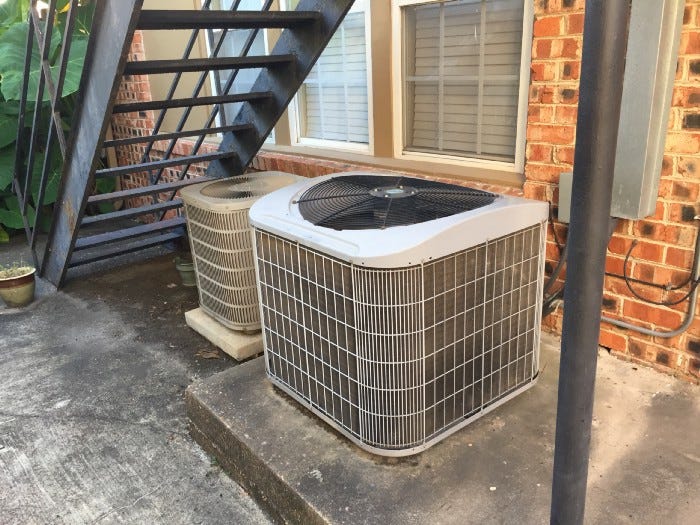
Look at the above picture and think about my Point of Observation at that time.

From the point of the last picture, I moved several steps and saw my son! Look at this picture and think about my Point of Observation again. Once I moved, my point of observation changed. Once my point of observation changed, my ambient optic arrays changed.
Different Points of Observation generate different Ecological Perspectives.
Though Gibson used Point of Observation to discuss Visual Perception. We can use the concept of “Point of Observation” to discuss the dynamics of perspectives.
Let’s roughly define the following typology of Perspectives:
- Theoretical Perspectives: they are based on theoretical approaches. They are not based on our practical interests and points of observation.
- Practical Perspectives: they are determined by our practical interests, not by theoretical approaches and points of observation.
- Ecological Perspectives: they come from the changes in our points of observation.
For the “Perspectives — Views” mapping, the above typology of Perspectives is a critical tool for understanding the dynamics.
The Curated Mind
In 2019, I used “the Curated Mind” as the title of my plan about reflecting on the BagTheWeb project. See the picture below.
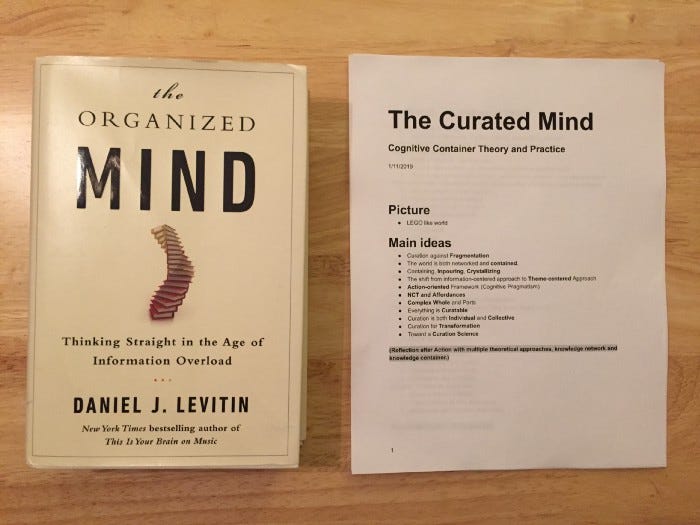
In 2018, I had a wonderful experience using BagTheWeb which was designed and launched around 2010. I was the Chief Information Architect of the product. Since 2010, I have been using it for my personal information and knowledge curation for many years.
We stopped developing the site around 2014 and moved to other directions. However, I still used it as a heavy user after 2014 since we kept the site live. In 2018, I discovered several insights from my own experience using the site. Eventually, I started planning to do a theory-based reflection around BagTheWeb in Sept 2018.
Inspired by the cognitive psychologist Daniel J. Levitin’s book The Organized Mind, I named my research plan The Curated Mind: Cognitive Container Theory and Practices. I wrote a 20-page outline and stopped the project because the original plan adopted Activity Theory as the theoretical resource.
In Oct 2018, I started a new project called Curativity and moved to Ecological Psychology and social practice theories. In March 2019, I finished Curativity: The Ecological Approach to General Curation Practice.
The last chapter of Curativity is titled The Epistemology of Curativity in which I reviewed my knowledge about epistemology and the epistemology of Curativity Theory.
In the past several years, I moved in the direction of “Practice Studies”. I have been working on the Ecological Practice approach for many years. I almost forgot “the Curated Mind”.
However, I recently returned to “the Curated Mind” and developed it as a personal perspective of the mind. Since the perspective is guided by Curativity Theory. It is a theoretical perspective.
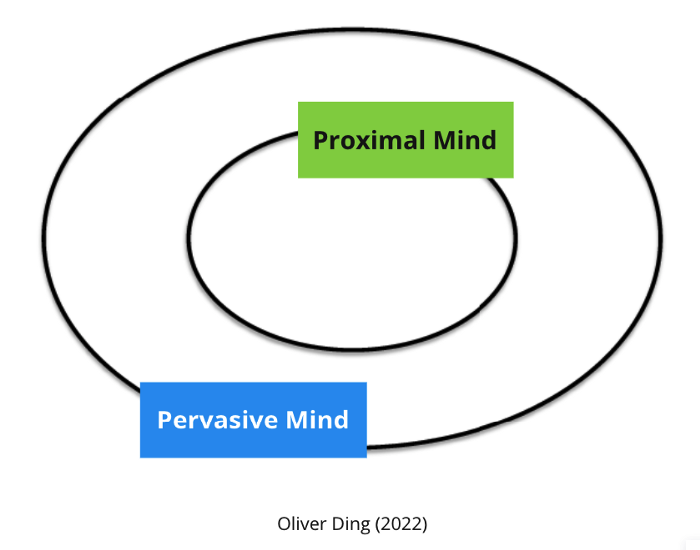
The above diagram is the basic model of the Curated Mind. This model adopted the ecological approach to reflect on the Mind. While Proximal Mind corresponds to Proximal Contexts, Pervasive Mind corresponds to Pervasive Mind.
- Proximal Contexts (Proximal Mind)
- Pervasive Contexts (Pervasive Mind)
These two parts form a whole as a system which is called Curated Mind.
If we apply this diagram to reflect on my theoretical interests, then most of my writings are about the Proximal Contexts and Proximal Mind. I didn’t pay attention to Pervasive Contexts and Pervasive Minds before 2021. For example, I didn’t write some articles about cognitive representations and cultural significance. I didn’t pay attention to some fields about Future Studies, Social Discourse, Ecosystem Innovation, etc.
In the past several days, Maurizio Goetz, who is the Co-founder of Presso Italian Institute for the Future — Speculative Design Hub, encouraged me to explore Future Studies, Imagination Design, and Anticipative Communication /Storytelling.
Our discussion inspired me to expand the level of Pervasive Mind from the original two practical perspectives to four perspectives:
- Representation (old version)
- Significance (old version)
- Imagination (new version)
- Anticipation (new version)
Then, I developed the following model of Curated Mind on March 31, 2022.
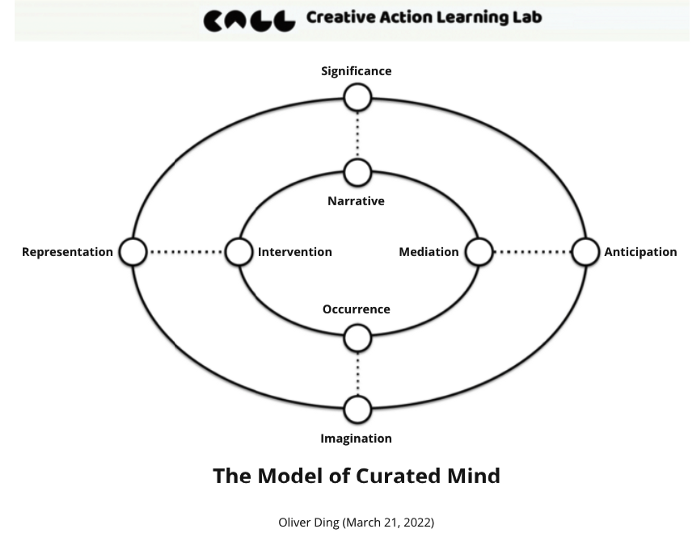
I’d like to claim that this is an experience of changes in Points of Observation in Thematic Space. Though I had a theoretical perspective on Curated Mind, I changed my Points of Observation from the Proximal Mind to the Pervasive Mind.
This change was caused by the conversation with Maurizio Goetz and some interactions with friends who are passionate about ecosystems. For example, I made Optimal Context Canvas to respond to some friends’ needs about perspectives on ecosystems on March 3, 2022.
Where are the changes in Points Observation? I’d like to claim that it happens in Thematic Space, not the physical environment.
Related Articles:
- D as Diagramming: The Mind as Play Metaphor
- The Diagramming as Practice Framework
- D as Diagramming: An Integrated Framework for Studying Knowledge Diagrams (Part 3A)
- Mapping Thematic Space #6: The “Life” thematic space
- Thematic Space: The “Strategy” thematic space
- #SocialPxD — ReEngagement with Twitterville: An Introduction to Ecological Physics Method
- Slow Cognition: The Curated Mind
- Slow Cognition: The Model of Curated Mind
- The Born of Optimal Context Canvas
I am also working on building a new website for the Platform Ecology project. You can save the following links:
- PlatformEcology.org
- Twitter: @PlatformEcology
- Linkedin: @PlatformEcology
You are most welcome to connect via the following social platforms:
Linkedin: https://www.linkedin.com/in/oliverding Twitter: https://twitter.com/oliverding Polywork: https://www.polywork.com/oliverding Boardle: https://www.boardle.io/users/oliver-ding


