
Perspectives On Hope
Are you cultivating your seeds of hope?
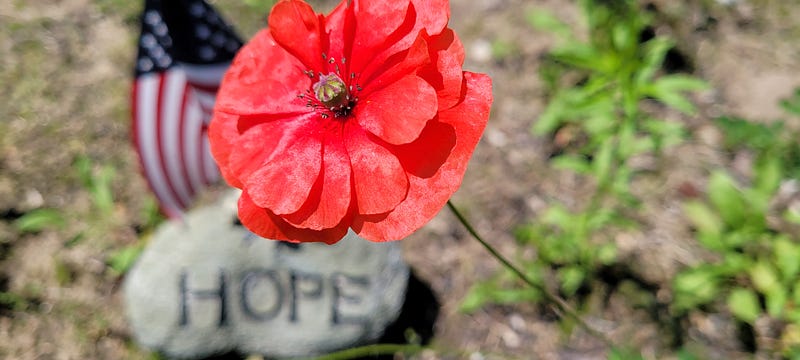
Are our hopes just the opposite of our worries?
What we hope for changes over time.
Lately, I have been thinking about the concept that some of the things we worry about exist in the future, but when we face those situations we will be different people, time will have passed we will have changed mentally and physically. Our worry may be completely unnecessary. The event may actually never arrive or it may not present in the way we envision and worry about. If these events do come to pass, we will be operating from a completely different perspective at that point in time. What does the passing of time do to our worries? What does it do to our hopes?
These questions prompted me to go back to my writings about hope from the past six months.
I wrote that hope can be crushed and cultivated in Seeds of Hope. I still believe this concept to be true. We have to protect our own seeds of hope and become a light of hope to help others.
I also wrote about my encounter with Two Mourning Doves as a symbol, bringing a message of hope. I am still a strong believer in the signs the universe offers. We can sometimes be a sign of hope by the way we live and by our offerings. Always Important is one of my offerings of hope to survivors of domestic abuse.
Hope Holds Our Heartstrings and Increases Our Wellbeing is my more in-depth examination of hope. Here is part of the opening and closing of that story:
Hope is an emotion and more. Hope is an element of spirituality. Hope is an antidote for trauma and mental illness. Hope holds the heartstrings to human well-being. Hope could heal humanity.
There are so many things that we can do to help restore hope in ourselves and others. Even a glimmer of hope is the first step over a divide. A bridge between stuck and strong, between them and us…heartstrings pulling toward more hope. Once we have a bit of hope, it spreads. Collective hope can improve outcomes for all.
This is also where my idea sprouted to make sure I added a message of hope to the end of each of my stories:
I score high on the Hope Scale. Going forward, I will demonstrate my hope to others more often. I will include my hopes for them in our text messages, emails, and conversations. In this case, if their hope ever waivers, this can remind them to focus on hope as a means of moving toward happiness and success — improving their well-being. It will help remind them that hope is always an option.
Perspective
Revisiting these ideas lead me to think about how hope may take on a different meaning at different stages of our lives. I am 46 years old. I was interested in exploring hope from beyond my own perspective. I decided to check in with my grandma, my father’s mother (86 years old), my father (66 years old), and my son (26 years old).
In my conversations with my grandma, father, and son, I asked the two questions below. I gave a lot of wait time for the first one before asking the second.
What do you think about hope?
What is your most important hope?
Grandma (86)
- We can hope about a lot of things but there are some things we should be sure about.
- A lot of us only hope for things. There are a lot of circumstances we need to have hope for.
- I hope my neighbors know they are annoying me — those ones need to straighten their blinds and those ones need to take their winter shovel off their front porch for the summer. (This one had us laughing.)
- We have to think about the way our hopes impact others. Hoping a room opens up for me at the assisted living center may not have a good outcome for someone else and their family.
- The cover photo should be the one with the flag included. We have a lot of things to hope for. We should have some hope in our nation.
- I hope my neighbor puts her flag out every day. That is the signal that she is ok. If she doesn’t put it out, I know I need to call and check on her.
- My most important hope is that my children, grandchildren, descendants, and loved ones will come to know the Lord.
- I am sure of my own salvation. I don’t have to hope that I am going to heaven. I am sure about that.
Father (66)
First, I promised my dad that I would identify him as a pleasant sixty-five-year-old man. This was the description in the notes from his recent surgeon. My sister and I found the description humorous. He found it fitting.
- I hope I remember to get a lid for my coffee next time so I don’t spill so much of it.
- I hope your mom knows this interview is why I am running late.
- Hope. I don’t know what to tell you about that. Don’t you have some interview questions? (As you can see, his answers took a bit of time to develop. We don’t often talk about these types of things which is why I found it so interesting. I also left my first question very open-ended on purpose.)
- Everyone needs the hope that what they are doing will make a difference to improve their lives so they know they are not working toward a dead end.
- Nobody knows what will happen for sure, we are hoping for things to go right.
- (He sent me a follow-up text) Hope, wish, pray, a thoughtful advance in that direction, in most cases, will get you to your goal.
- My most important wish is for ambulation and coherence (into older years)
Son (26)
- Hope as in optimism for the future? (He answered the question with a question.)
- I think hope is essential for most things and the key to optimistic thinking. I feel like the only way a person or a group of people can reach their goal is by having hope, and or faith.
- My most important hope is reaching self-actualization so I can become successful, content with myself, and bless others.
My Reflections
I can see even more clearly that life experiences shape our perceptions of all things, including hope. My grandmother grew up in a city, moved to a farm, then moved to a very small town. My dad lived in a small town and moved to an even smaller town. My son grew up in an inner-city before we adopted him at fourteen years old, then a suburb of that same city, and now San Diego, California. So much goes into the development and cultivation of our hopes.
Through these twenty-year intervals in my family, I see:
- my grandmother’s focus on religion
- my father’s focus on work and personal responsibility for outcomes
- my son’s focus on responsibility for a greater good
I am so thankful to my family for participating in this exercise. This is just a glimpse into their thoughts on the topic, but there are layers of interesting and telling tidbits to further investigate for an inquiring mind like mine. Hopes and worries are important forces in our lives — worth our attention.
These generalizations don’t represent whole generations but they are themes that are familiar beyond just this small sample of perspectives.
Final Thoughts
Hope is different for everyone. As with anything, our own clarity and well-being can be further developed by understanding the perspectives of others. Our own attention or lack of attention can lead to the cultivation or dormancy of the seeds of hope within us.
Learning always leads to more questions…
What do you think about hope? Who shares your perspective? Who has an alternate perspective? Why? How does it serve them, or not? How do you cultivate hope in yourself? In others?
Thanks for reading! I hope that everyone finds peace from their worries through their hopes and knowings!
Thanks to Diana C. for providing the space for today’s guest prompt from Dan Catalin. Thanks Dan!


