avatarMatthew Bamberg

Free AI web copilot to create summaries, insights and extended knowledge, download it at here

4502

Abstract

/">https://www.loc.gov/pictures/collection/highsm/item/2010630144/</a></figcaption></figure><p id="c4e0">The main building is a half-sphere that resembles a dress, on top of which there is a sculpture of a woman with her head wrapped in a bandanna. Weston includes included other elements — — a truck and gas pumps in the foreground — — so as not to cramp the main figure in the frame.</p><p id="a124">Weston had an advantage in getting a better photograph of this iconic piece of architecture because when he shot it, it was new, only a year after it was built (the structure was built in 1940).</p><figure id="602a"><img src="https://cdn-images-1.readmedium.com/v2/resize:fit:800/1*ggkL5rzdm_F-56uUthMNnw.jpeg"><figcaption>Barrel Restaurant Photo by Matthew Bamberg</figcaption></figure><p id="5b70">I’ve photographed a California restaurant in the desert that is shaped like a barrel. Coincidentally enough, the name of the restaurant is Barrel.</p><p id="8087">Because much of this type of architecture is over 50 years old, you get a different feeling than if it were brand new, like when Weston was photographing. When architecture is worn by time and the elements, it brings out a lost, end-of-the-world feeling.</p><h2 id="44c3">A Mismatched Pair of Shoes</h2><figure id="80df"><img src="https://cdn-images-1.readmedium.com/v2/resize:fit:800/1*zDejFt6DD6d-C1lLdLdtyA.jpeg"><figcaption></figcaption></figure><figure id="9625"><img src="https://cdn-images-1.readmedium.com/v2/resize:fit:800/1*BBZihdiuWWHe32YMa0H7og.jpeg"><figcaption>The Big Shoe Repair in Bakersfield, California (left photo by Matthew Bamberg) and The Haines Shoe House (right photo by <a href="https://commons.wikimedia.org/wiki/User:CrazyLegsKC">CrazyLegsKC</a>, <a href="https://creativecommons.org/licenses/by-sa/3.0">CC BY-SA 3.0</a>)</figcaption></figure><p id="ae76">A giant shoe has been the theme of many novelty structures.</p><p id="7cf9">Oh, here’s two. West Coast and East Coast shoes.</p><p id="592a">What a pair! Much too big for my feet.</p><h2 id="d381">Coastal Flying Saucers</h2><figure id="eac6"><img src="https://cdn-images-1.readmedium.com/v2/resize:fit:800/1*6hfgMDNV_jg_gld_EZTASA.jpeg"><figcaption>Programmatic spaceships at JFK in Queens, New York. Photo by Matthew Bamberg</figcaption></figure><p id="6fc1">You’d think the two major airports in the United States could take you to Mars and beyond. Way back then, designers thought that would happen by now, causing them to construct travel dome spaceships.</p><p id="6da6">Eero Saarinen designed JFK’s TWA Terminal in 1962, now a swank hotel containing The Paris Cafe, which serves up better-than-first-class food, spaceship style and is an East Coast landmark.</p><p id="0a9f" type="7">Designed just like a spaceship, the TWA hotel’s interior has no corners.</p><p id="c8c9">Behind the hotel, uber-programmatic Connie (not to be confused with <i>Karen</i>) Cocktail Lounge, housed in a 1958 Lockheed Constellation airplane aptly called “Connie,” hums to a retro beat.</p><p id="2e7c">Sipping on a social lubricant such as the <i>Moonwalk </i>can launch you into some heavy chit-chat.</p><p id="144b">The plane’s name is the same as the one “stewardesses” in the 1950s, often used as their nickname (“TWA Hotel,” 2024).</p><figure id="7bba"><img src="https://cdn-images-1.readmedium.com/v2/resize:fit:800/1*4vSl7Kub4HBLWjORgJJlXQ.jpeg"><figcaption>The Theme Building at LAX.</figcaption></figure><p id="3676">Nowhere is programmatic architecture plentiful than in Los Angeles on the West Coast. The spaceship (Theme Building) at the airport, LAX, was once a glamorous, supposedly (rumor has it) rotating “Encounter” restaurant.</p><p id="a5af" type="7">In 2024, it sits there disabled without a savior.</p><p id="8a1e" type="7">¡Qué lástima! What a pity!</p><p id="9420">It’s a Googie too. The foreign object is one of many iconic marvels in LA.</p><div id="ab9b" class="link-block"> <a href="https://readmedium.com/googie-architecture-is-fly-catching-539257077b91"> <div> <div> <h2>Googie Architecture’s Futuristic, Flamboyant Style</h2> <div><h3>LAX Spaceship Still Closed After 10 Years</h3></div> <div><p>medium.com</p></div> </div> <div> <div style="background-image: url(https://miro.readmedium.com/v2/resize:fit:320/1*4UD2cgJG8TufrBus32OIBA.jpeg)"></div> </div> </div> </a>

Options

</div><p id="5250">Yes, I said Googie! What’s that? Click on the article above to find out about the <i>avant</i>-garde construction.</p><figure id="3b65"><img src="https://cdn-images-1.readmedium.com/v2/resize:fit:800/1*UZ43X02PXjqS2SRzDsWk8Q.jpeg"><figcaption>Giant binoculars in Venice Beach, CA. Photo by Matthew Bamberg</figcaption></figure><p id="b2ee">Now, imagine yourself driving into a pair of binoculars. That’s the case in Venice Beach, California, where seeing big is believing big.</p><figure id="45f6"><img src="https://cdn-images-1.readmedium.com/v2/resize:fit:800/1*rDxNbwcrN3W6gsjgW2-6Qg.jpeg"><figcaption>Giant Camera at Lands End in San Francisco near Ocean Beach. Photo by Matthew Bamberg</figcaption></figure><p id="722c">Finally, in California, up north near San Francisco’s Ocean Beach on top of a cliff, is a giant camera, a real one known as Camera Obscura.</p><h2 id="d396">Vive la France</h2><figure id="d278"><img src="https://cdn-images-1.readmedium.com/v2/resize:fit:800/1*zl1TMuNiK7EOIkRiU0qVMg.jpeg"><figcaption>Moulin Rouge in Paris. Film photo taken by Matthew Bamberg</figcaption></figure><p id="4593">Paris is a European city known for flashing programmatic illusions.</p><p id="b908">It’s 2002.</p><p id="409a" type="7">The City of Light’s magnificent nightclub, glowing red and orange, a programmatic paradise, twinkles wildly in the in the Montmartre.</p><p id="d31d">There’s amazement as I watch.</p><p id="e08b">“I see you! Flashing, twirling,” I whisper, setting up my camera and tripod as passersby glare in red.</p><p id="63f9">Talk to me!” “I hear you!” I ponder.</p><p id="ac46">Wrapped up in down on a cold winter evening at dusk, I look around at the Parisian crowd, as I focus on the blasting color of the spinning windmill.</p><p id="ccb4">The Moulin Rouge sings to me as if it were Christian (Ewan McGregor) while setting my camera on its tripod for a lengthy exposure as the giant fan goes round and round to soften its movement streaks in a still image.</p><p id="fa73">“Come what may, I will love you until my dying day” (Luhrmann, 2001) the <i>architecture parlante</i> or speaking architecture” (Carbone, 2015) echoes in my mind.</p><p id="2ec4">“I feel you!” A gust of wind from the twirling circle hits me with a blast of frigid air. I shake.</p><p id="2853">I can taste the resulting images, one by one, as I peer at the viewfinder after each shot.</p><figure id="cec4"><img src="https://cdn-images-1.readmedium.com/v2/resize:fit:800/1*GKO5xxGsf8xH1Jk5edyZVQ.jpeg"><figcaption>Provence France is home to book buildings. Photo by Matthew Bamberg</figcaption></figure><p id="9c6b">Digging deeper into France are (or were, as the photo above was taken two decades ago) giant book buildings.</p><p id="ec69">Unbelievable, I surmise.</p><p id="283f">Vive la France!</p><h2 id="8c3d">Takeaway for Programmatic Style</h2><p id="d89d">I leave you with an odd architectural marvel in Tallinn, Estonia, a Baltic city that is home to a tree fort edifice.</p><p id="a68d">Unusual and unique are these landmarks of design around the world. I’m sure I’ve missed some, so as I continue to travel, I’ll be sure to write about more.</p><p id="47e1">What could be better than advocating for saving these priceless monuments than writing about them?</p><figure id="a8d8"><img src="https://cdn-images-1.readmedium.com/v2/resize:fit:800/1*PbncMRES-JON1HOlTPfezA.jpeg"><figcaption>Tree House in Estonia. Photo by Matthew Bamberg</figcaption></figure><h2 id="3a1c">Taking Programmatic Action</h2><p id="87d8">Become a Programmatic Preserver! <a href="https://savingplaces.org/stories/retro-roadmap-cool-buildings-that-look-like-objects">National Trust for Historic Preservation</a></p><p id="44c4">Visit Mod Betty, a retro woman who makes it easy for you to visit <a href="https://www.retroroadmap.com/">authentic places across the USA!​</a></p><p id="b4e9">Balogh, R. (2017). The Coffee Pot Bedford, Pa. <a href="https://www.themunicipal.com/2017/06/the-coffee-pot-bedford-pa/">https://www.themunicipal.com/2017/06/the-coffee-pot-bedford-pa/</a></p><p id="4d09">Carbone, C. (2012). Mimetic and Programmatic Architecture in America. <a href="https://sah-archipedia.org/essays/TH-01-ART-004">https://sah-archipedia.org/essays/TH-01-ART-004</a></p><p id="ac7b">Luhrmann, B. (Director). (2001). <i>Moulin Rouge</i> [Film]. Twentieth Century Fox.</p><p id="0e06">TWA Hotel. (2024). <a href="https://www.twahotel.com/">https://www.twahotel.com/</a></p></article></body>

Perspectives from Programmatic Architecture

Mimetic or novelty architecture that meets the imagination

Programmatic architecture was never really in fashion and thus, it could never really go out of fashion — Cristina Carbone, Society of Architectural Historians
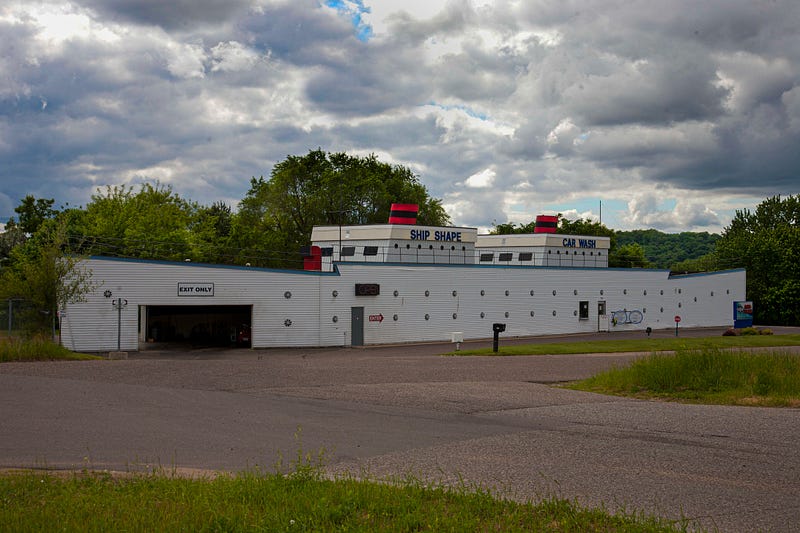
Ship Shape Car Wash in Onalaska, Wisconsin. Photo by Matthew Bamberg

Anyone up for a sojourn to a land-sailing ship, multiple-storied books, a binocular building, a twirling windmill, or a coffee pot ziggurat?

Along with America’s quest for bigness came innovation — sign and building all-in-one, referred to as programmatic architecture (sometimes called mimetic or novelty architecture).

Programmatic architecture is a building that was constructed in the shape of a familiar character or object. This architecture was popular in the middle of the century.

For example, Edward Weston photographed Mammy, in 1941, of, a structure in Natchez, Mississippi, which was a Shell station when Weston shot it.

I will introduce some outstanding photos representing programmatic architecture and caption them with links for more information.
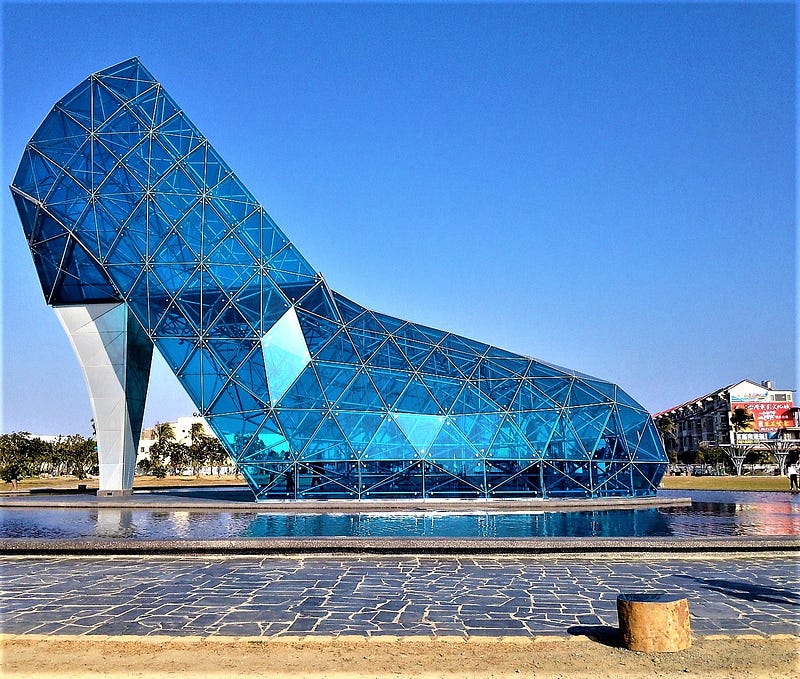
Glass High Heel Church in Budai Township, Chiayi County, Taiwan Attribution-Share Alike 4.0 International. Courtesy of Accord14

The style, however, was not unique to the United States. These amazing feats of design exist worldwide. On the other side of the globe in Taiwan is the Glass High Heel Church.

Go figure.

This giant novelty edifice shows no signs of needing repairs, much unlike the American counterparts that have been around for nearly a century, with Las Vegas being an isolated exception.
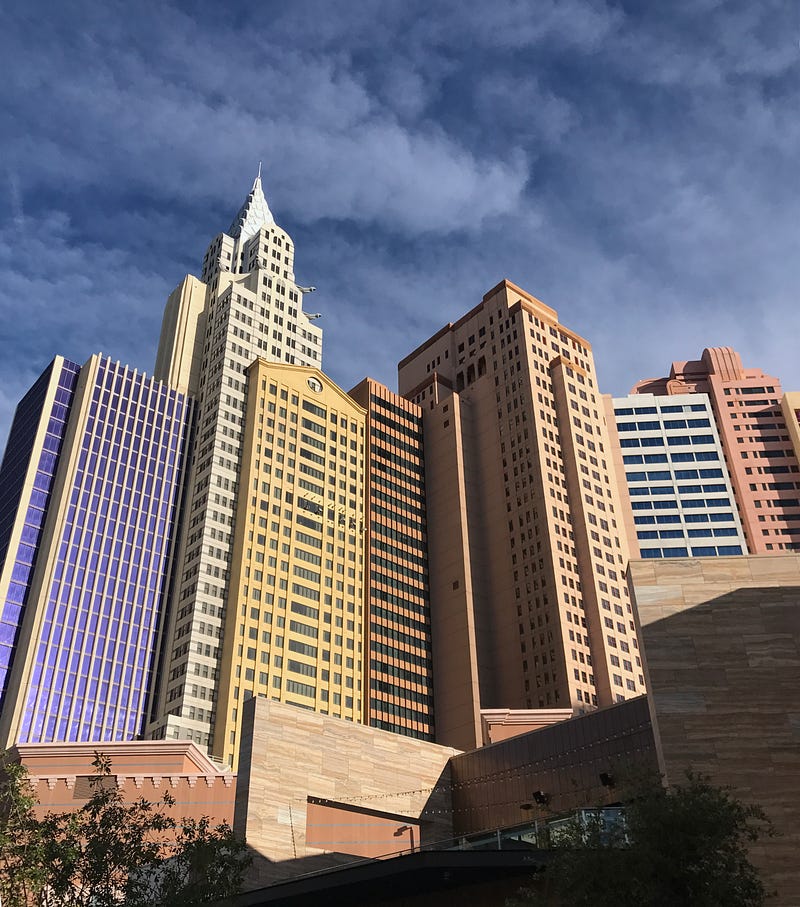
Faux skyline of New York in Las Vegas, Nevada, USA. Photo by Matthew Bamberg

That city speaks programmatic from the amazing Luxor Hotel to the mimicking skyline of New York New York.
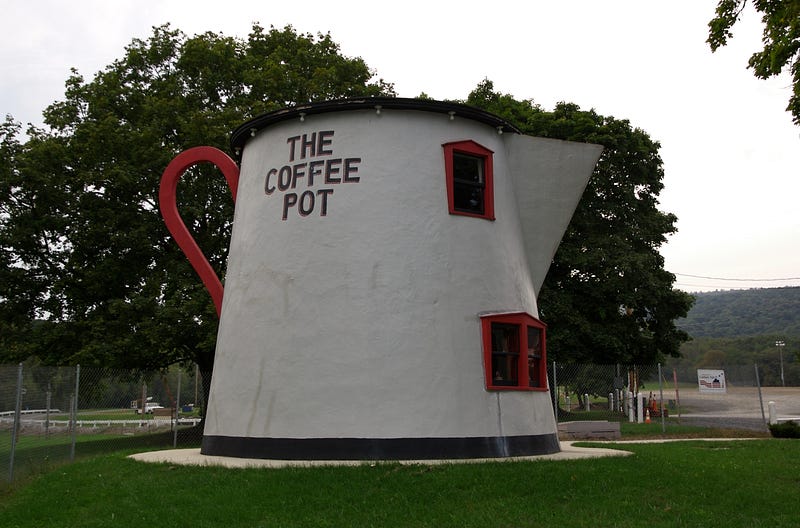
Jeff Kubina via CC BY-SA 2.0 Wikimedia Commons

One of these types of architecture’s most revered monuments is “The Coffee Pot.”

David Berton Koontz operated a service station. Next to it, he constructed an 18-foot-high coffee pot that became a coffee shop for weary travelers on Lincoln Highway in Bedford, PA. After nearly a century, the hot pot is still there (Balogh, 2017).

When the Lincoln Highway, christened with a blessing to The West, Carl Fisher’s Roaring Twenties dream came alive — to build a highway that would traverse the United States.

At first, Fisher imagined the road could be built inexpensively if the communities along the route would pitch in by paving it with small rocks.

Model Ts (of the Ford variety) would be able to cross the United States in time for the Panama Pacific Exposition in 1915.

The plan was never finished, not due to a lack of pebbles but because the foundation for bigger and better ideas — highways made of concrete.

After that, growing numbers of cars and roadside businesses that spoke programmatic followed.

Think Route 66.
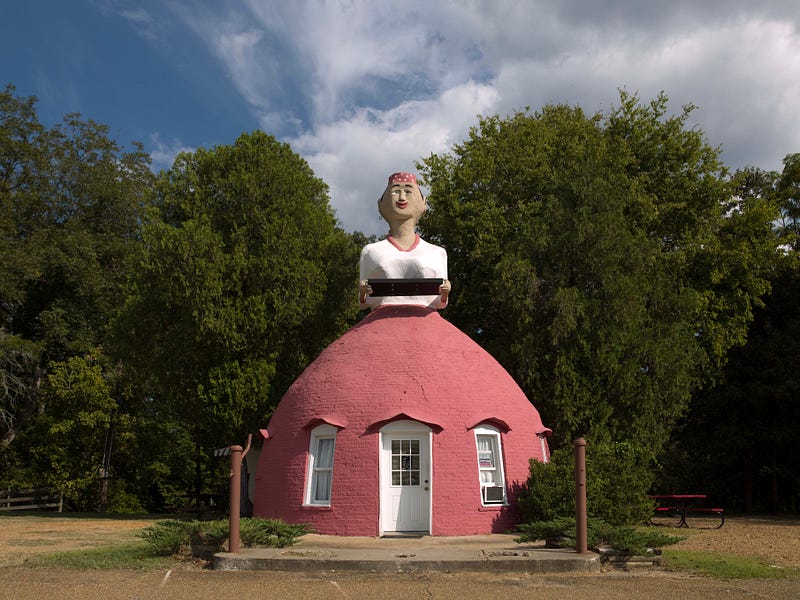
Public Domain Carol M. Highsmithhttps://www.loc.gov/pictures/collection/highsm/item/2010630144/

The main building is a half-sphere that resembles a dress, on top of which there is a sculpture of a woman with her head wrapped in a bandanna. Weston includes included other elements — — a truck and gas pumps in the foreground — — so as not to cramp the main figure in the frame.

Weston had an advantage in getting a better photograph of this iconic piece of architecture because when he shot it, it was new, only a year after it was built (the structure was built in 1940).
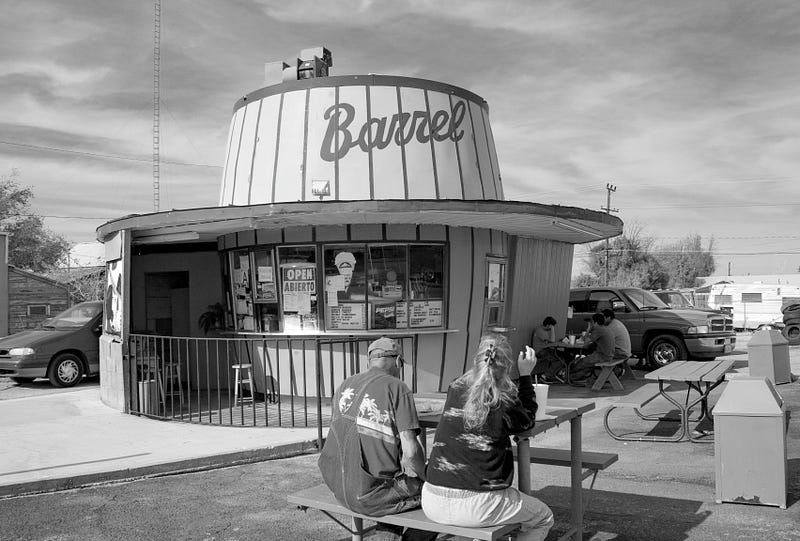
Barrel Restaurant Photo by Matthew Bamberg

I’ve photographed a California restaurant in the desert that is shaped like a barrel. Coincidentally enough, the name of the restaurant is Barrel.

Because much of this type of architecture is over 50 years old, you get a different feeling than if it were brand new, like when Weston was photographing. When architecture is worn by time and the elements, it brings out a lost, end-of-the-world feeling.

A Mismatched Pair of Shoes
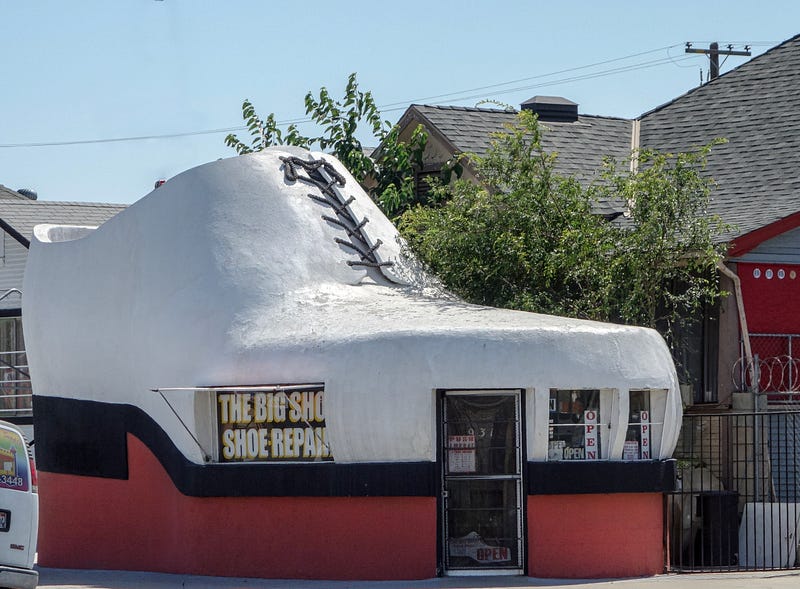
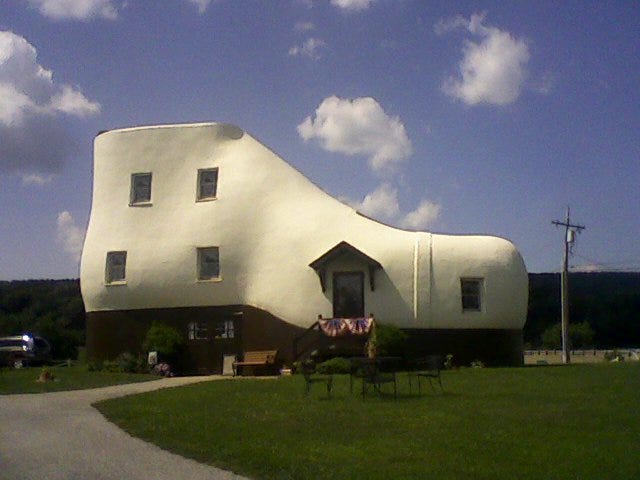
The Big Shoe Repair in Bakersfield, California (left photo by Matthew Bamberg) and The Haines Shoe House (right photo by CrazyLegsKC, CC BY-SA 3.0)

A giant shoe has been the theme of many novelty structures.

Oh, here’s two. West Coast and East Coast shoes.

What a pair! Much too big for my feet.

Coastal Flying Saucers
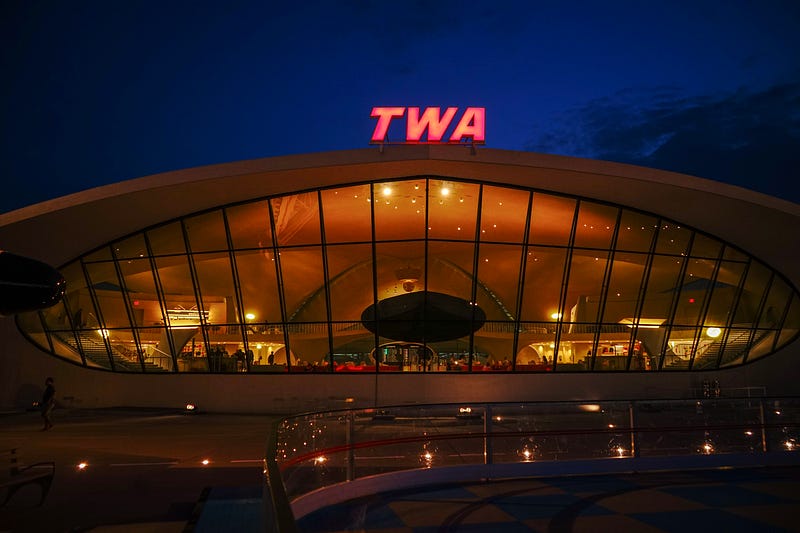
Programmatic spaceships at JFK in Queens, New York. Photo by Matthew Bamberg

You’d think the two major airports in the United States could take you to Mars and beyond. Way back then, designers thought that would happen by now, causing them to construct travel dome spaceships.

Eero Saarinen designed JFK’s TWA Terminal in 1962, now a swank hotel containing The Paris Cafe, which serves up better-than-first-class food, spaceship style and is an East Coast landmark.

Designed just like a spaceship, the TWA hotel’s interior has no corners.

Behind the hotel, uber-programmatic Connie (not to be confused with Karen) Cocktail Lounge, housed in a 1958 Lockheed Constellation airplane aptly called “Connie,” hums to a retro beat.

Sipping on a social lubricant such as the Moonwalk can launch you into some heavy chit-chat.

The plane’s name is the same as the one “stewardesses” in the 1950s, often used as their nickname (“TWA Hotel,” 2024).
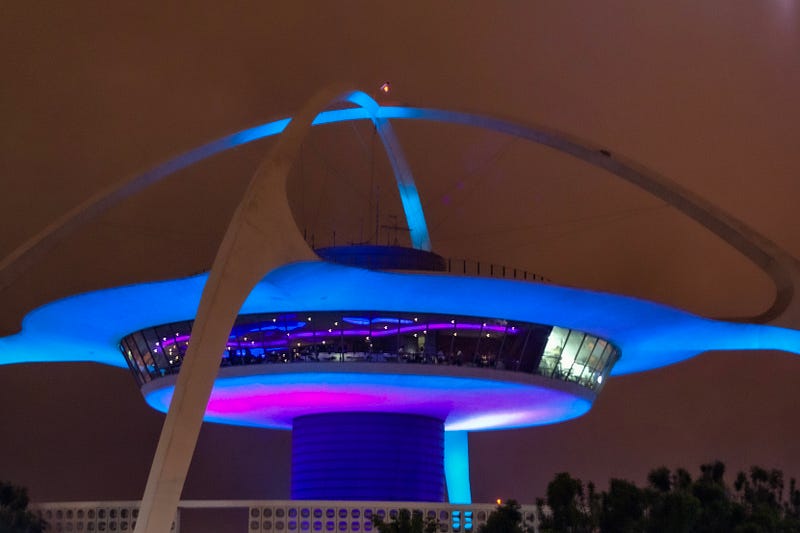
The Theme Building at LAX.

Nowhere is programmatic architecture plentiful than in Los Angeles on the West Coast. The spaceship (Theme Building) at the airport, LAX, was once a glamorous, supposedly (rumor has it) rotating “Encounter” restaurant.

In 2024, it sits there disabled without a savior.

¡Qué lástima! What a pity!

It’s a Googie too. The foreign object is one of many iconic marvels in LA.

Yes, I said Googie! What’s that? Click on the article above to find out about the avant-garde construction.
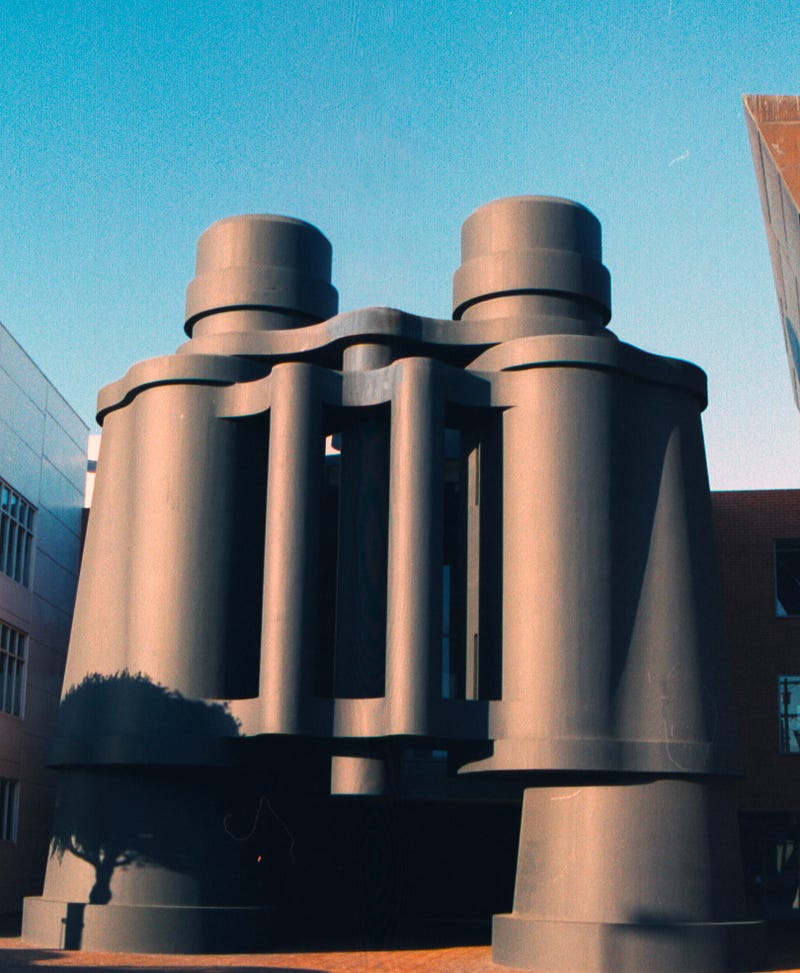
Giant binoculars in Venice Beach, CA. Photo by Matthew Bamberg

Now, imagine yourself driving into a pair of binoculars. That’s the case in Venice Beach, California, where seeing big is believing big.
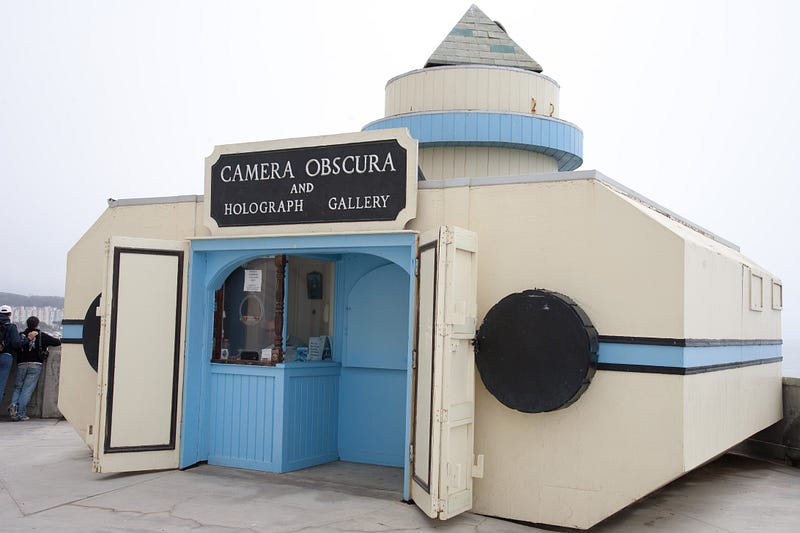
Giant Camera at Lands End in San Francisco near Ocean Beach. Photo by Matthew Bamberg

Finally, in California, up north near San Francisco’s Ocean Beach on top of a cliff, is a giant camera, a real one known as Camera Obscura.

Vive la France
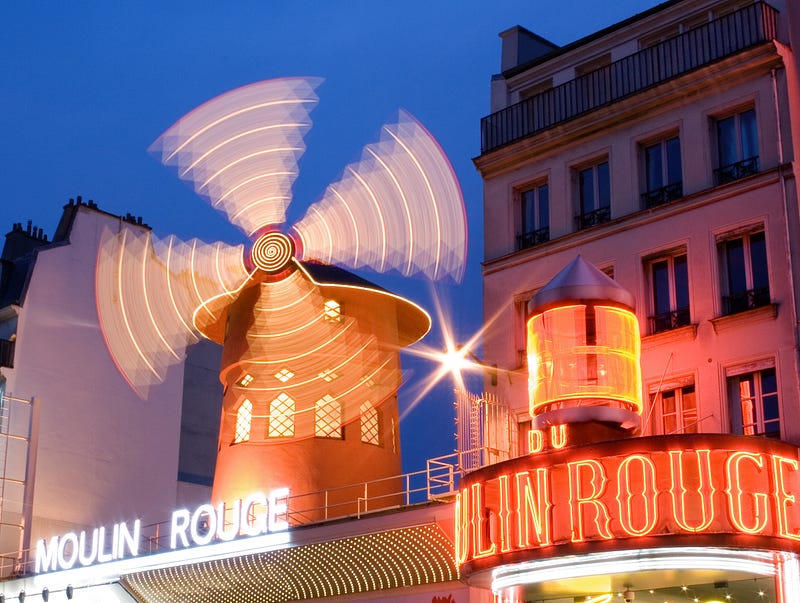
Moulin Rouge in Paris. Film photo taken by Matthew Bamberg

Paris is a European city known for flashing programmatic illusions.

It’s 2002.

The City of Light’s magnificent nightclub, glowing red and orange, a programmatic paradise, twinkles wildly in the in the Montmartre.

There’s amazement as I watch.

“I see you! Flashing, twirling,” I whisper, setting up my camera and tripod as passersby glare in red.

Talk to me!” “I hear you!” I ponder.

Wrapped up in down on a cold winter evening at dusk, I look around at the Parisian crowd, as I focus on the blasting color of the spinning windmill.

The Moulin Rouge sings to me as if it were Christian (Ewan McGregor) while setting my camera on its tripod for a lengthy exposure as the giant fan goes round and round to soften its movement streaks in a still image.

“Come what may, I will love you until my dying day” (Luhrmann, 2001) the architecture parlante or speaking architecture” (Carbone, 2015) echoes in my mind.

“I feel you!” A gust of wind from the twirling circle hits me with a blast of frigid air. I shake.

I can taste the resulting images, one by one, as I peer at the viewfinder after each shot.
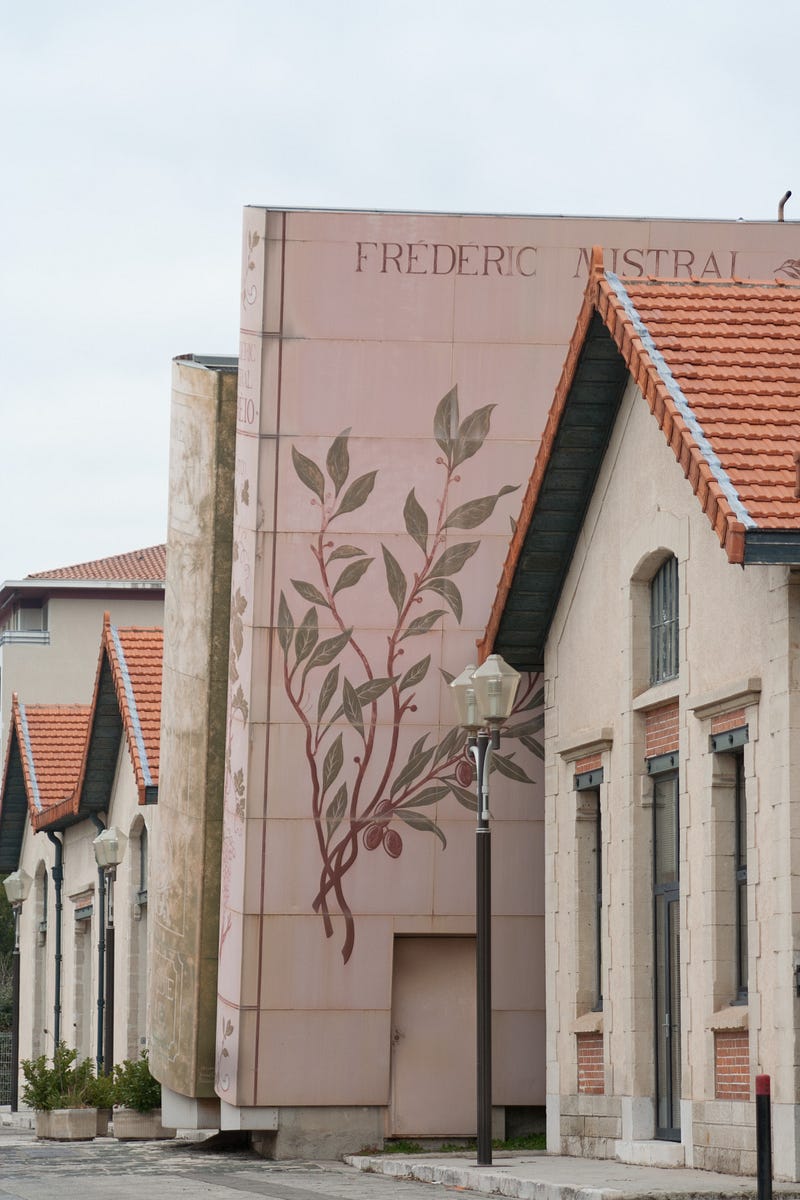
Provence France is home to book buildings. Photo by Matthew Bamberg

Digging deeper into France are (or were, as the photo above was taken two decades ago) giant book buildings.

Unbelievable, I surmise.

Vive la France!

Takeaway for Programmatic Style

I leave you with an odd architectural marvel in Tallinn, Estonia, a Baltic city that is home to a tree fort edifice.

Unusual and unique are these landmarks of design around the world. I’m sure I’ve missed some, so as I continue to travel, I’ll be sure to write about more.

What could be better than advocating for saving these priceless monuments than writing about them?
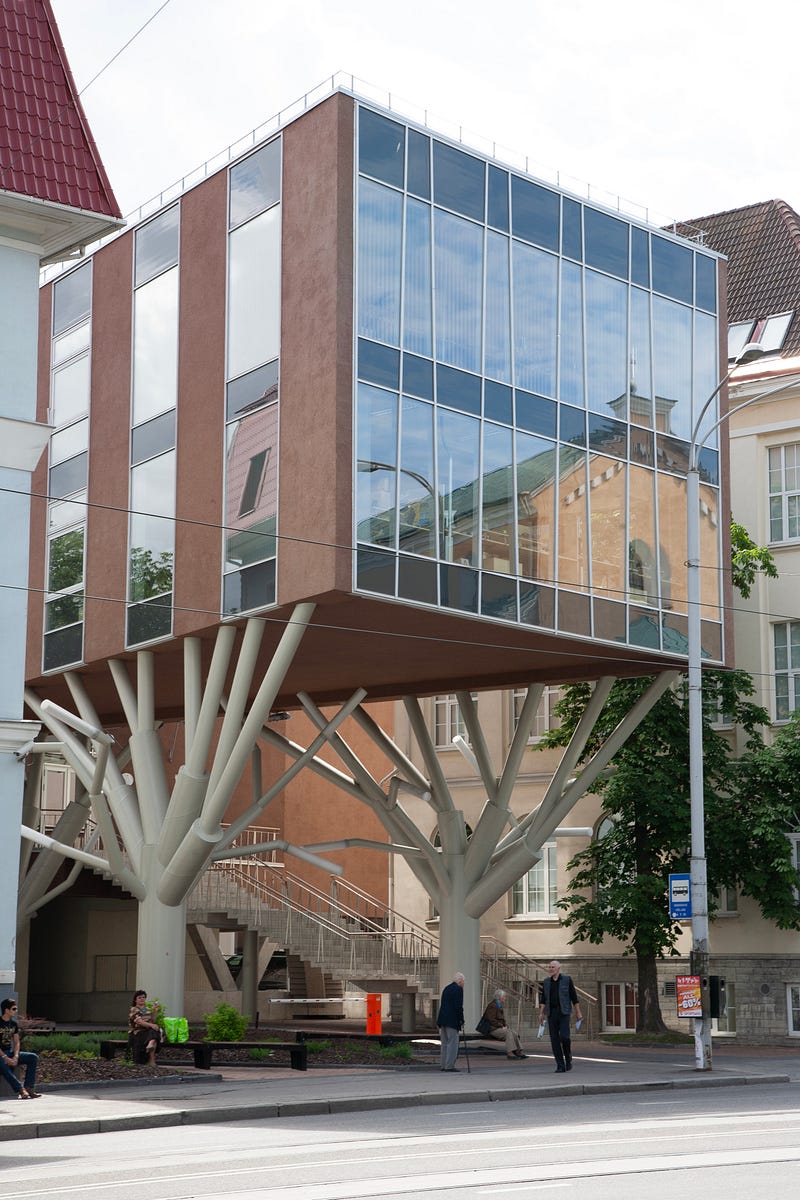
Tree House in Estonia. Photo by Matthew Bamberg

Taking Programmatic Action

Become a Programmatic Preserver! National Trust for Historic Preservation

Visit Mod Betty, a retro woman who makes it easy for you to visit authentic places across the USA!​

Balogh, R. (2017). The Coffee Pot Bedford, Pa. https://www.themunicipal.com/2017/06/the-coffee-pot-bedford-pa/

Carbone, C. (2012). Mimetic and Programmatic Architecture in America. https://sah-archipedia.org/essays/TH-01-ART-004

Luhrmann, B. (Director). (2001). Moulin Rouge [Film]. Twentieth Century Fox.

TWA Hotel. (2024). https://www.twahotel.com/

Architecture
Programmatic
Illumination Curated
Weird
Features
Recommended from ReadMedium