avatarMatthew Bamberg

Free AI web copilot to create summaries, insights and extended knowledge, download it at here

3025

Abstract

1b4764040d3dc5c07&type=text%2Fhtml&schema=youtube" allowfullscreen="" frameborder="0" height="480" width="854"> </div> </div> </figure></iframe></div></div></figure><p id="b3fa"><b>The Real Future</b></p><p id="4090">Life in the twenty-first century didn’t turn out to be what humans expected.</p><p id="17ea">It’s been ten years since Los Angeles’ only spaceship restaurant, The Encounter” was open. Sad to say, the LAX Theme Building isn’t accessible to passengers or visitors because of security concerns.</p> <figure id="aa2c"> <div> <div> <img class="ratio" src="http://placehold.it/16x9"> <iframe class="" src="https://cdn.embedly.com/widgets/media.html?src=https%3A%2F%2Fwww.youtube.com%2Fembed%2F4N6gDcFBv0U%3Ffeature%3Doembed&amp;display_name=YouTube&amp;url=https%3A%2F%2Fwww.youtube.com%2Fwatch%3Fv%3D4N6gDcFBv0U&amp;image=https%3A%2F%2Fi.ytimg.com%2Fvi%2F4N6gDcFBv0U%2Fhqdefault.jpg&amp;key=a19fcc184b9711e1b4764040d3dc5c07&amp;type=text%2Fhtml&amp;schema=youtube" allowfullscreen="" frameborder="0" height="480" width="640"> </div> </div> </figure></iframe></div></div></figure><p id="1a87">The former Encounter restaurant closed in 2013. As one of the most glamorous destinations in LA, its history can’t be forgotten.</p><p id="6d1e">LA’s spaceship landmark makes LAX look like it’s been taken over by aliens. That was the general idea when it was built in 1961.</p><p id="9231">This Googie landmark isn’t the only one. Googie fever’s rapid rise came from space successes from John Glenn orbiting Earth to the men on the moon in 1969.</p><p id="81de">Amusement parks and tourist attractions followed in celebration, which gave way to spinning restaurants, space-age banks, and airports.</p><p id="afc9">Googie has been traced back to <a href="https://i0.wp.com/www.martinturnbull.com/wp-content/uploads/2015/11/Coffee-Dans-9561-Wilshire-Boulevard-Los-Angeles1.jpg">Coffee Dan’s</a> restaurants designed by John Lautner in the early forties. <a href="https://www.facebook.com/VintageLosAngeles/photos/a.578880922168631/1517553348301379/?type=3&amp;theater">Goggies Coffee Shop</a> was at Sunset and Crescent Heights in Los Angeles.</p><p id="c3c9">Since then Googie has taken some twists and turns.</p><figure id="0da3"><img src="https://cdn-images-1.readmedium.com/v2/resize:fit:800/1*mATt4quEnbse51aZvLw-Eg.jpeg"><figcaption>Seattle Space Needle Image by Matthew Bamberg</figcaption></figure><p id="d161">Who can forget the Seattle Space Needle, the centerpiece of the city’s skyline?</p><p id="7a36">Down south, Googie was wildly popular in Southern California for certain high entertainment/concept businesses in the late fifties and early 60’s and dovetailed with the Cadillac’s tail fins of the same era. Googie structures riffed on the new shapes and designs coming from NASA.</p><p id="58b8">Googie contains some of the mid-century’s most alluring and futuristi

Options

c video game-like designs. Yet, Googie structures with their extreme, metaphorical qualities and humor are hard to categorize.</p><p id="dd7d"><b>Palm Springs — Mid-Century Disneyland</b></p><p id="1251">While Palm Springs is certainly not the Googie center of the world, as other SoCal locales, there are notable elements of this flamboyant architecture in the Coachella Valley, a place that has become a mid-century Disneyland.</p><p id="a9a0">The <a href="http://www.adc-exhibits.museum.ucsb.edu/items/show/424">Tramway Gas Station</a> designed by Albert Frey (now Palm Springs Visitor’s Center) is probably the best-known Googie landmark. Frey did his Googie-style turn with such sophistication, that it may be hard to see the Tramway Gas Station as projecting the optimism and future (of that style).</p><p id="4945">One must notice the architectural drama in the triangular roof jutting out to shade the original gas pumps as they enter Palm Springs on Highway 111.</p><p id="3170">The “roadside flypaper” served a purpose — to get the highway traveler off the road and inside a business. Frey’s style did just that, got people to stop at the gas station to buy gas for new fashionable vehicles of chrome and steel. Frey’s Googie-style building was architecture built to succeed in yesterday’s future: the current day.</p><p id="85e6">The roof is the first eyebrow lifting experience on which Googie brings to the casual roadside observer from his car window upon entering Palm Springs. The top of which would probably be a skateboarder’s paradise — slopes that swoop — had they been built on the ground.</p><p id="9c3a">Large plate glass windows are the next telling sign, letting the car culture know that there’s something that they want and need, whether they have to have it or not. In this aspect, up and down Palm Canyon, Highway 111, Date Palm and other established thoroughfares in the desert the tale-tall signs of Googie are lurking.</p><p id="c293">Meant to attract the automobile, a Googie building became a destination in itself. It served as a Disneyesque Tomorrowland, built with the sole purpose of creating architecture and outdoor space that itself was the attraction.</p><figure id="e1b9"><img src="https://cdn-images-1.readmedium.com/v2/resize:fit:800/1*jnCA8Ct_Nnp11g_Xs1P3Jg.jpeg"><figcaption>Los Angeles car wash Photo by Matthew Bamberg</figcaption></figure><p id="c55c">Googie-style buildings serviced the new culture of mobility: car washes, gas stations, roadside cafes, convenience stores and drive-in restaurants and even airports.</p><p id="77b7">It spread from here all over the United States and Canada, a celebration of competition for the highway traveler, paralleling the US-Soviet space race, the launch of the USA’s Mercury missions vs. the launch of the Sputnik, the Soviet-era spacecraft.</p><p id="3296">Now more than ever, nostalgia for a simpler, more optimistic time goes a long way towards explaining the resurgence in interest surrounding Googie design.</p></article></body>

Googie Architecture’s Futuristic, Flamboyant Style

LAX Spaceship Still Closed After 10 Years
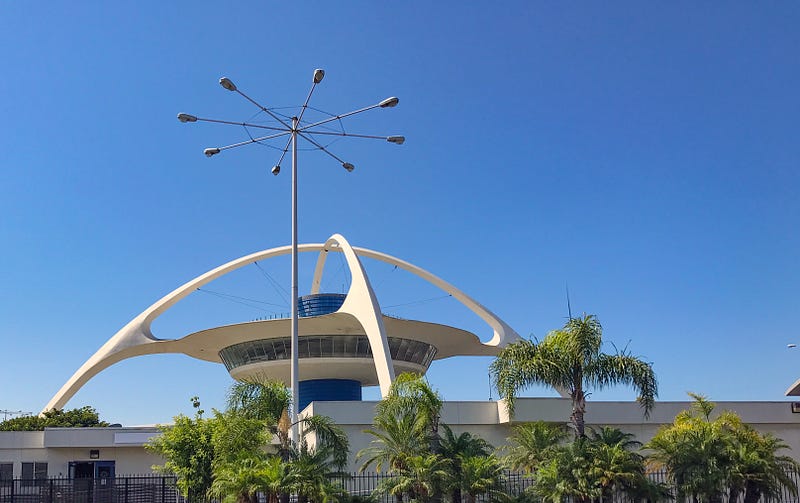
LAX spaceship Photo by Matthew Bamberg

Googie, abstract and geometric, ignoring gravity and consisting of a combination of then-space age materials — sheets of glass, steel beams asbestos (oh no), plywood and plastic — Googie is space-age, roadside-ultra-optimistic, mid-century modern architecture.

In the 1950s and 60s airline travel became a centerpiece of American culture. Forward-looking LAX officials envisioned a spaceship-designed structure to symbolize that Los Angeles was the future.

The Design Movement’s Beginning

During the middle of the twentieth century, Googie had become well-known in the City of Angeles because of the inception of a new design that was born first at Coffee Dan’s Coffee Shop, a structure of wall to wall and wall to ceiling glass with angled beams of steel leading to the heavens.

After drivers passed Coffee Dan’s, Angelenos wanted more future integrated into their lives.

Googie’s Coffee Shop was next, the term’s namesake. Googie linked the present to the future. Marilyn Monroe and other stars could be seen through plate-glass windows and angled beams of wood when walking down Sunset Blvd.

The Birth of the Space-Age

Hollywood fell in love with both Marilyn and Googie.

At the same time, it lauded Googie design.

Additionally, man had intentions of traveling into space. Americans competed with the Soviets in the race to space.

LAX wanted to be part of the action-packed architectural future.

LAX embraced not only the upper part of troposphere by launching planes to faraway locales above the earth, but also admired the spacecraft that went further up than any human had ever been when John Glenn rehearsed his weightlessness in outer space during the men-in-space Project Mercury.

The space-age was christened when the Theme Building opened in the center of the Los Angeles Airport.

Passengers were exhilarated.

Think:

The Jetsons

The Real Future

Life in the twenty-first century didn’t turn out to be what humans expected.

It’s been ten years since Los Angeles’ only spaceship restaurant, The Encounter” was open. Sad to say, the LAX Theme Building isn’t accessible to passengers or visitors because of security concerns.

The former Encounter restaurant closed in 2013. As one of the most glamorous destinations in LA, its history can’t be forgotten.

LA’s spaceship landmark makes LAX look like it’s been taken over by aliens. That was the general idea when it was built in 1961.

This Googie landmark isn’t the only one. Googie fever’s rapid rise came from space successes from John Glenn orbiting Earth to the men on the moon in 1969.

Amusement parks and tourist attractions followed in celebration, which gave way to spinning restaurants, space-age banks, and airports.

Googie has been traced back to Coffee Dan’s restaurants designed by John Lautner in the early forties. Goggies Coffee Shop was at Sunset and Crescent Heights in Los Angeles.

Since then Googie has taken some twists and turns.
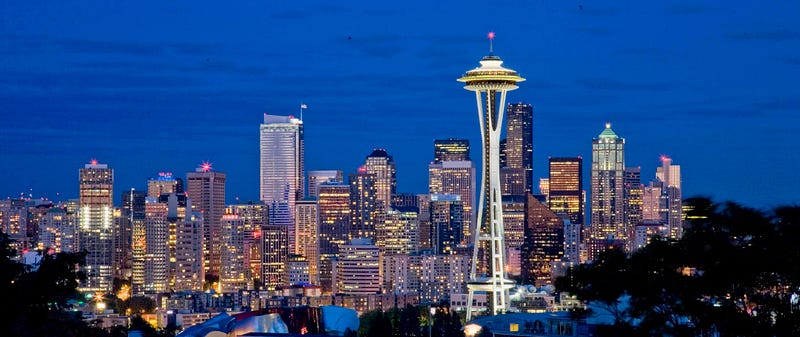
Seattle Space Needle Image by Matthew Bamberg

Who can forget the Seattle Space Needle, the centerpiece of the city’s skyline?

Down south, Googie was wildly popular in Southern California for certain high entertainment/concept businesses in the late fifties and early 60’s and dovetailed with the Cadillac’s tail fins of the same era. Googie structures riffed on the new shapes and designs coming from NASA.

Googie contains some of the mid-century’s most alluring and futuristic video game-like designs. Yet, Googie structures with their extreme, metaphorical qualities and humor are hard to categorize.

Palm Springs — Mid-Century Disneyland

While Palm Springs is certainly not the Googie center of the world, as other SoCal locales, there are notable elements of this flamboyant architecture in the Coachella Valley, a place that has become a mid-century Disneyland.

The Tramway Gas Station designed by Albert Frey (now Palm Springs Visitor’s Center) is probably the best-known Googie landmark. Frey did his Googie-style turn with such sophistication, that it may be hard to see the Tramway Gas Station as projecting the optimism and future (of that style).

One must notice the architectural drama in the triangular roof jutting out to shade the original gas pumps as they enter Palm Springs on Highway 111.

The “roadside flypaper” served a purpose — to get the highway traveler off the road and inside a business. Frey’s style did just that, got people to stop at the gas station to buy gas for new fashionable vehicles of chrome and steel. Frey’s Googie-style building was architecture built to succeed in yesterday’s future: the current day.

The roof is the first eyebrow lifting experience on which Googie brings to the casual roadside observer from his car window upon entering Palm Springs. The top of which would probably be a skateboarder’s paradise — slopes that swoop — had they been built on the ground.

Large plate glass windows are the next telling sign, letting the car culture know that there’s something that they want and need, whether they have to have it or not. In this aspect, up and down Palm Canyon, Highway 111, Date Palm and other established thoroughfares in the desert the tale-tall signs of Googie are lurking.

Meant to attract the automobile, a Googie building became a destination in itself. It served as a Disneyesque Tomorrowland, built with the sole purpose of creating architecture and outdoor space that itself was the attraction.
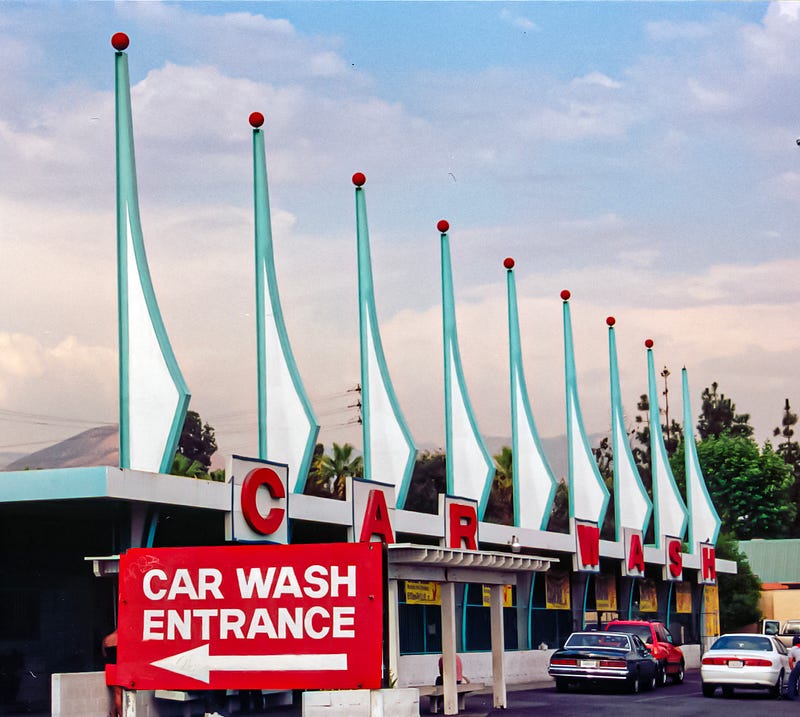
Los Angeles car wash Photo by Matthew Bamberg

Googie-style buildings serviced the new culture of mobility: car washes, gas stations, roadside cafes, convenience stores and drive-in restaurants and even airports.

It spread from here all over the United States and Canada, a celebration of competition for the highway traveler, paralleling the US-Soviet space race, the launch of the USA’s Mercury missions vs. the launch of the Sputnik, the Soviet-era spacecraft.

Now more than ever, nostalgia for a simpler, more optimistic time goes a long way towards explaining the resurgence in interest surrounding Googie design.

Architecture
Modern
1960s
Retro
Los Angeles
Recommended from ReadMedium