avatarAvi Kotzer

Free AI web copilot to create summaries, insights and extended knowledge, download it at here

2856

Abstract

not part of a larger cavalry.</p><p id="af1d">The pennons were designed with the corresponding heraldry, and carried by lonely knights (bad pun intended) on their lances. They were set strategically to fly correctly when the knight used the lance for charging. That way, when jousting, the rivals knew who the schmuck that was coming at them was.</p><p id="ce83">Ever heard of “A paper Heraldical book in small Quarto”? No? Don’t feel badly. I knew nothing about its existence until half an hour ago.</p><p id="89b7">It’s a manuscript of the 16th century (now in the British Museum) that explains in great detail the features of pennons and other banners. For example, it clearly states that “a pennon must be two yards and a half long, made round at the end, and contain the arms of the owner”. It also gives a warning to cowards, seemingly: “from a standard or streamer a man may flee, but not from his banner or pennon bearing his arms.” Talk about moral gatekeeping in the 1500s!</p><p id="423f">Here is the pennon of James Douglas, Earl of Douglas, which he sported at the Battle of Otterburn on August 5th, 1388. Or on August 19th. The smartphone video taken during the battle blurs out the exact date.</p><figure id="745c"><img src="https://cdn-images-1.readmedium.com/v2/resize:fit:800/0*j4rSlDM3gVMT3ybh.jpg"><figcaption>Credit: wikicommons</figcaption></figure><p id="8dea">I’m not sure how effective the lion art was at getting opposing soldiers to flee from the Earl. Especially considering he was killed pretty quickly. He was so <b>not important</b>, apparently, that his death wasn’t even noticed until much later. Maybe that explains the two dates I mentioned earlier. Douglas was killed on August 5th, but someone finally noticed he was dead two weeks later, on the 19th.</p><p id="eb1b">In any case, on the losing side was Henry “Hotspur” Percy, whose <i>pennon</i> was captured.</p><figure id="d17b"><img src="https://cdn-images-1.readmedium.com/v2/resize:fit:800/0*VC6Vls4aQFU6qjZl.jpg"><figcaption></figcaption></figure><p id="c215">Wait a second… was this actually the first “Capture the flag” game recorded in history?</p><p id="4c80">Pennons were also used for any special ceremonies, including funerals. So it’s likely Earl James Douglas at least got to be buried with his <i>pennon</i> and its ineffective lion cartoon.</p><h2 id="d115">Times of ensign</h2><p id="1d11">Today everyone agrees that using the word <i>pennon</i> is just silly, so we’ve collectively decided to call them pennants.</p><p id="ec21">And although recreational axe-throwing has been trending for a few years, jousting has not yet made a comeback. I’m still on the fence as to whether that is good or unfortunate.</p><p id="6932">In any case, most people are not flying <i>pennons</i> on their lances. They are purchasing pennants at their favorite team’s

Options

stores. Then they use them to taunt opposing team fans at the stadium or hang them up on the walls of their basement man caves. Those who want to appear more sophisticated flaunt their Ivy League pennants.</p><figure id="f343"><img src="https://cdn-images-1.readmedium.com/v2/resize:fit:800/1*KxELMt6S5bQBjocWLBcQKA.png"><figcaption>Screenshot by Iva Reztok</figcaption></figure><p id="e8ca">Umm… I may have gotten the word tags reversed, but I swear it was an accident. In any case, you get the idea. That’s what Americans do with their modern-day <i>pennons</i>.</p><p id="5b01">In other countries, pennons play a more formal role. In the Netherlands, for example, orange pennons are flown with the Dutch flag on King’s Day and other holidays related to the House of Orange. That’s very similar to England’s House of Windsor, but more colorful.</p><p id="ab13">Household pennants are a tradition in Finland. Called <i>isännänviiri</i>, their purpose when flown is to announce that the “master of the house” is home. That way, the Finnish postman knows not to ring twice… or even once.</p><p id="4588">In any case, whether you’re in America or another part of the world, don’t ask for a <i>pennon</i> when you go buy a pennant. That’s because the editors of the Spelling Bee decided that the word <i>pennon</i> is a <a href="https://www.merriam-webster.com/words-at-play/dord-a-ghost-word"><b>dord</b></a><b>.</b></p><p id="74b2">(If you’re in Finland, however, feel free to order an <i>isännänviiri</i>.)</p><p id="5ffe">Please check out my previous entry on another <b>dord:</b></p><div id="8d93" class="link-block"> <a href="https://readmedium.com/lavalava-a9e06e32b70c"> <div> <div> <h2>Lavalava</h2> <div><h3>This outfit is great for hothot weather.</h3></div> <div><p>medium.com</p></div> </div> <div> <div style="background-image: url(https://miro.readmedium.com/v2/resize:fit:320/0*ThFoM54DqYwXDNFS.jpg)"></div> </div> </div> </a> </div><p id="1210">*What the heck is a <b>dord, </b>anyway? Here you go:</p><div id="c855" class="link-block"> <a href="https://www.merriam-webster.com/words-at-play/dord-a-ghost-word"> <div> <div> <h2>'Dord': A Ghost Word</h2> <div><h3>One of the questions people like to ask lexicographers is this: Can you sneak something into the dictionary? Can you…</h3></div> <div><p>www.merriam-webster.com</p></div> </div> <div> <div style="background-image: url(https://miro.readmedium.com/v2/resize:fit:320/0*uPQQNXO0NMiTGEYu)"></div> </div> </div> </a> </div></article></body>

Pennon

Medieval teams also had memorabilia

Photo by Liam Desic on Unsplash

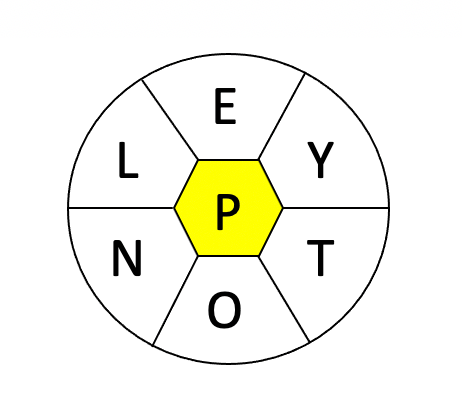
Today’s New York Times Spelling Bee letters:
Art: Iva Reztok

E, L, N, O, T, Y, and center P (all words must include P).

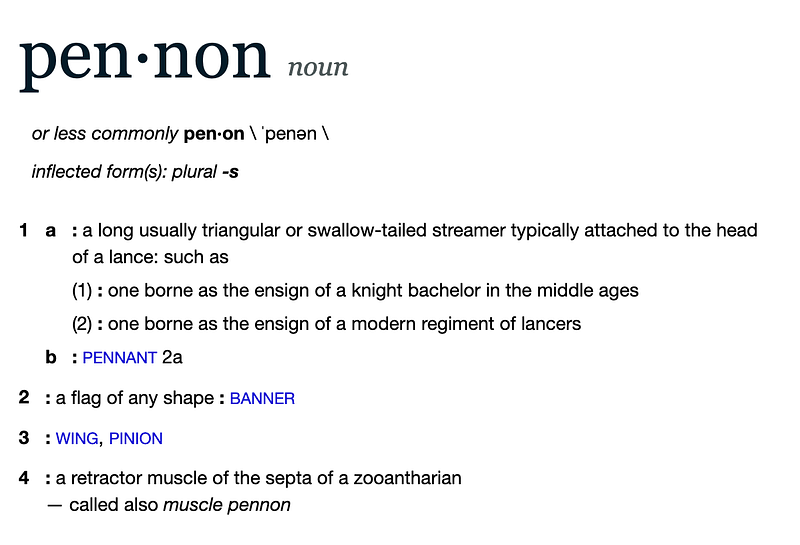
Merriam-Webster says…
Credit: merriam-webster.com

Silly little dictionary! Don’t you know pennon can’t possibly be a word if the New York Times says it ain’t?

For further fascinating facts, check out the Spelling Bee Master.

What’s your favorite dord* from today’s puzzle?

My Two Cents

The word pennon came from the same Middle English term, which derived from the Middle French penon, and augmentative of penne. So even back then people were trying to increase penne size. (Cue rim shot.)

Penne itself meant “feather” or “quill” in Latin. Today the Italians use the word penna to refer to both bird feathers and writing pens. But not bird pens and writing feathers. Just wanted to clear up that potential misunderstanding.

The pasta itself, contrary to popular belief, is not named so because it resembles feathers or penises. (Ouch! Who would cut genitals in such a shape anyway?) When penne were designed and created by Giovanni Battista Capurro in 1865 — I was there, and can attest to the date and the inventor — the intention was for the pasta to look like a fountain pen’s nibs.

Fun fact: penne pasta is called “pencil points” in Trenton, New Jersey. But only there. Don’t go to restaurants asking for pencil points anywhere else in that state, or even worse, in New York.

An ensign of the times

Historically, the pennon was a personal flag used by knights bachelors. No, these were not guys who handed out roses to maidens catfighting over them in Medieval reality shows. The “bachelor” part simply means that these knights were not part of a larger cavalry.

The pennons were designed with the corresponding heraldry, and carried by lonely knights (bad pun intended) on their lances. They were set strategically to fly correctly when the knight used the lance for charging. That way, when jousting, the rivals knew who the schmuck that was coming at them was.

Ever heard of “A paper Heraldical book in small Quarto”? No? Don’t feel badly. I knew nothing about its existence until half an hour ago.

It’s a manuscript of the 16th century (now in the British Museum) that explains in great detail the features of pennons and other banners. For example, it clearly states that “a pennon must be two yards and a half long, made round at the end, and contain the arms of the owner”. It also gives a warning to cowards, seemingly: “from a standard or streamer a man may flee, but not from his banner or pennon bearing his arms.” Talk about moral gatekeeping in the 1500s!

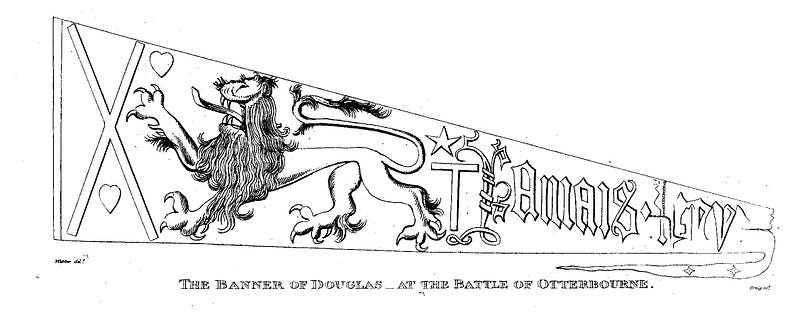
Here is the pennon of James Douglas, Earl of Douglas, which he sported at the Battle of Otterburn on August 5th, 1388. Or on August 19th. The smartphone video taken during the battle blurs out the exact date.
Credit: wikicommons

I’m not sure how effective the lion art was at getting opposing soldiers to flee from the Earl. Especially considering he was killed pretty quickly. He was so not important, apparently, that his death wasn’t even noticed until much later. Maybe that explains the two dates I mentioned earlier. Douglas was killed on August 5th, but someone finally noticed he was dead two weeks later, on the 19th.

In any case, on the losing side was Henry “Hotspur” Percy, whose pennon was captured.
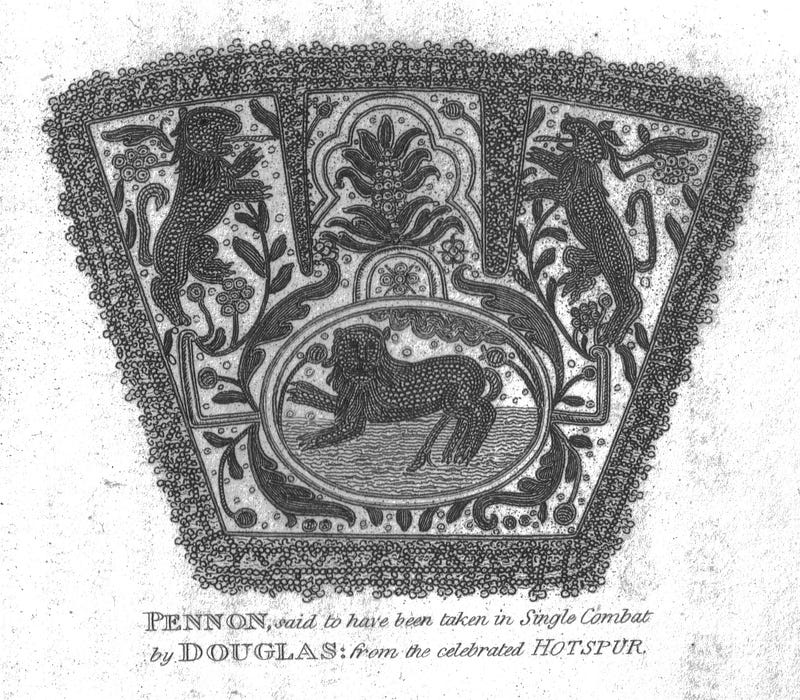
Wait a second… was this actually the first “Capture the flag” game recorded in history?

Pennons were also used for any special ceremonies, including funerals. So it’s likely Earl James Douglas at least got to be buried with his pennon and its ineffective lion cartoon.

Times of ensign

Today everyone agrees that using the word pennon is just silly, so we’ve collectively decided to call them pennants.

And although recreational axe-throwing has been trending for a few years, jousting has not yet made a comeback. I’m still on the fence as to whether that is good or unfortunate.

In any case, most people are not flying pennons on their lances. They are purchasing pennants at their favorite team’s stores. Then they use them to taunt opposing team fans at the stadium or hang them up on the walls of their basement man caves. Those who want to appear more sophisticated flaunt their Ivy League pennants.
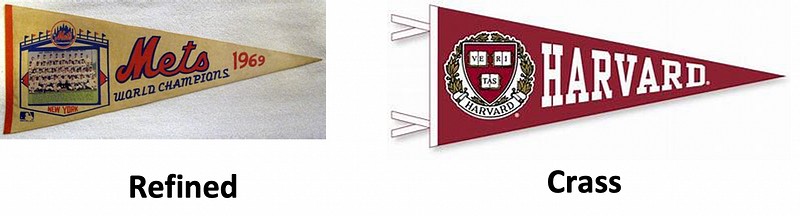
Screenshot by Iva Reztok

Umm… I may have gotten the word tags reversed, but I swear it was an accident. In any case, you get the idea. That’s what Americans do with their modern-day pennons.

In other countries, pennons play a more formal role. In the Netherlands, for example, orange pennons are flown with the Dutch flag on King’s Day and other holidays related to the House of Orange. That’s very similar to England’s House of Windsor, but more colorful.

Household pennants are a tradition in Finland. Called isännänviiri, their purpose when flown is to announce that the “master of the house” is home. That way, the Finnish postman knows not to ring twice… or even once.

In any case, whether you’re in America or another part of the world, don’t ask for a pennon when you go buy a pennant. That’s because the editors of the Spelling Bee decided that the word pennon is a dord.*

(If you’re in Finland, however, feel free to order an isännänviiri.)

Please check out my previous entry on another dord*:

*What the heck is a dord, anyway? Here you go:

Spelling Bee
Language
History
Culture
Knight
Recommended from ReadMedium