
Penang Hill
A return visit to connect with a new and spectacular ecological experience.
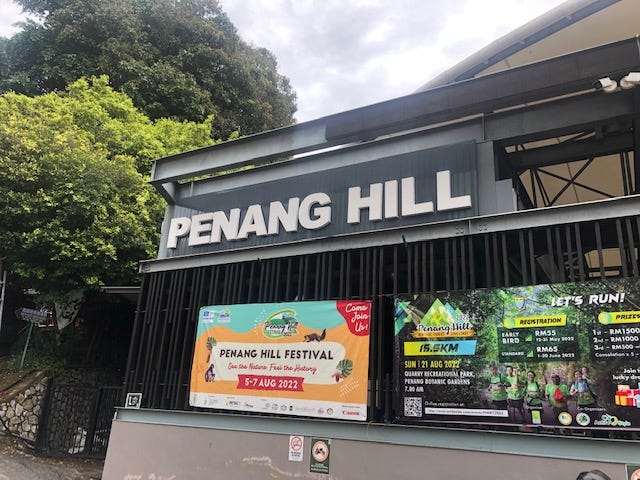
Whenever we visit Penang, we take the funicular up Penang Hill. Located in the Ayer Hitam area, Penang Hill is actually a group of peaks, the highest being 2,733 feet above sea level. The founder of Penang, Francis Light, first cleared a horse track from the waterfalls of the Botanic Gardens to one of the peaks in1788 to grow strawberries.
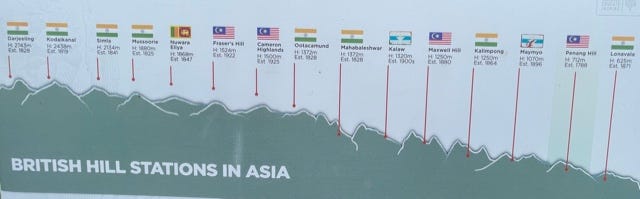
The main peak is Bukit Bendera, Malay for Flagstaff Hill. Like Fraser’s Hill, it was initially developed as a cool weather retreat for the British as well as a convalescent area. A railway funicular was built in 1923 which started the development of holiday bungalows and the recognition of its potential as a tourist destination. As you can see from the diagram below, Penang Hill is one of four hill resorts the British developed in peninsular Malaya, the other three being Fraser’s, Cameron and Maxwell.
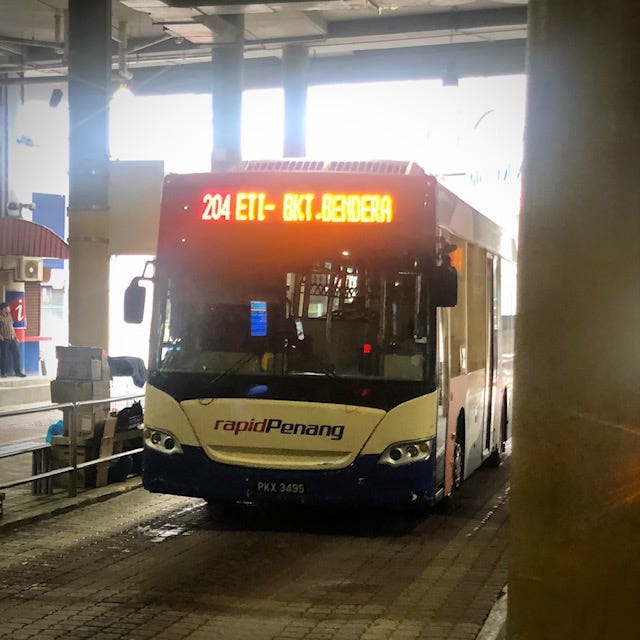
To get to Penang Hill, one has to get to the base funicular station. The Rapid Penang bus company has a bus service to the funicular station from Komtar, a large shopping and entertainment complex. From our hotel, the Bayview in Georgetown, it was about a twenty-minute walk to the bus interchange at Komtar. There we waited for bus #204 which leaves from platform 2 every 25 minutes. The ride takes about 30 minutes and the fare per person is currently M$2 (roughly US$0.50).
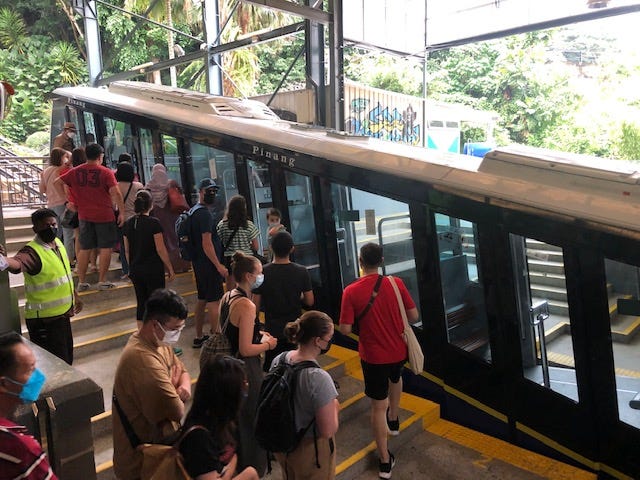
When we arrived at the funicular station, we discovered that Covid precautions were strictly enforced. Masks had to be worn and they asked to see our MySejahtera app, the local government’s contact tracing system which also houses our covid vaccine information. After purchasing the funicular tickets which cost M$30 per person (US$5), we were soon in line to board the train.
One of the new attractions on Penang Hill is the UNESCO recognised Biosphere Reserve established by the Habitat Group, a foundation dedicated to nature preservation education.
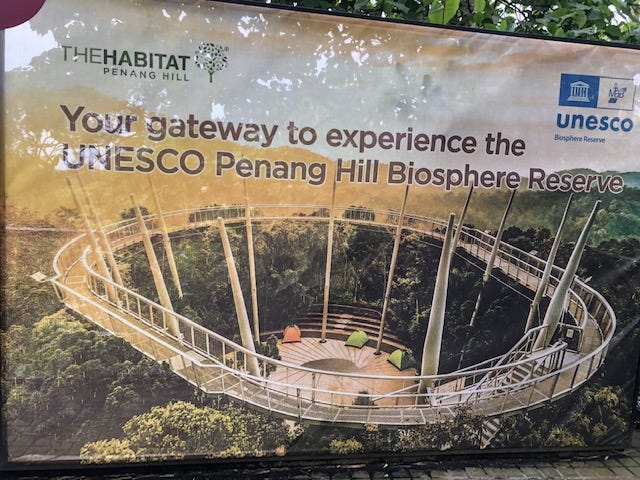
Much of this visit focuses on the Biosphere Reserve. While one can freely walk around Penang Hill, there is a charge to visit the Biosphere Reserve. As seniors, we received a twenty percent discount and paid $M40 each (US$10). This rainforest reserve is definitely worth paying for. In fact, you will be short-changing yourself if you go up Penang Hill without experiencing it.
The rainforest discovery is located around a forest reserve protected since 1911 and accessible via the original 1.6 km trail built by the East India Company in the 1800’s.
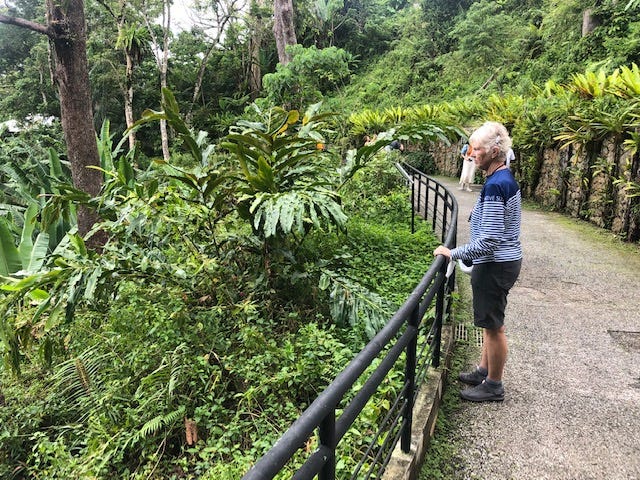
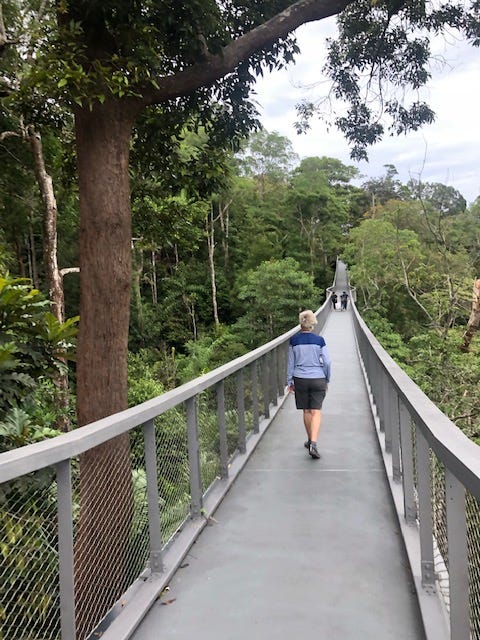
A couple of modern architectural improvements have been added to the trail. One is the Langur Canopy Walk, the world’s longest two-span ribbon bridge and the only one that sits within and atop a pristine rainforest.
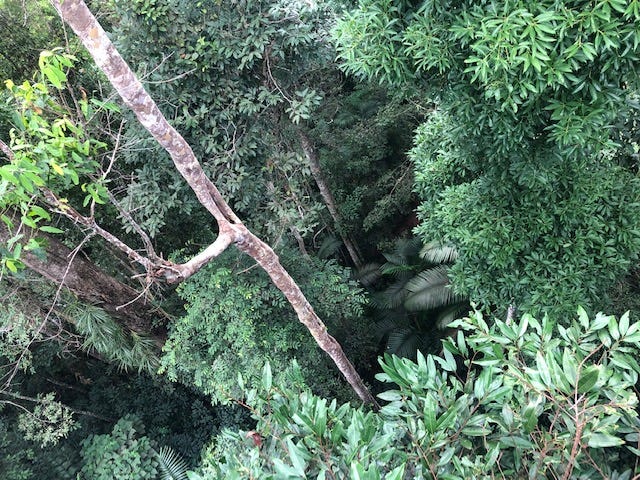
At the end of the Canopy Walk, you arrive at the second new addition, the 13-meter-high Curtis Crest Tree Top Walk. At 800 meters above sea level, it is the highest point on Penang Hill and offers breathtaking views of the island and visible islands in the distance including Langkawi Island.
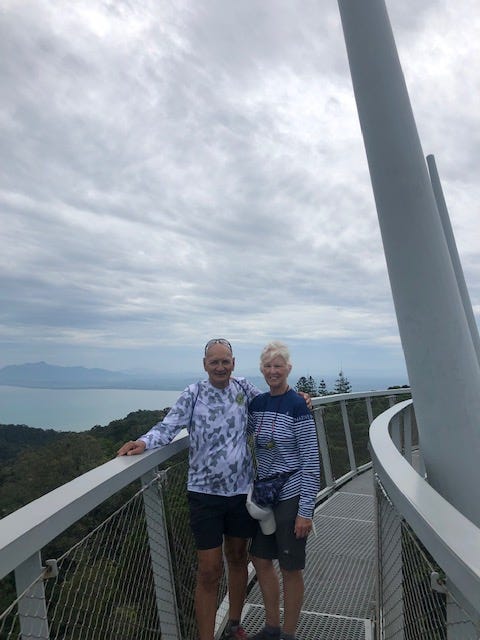
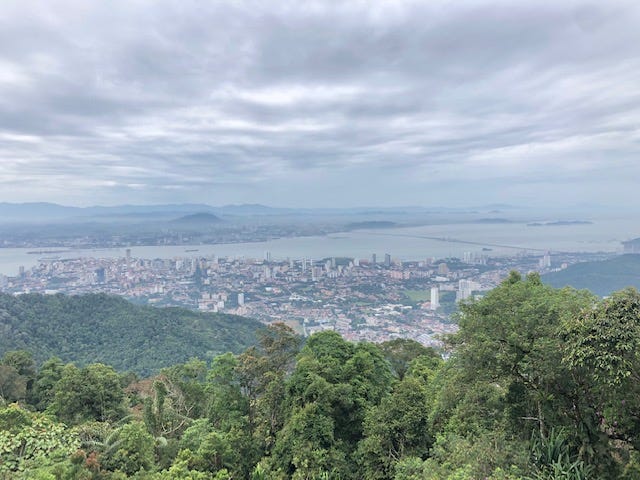
Besides the two spectacular attractions, the walk along the original trail exposes the visitor to the rich biodiversity of the area.
After the visit, we opted not to take the free shuttle back down to the train station but walked the 1.5 km to further experience the rich plant life along the way.
After a drink at the hawker center next to the station and our customary bowl of ice kachang (a concoction of shaved ice, fruit, peanuts and ice-cream) we made our way back to the station to take the funicular down.

I must add that they have improved the speed of the funicular. I remember the trip once taking more than 15 minutes. The new train whizzes up and down so that your ride each way is no more than five minutes long. In fact in the old days, one had to change trains at the halfway point up and down Penang Hill. In 2010 the system was shut down for a year to accommodate a major overhaul. With new tracks and a complete new system, there is now no need to change trains at the halfway point. The new Swiss-made cars also have an increased capacity of 100 passengers.
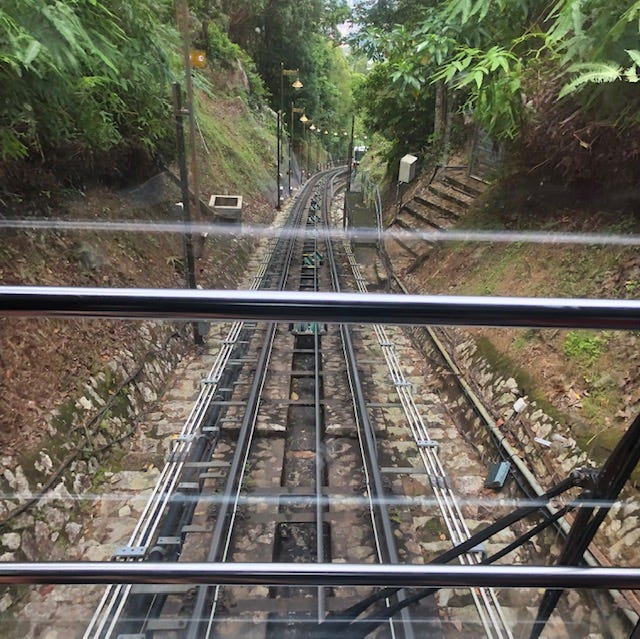
At the base we got to the bus stop and waited for bus #204 to take us back to Komtar. On this visit we spent about six hours on Penang Hill, much of the time visiting the new Rainforest Reserve. There are also places where one can stay overnight on Penang Hill. On a return visit, we hope to spend a day and a night on the hill to fully experience the ecological and social offerings of the hill.
Here is a link to my wife’s article on our visit from an ecological point of view.
If you are not yet a member of Medium, please consider using this link to join. I receive a small commission which will not increase the cost of your membership. Membership gets you get full access to the work of all the authors on Medium. Thank you for your support.


