
Pediment
This word was an im-pediment for the Spelling Bee (groan!)
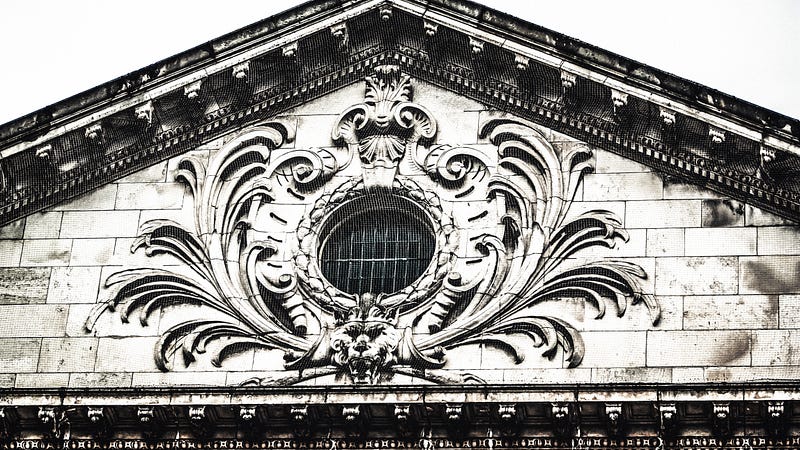
Today’s New York Times Spelling Bee letters:
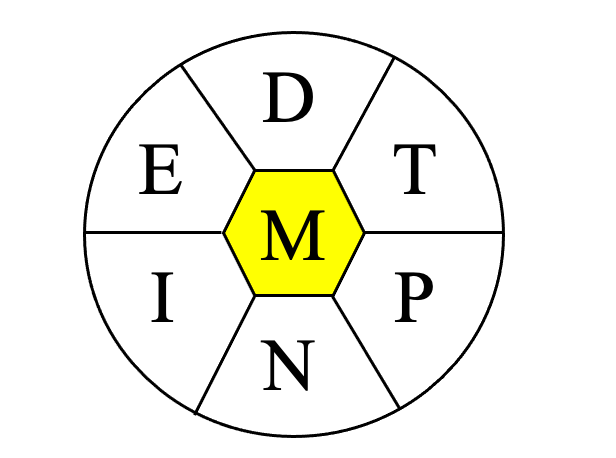
D, E, I, N, P, T, and center M (all words must include M)
Merriam-Webster says…
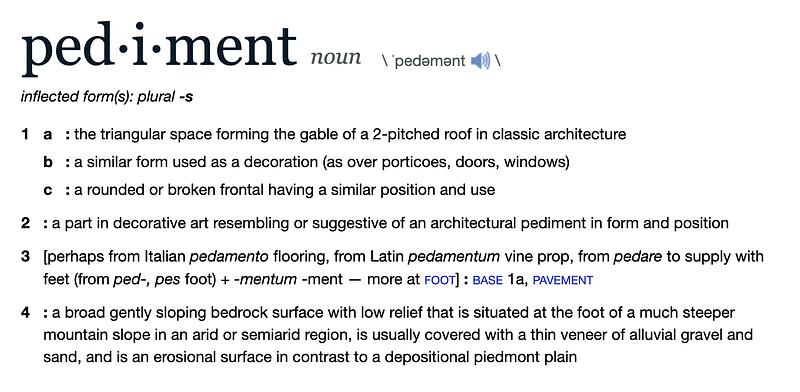
Silly little dictionary! Don’t you know that pediment can’t possibly be a word if The New York Times says it ain’t?
For further fascinating facts, check out the Spelling Bee Master.
What’s your favorite dord* from today’s puzzle?
My Two Cents
My biggest beef with the Spelling Bee for not including the word pediment in today’s list of valid answers is that it’s a pangram. In the game’s lingo, a pangram is the word that can be made using all seven letters in the puzzle. There is always at least one pangram, and finding it gives you bonus points. Pediment would have been the second one today. (I’m my eagle-eyed readers have guessed the pangram that was accepted.)
My second biggest beef is that pediment is not an obscure word. I don’t think you need to be an architect or a fan of historic buildings to have heard of the term. Plus, the New York Times shows plenty of articles that mention pediment when you look up the word in their archives.
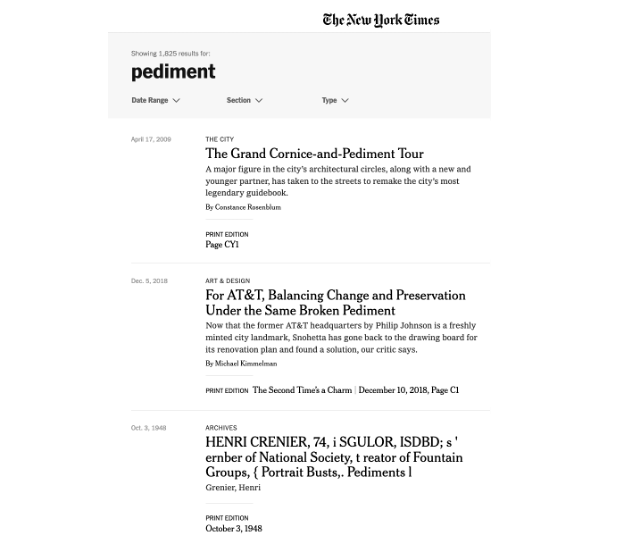
C’mon, the first one listed –– The Grand Cornice-and-Pediment Tour–– is from 2009, has pediment in its header… and talks about buildings in New York City, for crying out loud! Well, okay, pediments aren’t mentioned at all in the rest of the article, but still. And in a 2018 article about the renovation of the old AT&T building (550 Madison), the word is actually mentioned twice in the text itself.
Anyhoo… for some reason the editors of the Spelling Bee thought pediment was an obscure word (it’s certainly not a curse word or otherwise offensive), which means I get to write a brief column on it (bad pun intended).
On buildings
I have very poor knowledge about architecture. That word always brings to mind the same three things, but not always in the same order: Frank Lloyd Wright, Ayn Rand, and Art Vandelay. And since I’m a big believer of Dirty Harry’s wise words in Magnum Force, “A man’s got to know his limitations”, I’ll just ask for help from the pros today.
The 1911 Encyclopedia Britannica sums up pediment quite nicely:
PEDIMENT (equivalents, Gr. ἀετός, Lat. fastigium, Fr. ponton), in classic architecture the triangular-shaped portion of the wall above the cornice which formed the termination of the roof behind it. The projecting mouldings of the cornice which surround it enclose the tympanum, which is sometimes decorated with sculpture. The pediment in classic architecture corresponds to the gable in Gothic architecture, where the roof is of loftier pitch. It was employed by the Greeks only as the front of the roof which covered the main building; the Romans, however, adopted it as a decorative termination to a doorway, niche or window, and occasionally, in a row of windows or niches, alternated the triangular with a segmental pediment. It was reserved for the Italian architects of the decadence to break the pediment in the centre, thus destroying its original purpose. The earliest English form of the word is periment or peremint, probably a workman’s corruption of “pyramid.”
That last sentence came out of left field. I was expecting the origin of pediment to come from an old Greek or Latin word. Our friends at Merriam-Webster confirm the etymology as an “alteration of obsolete English periment, probably alteration of English pyramid”, and its first use was in 1664.
(Also, note in this entry the mild persnickety jab at the Italian architects of the Decadent movement of the late 19th century.)
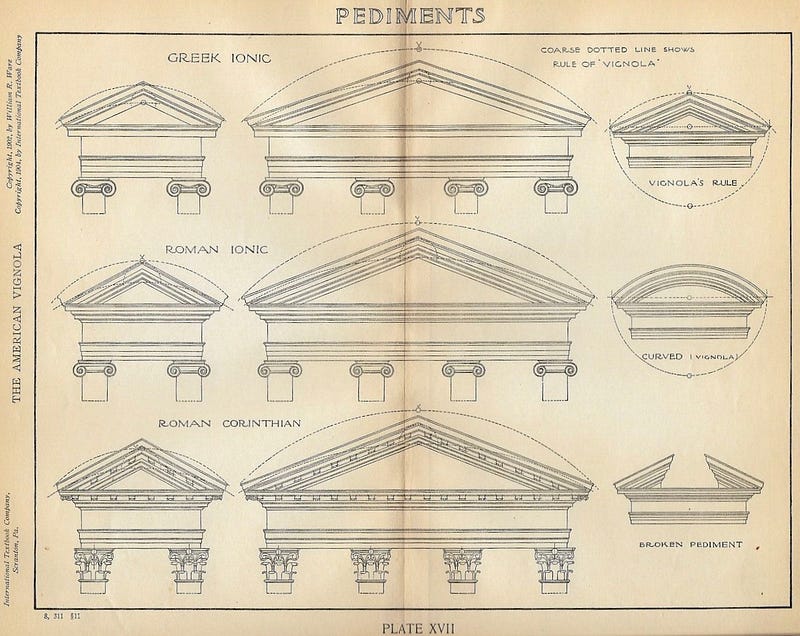
For illustrations, we can avail ourselves of copyright-free pictures. The first one succinctly shows several types of pediments.
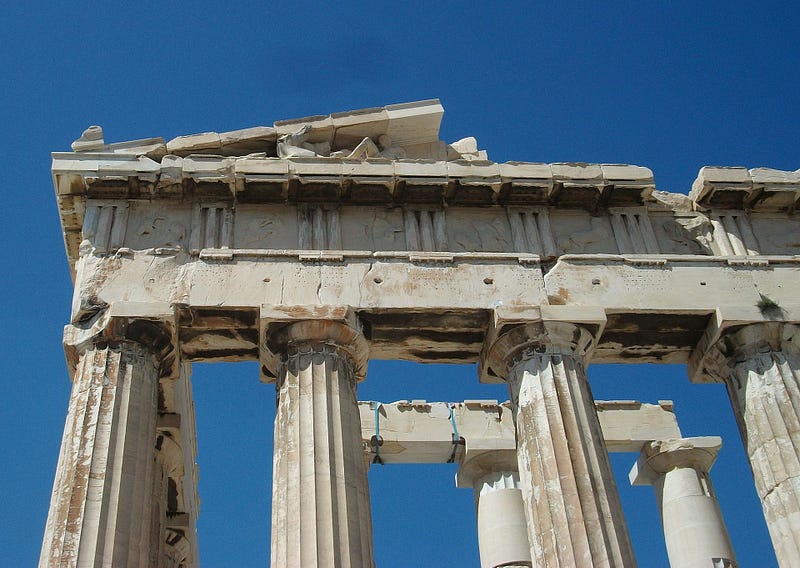
And starting with antiquity, we’ll quickly jump through photos of pediments over the last few millennia. First up is the Greek Parthenon…
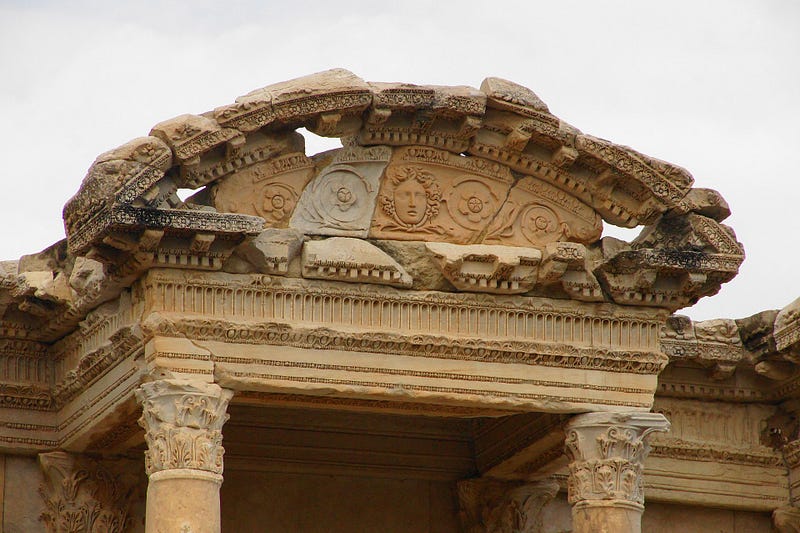
…followed by Ancient Rome…
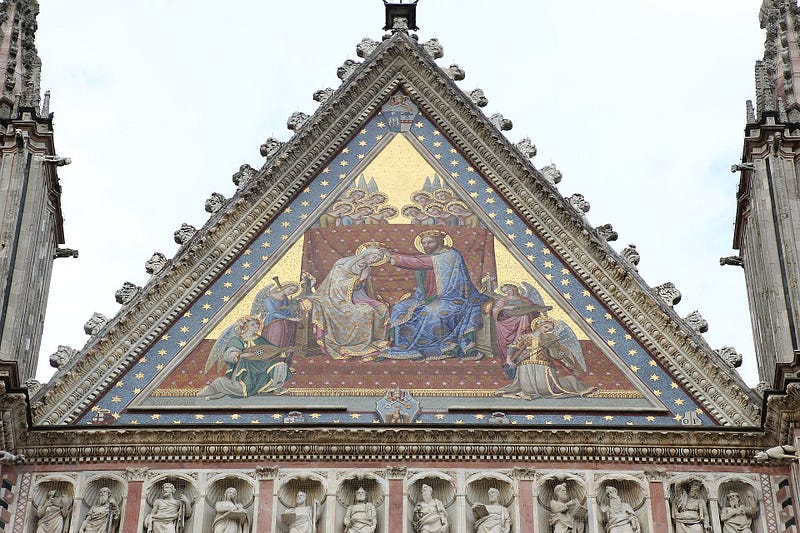
…a Gothic (middle Ages) one made out of mosaic tiles…
…Gothic Revival, a couple centuries later…
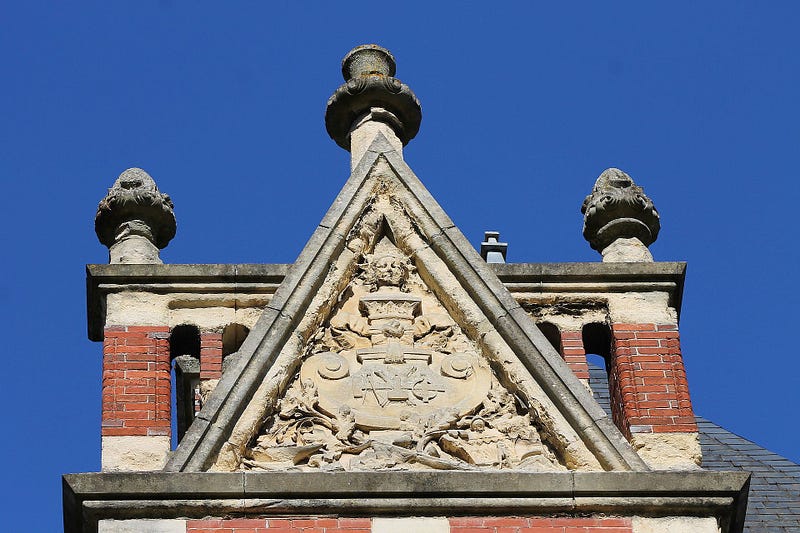
…and finally, another mosaic on the sexy curvaceous pediment of the Alexander Nevsky Cathedral in Estonia),

And now, without impediment (sorry, couldn’t resist), we move on to the other type of pediment.
On mountains
For this one, I’ll ask the modern online Britannica for assistance:
pediment, in geology, any relatively flat surface of bedrock (exposed or veneered with alluvial soil or gravel) that occurs at the base of a mountain or as a plain having no associated mountain. Pediments, sometimes mistaken for groups of merged alluvial fans, are most conspicuous in basin-and-range-type desert areas throughout the world. The angle of a pediment’s slope is generally from 0.5° to 7°. Its form is slightly concave, and it is typically found at the base of hills in arid regions where rainfall is spasmodic and intense for brief periods of time. There is frequently a sharp break of slope between the pediment and the steeper hillside above it. Water passes across the pediment by laminar sheet flow, but if this is disturbed, the flow becomes turbulent and gullies develop.
The geological processes involved in creating a pediment have been debated for over a century. We here at Silly Little Dictionary! have no worthwhile opinion on the issue, but if you want to delve deeper into the fray, by all means try to read this abstract:
Or you can simply enjoy the one copyright-free image I found of this type of pediment:
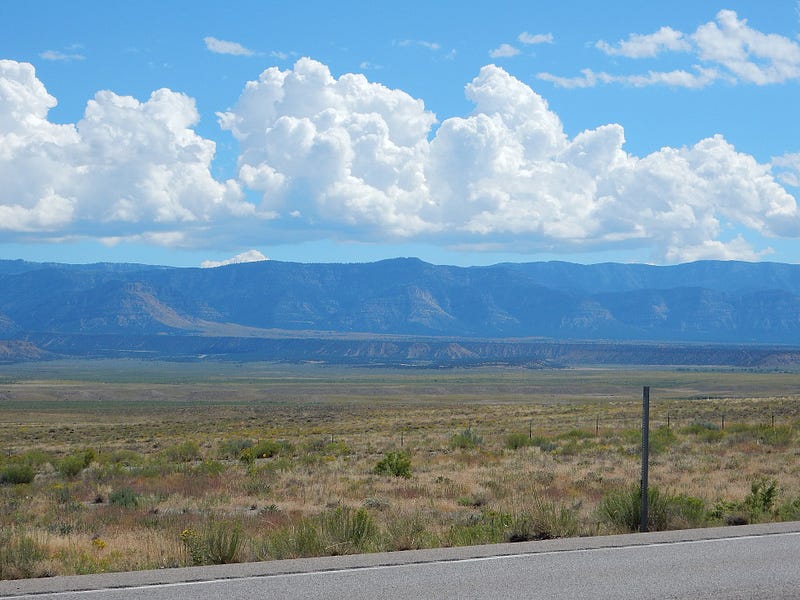
You may be asking yourself what part of the above photo is the pediment. I think that’s a great question, one that perhaps Kent G. Budge could answer… if we were able to get ahold of them.
C’mon, just enjoy the pretty picture!
Now you know. Next time you’re on a grand cornice-and-pediment tour in New York City, you can tell your guide to show you all the pediments in the Big Apple. Don’t be surprised if they only show you the cornices, though… because the editors of the Spelling Bee decided that pediment is a dord*.
You can check out my previous entry on another dord* here:
*What the heck is a dord, you ask? Here’s the answer: