
With Author’s Commentary
PARENT’S RIGHTS, Section 1
In 4 Sections
The Parent’s Rights listed below came from REACH OUT AND TEACH, a parent handbook distributed by the American Foundation for the Blind. Although written for parents with young blind children, these guidelines speak to ALL parents. They help us to maintain a healthy perspective, especially when working with professionals such as our child’s teacher(s) or doctor(s). And, as I have found, at the end of the day, age of the loved one doesn’t matter. The work doesn’t end till the end. For some, maybe even beyond.
This was published by me as an editor of SHARING in the March 1987 edition, the newsletter of the “SHARING” Down Syndrome Parent Support Group, which I co-founded in 1983.
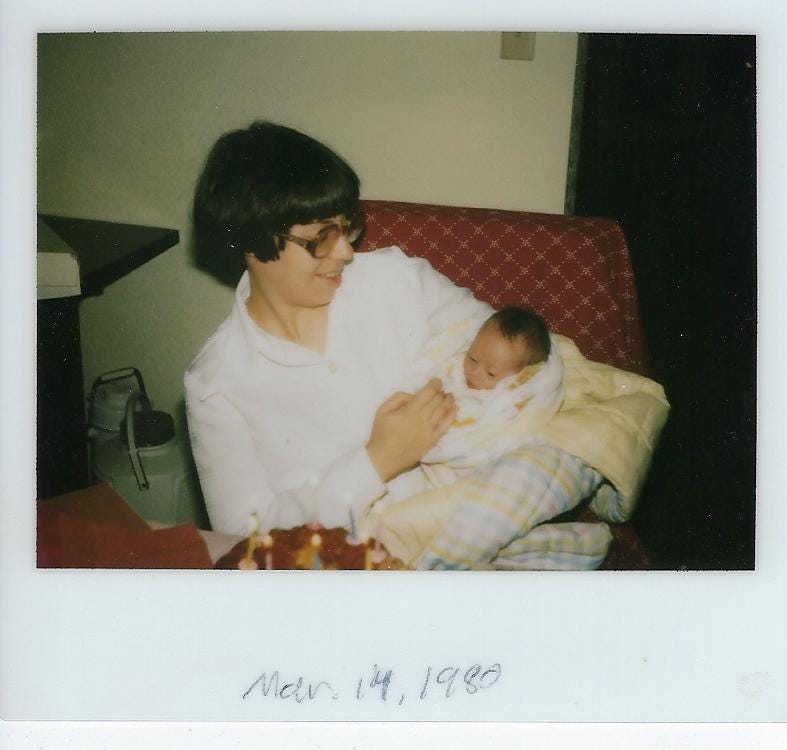
- THE RIGHT TO FEEL ANGRY — Nothing in life prepares anyone for being handicapped, and when it is your child who is handicapped, it seems all the more unfair. Be angry, but use your anger to get the best services you can for your child.
Author: In my opinion both sadness and anger can cause a parent to feel paralyzed. I think, however, that anger has more of a potential to spur action. To do something is a distraction to the pain of whatever the triggering cause happens to be. Why me? Well, why not me? I have never once not gotten out of bed. I have never had that luxury. Certainly it has helped that I have not inherited any tendency for depression., except for the mild, situational variety.
However, from an energy perspective, as I have learned as an energy healer, anger is a lower vibrational energy field. I would say one can use it to initiate action, but then it has to be cleaned up — which is what energy healers do. I didn’t learn this till many years after my daughter was born having Down syndrome.
2. THE RIGHT TO SEEK ANOTHER OPINION — Everyone is told today that it makes good sense to seek a second opinion before having surgery, or before investing money, or before buying a used car. It should not be any different for you and your handicapped child whether you are looking for medical care or an educational program.
Author: Back in 1980 when my daughter was born there was a lot less information about Down syndrome, let alone accurate information. Some doctors were still telling parents that the best place for their baby was in an institution.
My late mother had been a State of Illinois nursing home service social worker. She visited nursing homes on a regular basis, interviewed clients, observed, and turned in reports to the state. Some of those clients were adults with Down syndrome lying in bed in the fetal position because they had been sent to an institution as a baby, not loved, handled or stimulated. What a travesty! Imagine, if you will, what my mother saw juxtaposed to the growth and accomplishments of her granddaughter.
What if those parents had another doctor with whom to confer? What if there were a parent support group from which to get support and differing perspectives? People who had been and were going through something similar. My husband and I were lucky that our doctor was enlightened. Also, I knew enough that she was going home with us. We did fight for the preschool program that the doctor had recommended when the State of Arizona Department of Disabilities decided there wasn’t room and recommended another program. We were the squeaky wheel. I have never been sorry.
3) THE RIGHT TO PRIVACY — Some aspects of your life are simply no one else’s business. If you do not want to discuss something, or if you do not want your child’s picture taken, it is your right to say “No”.
Author: When parents have a child with a disability they are thrust into a different club. Similar to, as I found later, getting a divorce. Some friends and family distance themselves or disappear from the life circle altogether. Some are curious, others don’t want to know anything. Parents, family, need to be careful not to dump fears and concerns, pain and feelings of sadness, and hopelessness on others. Many people don’t know how to receive that or what to say; most are just glad it’s not they who are burdened in like fashion.
There’s also, for some of us, the tendency to appear strong and protect others, which is something I did for a long time, dwelling on the positive aspects even if I really didn’t feel them strongly. I was projecting a façade that actually didn’t exist for me, my essence residing inside a shell of my creation.
I have been proud of what my daughter has achieved, always allowed her photo to be taken. Believe me, I worked my butt off to help her with the growth she’s had. There are things I have never shared, likely won’t ever share. They are no one’s business but my own.
Check out PARENT’S RIGHTS Section 2, Section 3, and Section 4


