
Parents Ask Their Children, ‘Who Are You?’
Two weeks — no rest!
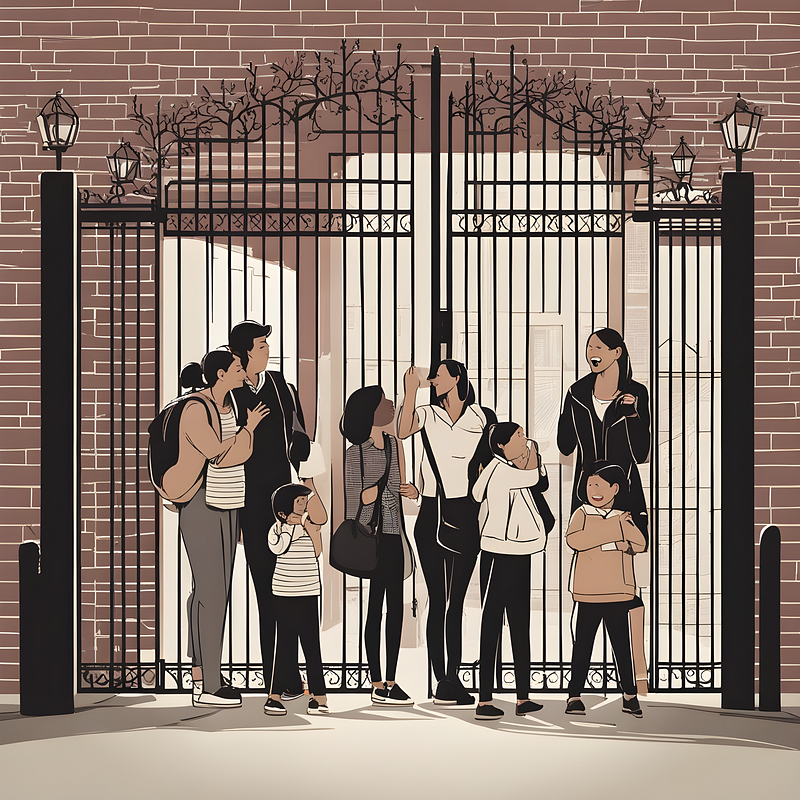
Six weeks has come to an end
Students in the UK have finally reemerged from their six-week summer holiday and return to school!
Parents Across the UK Unite in Solidarity — and Raise a Glass (or Three) to Celebrate Their Freedom!
During the six weeks of holiday, students have enjoyed precious moments with their parents, who either valiantly entertained or expertly ignored them for six weeks.
Some parents did not even know who these little people were and demanded identification!
These little people devoured their parents’ food supplies, destroyed homes in the name of play, and invited unwanted guests to stay over. The parents gave into many of their pleas, hoping that with each yes, they would have more time to themselves.
Some parents, grappling with a touch of Monday morning madness, dropped their kids off at school in a bewildered daze, convinced that there must be an error and the school was open for business.
Their hands stretched out with pleading eyes and faces, pleading for their offspring to be taken.
But school was closed for six weeks; the note read, ‘go home and take that little person with you’.
After the six weeks holiday
The return to school brings mixed emotions for both students and parents. While some parents may be secretly relieved to have a quiet house again, others may miss the chaotic energy their children bring. NOT!
As for the students, they embark on a new academic year with a mixture of excitement and trepidation, eager to reunite with friends and dive into new challenges.
Another two-week break!
But wait a minute — five weeks into returning to school — some schools are now closed for two weeks! Not one week as typically promised, but TWO WEEKS!
But wait a minute. Did they not just have a whole six weeks of leisure? Didn’t the parents and caregivers fulfil their duty and play caretaker?
Did they go to extreme lengths, recruiting random people off the street to babysit because they couldn’t take a six-week vacation themselves?
And what about leaving the responsible five-year-old in charge of their siblings while they hustled to make enough money to satisfy those bottomless stomachs?
Haven’t they endured enough chaos in their homes, with their own kids, their kids’ friends, or even random kids being dropped off because their parents couldn’t take time off?
Haven’t they suffered endless ‘I’m bored’ choruses, spending their last pennies on outings and lunches to make their kids feel cherished and part of society? They’ve done more than their fair share.
You may like -
Another two weeks off
Nevertheless, in some areas of the UK, the decision-makers have gone beyond just the typical half-term break, deeming introducing an additional week off necessary.
Yes, that’s right, another two weeks on top of the already generous six-week summer break. This approach is under trial, leaving many wondering who was consulted for this experiment.
Now, when it comes to employment, one might question which employer would willingly grant an extra two weeks off to their workforce.NONE!
Most schools lack dedicated care centres, which means parents are left with two choices: leaving their children at home to fend for themselves or taking, at most, one week off and conjuring up a creative illness to cover the second week.
Parents are suffering here
Every step of the way, people try in society to make a life for themselves. But sometimes, even in so-called democratic countries, it cannot work.
Capitalism and democracy somehow seem polar opposites.
You can take the time off, but the company will not pay for it.
Working-class people do not have the luxury of a stay-at-home nanny.
Sometimes, you wonder who the government works for, as it is not the country’s majority.
©Sophia Tell. All rights reserved.


