
TRAVEL TALES
Panning For Flakes of Gold Between the Deep Purple of Wild Thyme Fields
Learning more about the gold mining history and how this herb traveled across the world
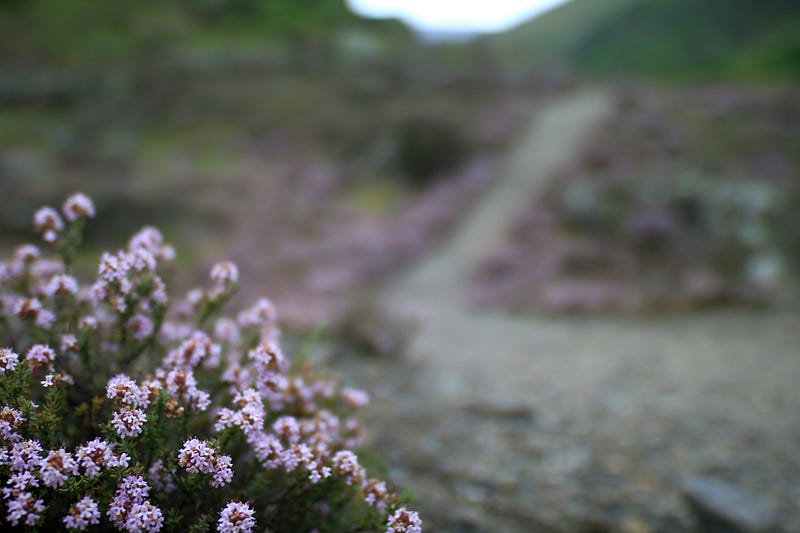
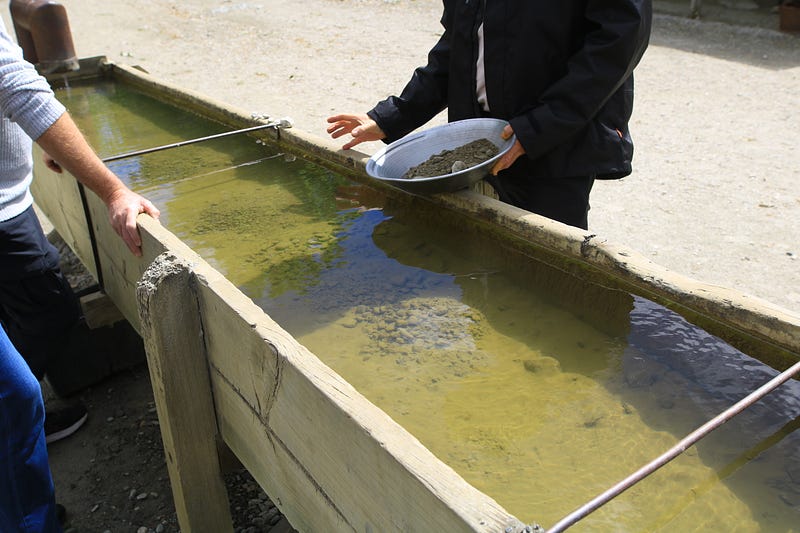
Pouring water into my pan and swinging the rocks and gravel inside over and over in circles I can’t find enough patience until the flakes of gold finally appear at the bottom of the pan. I’d much rather stare all day long at these purple fields of wild thyme.
We had to be up and running early to be ready and leave for work when the weather call at 7 am would be positive just that it wasn’t. We kind of knew we wouldn’t skydive in this weather. Today or the next few days. A strong northwesterly weather pattern is bringing not only gale-force winds but heavy rain clouds along as well.
Anyway, since I was up and had breakfast already, I decided to make the best of the day and head out exploring. David wasn’t interested which is understandable in these wind conditions.
I just waited for the rain to pass but the next shower came down onto the windscreen as I was driving toward Kawarau Gorge. I had seen the sign for the Goldfields Mining Center already a few times on our drives to and from Queenstown but didn’t actually think it was something I’d be interested in doing.
But then again, what do I know about gold mining?
Nothing.
So why not enlighten my horizon and learn something new?
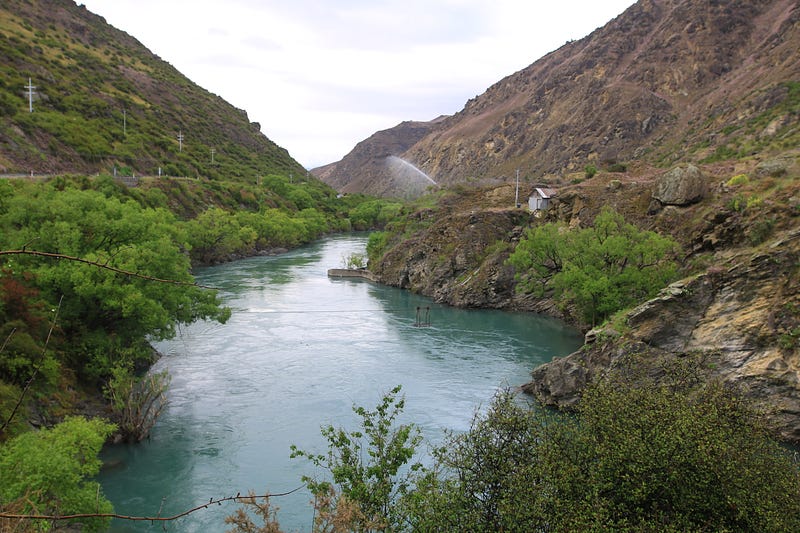
Where the Kawarau River winds its way down through the narrow valley from Queenstown being the only draining river of Lake Wakatipu, a lot of water pressure is building up creating the perfect spot for gold mining.
It just began to drizzle again as I walked across the bridge over the roaring and deep blue river. The visitor center had just opened and I received the friendliest greeting from the lady behind the desk.
I had done zero research on this place upon my arrival and just thought I’d check it out as it was just around the corner from our new home but as the lady explained everything, I just decided to head inside.
The tour was split in half. The first part was a self-guided walk lined with informative boards on the history of gold mining at the Kawarau River and the other half was a guided tour held by a local explaining more in-depth how mining for gold worked back in the days and how they found out about gold in this place.
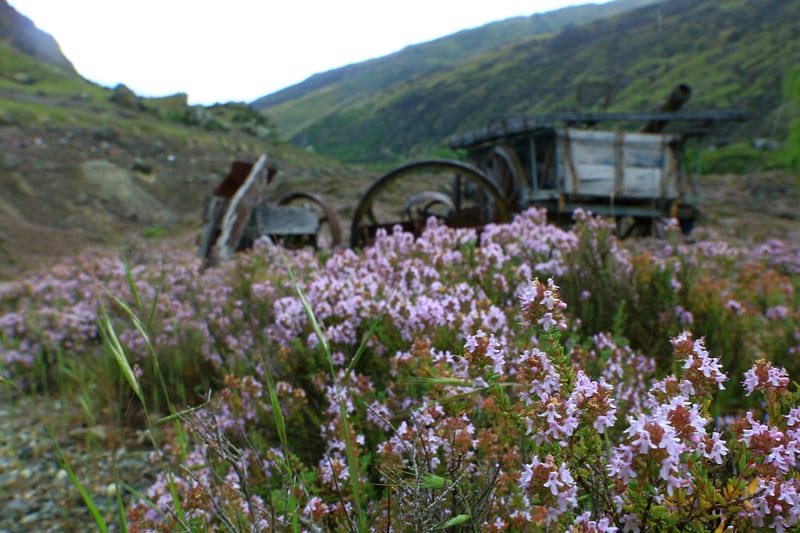
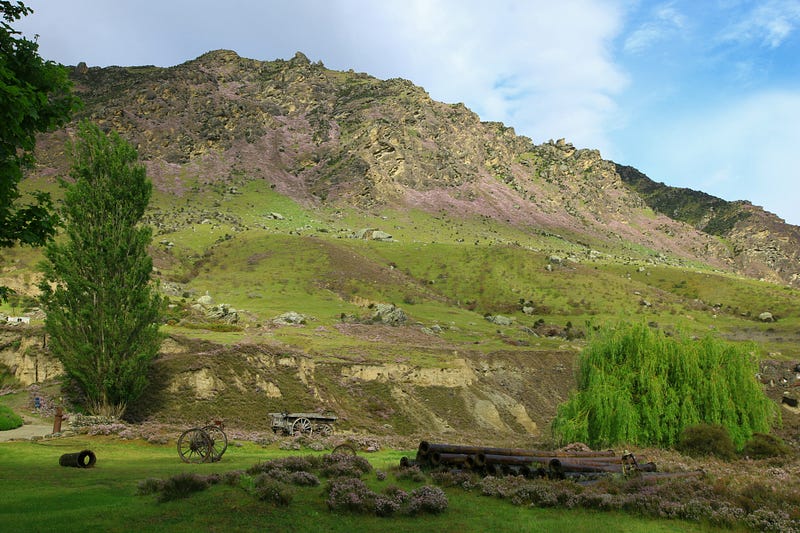
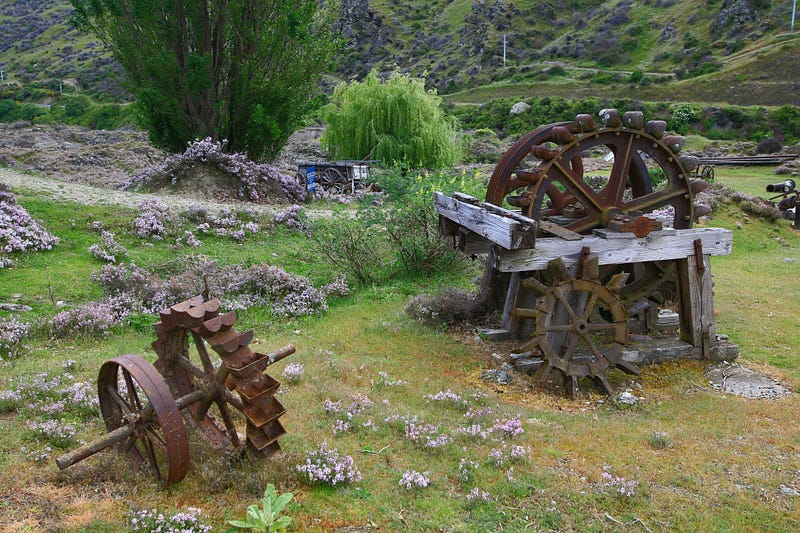
Just as I was leaving the reception area with the map in hand, the rain got stronger. I hid my camera underneath the rain jacket and hit the trail passing old mining machinery, a basic shelter and some transport wagons.
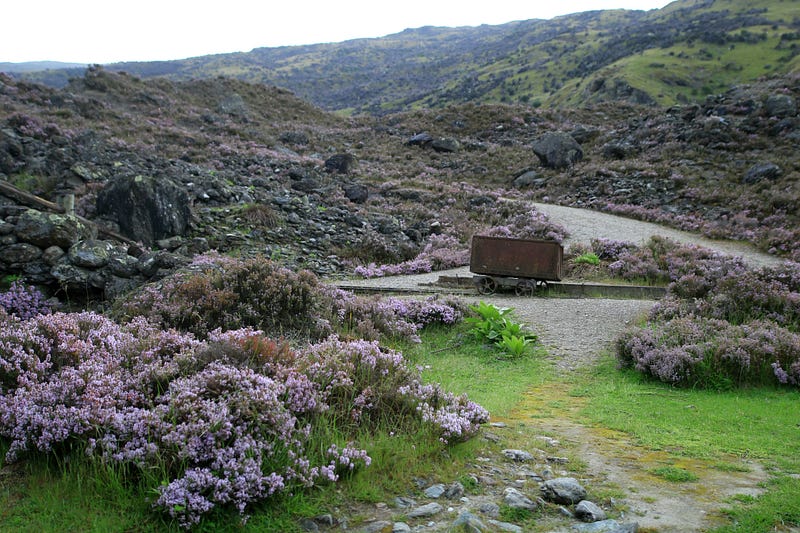
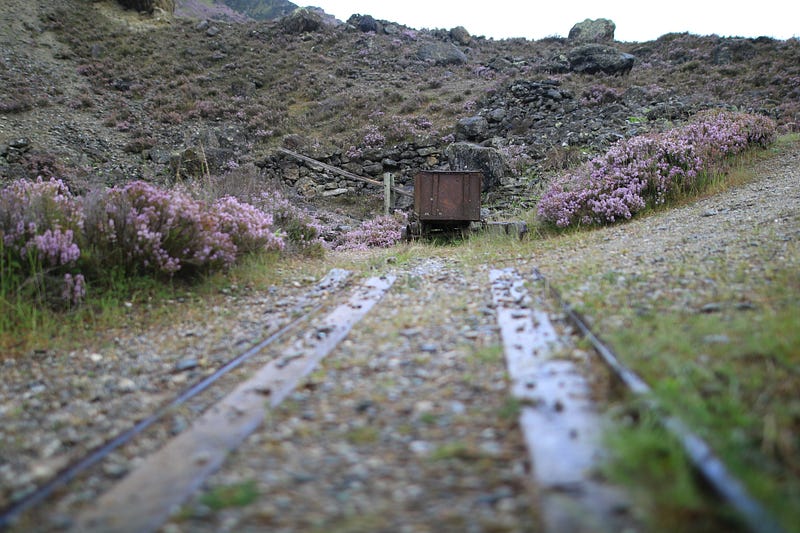
But not the machinery or the informative boards were what caught my attention first. The fields of flowering wild thyme painting the mountain slopes in deep purple landed in the focus of my camera.
At this point, I wasn’t even aware of it being thyme. I bent down to smell the plants as I suspected it of being some sort of a wild thyme but didn’t smell anything.
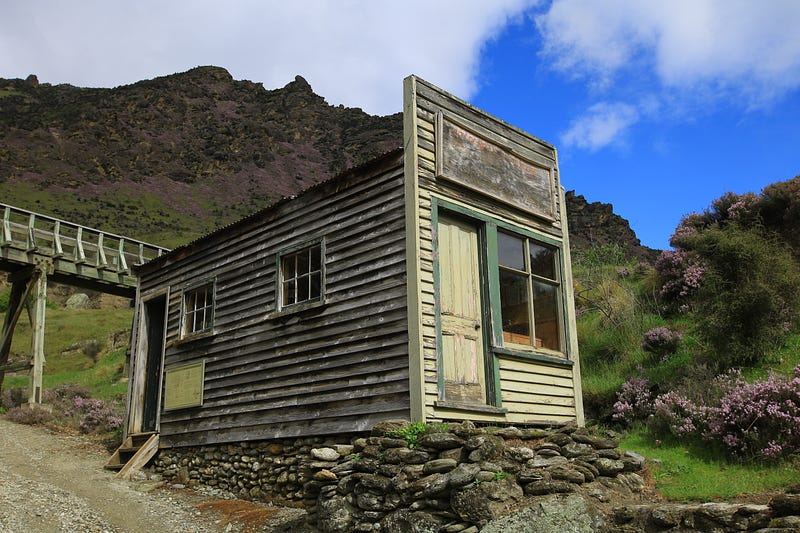
Walking further, a small reconstructed settlement appeared. It was built a few years ago for a film set but is a very accurate replica of what the homes in Chinatown looked like.
Chinatown?
Yes, when new gold was found on the West Coast (of New Zealand) all gold miners left within days and left behind an empty town. In order to keep things going the town council invited Chinese miners to continue mining in the area and as some regions in China were suffering a low employment rate, over 1000 Chinese workers arrived within a year. A few years later, the region counted over 5000 Chinese workers in Otago.
They worked differently than their European neighbors as they didn’t keep to themselves but operated as a community. Being discriminated against from the rest, they built their own settlements and housing. They remained in these mining sites gaining gold for another 30 years after the Europeans left.
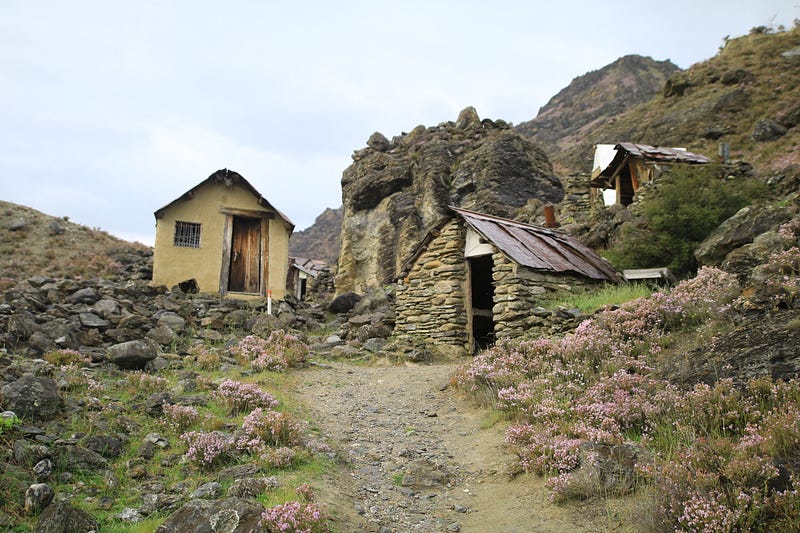
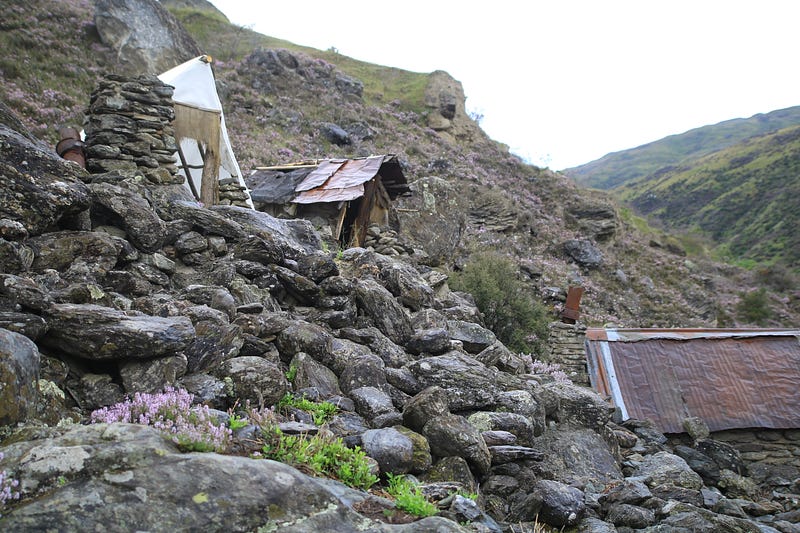
Despite the rain that turned into a light drizzle again, I enjoyed simply walking through the area. The informative boards taught me a lesson or two about the function of gold mines and the history of this place while my eyes were glued to the purple thyme flowers.
The walkways were well-maintained and beautifully directed along the turquoise blue of the Kawaru River. And while I was enjoying the views and nature all around, I was constantly reminded of what a harsh place this was to survive in back then.
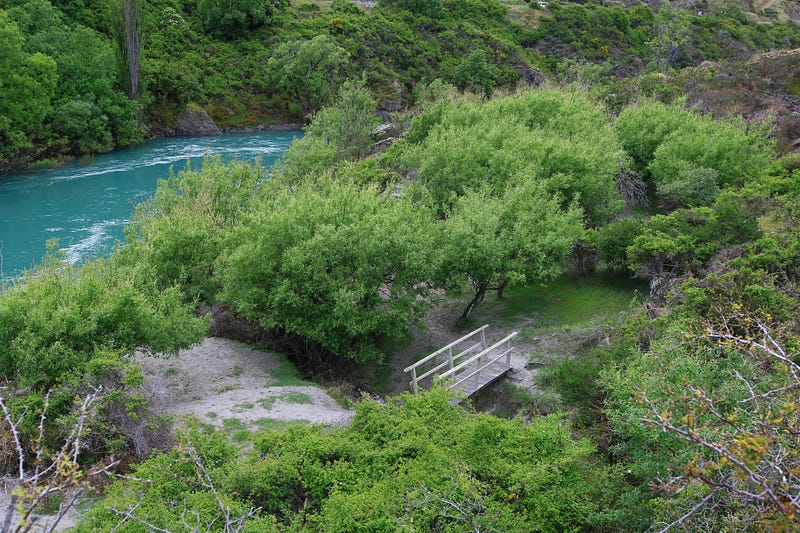
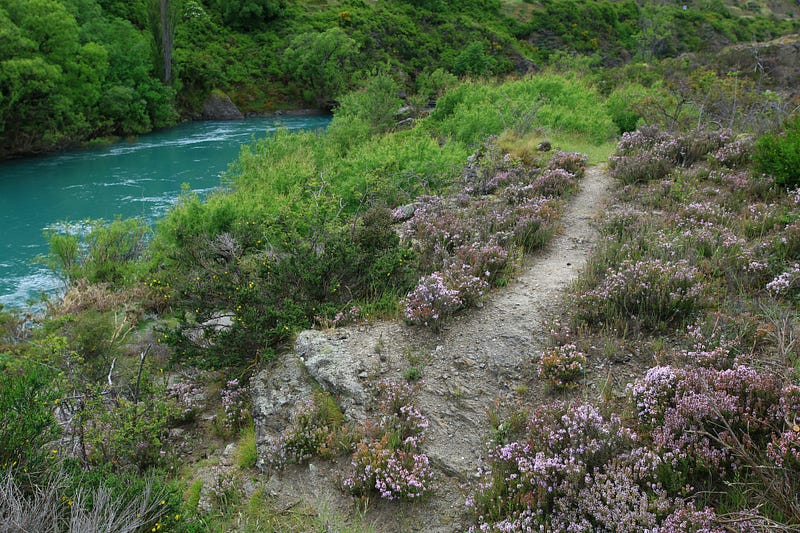
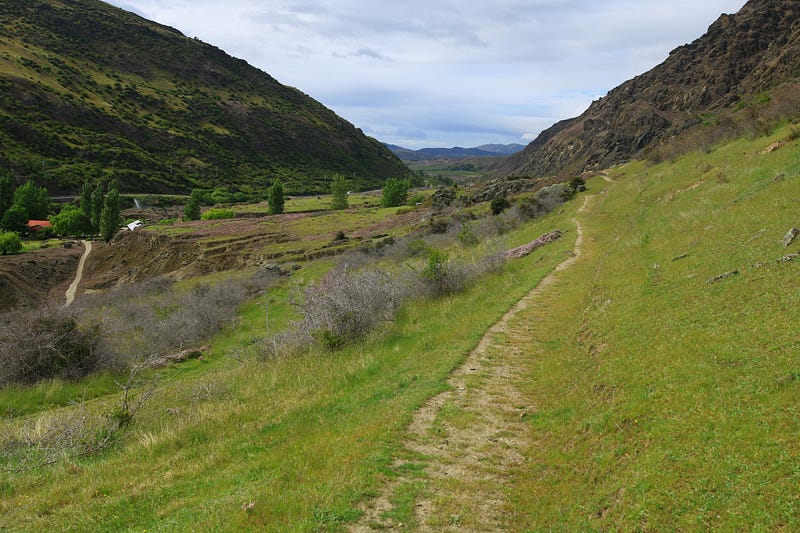
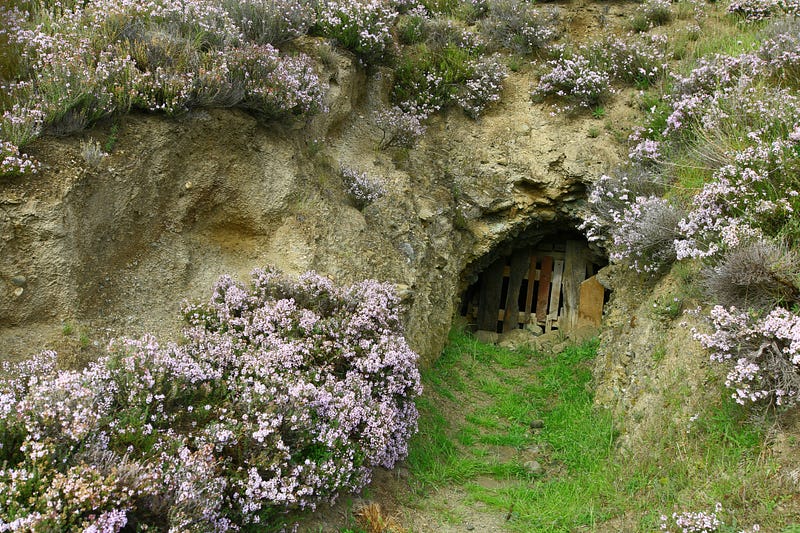
More basic shelters are proof of how these early settlers and gold miners lived in the area. Most had housing in the village below but some stayed up in the mining fields in rock shelters on site.
But before humans were home to these natural shelters, a large bird species named moa possibly housed in there until hunted to extinction by the local population, the Māori.
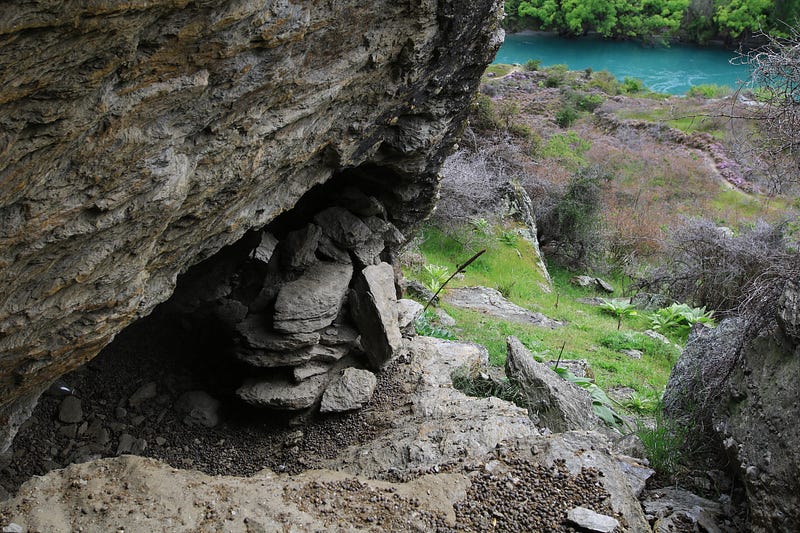
A few tunnels and holes in the mountain were spread across the mountain slopes showing how and where the miners got deeper gold out of the soil.
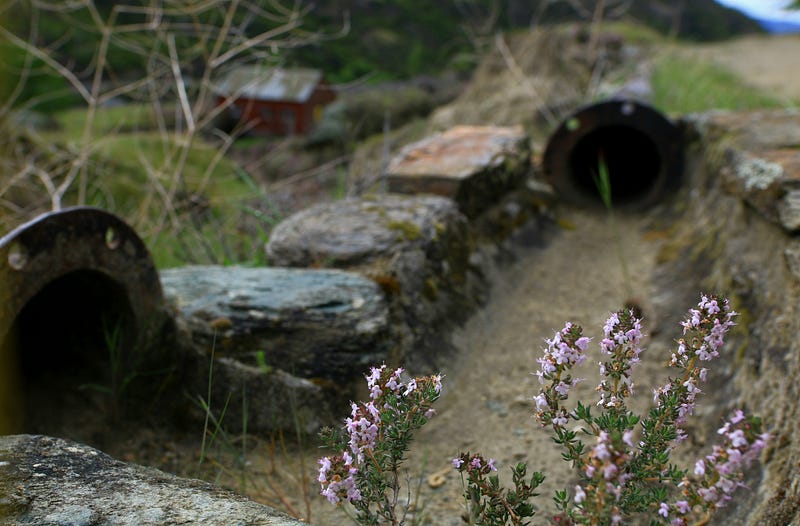
Also, they had complex water piping systems feeding their machines across the slopes.
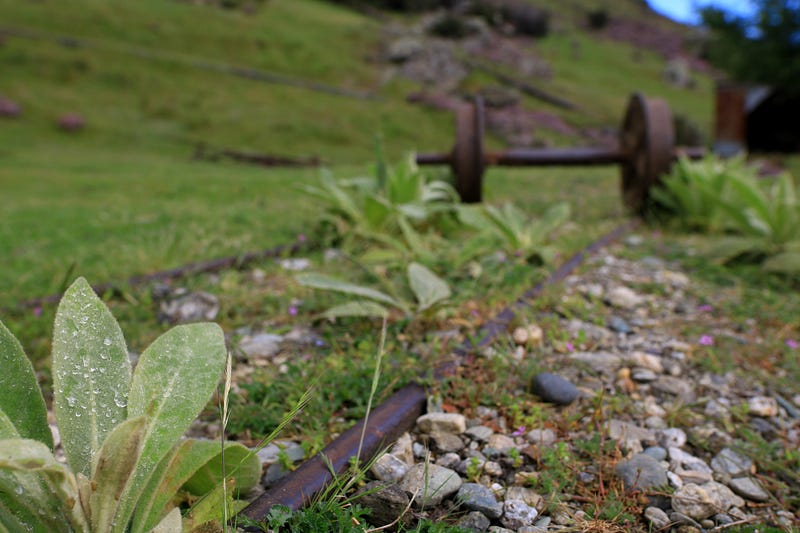
The rain had stopped and even some blue sky was visible above me as I reached back the reception area where Christoph, the local guide greeted an Australian couple and myself for the very private tour.
I learned more about the how, when and what of gold mining. It was actually quite interesting to see how all the machinery works and see the power of the water hose we were allowed to switch on and point at the slope.
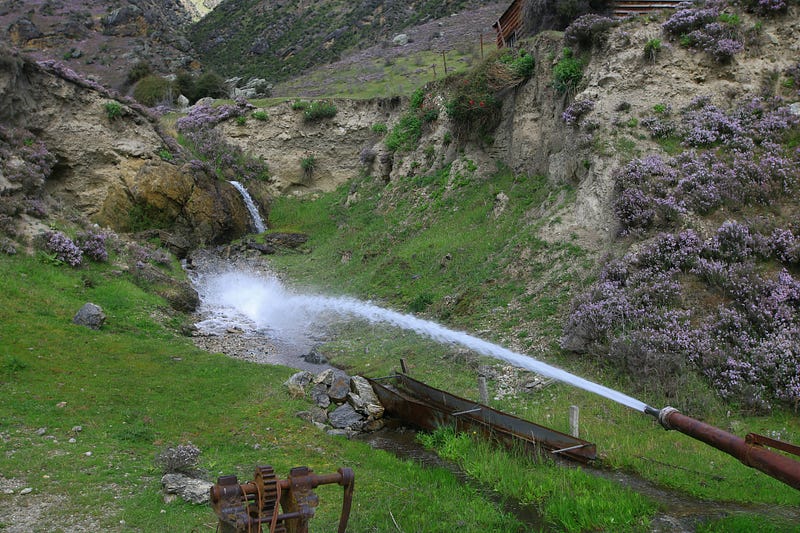
Finishing off the tour, the guide took us down to the gold panning site where we were instructed to put some gravel on our pans and rinse them out until the tiniest of tiny flakes of gold appeared at the bottom.
I did the process twice and didn’t even bother collecting the tiny pieces of shining gold. For me, it was more about the process of gold mining and learning what work these guys used to do than bringing home a flake of gold in a glass jar.
I was the first one to leave the gold panning site with an aching back and no more patience left for staring at gravel just when the guide was chatting me up asking what I was doing in the area and if I was a geologist.
Certainly not! I got a job a little more thrilling or as he commented “you must have nerves made of steel”. Maybe. That’s one way to look at it.
Walking back across the bridge and arriving at the car park I noticed how the hours had flown by while I was on the gold mining site and texted David asking how he was doing and if he was keen on joining me for the afternoon trip.
Backtracking home for lunch, we then headed both out again aiming for the Bannockburn Sluicings I had read about following Tim Ward’s New Zealand adventures.
If I was making this a day dedicated to all gold mining in the country, I was going all in. While there are several historic gold mining sites on the South Island, each of the reserves focuses on a slightly different aspect of the subject making it interesting to visit all or at least a few of them.
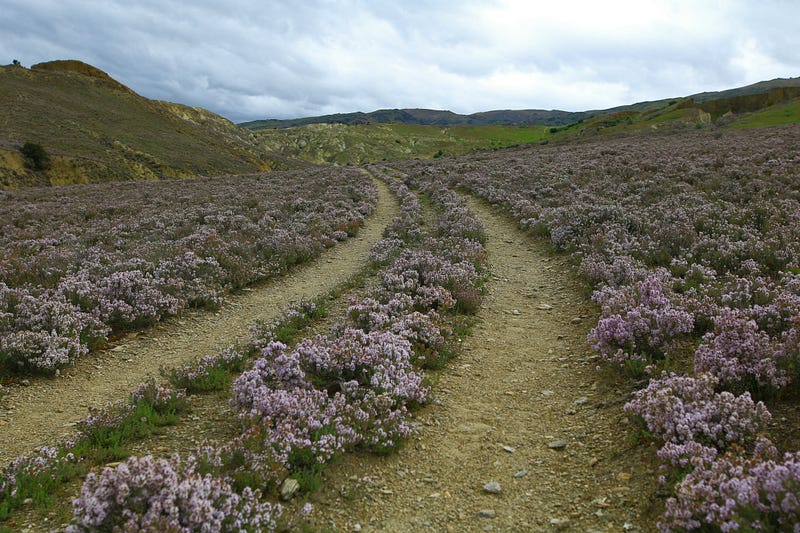
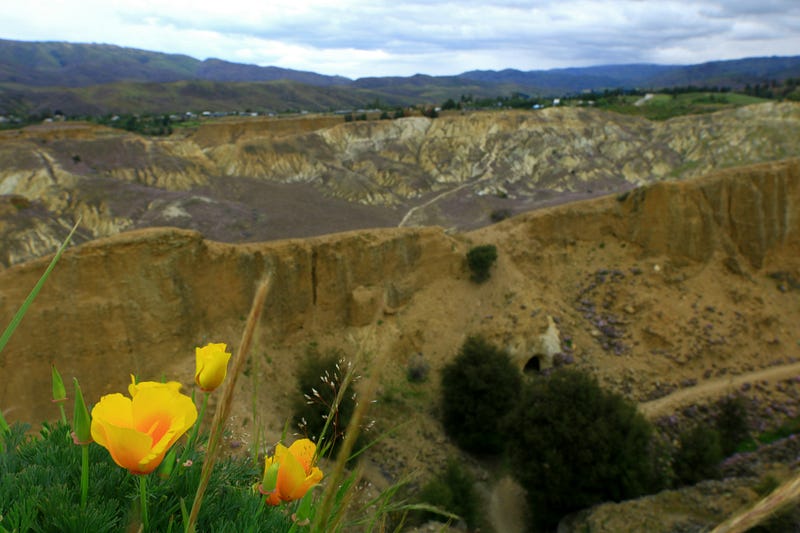
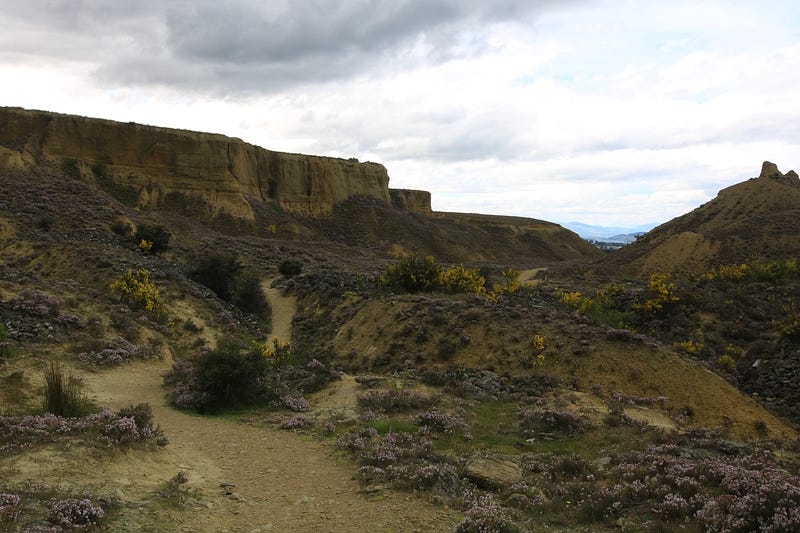
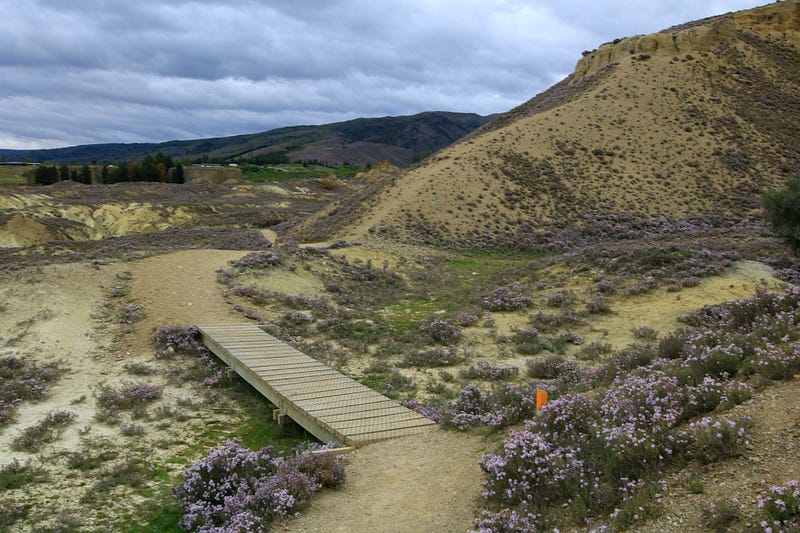
Arriving at the car park and looking at the deformed landscape due to the mining we saw nothing but a slope covered in purple. As we began our way up, we noticed a woman in the field picking the flowers.
Just as David was wondering if we were walking in a field of wild thyme I said I didn’t smell anything when I brought my nose to the flower heads but picked a leave and rubbed my fingers.
Wow, what an intense smell which is apparently only being freed upon touch.
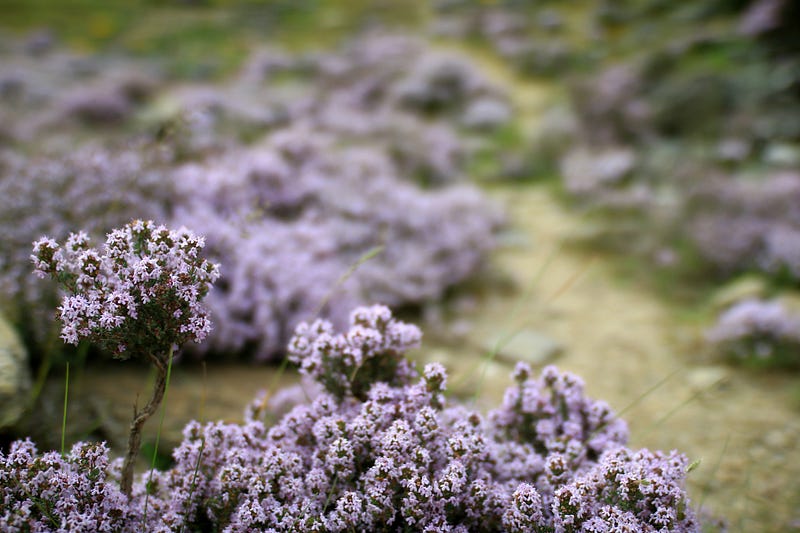
The wild thyme entered New Zealand on an unexpected note but is now characteristic of the landscape of Central Otago during springtime and summer.
“Thyme was introduced into Central in the 1800s by a French gold miner. It then escaped his garden, and as livestock didn’t like the taste, it spread without challenge - resulting in the fields of thyme you see in spring and early summer today.” — wilddispensary.co.nz
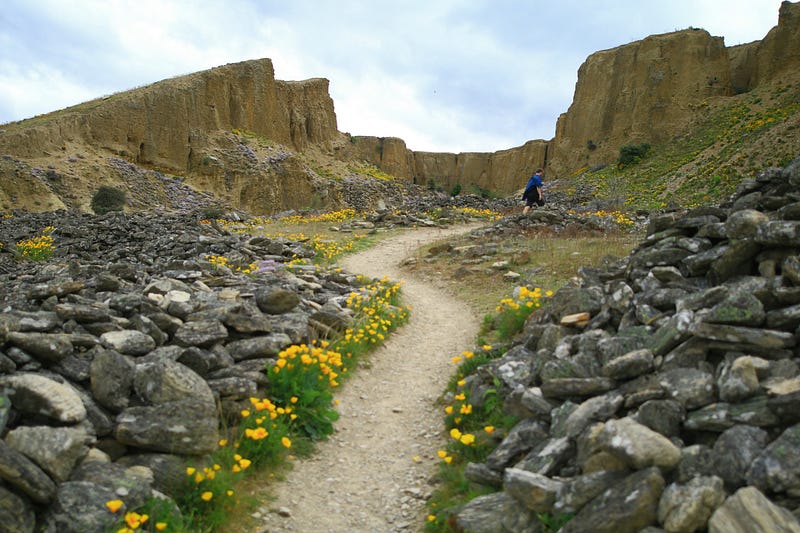
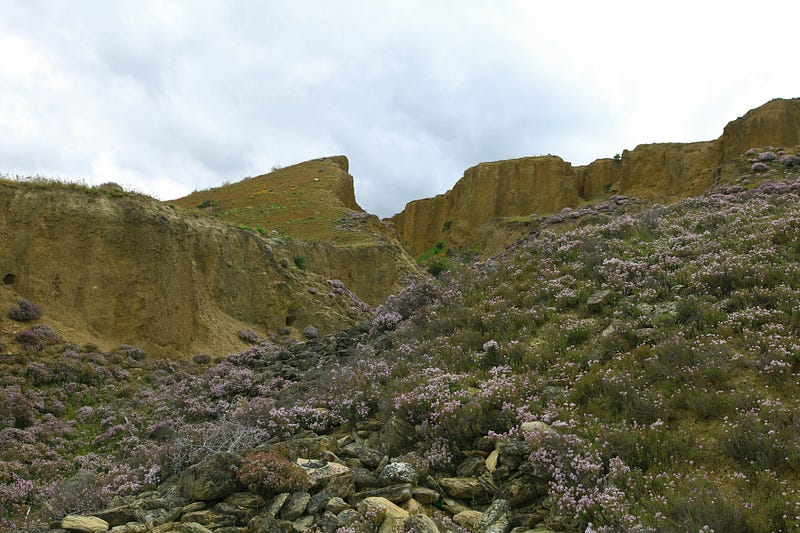
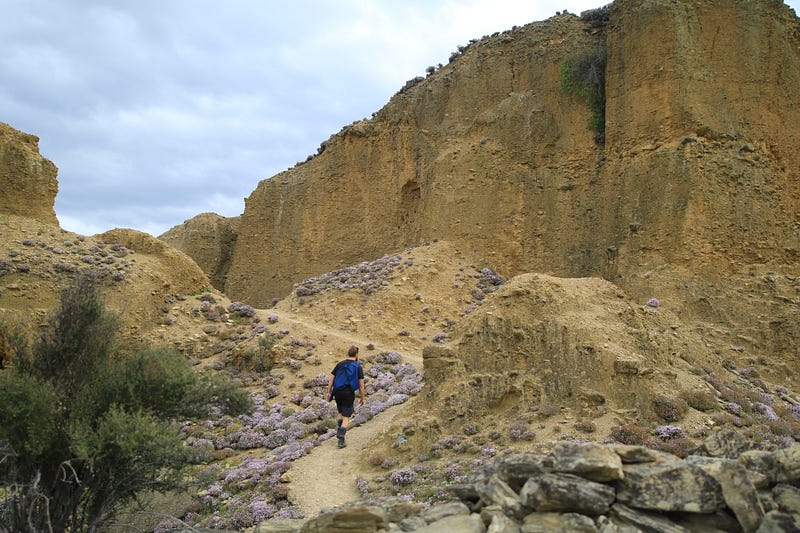
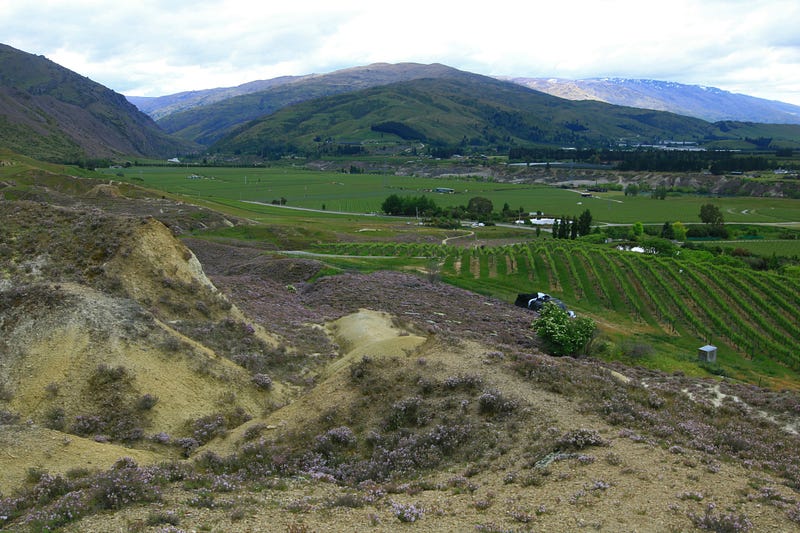
These landscapes altered beyond recognition through the mining are now showcasing deep valleys and canyons. The earth’s surface from the time before the rush can still be seen and is mostly used up by vineyards of surrounding farms.
Also, next to the invasive but healthy and beneficial wild thyme, another intruder was mixing on the slopes creating a wonderful contrast in colors.
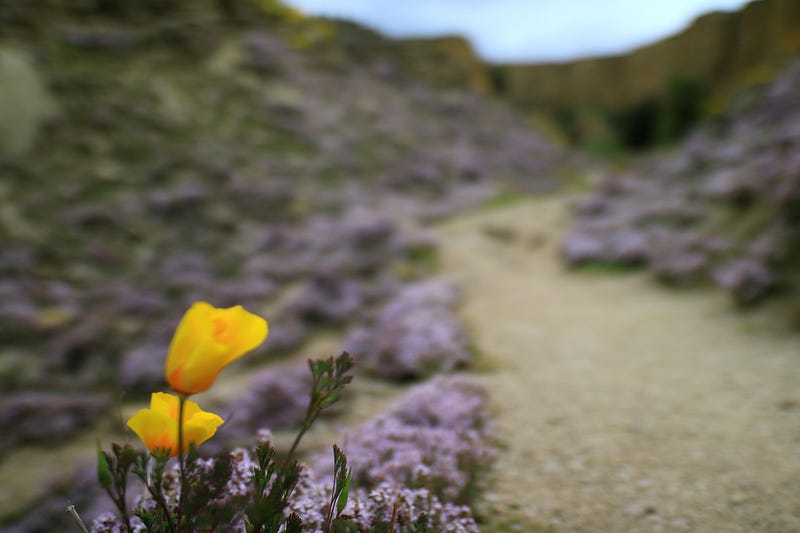
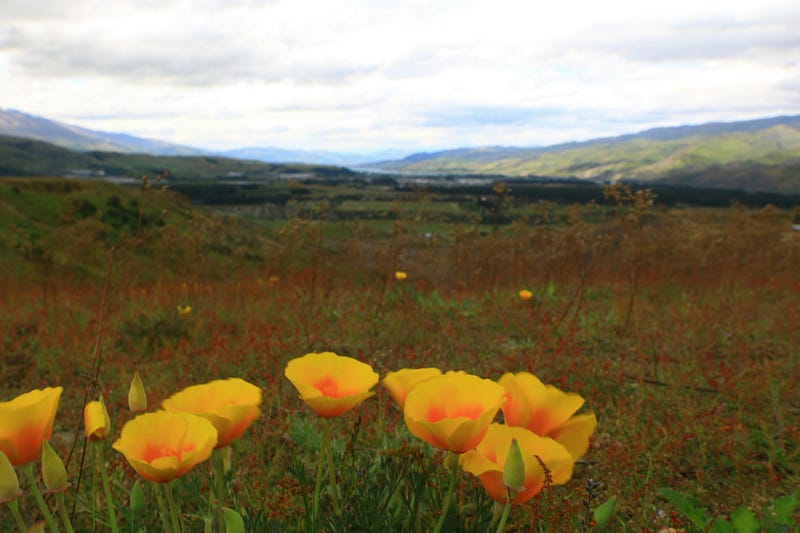
The California Poppies I had captured just a day before were blooming not as in abundance as on the other field but still widely spread across this landscape.
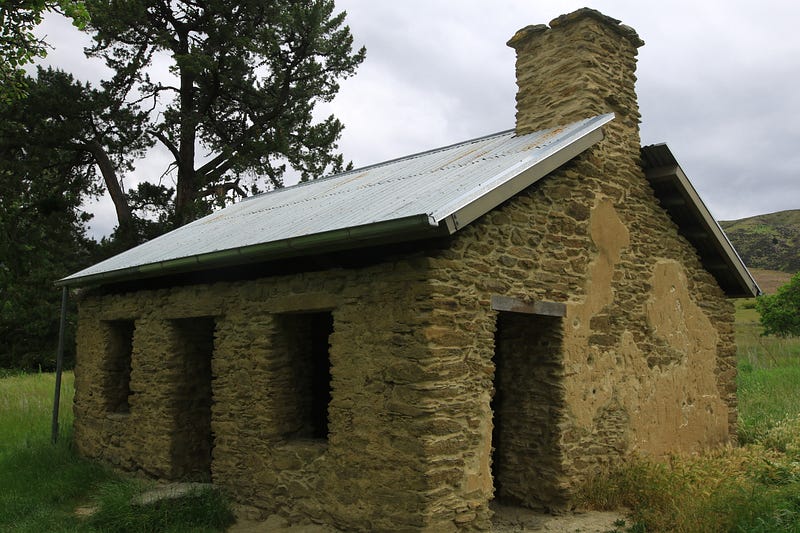
An old building was focusing on Stewart Town, the large dam feeding the miners with enough water for their work and women living at the Bannockburn Sluicings.
“Women are rarely mentioned in mining commentary yet, in 1878, 75 children were enrolled at Bannockburn School. If live was difficult for miners, it was a larger struggle for their wives.” — Department of Conservation
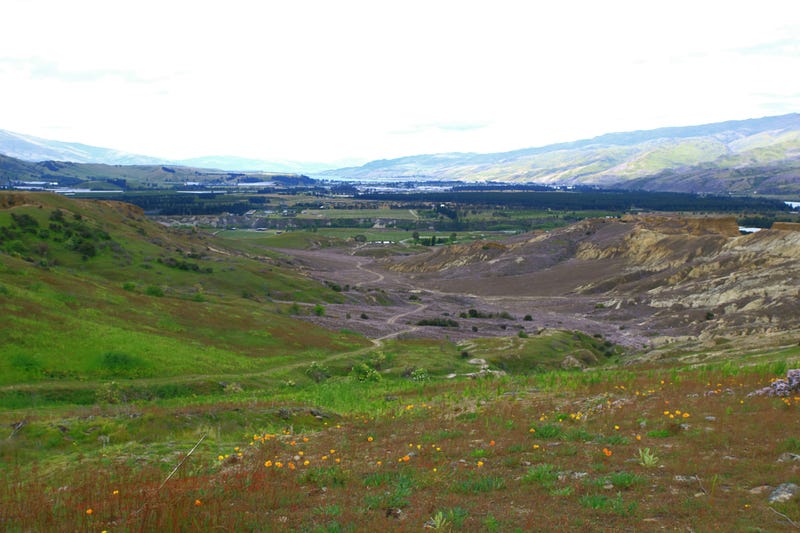
Following the loop trail around the sluicings we were offered spectacular views across the purple-shining valley of wild thyme and beyond up to Lake Dunstan.
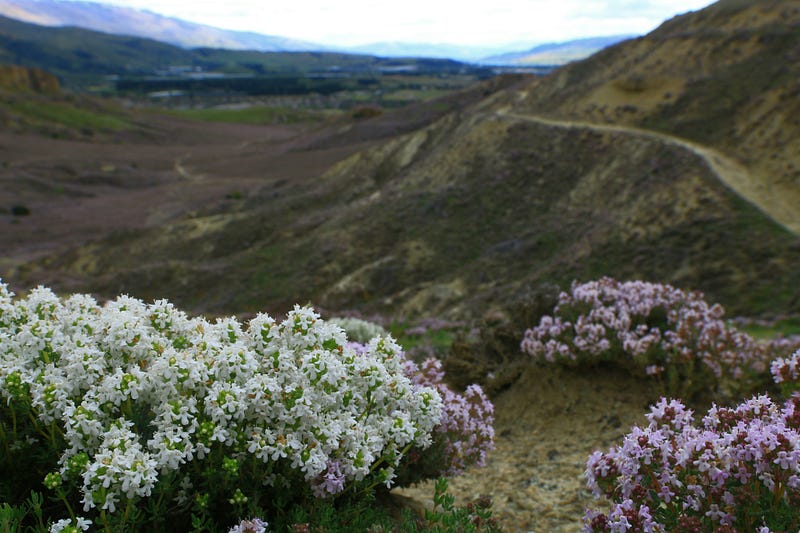
It was here we bent down to pick some wild thyme as a spice for the night's lamb steak and where we discovered there was also white thyme in between all the purple.
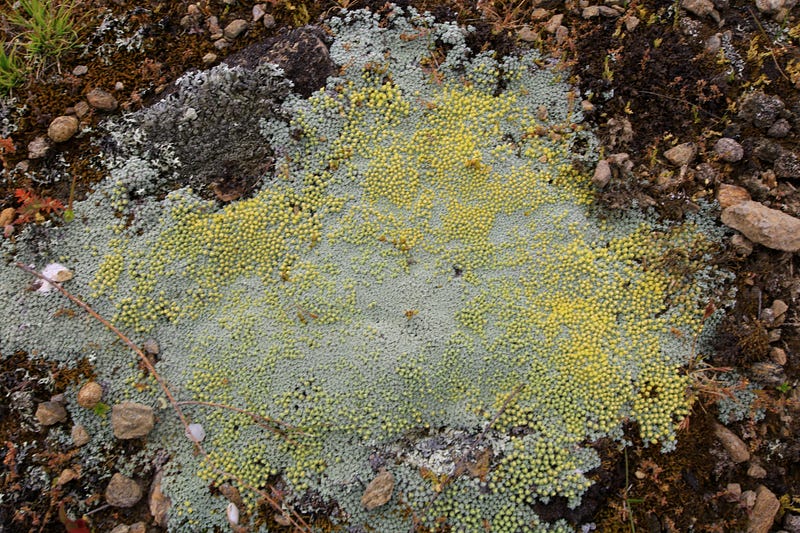
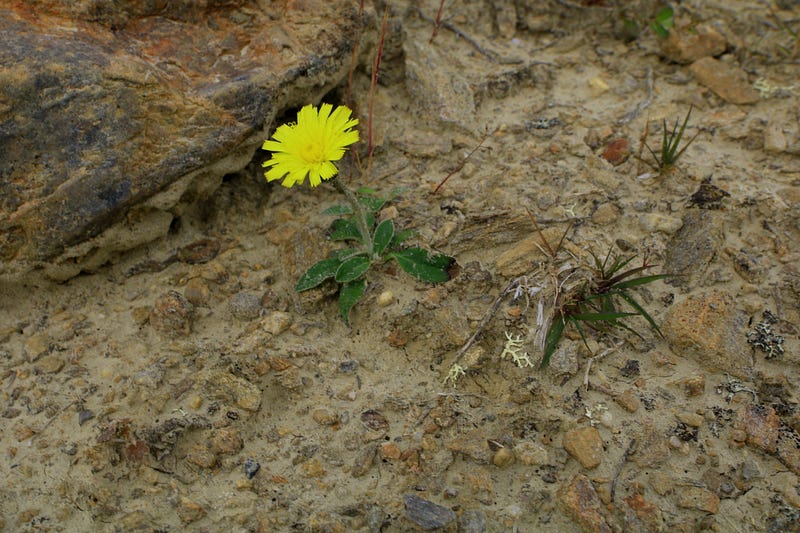
The blooming lichens that caught my attention the day before still had me wondering about its background. Upon further research, I learned about the symbiotic partnership of a fungus and an alga forming the lichens which are apparently non-flowering plants.
So what are those yellow ‘flowers’ then? Also, I couldn’t zoom further into the picture as I would be in need of a macro lens. If anyone knows something about this plant or lichen, I’d be thrilled to hear about it.
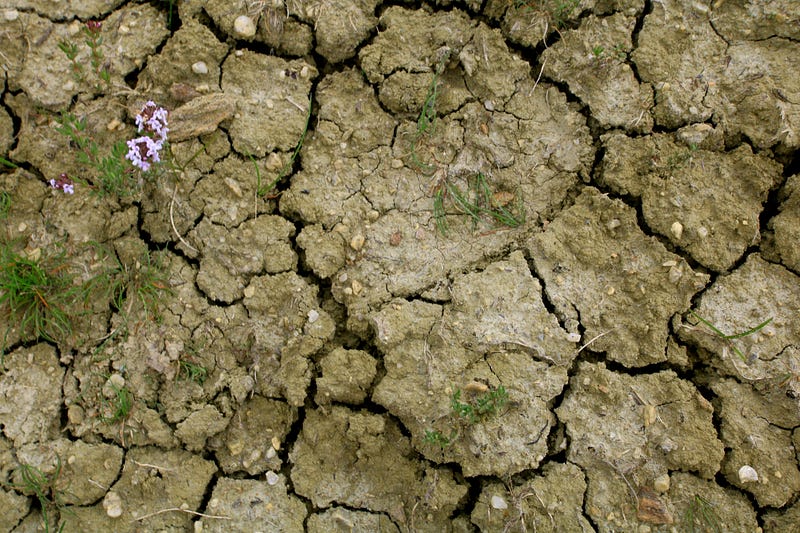
Being located in the rain shadow of the Southern Alps, this region is known to be rather arid and too dry for most vegetation which is why there is so much water irrigation to be found among the vineyards, orchards and grass-feeding meadows.
Finishing off this already lengthy article, I will leave you with some views of our return track.
If you’re interested in my New Zealand adventures, subscribe to my newsletter to stay updated or check in on my new list regularly.
Join my email list here if you would like to read more photo essays.
Shutterstock | Instagram | YouTube | Mailchimp | Amazon | Redbubble