Mature Flâneur Down Under
Of Gold and Grapes in New Zealand’s Otago Valley
The beautiful wasteland of the Bannockburn sluicings
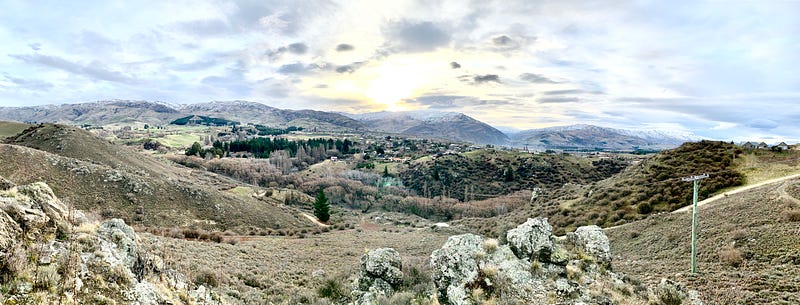
Gold — how it has shaped our hearts and our world!
From New Zealand’s Otago Peninsula in the South Island, Teresa (my ever-intrepid, perpetually adorable spouse) and I travelled into the vast emptiness of central Otago, towards Bannockburn, a little village in the Otago Valley just an hour east of Queenstown. We were headed there because we simply had not had enough of Otago wineries, and there are 133 of them in this region.
The journey through central Otago was like driving through Wyoming: endless valleys of winter-blond grass and grizzled, scrub-covered hills with snow on the tops of them. A cold wind was blowing. The settlements here are few and far between — small and rough sheep farm towns that have only dwindled in size since the days of the gold rush.
The Otago gold rush of the 1860s was the biggest in New Zealand. Some 18,000 men hoping to strike it rich flooded the interior. They came inland from along the coast, but also from overseas, from England, Scotland, California — even China. It took them weeks of travel through the mud roads with horses and wagons. When they arrived at one of Otago’s 80 different gold fields, they pitched their tents, sorted out their supplies and whatever claim they had staked. Then they got to work.
I had my own naïve notions about what gold mining must have been like — washing and sifting gravel from a riverbed with a tin pan with holes in the bottom, then plucking out the nuggets. But that of course is not how one seriously searches for alluvial gold. The reality is, you have to break up a mountain into tiny bits, first. What does it look like, when two thousand gold-hungry men set about to sift through a single mountainside? At Bannockburn, it looks like this:
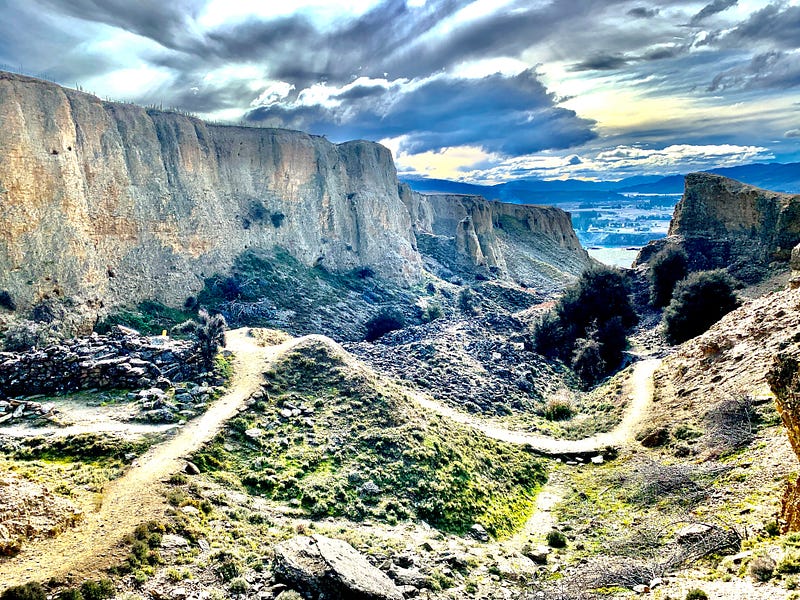
The cliff top to the left of the valley (above) was “ground level” of what was once a smooth hillside of the Carrick Mountain Range called the “Carrick Fan”. All the land beneath the cliff was mined away in just five years or so during the search for gold — and this is only a small part of the “Bannockburn Sluicings”:
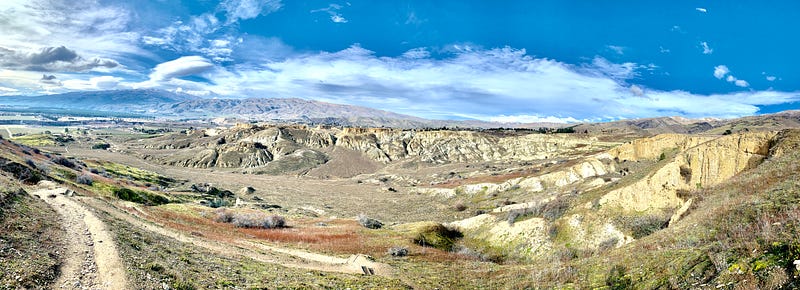
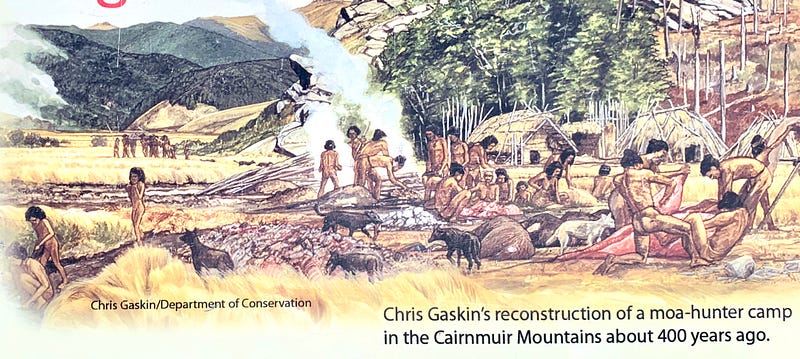
The challenge for the gold hunters was that the geological forces that formed these hills deposited most of the gold in a layer between gravels and sediments. The miners couldn’t simply tunnel in, they had to wash away the whole hillsides with hydraulic hoses to get at the gravel, and then painstakingly sift through it for the heavier particles of gold. The whole process was beautifully explained through as series of placards in the hiking trails that ran through the sluicings:
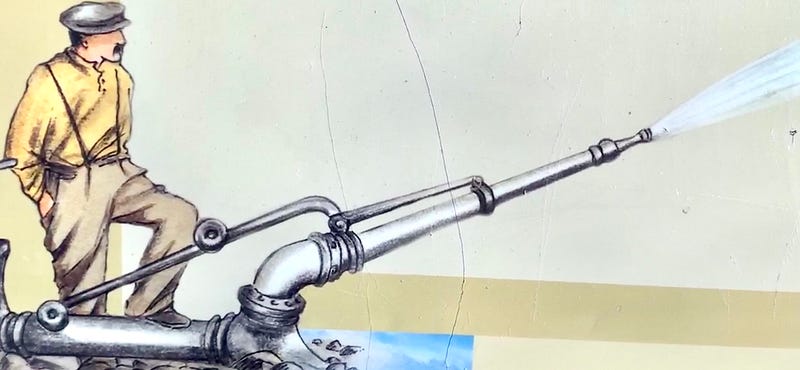
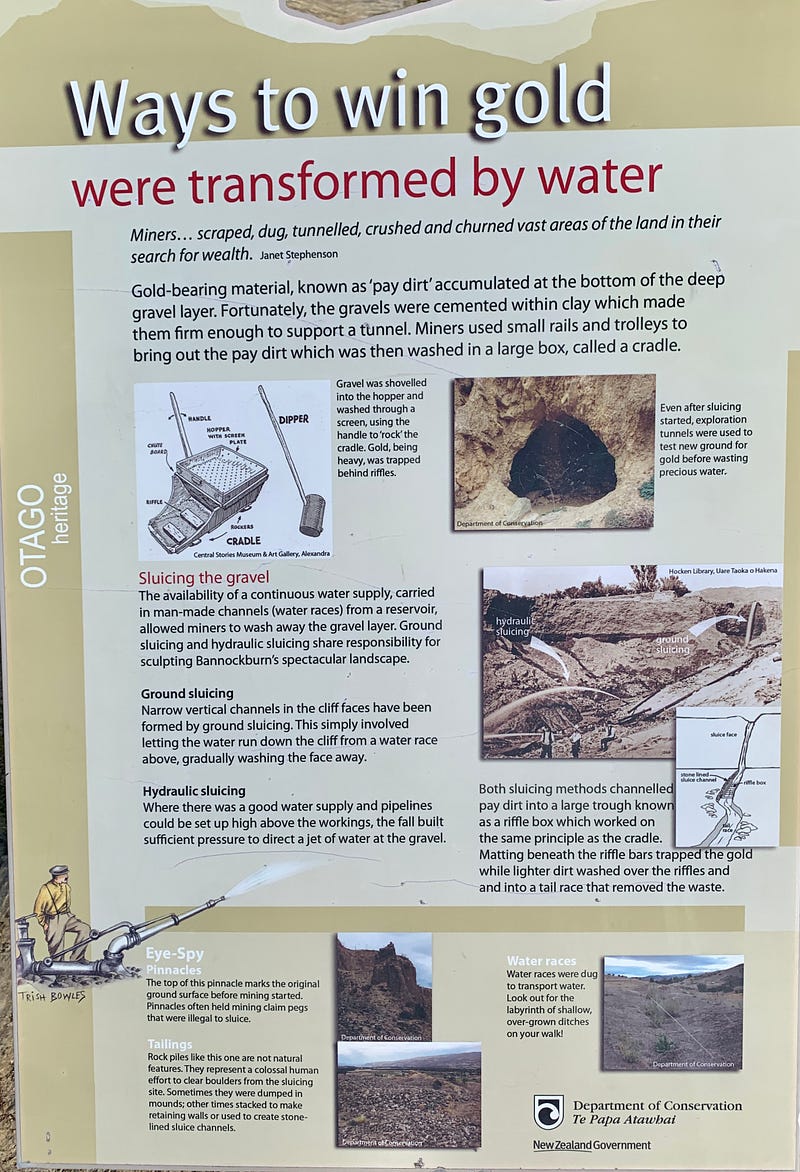
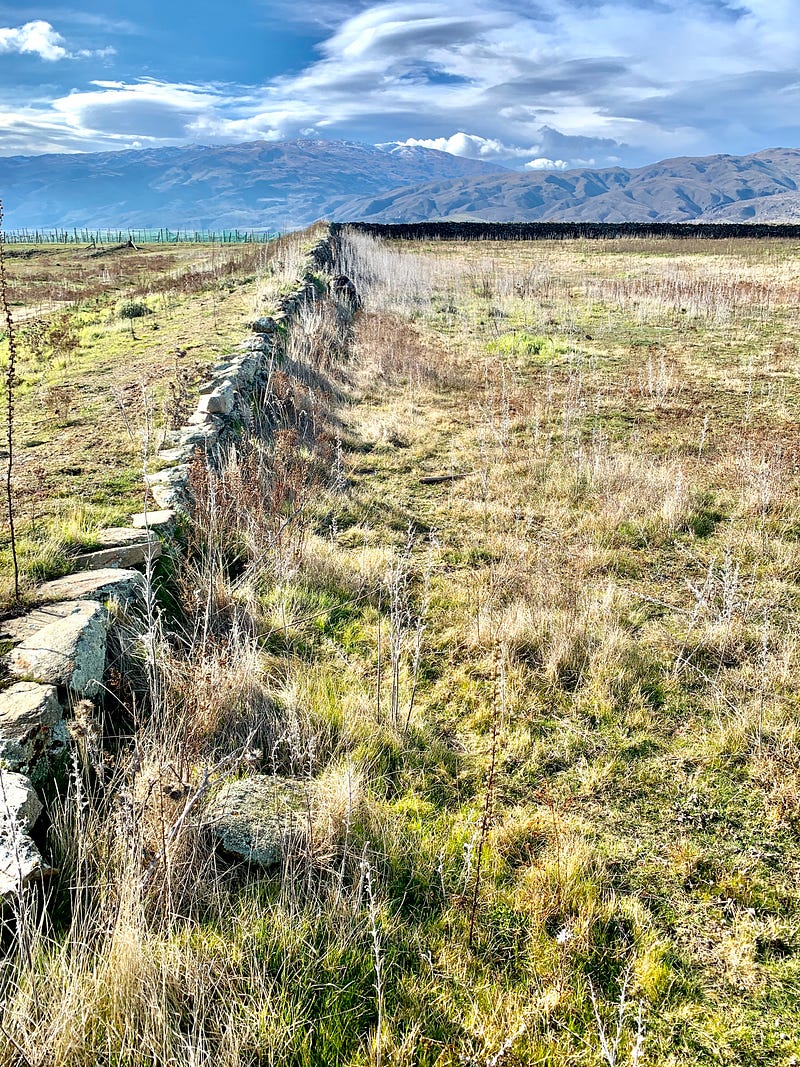
To run the hoses one needed plenty of water. This was one of the big challenges of mining in Bannockburn, for the area is in the ‘rainshadow’ of the Southern Alps. In fact, when Teresa and I drove into Bannockburn, we passed a road sign that read “Welcome to the Desert.” A few streams ran through the valley, but not enough to meet the miners’ demand. Rock channels were built through the sluicings to direct water into reservoirs that could feed the hoses. On my hike, I found the remains of one of these reservoirs, together with a sign that explained how the two brothers who built it made their fortunes not by mining, but by selling the water from their reservoir to the miners.
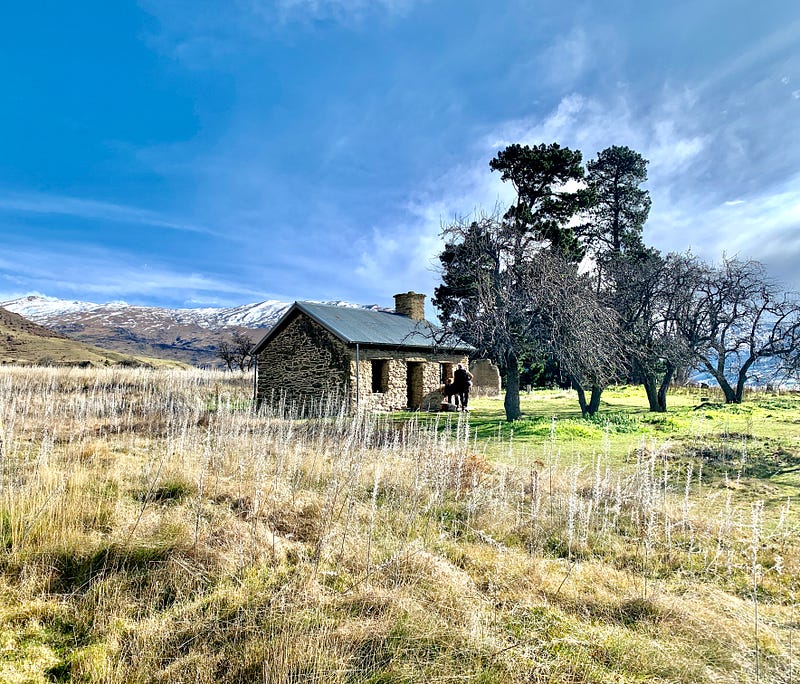
It was weird to walk through this man-made canyon. It was so beautiful, and yet so ugly to think of this land literally ripped apart just to get at the gold. The various history museums Teresa and I have visited around the South Island make it clear that gold mining was a hard life for the miners, and for the women who married them (and raised their children in the camps) — not to mention those who worked in the brothels in mining towns. It made me wonder how many of the countless thousands who came here to get rich actually fulfilled that dream.
I sifted the Internet, panning for answers, but came up with no definitive numbers. A Radio New Zealand show about the Otago gold rush did say that most NZ miners never struck it rich. Many others perished en route to the gold fields. And the ones who did find gold, well, according to the show, many had dreams of buying their own farm, while others had failed in business, and destitute, came to the gold fields because there was no better option. Those who found gold spent their money as you might expect: “They dressed like pirates in high boots, tight velvet trousers and loose shirts — often dyed red, pale yellow or blue. They accessorised with silk, sashes, gold rings and watch chains…”
The RNZ show also explained that while many of the miners came from Europe and North America, there were also Māori miners; they often worked in tribal units, not as individual prospectors. Thousands more came from China — resulting in a rise in anti-Chinese prejudice among the New Zealanders of European descent.
All told, the Otago gold rush was the richest in New Zealand, yielding some 195 tons — about twice as much gold as the famous Klondike. Of course, there’s no telling how much more was smuggled out of the country to avoid taxes. Walking through this ruined hillside, it’s easy to question whether or not it was worth it. But the real impact of gold for New Zealand was not in the metal extracted. Gold opened up the interior of the country, built towns, communities, schools. It created a dynamic economy in the coastal cities that supplied the miners, and those cities — Dunedin, Invercargill — are still thriving in the 21st century, without any dependence on gold.
It surprised me to learn there is one gold mine operating in the Bannockburn area today. There was still some gold in the ground when the boom subsided and the miners moved on. But what remained was harder to wrest from the rock until modern methods were developed in the early 20th century. These basically involved crushing massive amounts of raw ore and then bathing it in cyanide to leach out molecules of gold. Such a mine processes hundreds of tons of raw rock a day to extract about an ounce-and-a-half of gold per ton. It costs roughly 75% as much to produce the gold as the value of the gold itself. The Bannockburn mine went bankrupt in the 1990s but has been bought by an Australian firm that plans to restart it…sometime. When the price of gold is high enough, I suppose.
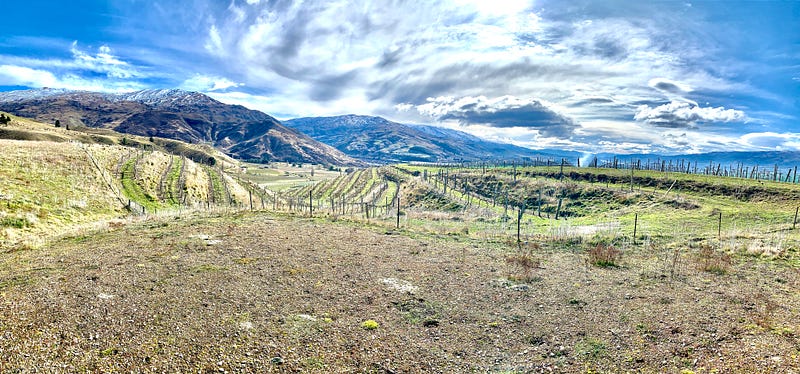
For now, grape is the new gold in Otago, and indeed, the current rush to sluice the juice reminds me of the gold rush days. Otago is the furthest-south wine region in the entire world. So many small wineries have sprung up on these dry hills, they have changed the landscape in their own way. Teresa and I wanted to visit some of these wineries, but with 133 to choose from, we didn’t have a clue where to start. Luckily, our B&B owner, Jules, had worked as a wine agent, and she recommended two outstanding wineries to us.
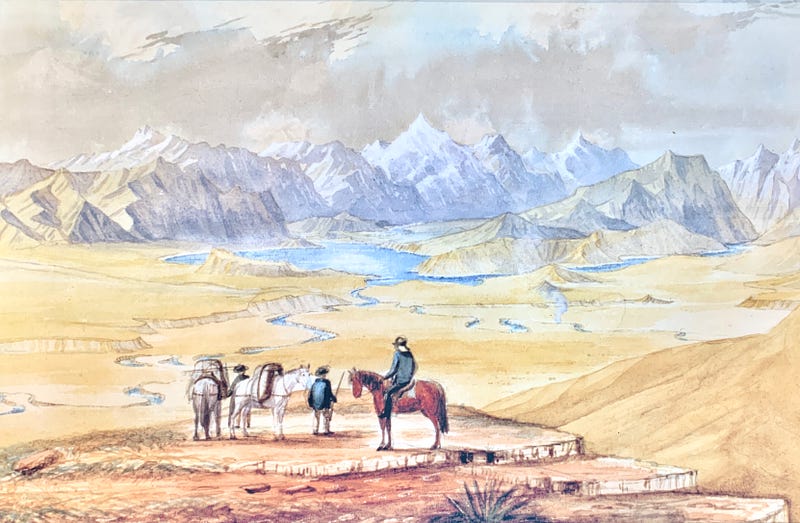
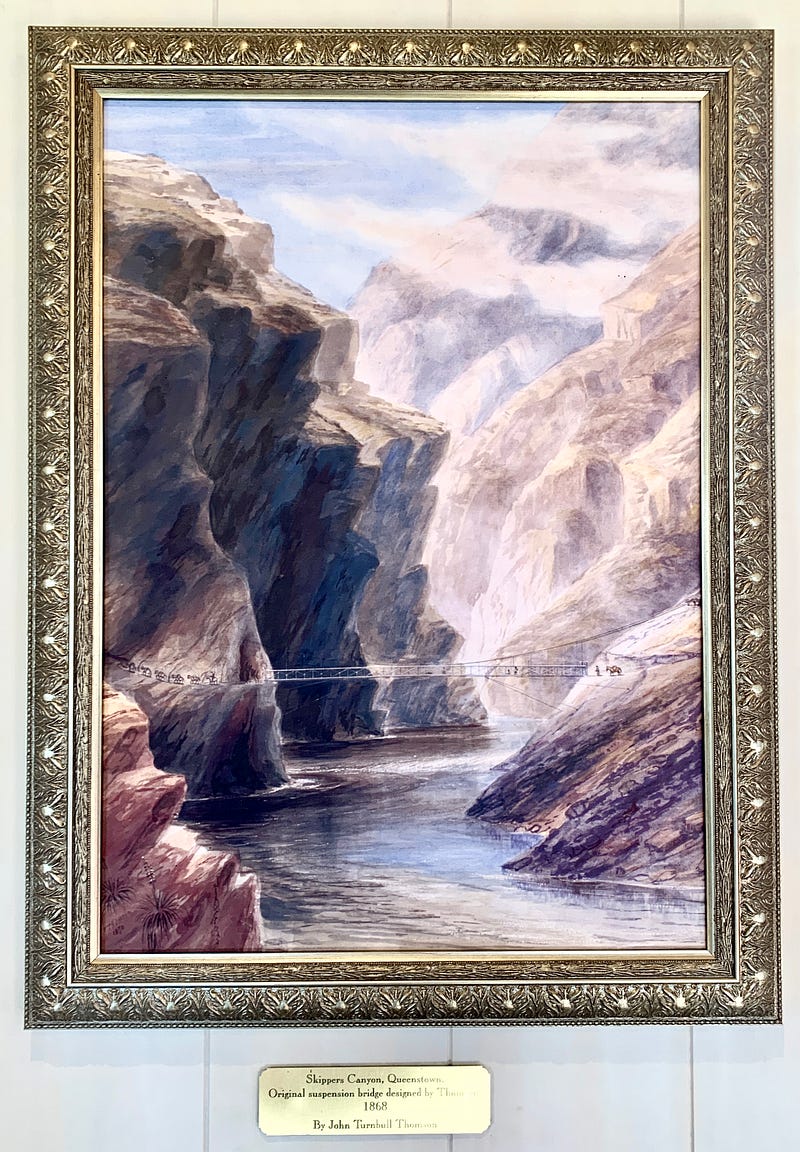
The first of them, Domaine Thomson, is owned by the great-great-grandson of John Turnbull Thomson, known as “Surveyor Thomson.” Thomson explored and mapped Central Otago in the 1850’s. He was also a painter, and the walls of the winery’s tasting room are adorned with his works that show what the region looked like in the decades before gold, and the mad rush that transformed the land:
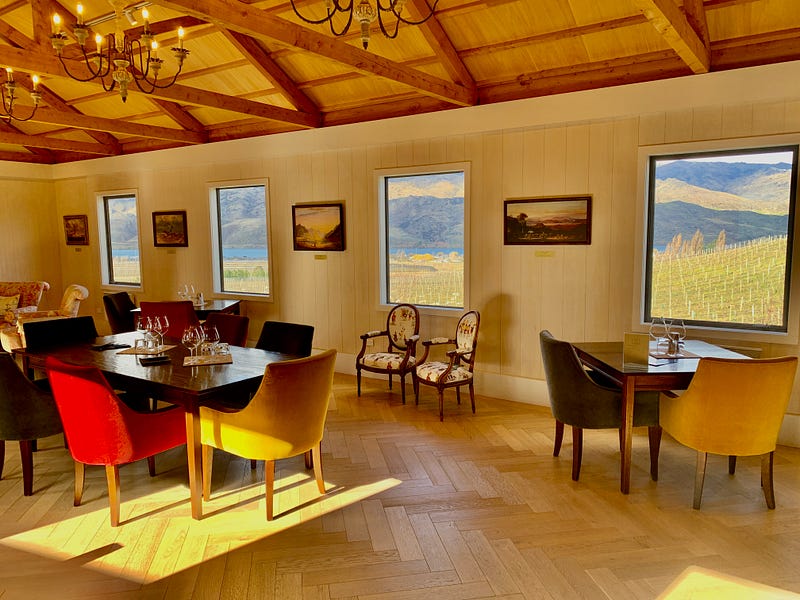
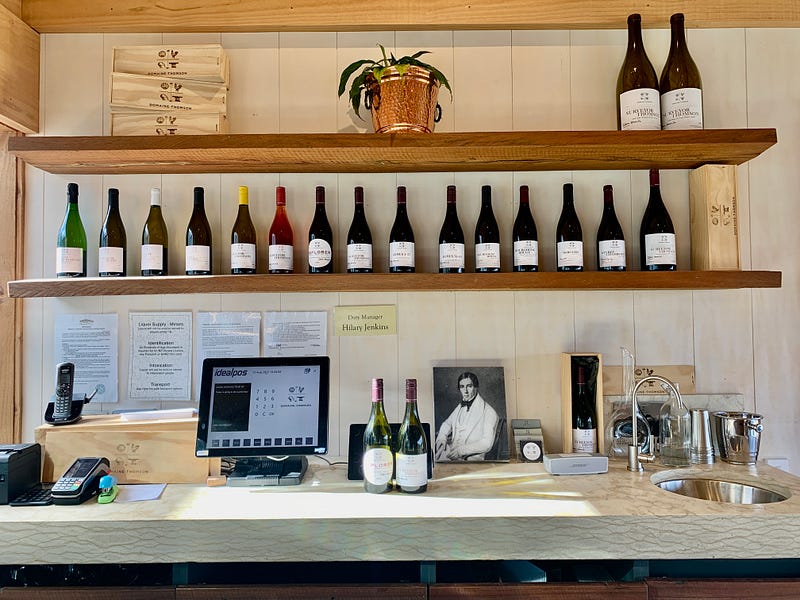
Domaine Thomson’s wines were the best we tasted in Otago. Pinot Noir grapes — the region’s specialty — love a dry climate, and the schist-filled soil gives the resulting wine a distinct earthy flavor you won’t find in France or California. I asked the friendly fellow who poured our glasses in the tasting room, what it takes for a winery to stand out in Otago when there is so much competition. “A good wine maker,” he replied. There are a few in the region who move about from winery to winery, and they tend to win the gold medals for the wineries they work for.
Maybe it’s just my prejudice, but wineries seem a much more palatable way for humans to live on the land. Extracting a good vintage requires care for the soil and the environment, whereas crushing tons of rock and soaking it in cyanide to extract gold — doesn’t. I’d rather discover a gold-medal Pinot than a piece of gold metal any day.
Good news! My new book, Mature Flâneur: Slow Travel through Portugal, France, Italy and Norway is now available! Please check it out here: