avatarAvi Kotzer

Free AI web copilot to create summaries, insights and extended knowledge, download it at here

4064

Abstract

eadmedium.com/v2/resize:fit:800/1*H5vd1RPBhPEhjG51QkU5Cg.png"><figcaption>Credit: eraotraepoca.blogspot.com</figcaption></figure><p id="f219">This package contained two small wafers with coconut creme filling. They were delicious! They still are, but now they’re made by Nestle, which bought the Venezuelan chocolate and candy manufacturer Savoy in 1998. So, as far as I’m concerned, the 20th-century <b>Cocosette</b> (pronounced coh-coh-SEH-tay) was better.</p><p id="b538">Anyway, back to <i>palmito</i>. As far as I was concerned, it was better to keep the palm tree alive so it could produce coconuts year after year instead of killing it to get its “heart”. To make things worse, I misunderstood my dad’s explanation and thought that a single can of <i>palmito</i> was an entire heart of palm.</p><p id="2d22">In other words, every can of <i>palmito</i> represented a dead tree. And there were thousands upon thousands of cans in supermarkets, grocery stores, and restaurants. The avocado and heart of palm salad was a very common starter dish at many Venezuelan eateries.</p><p id="cdf1">And yet… that avocado and <i>palmito</i> salad was so, so, so very tasty.</p><figure id="53ab"><img src="https://cdn-images-1.readmedium.com/v2/resize:fit:800/0*J8xsfRuIH_-0eBWO.jpg"><figcaption>Credit: <a href="http://lacasitademaribri.blogspot.com">http://lacasitademaribri.blogspot.com</a></figcaption></figure><p id="32e1">Especially doused with some olive oil or dipped in cocktail sauce, known in Venezuela as <i>salsa rosada</i>.</p><p id="b831">I was a kid, so you can’t blame for trying to straddle the best of both worlds: limit my consumption of hearts of palm while hoping that Savoy would find a way to continue making Cocosette.</p><p id="d5db">There was also no internet back then, so I couldn’t perform a cursory search to discover that <i>palmito</i> comes from several types of palm trees that do not bear coconuts: the juçara (<i>Euterpe edulis</i>), the açaí palm (<i>Euterpe oleracea</i>), the palmetto (<i>Sabal</i> spp.), and the peach palm.</p><p id="8e1a">That last one, <i>Bactris gasipaes,</i> is known as <i>chontaduro</i> in Ecuador and Colombia, <i>pupunha</i> in Brazil, and <i>pijiguao</i> in Venezuela. The advantage of using this tree as a heart of palm source is that (1) it’s farmed on a regular basis and (2) one tree can produce dozens of stems that can be harvested for <i>palmito</i>.</p><p id="759f">In other words, the peach palm can live on — for more than 70 years in some cases — and produce not only <i>palmito</i>, but also its fruit:</p><figure id="3fb2"><img src="https://cdn-images-1.readmedium.com/v2/resize:fit:800/0*pgo7jkIw4ULvTWBE.jpg"><figcaption>Credit: wikicommons</figcaption></figure><p id="f745">A word of warning: the fruit needs to be cooked before it can be eaten. Its flavor has been described as squash-like or chestnutty. Vendors across the Americas will stew them in water for around five hours, but 30 minutes in a pressure cooker appears to achieve the same result.</p><p id="cd23">The raw fruit can be used to produce oil and even flour, and some entrepreneurs in Colombia are trying to make palm peach chips a thing:</p><figure id="b512"><img src="https://cdn-images-1.readmedium.com/v2/resize:fit:800/1*Pxz738t9Uxrm7--Hskclmw.png"><figcaption>Credit: zoko.com.co</figcaption></figure><h2 id="713a">Yuccan’t tell the difference?</h2><p id="10fd">Merriam-Webster says that <i>palmito</i> is also what “several yuccas of Mexico and the southwestern U.S.” are called.</p><p id="5f52">Now, when I hear yucca in English, I always make the mistake of thinking of this:</p><figure id="cb75"><img src="https://cdn-images-1.readmedium.com/v2/resize:fit:800/1*GyWqyn0wxN_ixXo8tLXS8A.png"><figcaption>Screenshot collage: Iva Reztok</figcaption></figure><p id="5f72">The above is typically referred to as <i>cassava</i> or <i>manioc</i> in English. In Spanish, it’s called <b>yuca</b>, with only one “c”.</p><p id="2d50">You know who else made a mistake? Carl Linnaeus, that 18th-century Swedish guy who liked

Options

to name plants and animals. The first descriptions of the <b>yucca</b> were confused with those of the <b>yuca</b>, so Linnaeus gave the former the Taíno word for the latter.</p><p id="175d">But what is a yucca exactly? Well, the most famous one is actually an album by U2:</p><figure id="b553"><img src="https://cdn-images-1.readmedium.com/v2/resize:fit:800/0*CUfF1dHVINK9EqHq.png"><figcaption>Credit: wikipedia.com</figcaption></figure><p id="87e7">That’s right, their 1987 release <i>The Joshua Tree</i>. Now, clearly this is not very helpful, since U2 didn’t bother to include the actual tree on the front cover. You have to flip it over, which we can do using that magic of modern technology called screenshotting.</p><figure id="9085"><img src="https://cdn-images-1.readmedium.com/v2/resize:fit:800/1*4JeqAPH0WkZiONkS4-gyAQ.png"><figcaption>Screenshotted by Iva Reztok</figcaption></figure><p id="26ea">The Joshua tree (<i>Yucca brevifolia</i>) is a hardy yucca that grows in the arid deserts of California, Arizona, Utah, and Nevada. The yuccas as a genus are a group of perennial shrubs and trees belonging to the <b>Asparagaceae</b> family, the same family as the asparagus.</p><p id="2835">They are mostly grown as ornamental plants, although many of the species do have edible fruits, flowers, and seeds. Here are a few yuccas:</p><figure id="9050"><img src="https://cdn-images-1.readmedium.com/v2/resize:fit:800/1*JDTFI-vcbPkAvJsAjoqd-g.png"><figcaption>Screenshot collage: Iva Reztok</figcaption></figure><p id="51a5">Yeah, that last one is seeing a specialist about its… flaccidity.</p><p id="7542">All this talk about <i>palmito</i> and <i>yuca</i> have not just made me hungry, but also brought fond memories of my childhood in Caracas, where we would sometimes go to our local rotisserie:</p><figure id="1ea1"><img src="https://cdn-images-1.readmedium.com/v2/resize:fit:800/1*_WroLw7AGyLleapugyztKg.png"><figcaption>Credit: <a href="http://www.degustavenezuela.com/">www.degustavenezuela.com</a></figcaption></figure><p id="4d37">There we would eat grilled meat and blackened chicken with fried or boiled <i>yuca</i> (cassava) as a side dish. Before the main course, however, my dad would order an avocado and <i>palmito</i> salad.</p><p id="f4cf">Which I ate while crossing my fingers in hopes that there were still enough coconut-producing palm trees left in Venezuela.</p><p id="4712">Perhaps the New York Times still thinks harvesting the <i>palmito</i> means killing an entire tree. Maybe that’s why the editors of the Spelling Bee puzzle decided that <i>palmito</i> shall remain a<b> <a href="https://www.merriam-webster.com/words-at-play/dord-a-ghost-word">dord</a>.</b></p><p id="ab60">You can check out my previous entry on another <b>dord </b>here:</p><div id="e8ca" class="link-block"> <a href="https://readmedium.com/ronin-ec346265e022"> <div> <div> <h2>Ronin</h2> <div><h3>A swashbuckling start to another week of words</h3></div> <div><p>medium.com</p></div> </div> <div> <div style="background-image: url(https://miro.readmedium.com/v2/resize:fit:320/1*qFdAkRL6fYKes6EuGSRsqQ.jpeg)"></div> </div> </div> </a> </div><p id="90f7">*What the heck is a <b>dord, </b>you ask? Here’s the answer:</p><div id="cab0" class="link-block"> <a href="https://www.merriam-webster.com/words-at-play/dord-a-ghost-word"> <div> <div> <h2>'Dord': A Ghost Word</h2> <div><h3>One of the questions people like to ask lexicographers is this: Can you sneak something into the dictionary? Can you…</h3></div> <div><p>www.merriam-webster.com</p></div> </div> <div> <div style="background-image: url(https://miro.readmedium.com/v2/resize:fit:320/0*TGw-3vgX8J3WP-eY)"></div> </div> </div> </a> </div></article></body>

Palmito

Heart of palm is not the killer is used to be

Photo by Tim Mossholder on Unsplash

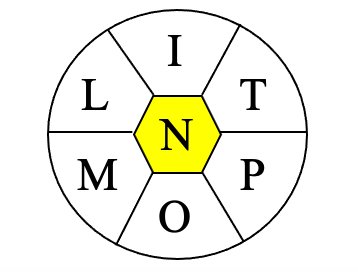
Today’s New York Times Spelling Bee letters:
Art: Iva Reztok

I, L, M, O, P, T, and center A (all words must include A).

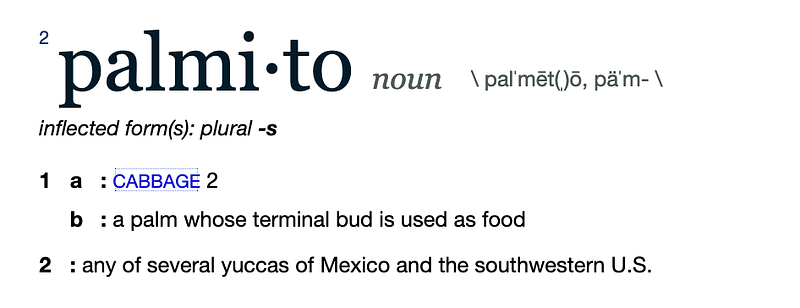
Merriam-Webster says…
Credit: merriam-webster.com

Silly little dictionary! Don’t you know that palmito can’t possibly be a word if the New York Times says it ain’t?

For further fascinating facts, check out the Spelling Bee Master.

What’s your favorite dord* from today’s puzzle?

My Two Cents

In today’s Spelling Bee, the word palmito is a pangram. Or it would be, if the editors of the game had not rejected it. In Spelling Bee lingo, a pangram refers to any word that contains all seven letters of the puzzle at least once. For example, another rejected word, papillomata, is also a pangram in which all seven letters are present, even if some repeat. (That’s allowed.)

It’s frustrating when a “non-word” is a pangram because pangrams are worth at least 14 points by the rule of the game (one point per letter plus a bonus of seven for getting a pangram). I did find today’s pangram, but I’m not spoiling it, in case you’re playing. Okay, a tiny spoiler: there is only one pangram.

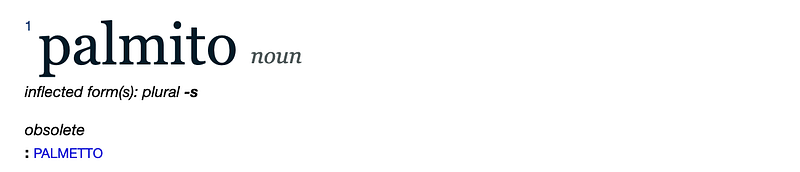
So why did the New York Times reject palmito? Is that because of its reputation as a killer vegetable? Or maybe because the dictionary says the other definition is obscure:
Credit: merriam-webster.com

Okay, I’ll give them that. But we still have two other definitions to contend with: (1) a palm whose terminal bud is used as food (or the terminal bud itself) and (2) any of several yuccas of Mexico and the southwestern U.S.

The heart of the matter

When I was a kid I had intense mixed feelings about eating hearts of palm, or palmitos as we called them in Venezuela. On the one hand, they were delicious — providing they had not been canned underripe.

On the other hand, they terrified me.

You see, my father, a food engineer, had explained to me that palmitos were harvested from the inside of the palm tree. In order to do that, the tree had to be felled. So harvesting palmito meant killing the palm tree. To me, who grew up in the Caribbean, a “palm tree” was necessarily a coconut tree. And although coconut trees do indeed provide hearts of palm, they are not the only types of palms that do so.

For example, another one is the palmetto, which is the obscure definition of palmito I mentioned earlier.

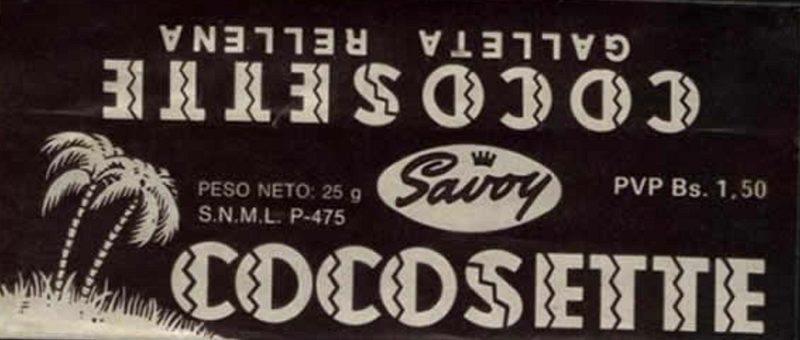
In my mind coconut trees provided coconuts, which I loved for their milk and crunchy meat. And also because coconut was an important ingredient in this wonderful Venezuelan treat:
Credit: eraotraepoca.blogspot.com

This package contained two small wafers with coconut creme filling. They were delicious! They still are, but now they’re made by Nestle, which bought the Venezuelan chocolate and candy manufacturer Savoy in 1998. So, as far as I’m concerned, the 20th-century Cocosette (pronounced coh-coh-SEH-tay) was better.

Anyway, back to palmito. As far as I was concerned, it was better to keep the palm tree alive so it could produce coconuts year after year instead of killing it to get its “heart”. To make things worse, I misunderstood my dad’s explanation and thought that a single can of palmito was an entire heart of palm.

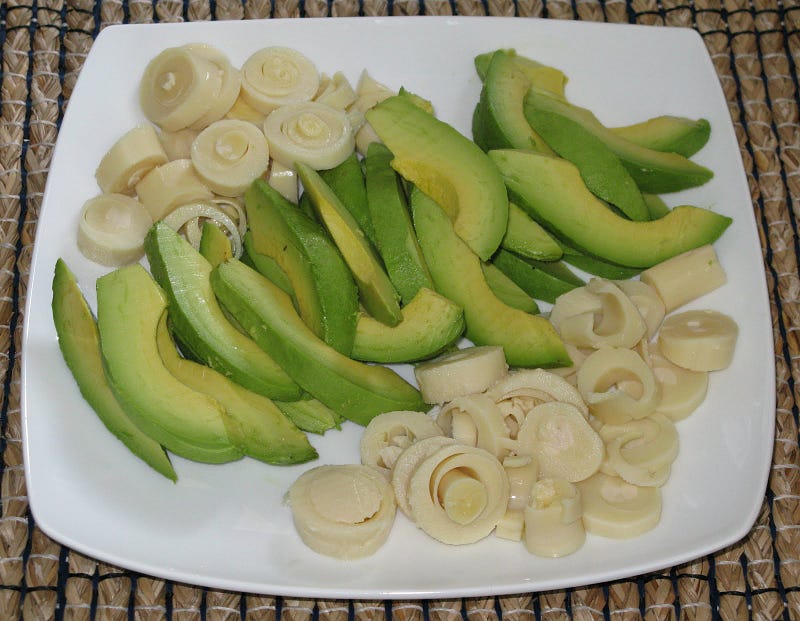
In other words, every can of palmito represented a dead tree. And there were thousands upon thousands of cans in supermarkets, grocery stores, and restaurants. The avocado and heart of palm salad was a very common starter dish at many Venezuelan eateries.

And yet… that avocado and palmito salad was so, so, so very tasty.
Credit: http://lacasitademaribri.blogspot.com

Especially doused with some olive oil or dipped in cocktail sauce, known in Venezuela as salsa rosada.

I was a kid, so you can’t blame for trying to straddle the best of both worlds: limit my consumption of hearts of palm while hoping that Savoy would find a way to continue making Cocosette.

There was also no internet back then, so I couldn’t perform a cursory search to discover that palmito comes from several types of palm trees that do not bear coconuts: the juçara (Euterpe edulis), the açaí palm (Euterpe oleracea), the palmetto (Sabal spp.), and the peach palm.

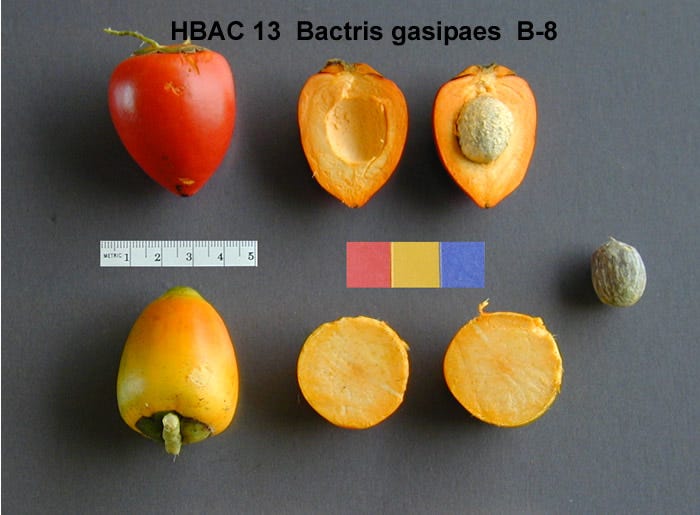
That last one, Bactris gasipaes, is known as chontaduro in Ecuador and Colombia, pupunha in Brazil, and pijiguao in Venezuela. The advantage of using this tree as a heart of palm source is that (1) it’s farmed on a regular basis and (2) one tree can produce dozens of stems that can be harvested for palmito.

In other words, the peach palm can live on — for more than 70 years in some cases — and produce not only palmito, but also its fruit:
Credit: wikicommons

A word of warning: the fruit needs to be cooked before it can be eaten. Its flavor has been described as squash-like or chestnutty. Vendors across the Americas will stew them in water for around five hours, but 30 minutes in a pressure cooker appears to achieve the same result.

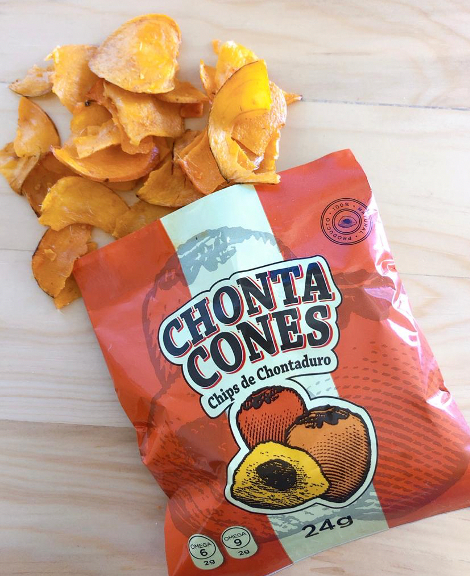
The raw fruit can be used to produce oil and even flour, and some entrepreneurs in Colombia are trying to make palm peach chips a thing:
Credit: zoko.com.co

Yuccan’t tell the difference?

Merriam-Webster says that palmito is also what “several yuccas of Mexico and the southwestern U.S.” are called.

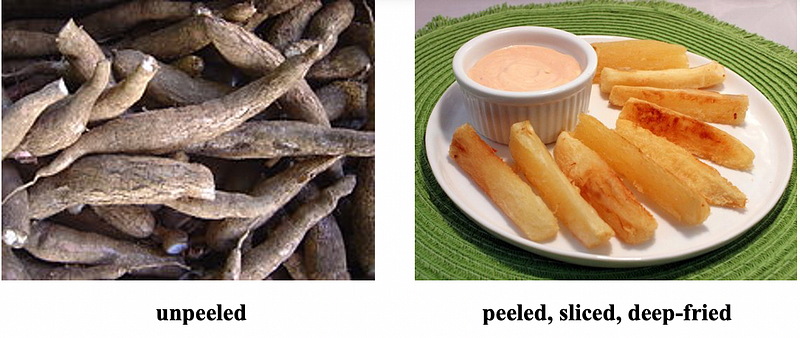
Now, when I hear yucca in English, I always make the mistake of thinking of this:
Screenshot collage: Iva Reztok

The above is typically referred to as cassava or manioc in English. In Spanish, it’s called yuca, with only one “c”.

You know who else made a mistake? Carl Linnaeus, that 18th-century Swedish guy who liked to name plants and animals. The first descriptions of the yucca were confused with those of the yuca, so Linnaeus gave the former the Taíno word for the latter.

But what is a yucca exactly? Well, the most famous one is actually an album by U2:

Credit: wikipedia.com

That’s right, their 1987 release The Joshua Tree. Now, clearly this is not very helpful, since U2 didn’t bother to include the actual tree on the front cover. You have to flip it over, which we can do using that magic of modern technology called screenshotting.

Screenshotted by Iva Reztok

The Joshua tree (Yucca brevifolia) is a hardy yucca that grows in the arid deserts of California, Arizona, Utah, and Nevada. The yuccas as a genus are a group of perennial shrubs and trees belonging to the Asparagaceae family, the same family as the asparagus.

They are mostly grown as ornamental plants, although many of the species do have edible fruits, flowers, and seeds. Here are a few yuccas:
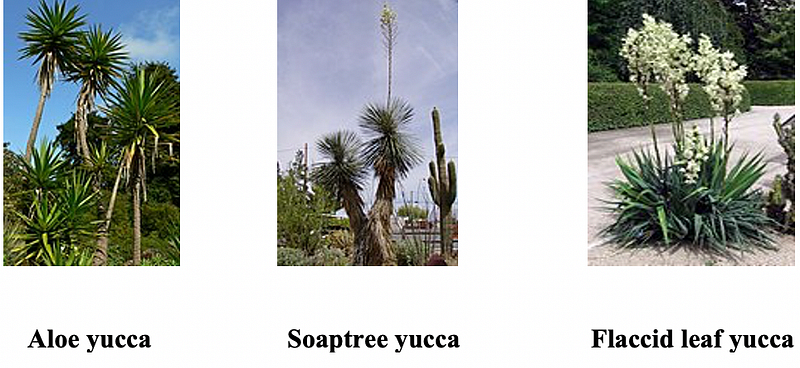
Screenshot collage: Iva Reztok

Yeah, that last one is seeing a specialist about its… flaccidity.

All this talk about palmito and yuca have not just made me hungry, but also brought fond memories of my childhood in Caracas, where we would sometimes go to our local rotisserie:

Credit: www.degustavenezuela.com

There we would eat grilled meat and blackened chicken with fried or boiled yuca (cassava) as a side dish. Before the main course, however, my dad would order an avocado and palmito salad.

Which I ate while crossing my fingers in hopes that there were still enough coconut-producing palm trees left in Venezuela.

Perhaps the New York Times still thinks harvesting the palmito means killing an entire tree. Maybe that’s why the editors of the Spelling Bee puzzle decided that palmito shall remain a dord.*

You can check out my previous entry on another dord* here:

*What the heck is a dord, you ask? Here’s the answer:

Spelling Bee
Language
Science
Food
Culture
Recommended from ReadMedium