
Our Words Tell a Lot About Us (#1)
Revising what I said and drawing new conclusions. The world as we perceive it.
Today I want to write about a seemingly simple sentence… it has a lot of depth though. Let me show you why.
In part #2, I will then go into detail on what this has to do with me.
The World is a reflection of our own self.
What Does It Actually Mean?
First, let me add a few words to the sentence to try to make it clearer:
The World (as we perceive it) is a reflection of (e.g. “shows us”) our own self (our own view, assumptions and values).
There Is No Objectivity
To understand we must first acknowledge that there is no objectivity — ever. That means in essence that there are as many world-views as there are humans on this planet. Sure, some may differ only in very subtle ways, but they do differ. Not a single person on this world was raised exactly like you, has lived through exactly the same situations or has had exactly the same emotions you have experienced (let alone has the same genes).
This proves that we are all completely unique. Even if we would create a perfect clone of ourselves at this very moment, she/he would develop their own view of the world over time as we cannot be in exactly the same physical space (having the same view point) and feel exactly the same emotions in situations that we experience together.
What We Perceive Consciously Is Only a Small Fraction
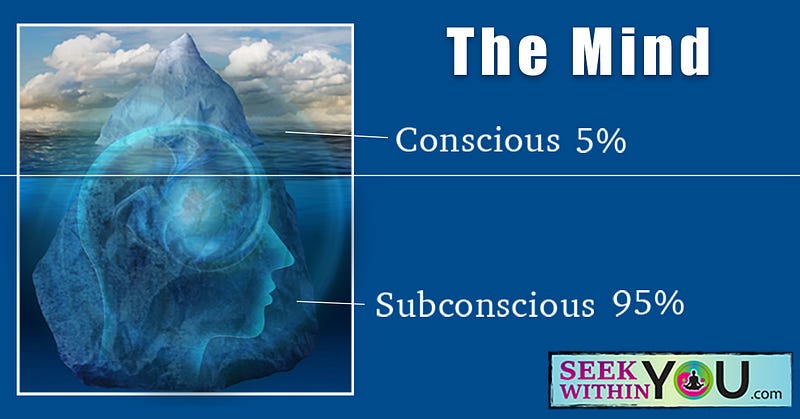
Our body, our senses can receive many more signals than our conscious brain is capable of processing. For this reason, our brain has evolved to focus and to reduce the signals we receive and process, so that we only consciously perceive what is important to us at this very moment.
We all have had situations which we can remember, where we intend to buy something or dream of something or simply meet a new person. From that day on, whatever it is we focused on, we suddenly notice it much more often — but it has always been there. Kind of like a self fulfilling prophecy.
In short, we “program” our brain, our unconscious to treat this thing we think of as important. Important enough to bring it into your consciousness. We do it all the time, whether we know about it or not, whether we want it or not.
We Focus on What Is Important (to Us)
Our brain brings things that we deem important into our consciousness and things that seem unimportant are processed by our unconscious, because our unconscious can handle much more signals. There are certain things though that evolution has taught us to be of utter importance, which we cannot ignore. Fire for example. This is the reason why the following trick works: When something stinks like crazy and then you light a match (or burn something else)… we suddenly no longer smell what stinks, we smell the fire. Evolution has taught us that fire is dangerous and it’s sort-of hardwired in our brain.
So, to sum up part one: “The World (as we perceive it)…”
We all have our unique “pattern” through which we consciously perceive the world around us. And we can change this pattern, actively. We all have the power within ourselves to see the world how we want it to be — for good and bad. We all have the ability to adjust and change what we want to perceive consciously.
Part 2
Thank you for reading this far!
I’ve split the story in two parts, so you can continue reading later or just to keep each story short and easier to digest.