
Our Space Journey, part 9

British spelling
To make sense of my story and obtain the best knowledgeable experience, please go to the beginning and read Part 1 here.
Part 9
At this distance, 20,000 light-years from the Sun, lies the nebula NGC3603, which contains one of the largest young star clusters in the Milky Way. Among the thousands of stars, some are just beginning their lives, and some will be nearing their end.
Another interesting object in this area of space is Sher 25, with a mass of 60 times that of the Sun. It is referred to as a blue supergiant, thought to be in the late stages of its life, and its end will not come peacefully either.
Its distance is approximately 25,000 light-years from the sun. High-mass stars burn their fuel much more quickly and have shorter lives than lower-mass stars.
37 years before the start of our journey, on April 26, 1986, one of the Chernobyl nuclear power plants in northern Ukraine exploded, causing the worst nuclear disaster the world had ever seen.

Experts at the time believed that the area at ground zero would not be completely free from radiation for about 20,000 years, but now at this time, the Geiger counters should be showing that the whole area is completely safe. The town of Pripyat was covered in radioactive fallout, forcing the authorities to evacuate its 50,000 inhabitants. It remained a ghost town for a long time, but I am sure that people moved back to that area a very long time ago.
The centre of the Milky Way is bursting with activity. An estimated 500,000 stars circle near its centre; the closest stars can reach tremendous speeds. One star named S4714 can reach a speed of over 86 million km/h.
As with most other galaxies, there is a black hole at the centre of the Milky Way named Sagittarius A*, which is estimated to hold a mass of 4 billion suns and is roughly 44 million kilometres in diameter.
The event horizon is the boundary surrounding a black hole where nothing can escape. This is due to its massive gravitational pull; even light is not fast enough to escape, hence the complete darkness and the name “black hole.”
We have almost reached our waypoint at Sagittarius A*, the black hole at the centre of our galaxy. We will have to maintain a safe distance to avoid its strong gravitational pull.
26,000 years have passed since leaving the closest star to the sun, Proxima Centauri, but remember, for every second of those 26,000 years, Celer has covered a distance of almost 300,000 kilometres.
Chapter Three: The Local Group of Galaxies.
Celer log, departing Sagittarius A*, waypoint, Andromeda galaxy.
We are now 30,000 years into our journey.
I am curious as to how humans are enduring life back on Earth. Have they evolved so that their appearance has changed? It is unlikely that 30,000 years is long enough for a significant change to happen.
Will humans continue to evolve as they did in the past? Before we left home, the average human height had increased by 10 centimetres in the past 200 years, which was probably due to better living conditions and nutrition. So many questions: are we still losing our body hair? Scientific evidence proves that our brains have been gradually getting smaller over time, so there is no need for a bigger head.
Have humans been able to cure all or most diseases? How long is an average human lifespan now? They will have visited Mars, but how large of a human population will be living on the red planet? Or maybe, for some unforeseen reason, humans are not around anymore. Plenty of scenarios could have happened in 30,000 years.
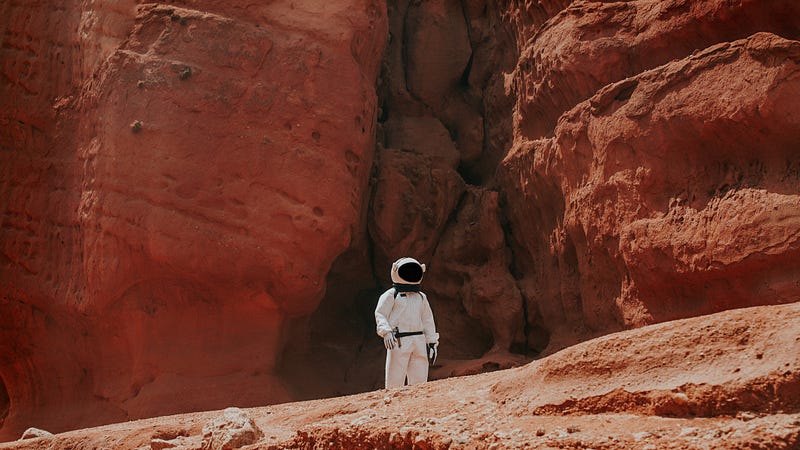
At this time on our trek through space, our sun will have a new closest stellar neighbour. The red dwarf star Ross 248 will be passing just over 3 light-years from the Sun, and that close encounter will last for about 8,000 years. After it moves away, Proxima Centauri will once again take its rightful place and be the closest star to the Sun.
A planetary nebula is one of the most beautiful and majestic objects in space. It is a cloud of expanding ionised gas that has been ejected from a red giant star that is nearing its end. Planetary nebulae play a very important role in the chemical evolution of galaxies.
Vast amounts of elements that the star has manufactured in its lifetime are expelled far out into interstellar space, and as I have noted before, these elements in the distant future will end up in new planets, new stars, or maybe even life itself. This element distribution is similar to that of a star, which will end its life in a supernova when some of the elements it has made are ejected far out into space.
50,000 years have passed since leaving the black hole at the centre of our galaxy. We are now leaving the Milky Way behind and moving on to our next waypoint in space. I am ramping up the distances now, as we have a very long way to go.
When we left home, Earth was approximately 11,000 years into an interglacial period, or thaw. Over the last two million years, glacial periods have been relatively steady; they would, on average, last for 85,000 years.
The woolly mammoth, a creature that existed in the last ice age, was perfectly adapted for a glacial period. Sadly, the remainder of them died out just 4,000 years before we left on our journey. Their extinction was probably due to climate change, the shrinkage of their habitat, and being hunted by humans.
Interglacial periods have lasted between 10,000 and 12,000 years. Looking at the evidence and considering that we have been travelling for 60,000 years, the Earth should be well into the next ice age, unless it has been halted by human intervention.
Mankind was to blame for the soaring emissions of carbon dioxide entering our atmosphere, which in turn was warming the planet; this might have delayed the next ice age by thousands of years.
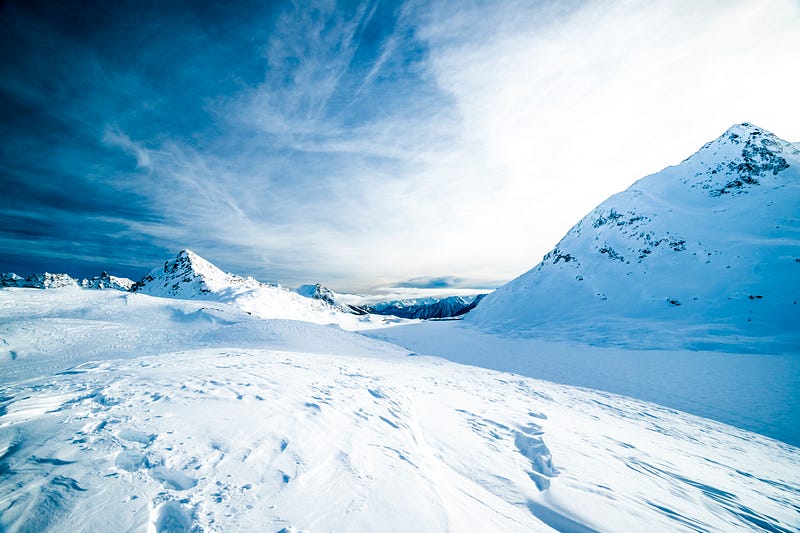
Could humanity survive another glacial period? The amount of water locked up in snow and ice would cover large areas of the planet. In the last glacial period, sea levels dropped 125 meters. Can you imagine all the seaports around the world left high and dry? This would, of course, be a slow process, giving the human population plenty of time to readjust.
100,000 years is a relatively short time considering the age of the universe, but in that time, a lot of changes will have taken place back home. Chances are that a large volcanic eruption could have taken place, releasing hundreds of square kilometres of magma.
If humans are still around and gazing up at the night sky, it will look different from the familiar sky that we viewed before we left our planet. Many of the stars will have moved positions in the sky, just enough to alter the shape of the constellations.
We are moving towards our next target, the Large Magellanic Cloud, a satellite galaxy of the Milky Way that lies 158,000 light-years from the Sun. The LMC is very small, only 14,000 light-years across. It is thought that the LMC and the Milky Way will collide in approximately 2.4 billion years.
Lying within the Large Magellanic Cloud is the star R136a1, classified as a Wolf-Rayet Hypergiant. It was born along with many other massive, bright stars inside the Tarantula Nebula. It is thought to have the highest mass and luminosity of any known star. It might have formed from several massive stars that merged.
Stars lose mass over time, but R136a1 is undergoing extreme mass loss, estimated to be a billion times more than what the Sun is losing. Its luminosity is estimated to be 9 million times that of the Sun, and it has a surface temperature of 53,000 degrees Celsius. This star is estimated to radiate more energy in 5 seconds than the Sun does in a whole year.
The closest spiral galaxy to the Milky Way is Andromeda, which is much larger. Andromeda is part of the local group of galaxies, which includes the Milky Way and over 50 more dwarf galaxies.
Andromeda is located almost 2.5 million light-years away from the Earth. It is 220,000 light-years across and estimated to hold 1,000,000,000,000 stars, which is one trillion.
Andromeda is approaching our galaxy at 110 kilometres per second, and far into the distant future, it will probably collide and merge with the Milky Way.
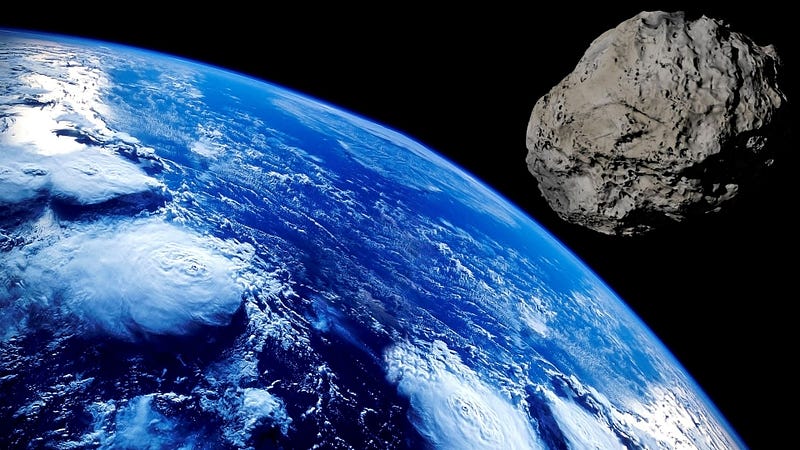
500,000 years have passed since we left our world behind. By this time, there is an almost certain chance that the Earth will have been in the path of an asteroid of over one kilometre in diameter; however, I am sure that this dire situation would have been averted by technological advances.
Gravity is the invisible force that attracts anything that has mass. The more mass an object has, the stronger its gravitational pull will be. It is what holds the planets in orbit around the Sun; it is just as well that we are travelling around the Sun at a great speed.
Fun fact. Hypothetically, if the Earth were to slow down and come to a complete stop, the Sun’s gravity would immediately start pulling it closer and closer, and within a couple of months, it would be swallowed up and become part of the Sun. but this nightmare scenario will never happen.
The gravity of the moon pulls at our oceans, causing the tides that we see every day. Have you ever wondered why stars, planets, and moons have a spherical shape? That is also because of gravity.
If you can imagine the force of gravity pulling from the centre of a large object, then all the matter in that object will end up in a spherical shape, because it is being pulled equally and in every direction. This process is called hydrostatic equilibrium.
Part 10