
Our Space Journey, part 10

British spelling
To make sense of my story and obtain the best knowledgeable experience, please go to the beginning and read part 1 here.
Part 10
Hypothetically, if you could somehow manage to throw a mountain far out into space, it would just float about, keeping its same shape. Something made of rock would have to be roughly 600–1,000 kilometres in diameter; that size would give it enough gravitational force to pull it into that common spherical shape we see throughout the universe.
Here is another interesting fact about gravity. If you were to take a heavy steel ball and a feather to the top of a high building and drop them both at the same time, then it would be no surprise when the steel ball hits the ground first. The feather is being slowed down by the resistance of the air. Now place that heavy ball and feather in a vacuum and release them both; no matter how high they are, they will both hit the ground at the same time.
Just a few lines to test your imagination!
Have you ever wondered what would happen if the sun were to instantly disappear? I am sure this has never entered your mind, and I don’t know why it entered my mind; this would never happen, but say it just did.
We would have no idea until just over 8 minutes later when the light and heat stopped arriving on Earth. Gravity waves travel at the same speed as light, and now it gets interesting: with the loss of the sun’s gravitational pull, the earth would be released and travel away in a straight line.
Mercury and Venus would have already gone on their separate ways, but it would take a little more time for the more distant planets to escape the sun’s gravity and go on their straight paths. Can you imagine the chaos there would be throughout the solar system?
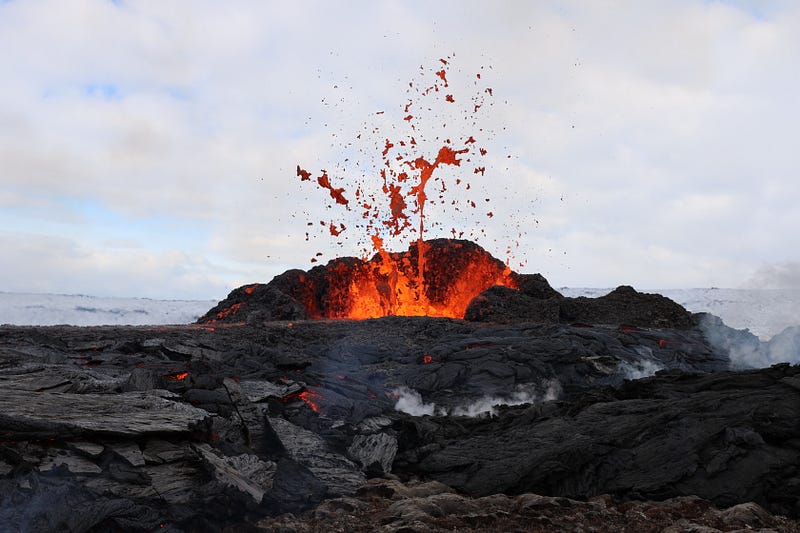
Time and distance are adding up; we have been travelling for one million years. Probably, by this time back on Earth, a supervolcanic eruption will have taken place; it could have caused thousands of cubic kilometres of magma to be released onto the surface of the Earth. Similar to the Toba eruption in Sumatra, Indonesia, which happened 75,000 years before we left home, that event is thought to have drastically reduced the human population at that time.
We are now in an area of space where the Andromeda galaxy is positioned. This spiral galaxy lies over 2.5 million light-years from Earth. For every hour of that time, Celer has covered a distance of 1,080 million kilometres. It may seem like a long time and a vast distance, but in reality, our journey has hardly begun.
Celer log, departing Andromeda galaxy, waypoint, Galaxy, IC1101.
Within 1 billion light-years from the Sun and in every direction, there are estimated to be 250,000 trillion stars and around 100 superclusters.
A supercluster is a large group of galaxies that are the largest structures in the universe. The local group, which includes our Milky Way, spans over 10 million light-years, and the Laniakea supercluster, which includes the local group, spans over 500 million light-years. It is thought that in the observable universe, there are approximately 10 million superclusters.
The barycentre is the centre of mass of two or more bodies that are orbiting each other. I used to think that planets orbit around a star’s centre, but I was wrong.
If you can imagine a long bar with a steel ball fixed at one end and a heavier steel ball fixed at the opposite end, if you were to run your finger along the bar until it balanced, then that point would be the barycenter.
Think of the sun and the largest planet, Jupiter. Their barycenter is situated just outside the sun’s surface, so they will both rotate around that point. The barycentre for the Earth and the Moon is situated inside the Earth at roughly 4,670 kilometres from its centre.
The rest of the planets in the solar system will have a barycentre somewhere between the sun’s centre and its surface. One way for astronomers to discover large exoplanets is to look for stars that wobble or move around their barycenter. Many large exoplanets have been discovered using this method.
50 million years have now passed, and I am thinking about home again. Way back then, I had a few holidays on cruise ships, sailing up and down the Mediterranean Sea. This would be impossible now, as North Africa will have collided with Eurasia, causing the land to rise and replacing the Mediterranean Sea with a huge mountain range.
We are now nearing a large barred spiral galaxy, identification number NGC6872, commonly known as the Condor galaxy. It is five times the size of the Milky Way; light would take 522,000 years to travel from one edge to the other. It lies 212 million light-years away from our sun.
These distances that Celer has travelled are very difficult to comprehend, but they are still small in comparison to the distances that we have yet to travel. It will be 750 million years before we reach the next waypoint.
If there is intelligent life out there, somewhere, then you can understand why we have never heard from them. Even at the incredible speed of light, the distances are just too great. Intelligent life on another distant world might have existed and become extinct in the time it would take for signals to arrive on Earth. The only chance we have of getting a visit is if another advanced civilisation has worked out a much faster way to get from A to B.
Although life has lived on Earth for well over 3 billion years, it has only been 110 years since the first public radio broadcast was transmitted.

These early radio signals are still travelling through space at the same speed as visible light. They will now be roughly 1,040 trillion kilometres, or 110 light-years, from the Earth, but as you know now from reading this story, that distance within our galaxy is very small and indeed minuscule compared to the whole universe.
We have passed many exoplanets, but not all of them will have an atmosphere. A planet or a moon needs to have enough mass and therefore sufficient gravity to hold on to the gases in its atmosphere, or they will simply be lost to space.
Temperature also plays a part; the hotter it gets, the easier it will be for gases to escape into space. This can be witnessed on Mercury, which has a very thin atmosphere. A layer of gases surrounding a planet or a moon helps shield the surface from radiation coming from a star, or in our case, the sun.
At this time, 250 million years into our cosmic journey, the Solar System will have completed a whole orbit around the centre of our galaxy, the Milky Way. All the continents on Earth will probably have merged to form another supercontinent. The sun will continue its function of fusing hydrogen to helium and will have changed very little in the past 250 million years.
Long before this time, the Earth was probably the target of a life-threatening asteroid between 5 and 10 kilometres in diameter. If mankind are still around, would they have been able to alter a large asteroid’s course or destroy it before it made contact with our planet?
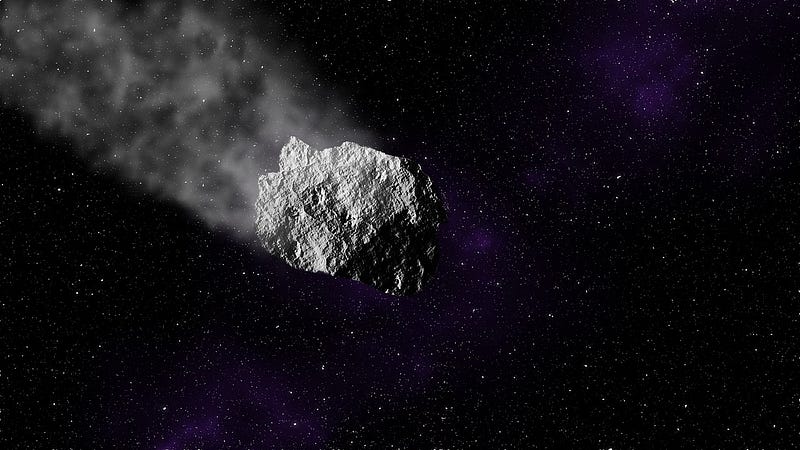
If an asteroid that size did hit dry land on our planet, it might have wiped out many animal and plant species, similar to what happened 66 million years before we left home when a similar-sized asteroid did indeed hit the Earth.
Scientists believe that something is missing in the universe that can’t be seen or detected, and they call it dark matter. Galaxies seem to be achieving something in their movements that would appear impossible with the amount of detectable matter that is present. The amount of detectable matter would not hold them together.
The same is happening to galaxies in clusters; something is providing galaxies with the necessary extra mass. The standard model of cosmology indicates that the total mass and energy of the universe are 4.9% ordinary matter, 26.8% dark matter, and 68.3% dark energy.
Experiments are being carried out using the Large Hadron Collider in an attempt to find out more about the existence of dark matter and dark energy.
Part 11


