
Our Space Journey, part 11

British spelling
To make sense of my story and obtain the best knowledgeable experience, please go to the beginning and read part 1 here.
Part 11
We are now half a billion years into our journey. Three of the many natural events that could have been disastrous to the Earth at that time were a prolonged volcanic event, a supernova, and an asteroid strike.
Before we left home, the last close supernova that was visible from the Earth took place over 400 years previous. That supernova was at an estimated distance of 20,000 light-years from the sun. It looks like there were no adverse effects on life on that occasion. Probably, a supernova would need to be at a distance of less than 50 to 100 light-years away to have an effect on the Earth, which could cause a chemical imbalance in the atmosphere.
As I said earlier, there are estimated to be on average two or three supernova events every 100 years in the Milky Way, but where the Solar System is positioned in the galaxy, it could be a very long time before there is another one close by.
Maybe by this time, the human race has ruined the conditions that were favourable for life on our special planet.
The sun is also getting warmer by about 10% every billion years, and this is also bad news for our planet. I wonder if humanity has moved on to a different world that is more favourable to life. It is realistically the only option they would have had before the Earth became uninhabitable.
The Horologium-Reticulum supercluster is one of the largest known. Its closest edge to the Earth is estimated to be 700 million light-years distant. It measures 550 million light-years across and holds 5,000 galaxy groups, 30,000 giant galaxies, and 300,000 dwarf galaxies.
If you were to add up all the stars in its volume, the number would be roughly one million billion stars. This supercluster has a combined mass of 100 quadrillion times that of our Sun; that number is 100, followed by 15 zeros.
Stars come in many forms and range from red dwarfs to red and blue supergiants and the true monsters of the universe, hypergiants. Among them are some very strange stars — neutron stars and wolf rayet stars being two. As the study of the universe continues, scientists are learning more detailed information about the complex lives of stars.
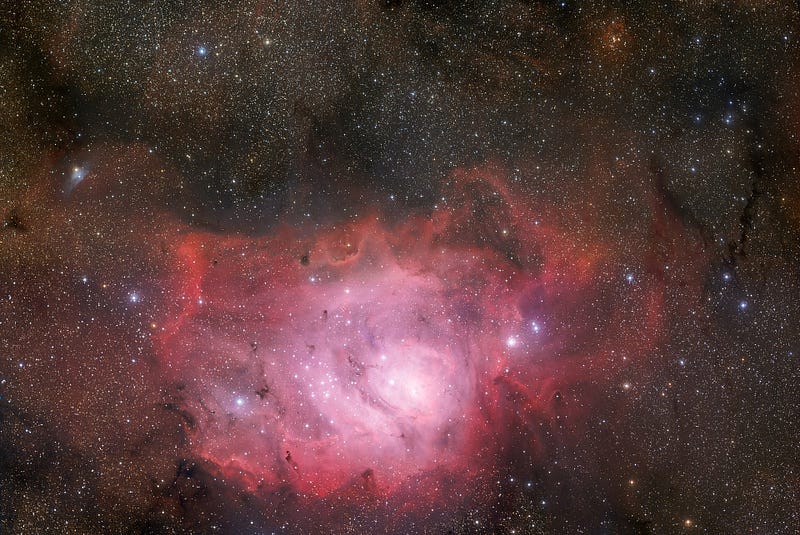
Every star that has ever existed started its life in a nebula. They are massive interstellar clouds of dust and gas; they can be remnants of matter from the Big Bang or the result of larger stars going supernova. Here is a short, simple explanation of some of the types of stars that are spread throughout the universe.
T Tauri stars are variable stars and will show random fluctuations in their brightness. They are very young, with an average age of around 10 million years. They may look like main sequence stars because of their size and brightness, but their core temperature is not hot enough for nuclear fusion to take place; the radiation that is being emitted comes from gravitational energy as the star contracts.
Our local star, the Sun, is a middle-aged yellow dwarf in the main sequence stage of its life. The majority of stars in the universe are main-sequence stars, varying in size, mass, and brightness. They are all converting hydrogen to helium in their cores, resulting in massive amounts of energy being released.
A star in the main sequence is in a controlled state; gravity is pulling inward and the pressure from the fusion reactions in the core is pushing outward. The inward and outward forces balance one another out, so these stars will remain stable for a very long time.
Their lives can last for millions, billions, or even trillions of years. The lower mass limit for a main-sequence star is about 0.08 of the mass of the Sun, which will still give the minimum amount of gravitational pressure needed to ignite fusion in its core.
White dwarf. When a star like our sun has exhausted its nuclear fuel, fusion comes to an end in its core, and the production of elements ceases. With no outward pressure from the fusion reactions, the star collapses inward under its own gravity and becomes a white dwarf.
During this process, some of the mass in the star will be lost to space, becoming a planetary nebula. The mass left will be compressed to a volume similar to the size of Earth. The white dwarf will remain hot for a very long time, maybe a billion years, but it will eventually cool down.
Black dwarf. This is an interesting type of star because they are thought not to exist yet. A white dwarf, which I mentioned in the last paragraph, will eventually become a black dwarf, but it will take a very long time to cool down completely and radiate no heat or light. Even the age of the universe might not be long enough for a white dwarf to cool down completely and become a black dwarf.
Red dwarf stars, as the name suggests, are small low-mass stars with cooler surfaces and are the most common type of main-sequence stars in the universe. They have surface temperatures between 2,500 and 4,000 degrees Celsius; compare that to the Sun, which has a surface temperature of around 5,470 degrees Celsius. The red colour is due to the cooler surface temperatures.
Red dwarf stars have much longer lives because they don’t burn through their fuel as fast. Once the hydrogen fuel is exhausted, the outward pressure stops, gravity takes over, and the star collapses, heats up, and becomes a white dwarf.
Astronomers have estimated that certain red dwarf stars could burn their fuel for trillions of years. A typical red dwarf star would have less than 50% the mass of the Sun; some are even known to have about 8% the mass of the Sun, but still manage to convert hydrogen to helium in their cores.
Red giant star. When a main sequence star depletes most of the hydrogen in its core, fusion stops and the star no longer generates an outward pressure. To counteract the inner gravitational force, a shell of hydrogen around the core ignites, continuing the fusion process. This change will increase the size of a star dramatically; the star will become a red giant and can be 100 times larger than it was in its main sequence phase. When most of its hydrogen fuel is exhausted, further shells of helium and even heavier elements can be manufactured in the fusion reactions. The life of a red giant is short; it will last a few hundred million years before it runs out of fuel completely, and it too will eventually become a white dwarf.
Supergiant stars are very large stars, consisting of many times the mass of our sun. Unlike a relatively stable star like our Sun, a supergiant consumes hydrogen fuel at an enormous rate and will use all the fuel in its core within a few million years. Supergiant stars’ lives are short compared to stars like our Sun; their end will be a supernova, and at the end of the process, a neutron star or a black hole can be left behind.
A neutron star is the collapsed core of a giant star, which has between 10 and 29 times the mass of our sun. Excluding black holes, they are the densest objects known. This is an interesting type of star composed mostly of neutrons. This is because the intense gravity can crush protons and electrons together to form neutrons.
As I mentioned previously, one cubic metre of neutronium in its core would weigh an incredible one million billion tons here on Earth. More massive stars that go supernova can skip the neutron star stage and proceed farther to become black holes with much more density and gravity.
Almost one billion years have now passed since we said goodbye to our home planet. The sun will be getting hotter, and the average temperature on the surface of the earth could be reaching 50 degrees Celsius, which is around 35 degrees hotter than it was at the time of our departure.
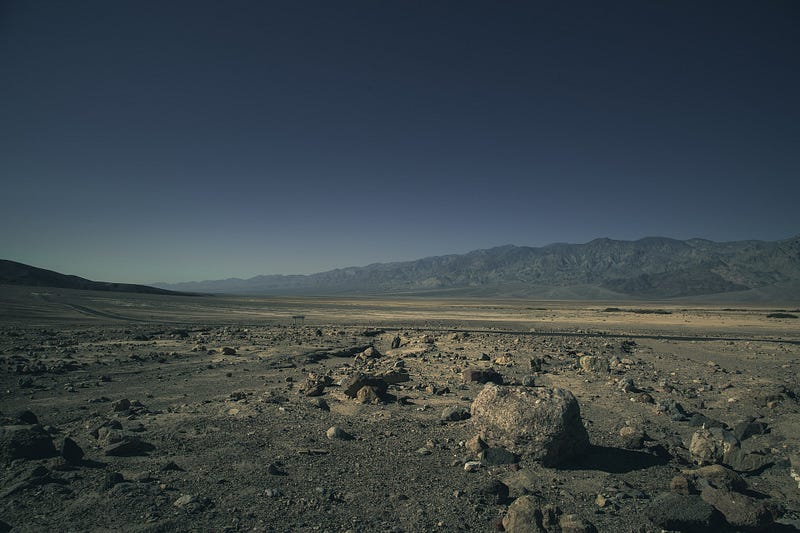
Most or all of the ocean water will have evaporated, and the atmosphere will be thick and heavy. This will have caused a greenhouse effect, trapping the heat on the surface. This will be similar to what happened on Venus when clouds of gases trapped heat on its surface. Hopefully, humans will have managed to migrate to a more hospitable place, but some life might still be holding on in a few isolated areas.
We are not far from one of the largest galaxies known, named IC1101. This supergiant elliptical galaxy is possibly the largest in the observable universe; its distance is one billion light-years from Earth. As a comparison, the Milky Way has a diameter of 100,000 light-years, but this monster’s estimated diameter is 5 million light-years across and contains around 100 trillion stars.
Celer has, at last, reached this waypoint, one billion light-years from the Sun. Our next leg of the journey, back to where everything began, will be a big leap and a vast distance, covering the remainder of the known universe.
Part 12