
Our Space Journey, part 5

To make sense of my story and obtain the best knowledgeable experience, please go to the beginning and read part 1 here.
British spelling.
Part 5
Celer log, departing Saturn, waypoint, Uranus
Distances are getting larger; the average distance between Saturn and Uranus is 1,448,950,000 km, which is almost 1.5 billion. The journey time for Celer will be just over 1 hour and 20 minutes.
Uranus.
William Herschel discovered this planet in 1781. Its axis was found to be tilted 98 degrees, which means that it lies almost on its side as it orbits the Sun. It is thought that the reason for this strange position could have been a collision with another planet in the distant past.
Uranus has a diameter of almost 52,000 km, and its average distance from the Sun is 2,87 billion km. It has a mass of 14.5 times that of the Earth. This large planet’s atmosphere is composed primarily of hydrogen, helium, and methane. A temperature of minus 216 degrees Celsius has been detected at the top of its clouds.
27 moons are known to be orbiting its centre. Uranus has an orbit so large that it takes 84 Earth years and 36 days to make one circuit around the Sun, which is known as the Uranian year. It has a day that lasts for 17 hours and 14 minutes, which is shorter than our day on Earth.
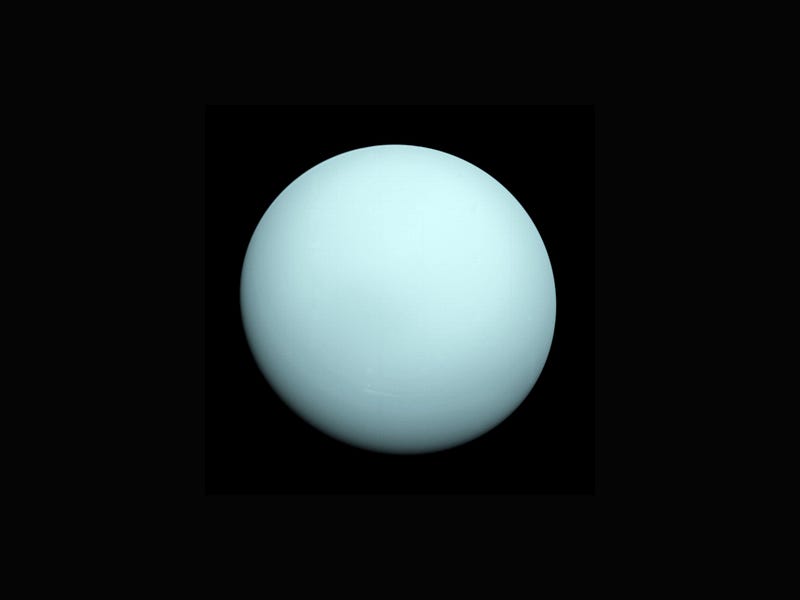
Voyager 2 is the only spacecraft that has visited Uranus; it made its closest approach to the planet on January 24, 1986. As of October 2023, no further exploratory missions to Uranus have been approved.
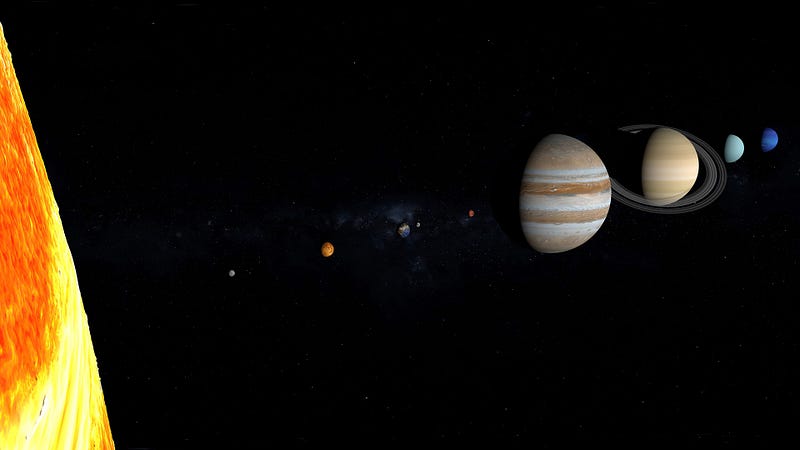
Look at the image below. In comparison to the sun, the four rocky inner planets, Mercury, Venus, Earth, and Mars, can hardly be seen. To us, our world seems big, but in reality, it is minuscule compared to the billions of other objects in our galaxy.
A molecular cloud is a vast area of space that is denser than its surroundings. Eventually, gravity causes parts of the cloud to collapse. This is where protostars (young stars) begin to form. As more matter accumulates in one area, it causes pressure, temperature, and density to rise. When a critical temperature of 15 million degrees Celsius is reached, nuclear fusion takes place, which converts hydrogen into helium. The star begins to shine.
The protostar process can take up to a million years before a main-sequence star is born. If a star fails to reach this critical mass and temperature, it will end up as a brown dwarf or a dead star.
Fortunately for us, our sun was big enough for nuclear fusion to take place. By the time the sun had formed completely, it had used up almost all the mass in its vicinity.
The new sun was surrounded by a spinning, swirling disc of leftover material called a solar nebula. Over millions of years, inside this flattened disc formed the dwarf planets, moons, asteroids, and everything else that orbits the Sun.
The reason the planets are in a level plane around the Sun is because of this flattened disc. Astronomers can see different stages of this disc formation in other solar systems within our galaxy.
Our local star, the sun.
The nuclear fusion occurring in the Sun’s core is fusing 600 million tons of hydrogen into 596 tons of helium every second, and those extra 4 million tons are converted into pure energy, which is the light and heat we see and feel on the Earth.
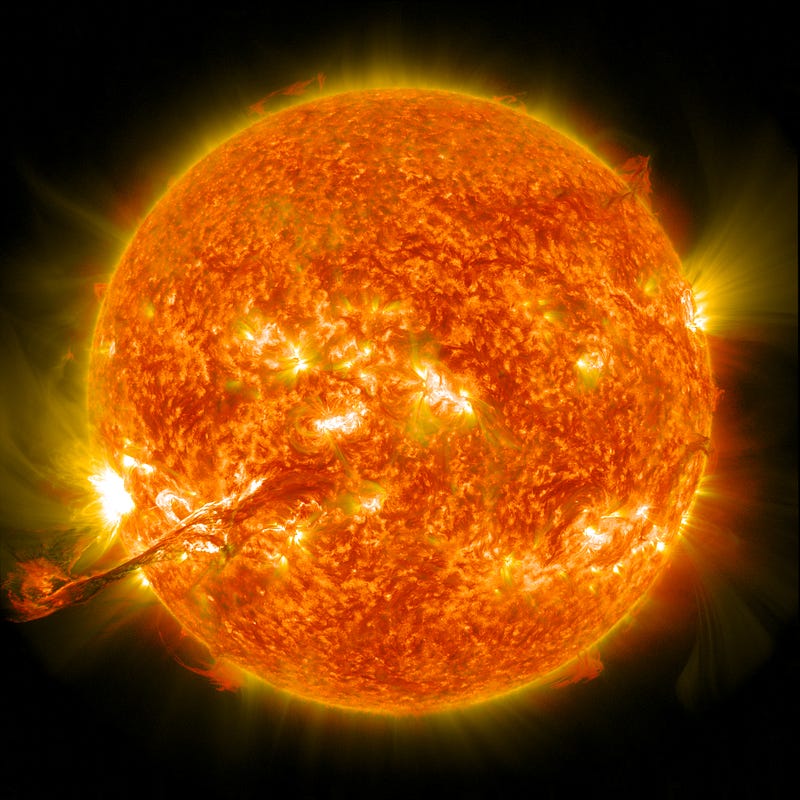
In one hour, the amount of power from the sun that lands on the earth is more than the entire world consumes in a year.
The mass being lost from the sun due to solar wind is the equivalent of one Earth mass every 150 million years, so that would be 30 Earth masses in its lifetime. That lost mass seems like a lot, but remember, the Sun has a mass of 333,000 times that of the Earth.
But surprisingly, the Sun’s hydrogen fuel supply is far from running out and has ample fuel left to last for a very long time, as we will find out later.
The sun accounts for 99.86% of the total mass in the solar system. Two forces are keeping the sun in a stable condition, one being the fusing of hydrogen to helium, creating the force that is pushing outwards from the core, and the other being gravity, which is pulling inwards. This stability will last for another 5 billion years or more.
The sun has a diameter of 1.39 million km and a core temperature of over 15 million degrees Celsius. It mainly consists of 70% hydrogen and 28% helium; the remainder of the mass is made up of carbon, nitrogen, oxygen, and a few other elements.
In its lifetime, the sun will fuse heavier elements, from helium right up the periodic table to carbon and oxygen. Larger-mass stars will be able to fuse heavier elements, which will end with iron. The Sun is so big that 1.3 million Earths would be needed to make up its volume.
The distance between the Earth and the Sun is approximately 149.6 million km. To put that distance into perspective, Celer, travelling from the Earth at the speed of light, which is 1,080 million km per hour, would take about 8.3 minutes to reach the Sun.
There are so many reasons why this would be impossible, but imagine for a moment, a Boeing 737 airliner would take over 20 years at normal cruising speed to travel the distance between the Earth and the Sun; now that would be a long-haul flight.
We are continually seeking to gain more information about the sun. On August 8, 2001, the 200 million-dollar Genesis mission was launched. It travelled 1.5 million km from the Earth and successfully collected samples from the solar wind, but unfortunately, on its return to Earth on September 8, 2004, it crash-landed in Utah because of a problem with its parachute. Fortunately, a few of its sample collectors were recovered undamaged. Space missions don’t always go according to plan, but I suppose we have to keep trying.
Theoretically, if the sun had a switch and it was turned off, the people on Earth would have no idea until 8.3 minutes later, when it fell dark. With no light coming from the sun, the moon would be dark as well; the only natural visible light would be coming from the rest of the stars in the sky.
When you are looking at a star that is one million light-years away, the light you are seeing left that star a million years ago; therefore, you are seeing the star as it was way back then. The star could have changed position in the sky or even come to the end of its life in the time it has taken for its light to arrive at our location.
Celer log, departing Uranus, waypoint, Neptune.
The average distance between Uranus and Neptune is 1,633,600,000 km or just over 1.6 billion km. Flyby time for Celer will be over 1 hour and 30 minutes.
Neptune is number eight and the most distant planet from the Sun. It has a diameter of 49,500 km and can be thirty times further away than the distance between the Earth and the Sun.
Neptune’s average distance from the Sun is over 4.5 billion km, so it is no surprise that it takes 164 Earth years and 264 days to complete one circuit around the Sun, which is known as the Neptunian year.
A day on Neptune adds up to 16 Earth hours; the mass of this planet is 17.2 times that of the Earth; and it has fourteen known moons orbiting its centre. The temperature in its clouds can be as low as minus 235 degrees Celsius, with an average temperature of minus 200 degrees Celsius. The winds on Neptune can be so strong and fast that they can break the sound barrier.
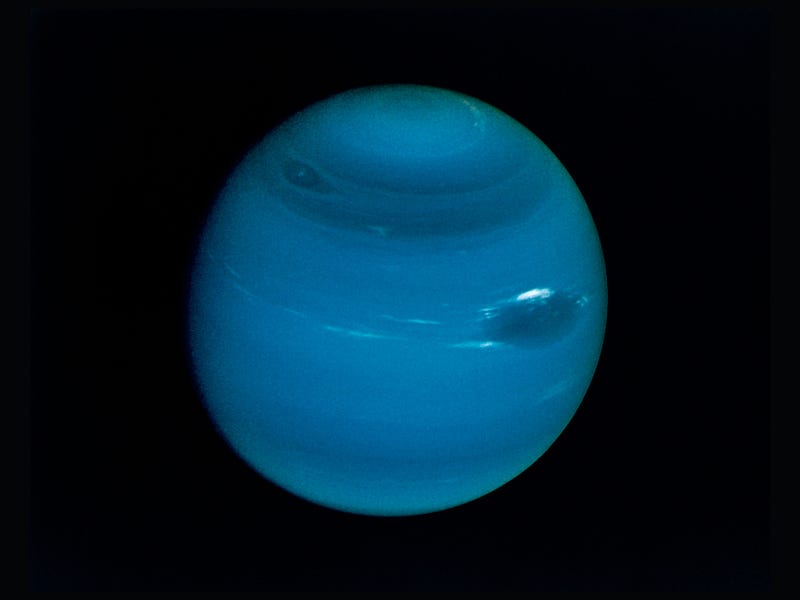
Neptune is another planet that has been visited only once. During its grand tour of the Solar System, the space probe Voyager 2 gave it a visit on August 25, 1989, passing just 3,000 km from its surface. As of October 2023, no other missions to Neptune have been approved.
Between the five planets, Celer has travelled 4,509,550,000 km, just over 4.5 billion km. That journey has taken a little over 4 hours, but remember, we are travelling at 18 million kilometres per minute! I will continue to use kilometres for now. The speed of light is difficult for us to comprehend; take that journey of 4 hours; it would have taken the fastest spacecraft we have almost 9 years to accomplish that journey.
Not all planets orbit a star; a few have been found speeding through our galaxy on their own. On these orphaned planets, it would always be nighttime and freezing cold. It is thought that these rogue planets were formed in star systems similar to our own, but for some unknown reason, they were ejected and travel through space alone.
Space. When we look up at the night sky, it appears to be full of stars, galaxies, and other objects, but in reality, most of the universe is space, a vacuum, and as sound waves cannot travel through a vacuum, it must also be a very silent place.
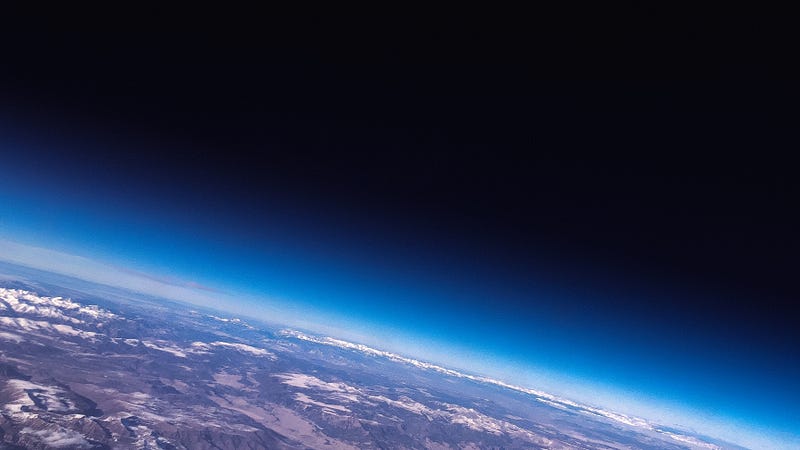
Outer space begins at the Karman line, which is 100 km above the Earth’s surface. 99% of the air in the atmosphere is below this line. The ISS, or International Space Station, orbits the Earth at just over 400 km from its surface. Even the most diluted parts of the universe contain a few hundred atoms or molecules per square meter. Space is also filled with many forms of radiation.
Part 6