
Our Space Journey, part 3

To make sense of my story and obtain the best knowledgeable experience, please go to the beginning and read part 1 here.
British spelling.
Part 3
It is almost time to start our epic journey.
At certain periods on our journey, we will look back to the Earth and the Sun to visualise what could be happening to them at that time. Many changes will have happened, whether man-made or caused by natural events.
About 66 million years ago, an asteroid roughly 10 kilometres in diameter slammed into the Yucatan Peninsula in Mexico, resulting in the mass extinction of 75% of the Earth’s plants and animal life, including the dinosaurs.
Who can say for sure that an event like that will not occur again? It has happened many times in the past; you just need to look at the surface of the moon; it reveals exactly how violent the Solar System was in the distant past.
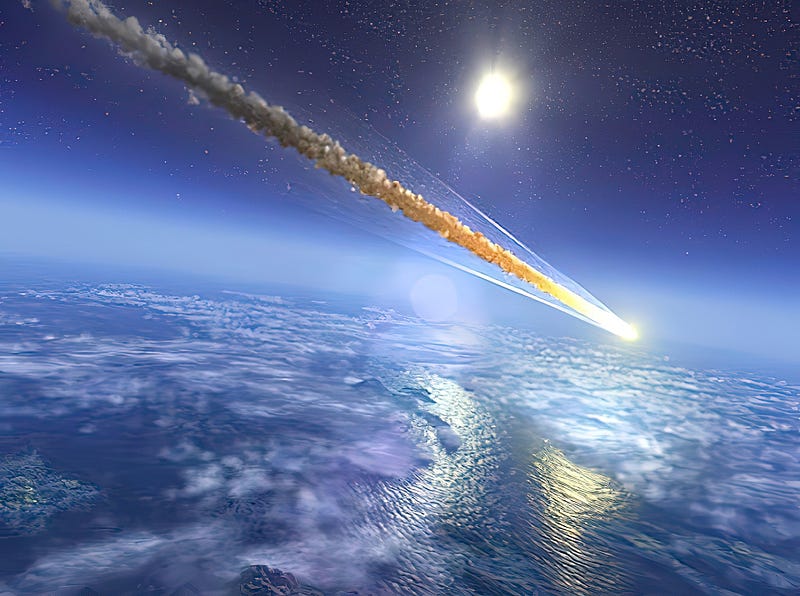
I am sure that in the future, mankind will be able to break apart or alter the course of an incoming asteroid before it can devastate the Earth.
I will provide more information on asteroids later in the story.
Major volcanic events could also be life changers in the future; they are thought to have caused a few life extinctions in the past three billion years.
The last major supervolcanic eruption happened about 250 million years ago and formed the Siberian Steps. In roughly two million years of activity, an estimated three million cubic kilometres of lava and debris emerged from the eruptions. This resulted in the release of well over 1,000 billion tons of methane and an estimated 4,000 billion tons of sulphur dioxide, which poisoned the atmosphere over that long time.
Can you imagine going on a long, one-way journey and leaving your family and friends behind, knowing that you will never see them again? My situation would be to leave my wife, my two children, and my four grandchildren, who have ages between three and nine.
If a suitable spacecraft was built for transporting people to Mars to start a colony, then I am sure there would be plenty of recruits.
Sending men or women to Mars will probably happen in the next few decades, as Mars is not that far from our planet considering the vastness of space.
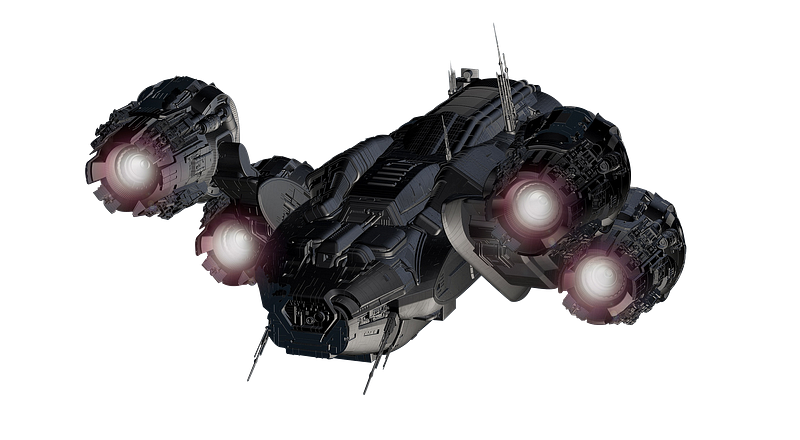
At the start of this epic journey, Celer will travel out into the solar system towards Mars. It is not easy to reach space; you need to accelerate to the escape velocity. This is the minimum speed necessary to break free from the Earth’s gravitational grip and never be dragged back. On Earth, that speed is 11 kilometres per second or 40,000 kilometres per hour.
I will explain later in more detail about escape velocity, or the speed needed to exit a planet or other objects in space. The Earth’s gravity weakens or has less effect on an object as it moves farther away into space.
During the story, I will mention a few notable and very strange objects that are out there in that unbelievably large area we call outer space. When I describe an object, it will be at a distance between the sun and our next point of arrival, or waypoint.
The story is mostly about time, size, and distance, and how the universe has evolved over that vast time. Hopefully, it will be easy to understand. Remember, the fictional part is there as a help in understanding how vast and ancient the universe is.
There are plenty of science books written by experts; sorry, I am not one of them, but I will do my best to make this story interesting to read.
Celer log, departing Earth, waypoint, Mars.
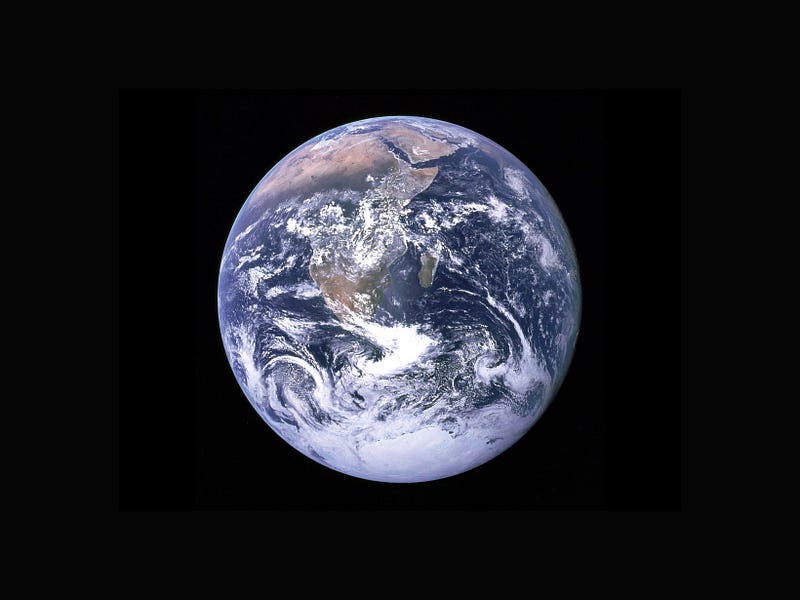
Goodbye Earth.
The year is 2023. Celer has left the Earth behind and started its very long journey back to where everything we know and see began.
The distance between the Earth and Mars varies greatly, so I will take an average distance of 228 million km. Fly-by time for Celer will be just over 12 minutes.
Celer has passed the Moon in the time it takes for a human heartbeat; it was a very short flight, to say the least, taking only 1.3 seconds to travel 384,400 kilometres.
Glimpsing back, I am surprised at how small the Earth looks just a few seconds into our flight. The distance between the planets varies considerably, so I will take the average distance between them on our journey.
As of this time, one of the fastest spacecraft to leave Earth was New Horizons; it travelled to Pluto and beyond at a speed of 58,500 km per hour. A similar spacecraft going on this same journey to Mars would take about 162 days to travel 228 million kilometres and arrive at its destination. Compare that time to the 12 minutes Celer is going to take travelling at the speed of light.
The Moon.
Most scientists agree that our Moon, which is 3,474 km in diameter, was formed about 4.5 billion years ago from ejected material thrown out into space when a planet roughly the size of Mars collided with the infant Earth. It is thought that the collision is the reason the Earth is tilted on its axis by over 23 degrees; this tilt is responsible for the seasons we witness each year.
The young Moon was a lot closer to the Earth back then, orbiting at an estimated distance of 20,000 to 30,000 km from the surface of our planet. If mankind had been around then, can you imagine how big the moon would have looked in the night sky?
Today, the Moon’s distance from the Earth is 384,400 km.
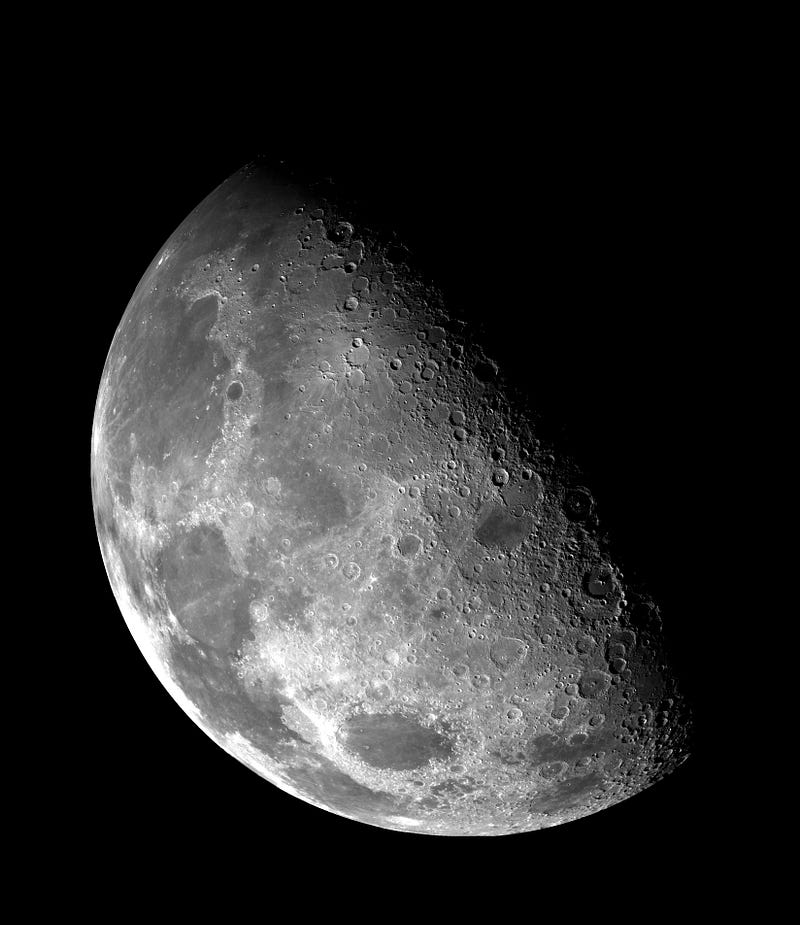
At present, the Moon continues to move away from the Earth at 3.6 centimetres per year, which is roughly the speed your fingernails grow. In an average human life, that would be over 2.5 metres, which doesn’t seem much but indicates how the kilometres would add up over millions or billions of years.
If we had no moon, our day would be roughly 6 hours long. The effect the moon has had on our tides has slowed down the Earth’s rotation over billions of years. And if there was no moon, the rise and fall of our tides would be significantly less, leaving only the gravity of the sun to pull at our oceans.
The largest tides occur when the Earth, the Moon, and the Sun are in alignment and both the Moon’s and the Sun’s gravity are pulling at our oceans at the same time. Without the Moon, the evolutionary path for life on Earth may have been very different; we humans might have never existed.
On May 25, 1961, American President John F. Kennedy announced the ambitious goal of sending men safely to the Moon and back. He said it would be achieved in less than ten years, but sadly, he was not there to see it happen within his estimated time scale.
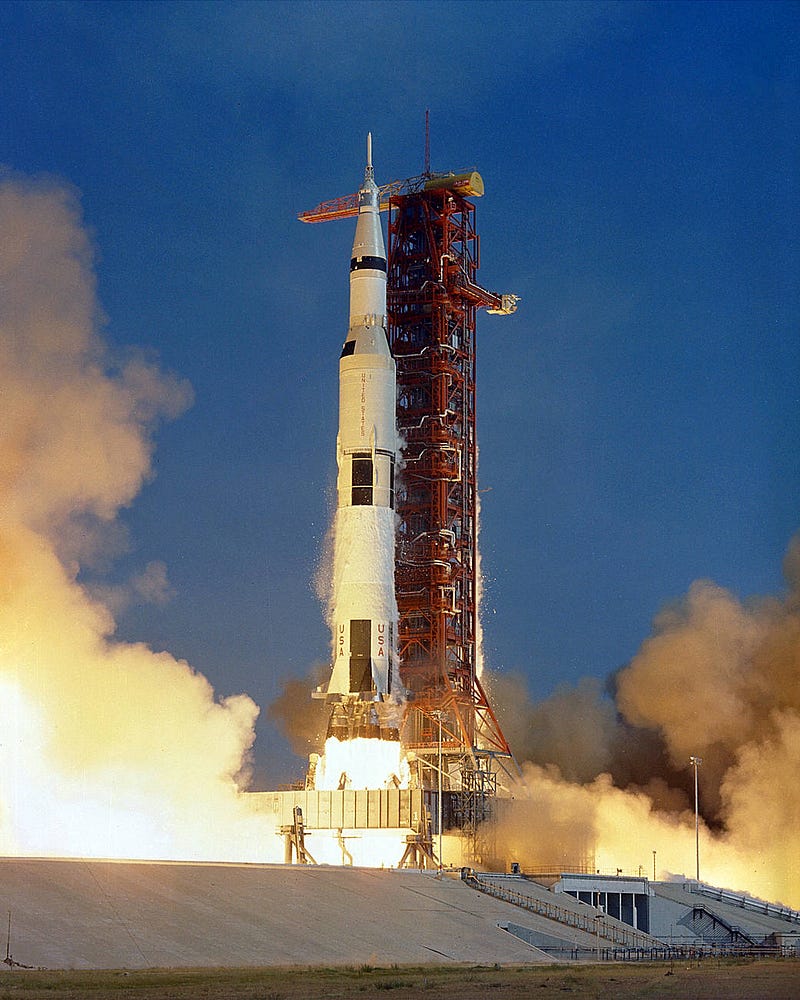
I remember driving home one evening in July 1969, parking my car, and looking up at the moon. It seemed so bright that night, I was amazed that two men had landed safely, left their spacecraft, and were walking on the moon’s surface. I felt so proud of humanity and so privileged to have been born at the right time to witness and understand that great event.
Apollo 11 was the first spacecraft to take men to the Moon; it arrived there on July 20, 1969. Three men made that journey: Michael Collins flew the command module Columbia; he stayed up there orbiting the moon, while Neil Armstrong and Buzz Aldrin made their way to the surface in the lunar module Eagle. It was a very long day for Michael; his biggest fear was the real possibility of going home alone.
Before their return home, Aldrin and Armstrong positioned a retroreflector (mirror) on the moon’s surface facing the Earth; two more were added by Apollo 14 and 15. They are called the “Lunar Laser Ranging Retroreflector Array.” They have been in use ever since and are the only scientific experiments left running since the end of the Apollo program.
A laser beam leaves the Earth, bounces off a mirror on the Moon, and returns to Earth. The time it takes is recorded, and knowing the speed of light, it can be calculated with great accuracy how far away the Moon is and the distance it is moving away from the Earth each year.
A huge number of things could have gone wrong with the first lunar landing, from the launch, the journey to the moon, landing on the moon, and the return to Earth. In the event of a disaster, with two men stranded on the moon, American President Richard Nixon had a speech prepared, but thankfully he never had to read it.
This is what he would have said.
“Fate has ordained that the men who went to the Moon to explore in peace will stay on the Moon to rest in peace. These brave men Neil Armstrong and Edwin Aldrin, know that there is no hope for their recovery. But they also know that there is hope for mankind in their sacrifice.
These two men are laying down their lives in mankind’s most noble goal: the search for truth and understanding. They will be mourned by their family and friends; they will be mourned by their nation; they will be mourned by the people of the world; they will be mourned by a Mother Earth that dared send two of her sons into the unknown.
In their exploration, they stirred the people of the world to feel as one; in their sacrifice, they bind more tightly the brotherhood of man. In ancient days, men looked at the stars and saw their heroes in the constellations. In modern times, we do much the same, but our heroes are epic men of flesh and blood. Others will follow and surely find their way home.
Man’s search will not be denied. But these men were the first, and they will remain the foremost in our hearts. For every human being that looks up at the Moon in the nights to come will know that there is some corner of another world that is forever mankind”
Very brave men.
Part 4